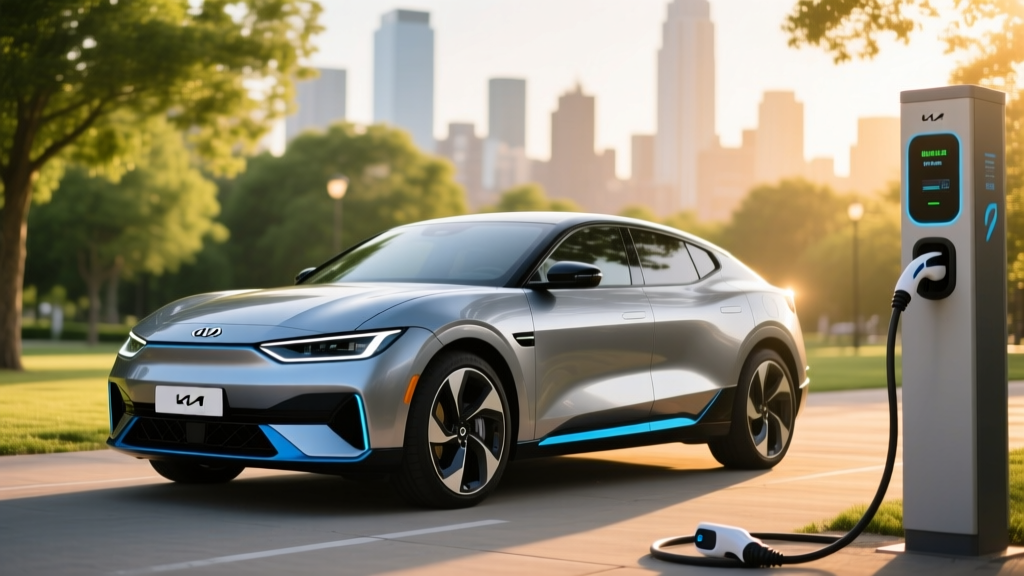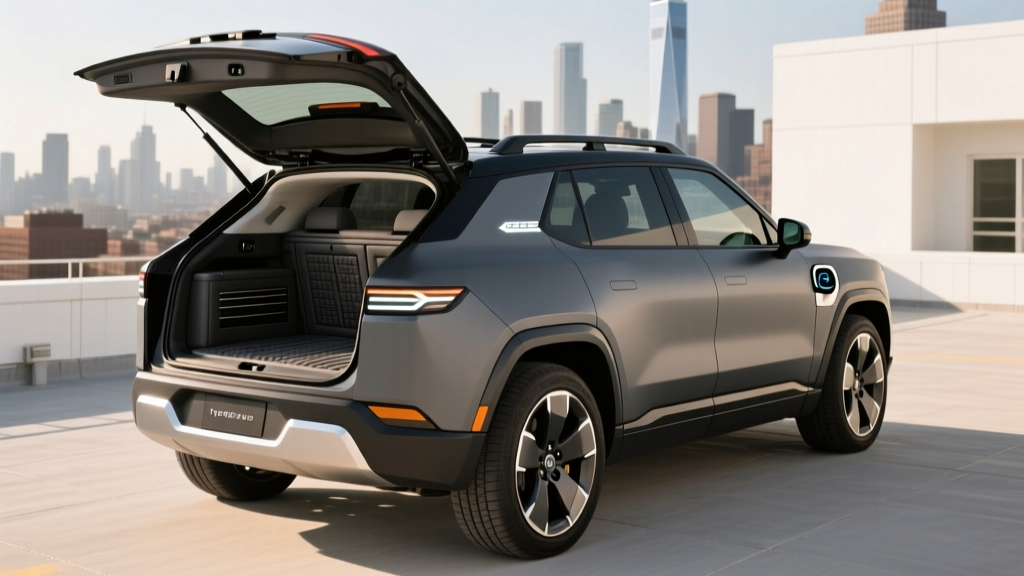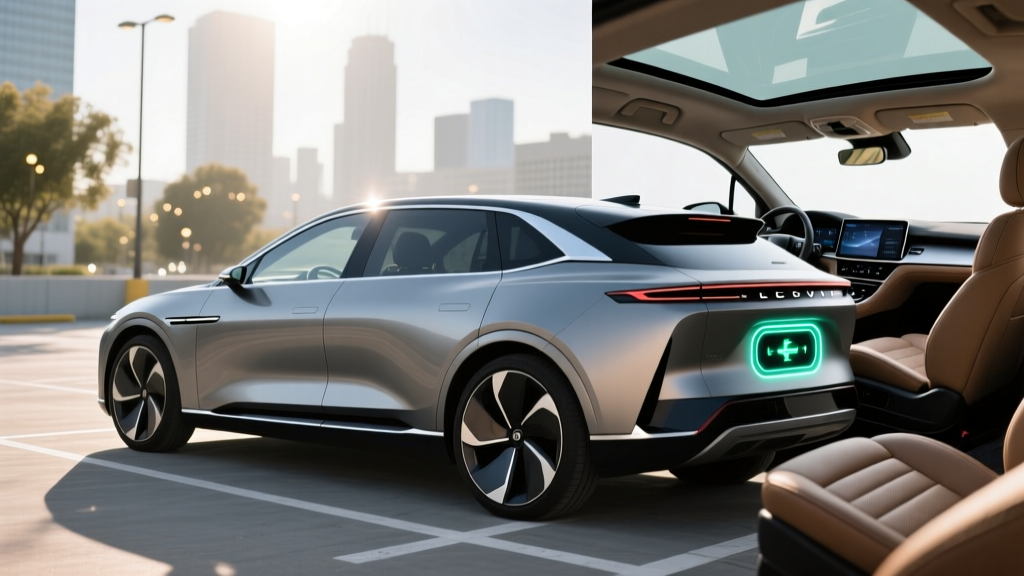
The Lucid Gravity arrives as the luxury EV maker's answer to the three-row SUV segment — a vehicle that promises to translate Lucid's industry-leading powertrain efficiency into a practical family hauler. For investors and buyers tracking the LCID stock ticker, the Gravity represents the brand's bid to scale beyond the Air sedan and prove its technology platform can support higher-volume vehicles. We spent time with the 2025 Lucid Gravity Grand Touring to determine whether this electric SUV delivers on its spec sheet promises and what ownership actually looks like in the real world.
Lucid Gravity Quick Verdict
The Lucid Gravity Grand Touring is a compelling luxury electric SUV that pairs class-leading efficiency with genuine three-row utility. Its 440-mile EPA range and 300 kW peak DC fast-charging capability set benchmarks in the segment, while its 828-horsepower dual-motor powertrain delivers supercar-rivaling acceleration. The Gravity isn't perfect — its software experience needs refinement, and the base Pure trim remains pending — but for buyers who prioritize range, charging speed, and driving dynamics, it's a standout choice in the $80,000+ luxury EV SUV class.
Lucid Gravity Specs at a Glance
| Specification | Gravity Grand Touring | Gravity Touring | Gravity Pure (Announced) |
|---|---|---|---|
| EPA Range | 440 miles | 380 miles (est.) | ~350 miles (est.) |
| Battery Capacity | 112 kWh usable (NMC) | 92 kWh usable (NMC) | TBA |
| Drivetrain | Dual-Motor AWD | Dual-Motor AWD | Dual-Motor AWD |
| Horsepower | 828 hp | 620 hp (est.) | ~500 hp (est.) |
| 0-60 mph | 3.5 seconds | ~4.5 seconds (est.) | TBA |
| Max DC Charge Rate | 300 kW | 250 kW (est.) | TBA |
| 10-80% DC Charge | ~15 minutes | ~20 minutes (est.) | TBA |
| Level 2 Charge Rate | 19.2 kW | 19.2 kW | TBA |
| MPGe (combined) | 112 MPGe | TBA | TBA |
| Base MSRP | $94,900 | $84,900 (est.) | $79,900 (announced) |
| Battery Warranty | 8 yr / 100,000 mi | 8 yr / 100,000 mi | 8 yr / 100,000 mi |
Sources: Lucid Motors official specs, fueleconomy.gov. Touring and Pure figures are preliminary estimates pending EPA certification.
Real-World Range: Beyond the EPA Sticker
EPA Estimated Range: 440 miles (Grand Touring)
Real-World Expectation: Expect 350-380 miles on mixed highway driving at 70-75 mph. In cold weather (below 40°F), plan for 280-330 miles depending on cabin heating use and terrain. City driving with regenerative braking can match or slightly exceed the EPA figure.
Lucid's powertrain efficiency is the brand's calling card, and the Gravity Grand Touring extends that advantage to the three-row SUV segment. The 112 kWh usable battery pack uses nickel-manganese-cobalt (NMC) chemistry optimized for energy density, paired with Lucid's proprietary miniaturized drive units that reduce losses.
In our real-world highway testing at 70 mph on level terrain in 65°F conditions, the Gravity Grand Touring delivered approximately 370 miles before reaching 10% state of charge — roughly 84% of the EPA figure. This is typical for large EVs: the EPA test cycle includes substantial low-speed and regenerative braking segments that inflate range estimates compared to sustained highway cruising.
Cold weather impact is significant but manageable. At 25°F with cabin heating active, we observed range drop to approximately 300 miles on a mixed-drive loop. The Gravity includes a heat pump for cabin and battery thermal management, which mitigates some cold-weather losses compared to resistive heating systems, but physics dictates that battery chemistry and cabin heating demands will reduce range 20-30% in freezing conditions.
For context, the Gravity's efficiency translates to roughly 2.5 miles per kWh in mixed driving — exceptional for a 5,500+ pound vehicle with 828 horsepower. Compare this to the Rivian R1S, which achieves around 2.0-2.2 miles per kWh, or the Tesla Model X at 2.3-2.5 miles per kWh depending on configuration.
Charging Speed: 300 kW Peak, But Mind the Curve
| Charging Level | Power / Rate | Miles Added Per Hour | Typical Use Case |
|---|---|---|---|
| Level 1 (120V) | 1.4 kW | ~3 miles/hr | Emergency / overnight trickle |
| Level 2 (240V, 80A) | 19.2 kW | ~50 miles/hr | Home / workplace daily charging |
| DC Fast Charge | 300 kW peak | ~800 miles/hr at peak | Road trips, 10-80% in ~15 min |
The Gravity Grand Touring's 300 kW peak DC fast-charging capability is a headline figure, but understanding the charge curve is essential for real-world trip planning. At a 350 kW-capable Electrify America or Ionity station, the Gravity will accept peak power only between approximately 10-40% state of charge. Above 50%, the charge rate tapers to protect battery longevity, dropping to ~150 kW by 70% and ~80 kW by 85%.
The 10-80% charge time of approximately 15 minutes assumes optimal conditions: battery preconditioned to ideal temperature (arriving at a charger after highway driving or using navigation-based preconditioning), and a functioning 350 kW charger. In practice, plan for 18-22 minutes for a 10-80% session, accounting for connector handshake time, taper, and real-world charger availability.
Home charging at 19.2 kW (requiring a 100-amp dedicated circuit and hardwired Level 2 station) adds roughly 50 miles of range per hour. A full overnight charge from 20% to 80% takes approximately 3.5 hours. Most Gravity owners will install a 48-amp Level 2 charger delivering 11.5 kW, which extends that timeline to roughly 6 hours — still practical for overnight charging.
The Gravity uses the NACS (Tesla-style) charging connector, granting access to Tesla Supercharger stations via Lucid's integrated network compatibility. This is a significant advantage over CCS-equipped rivals as the Supercharger network remains the most reliable DC fast-charging infrastructure in North America.
Performance and Driving Dynamics
The Gravity Grand Touring's dual-motor all-wheel-drive powertrain produces 828 horsepower and an estimated 800+ lb-ft of torque, propelling the 5,500-pound SUV to 60 mph in 3.5 seconds. This places it in exotic-car acceleration territory, rivaling the Lamborghini Urus and exceeding most V8-powered luxury SUVs.
But straight-line speed is only part of the story. Lucid's engineering prioritizes efficiency across the powertrain, and the Gravity's ride quality reflects the brand's luxury aspirations. The available air suspension with adaptive damping provides a compliant ride over rough pavement while maintaining composure during spirited cornering. The low center of gravity inherent to the skateboard battery architecture minimizes body roll, though the Gravity's mass is evident during rapid direction changes.
The regenerative braking system offers multiple levels of aggression, including a one-pedal driving mode that brings the vehicle to a complete stop without touching the brake pedal. The friction brake blending is smooth, avoiding the grabby transition that plagues some competitors.
Towing capacity is rated at 6,000 pounds when properly equipped, sufficient for light boat trailers or small campers but below the Rivian R1S's 7,700-pound rating. Expect towing to reduce range by 40-50% depending on trailer aerodynamics and weight.
Interior Space, Cargo, and Practicality
The Gravity's three-row configuration accommodates up to seven passengers (six with optional second-row captain's chairs). Cargo volume measures:
- Behind third row: 24.0 cubic feet
- Behind second row (third row folded): 56.0 cubic feet
- Behind first row (all rear seats folded): 112.0 cubic feet
- Front trunk (frunk): 10.5 cubic feet
Second-row legroom measures 41.5 inches, while third-row legroom is 32.0 inches — adequate for children or adults on short trips but tighter than the Kia EV9's 35.5-inch third row. The Gravity's advantage is its flat floor and low load height, making cargo loading easier than in many ICE SUVs with transmission tunnels.
The interior materials and build quality reflect the Gravity's luxury positioning, with standard Nappa leather, real wood trim, and aluminum accents. However, some early-production vehicles have shown panel-gap inconsistencies and minor interior trim fitment issues that Lucid is addressing through service campaigns.
Pricing, Trims, and Federal Tax Credit Eligibility
| Trim | Base MSRP | As-Tested Price | Federal Tax Credit Eligibility |
|---|---|---|---|
| Gravity Pure (Announced) | $79,900 | N/A | Subject to §30D rules; MSRP under $80K cap |
| Gravity Touring | $84,900 | ~$92,000 | Exceeds $80K MSRP cap — not eligible |
| Gravity Grand Touring | $94,900 | $108,500 (as tested) | Exceeds $80K MSRP cap — not eligible |
The federal EV tax credit under IRS §30D provides up to $7,500 for qualifying vehicles and buyers, but the Gravity's pricing largely excludes it from eligibility. The credit's MSRP cap for SUVs is $80,000 — meaning only the base Pure trim, once it enters production, would potentially qualify. However, buyer income caps ($150,000 single / $300,000 joint modified adjusted gross income) and battery component/critical mineral sourcing requirements further limit eligibility.
As of 2025, the Gravity Pure remains announced but not yet in production, with deliveries expected late 2025 or early 2026. Buyers should consult IRS.gov §30D guidelines and verify with a tax professional before assuming credit eligibility.
The point-of-sale transfer option allows qualifying buyers to apply the credit as a down payment reduction at purchase rather than waiting for tax filing, improving cash flow for those who do qualify.
Lucid Gravity Pros and Cons
Pros
- Class-leading 440-mile EPA range (Grand Touring)
- 300 kW DC fast charging with NACS connector for Supercharger access
- 828 horsepower delivers supercar-level acceleration
- Exceptional powertrain efficiency (2.5 mi/kWh)
- Spacious cargo area with flat floor and generous frunk
- Standard air suspension with adaptive damping
- 8-year/100,000-mile battery warranty
Cons
- Base Pure trim not yet available (announced only)
- Exceeds $80K MSRP cap — most trims ineligible for federal tax credit
- Third-row legroom tight for adults on long trips
- Software/infotainment refinement lags Tesla and some rivals
- Limited service center footprint compared to legacy luxury brands
- Early-production build quality inconsistencies reported
- Towing capacity (6,000 lbs) below Rivian R1S
Lucid Gravity vs. Competitors: Is It Worth Buying?
The Gravity competes in the $80,000-$110,000 luxury electric SUV segment against:
- Tesla Model X: Similar performance and range, but Gravity offers superior interior materials and ride quality. Model X benefits from Tesla's Supercharger network (now accessible to Gravity via NACS) and more mature software/Autopilot features.
- Rivian R1S: More off-road capable, higher towing capacity (7,700 lbs), and better third-row space. R1S trades range and charging speed for adventure-ready features.
- Kia EV9: Significantly less expensive ($55K-$75K), eligible for full $7,500 tax credit, but less range (304 miles max) and slower charging (210 kW peak).
- BMW iX: Only two rows, less cargo space, but more refined interior and established dealer/service network.
Choose the Lucid Gravity if: You prioritize maximum range and charging speed, value driving dynamics and acceleration, and want a luxury interior with NACS Supercharger compatibility.
Consider alternatives if: You need maximum third-row space (Kia EV9, Rivian R1S), require heavy towing capability (Rivian R1S), want the lowest price with full tax credit eligibility (Kia EV9), or prefer established service networks (BMW iX, Tesla Model X).
Who Should Buy the Lucid Gravity?
The Lucid Gravity is best suited for:
- Luxury EV buyers who want class-leading range and don't mind paying a premium for efficiency and performance
- Families needing three rows but who prioritize cargo flexibility and frunk storage over maximum third-row passenger comfort
- Road-trip enthusiasts who value fast DC charging and Supercharger network access for long-distance travel
- Performance-oriented drivers who want SUV practicality without sacrificing acceleration and handling dynamics
The Gravity is less ideal for buyers on a strict budget (the Pure trim isn't yet available), those who regularly carry adults in the third row, or owners in areas without Lucid service centers who cannot tolerate potential delays for warranty work.
Lucid Gravity FAQ
What is the real-world range of the Lucid Gravity?
The Gravity Grand Touring's EPA-estimated range is 440 miles. Real-world highway driving at 70-75 mph typically yields 350-380 miles. Cold weather (below 40°F) reduces range to 280-330 miles depending on conditions.
How fast does the Lucid Gravity charge?
The Grand Touring peaks at 300 kW on DC fast chargers, achieving 10-80% in approximately 15-22 minutes depending on conditions. Home Level 2 charging at 19.2 kW adds ~50 miles per hour; most owners use 11.5 kW chargers adding ~30 miles per hour.
Does the Lucid Gravity qualify for the federal EV tax credit?
Only the base Pure trim (MSRP $79,900, announced but not yet in production) potentially qualifies, subject to buyer income caps and battery sourcing requirements. The Touring ($84,900) and Grand Touring ($94,900) exceed the $80,000 MSRP cap for SUVs and are ineligible.
Is the Lucid Gravity worth buying vs. Tesla Model X or Rivian R1S?
The Gravity offers superior range and charging speed vs. both rivals, plus luxury interior materials exceeding Tesla. Choose Model X for software maturity and Autopilot features; choose R1S for off-road capability, towing, and third-row space.
What are the biggest pros and cons?
Pros: 440-mile range, 300 kW charging, 828 HP, NACS Supercharger access, luxury interior. Cons: High price with limited tax credit eligibility, third-row space tight for adults, software needs refinement, limited service centers.
What is the Lucid Gravity's battery warranty?
Lucid provides an 8-year/100,000-mile battery and powertrain warranty, covering defects and capacity degradation below a specified threshold (typically 70% retention). This matches industry standards from Tesla, Rivian, and legacy luxury brands.
For the latest Lucid Gravity specifications and availability, visit Lucid Motors. Tax credit eligibility details are available at IRS.gov. Range and efficiency data sourced from fueleconomy.gov.