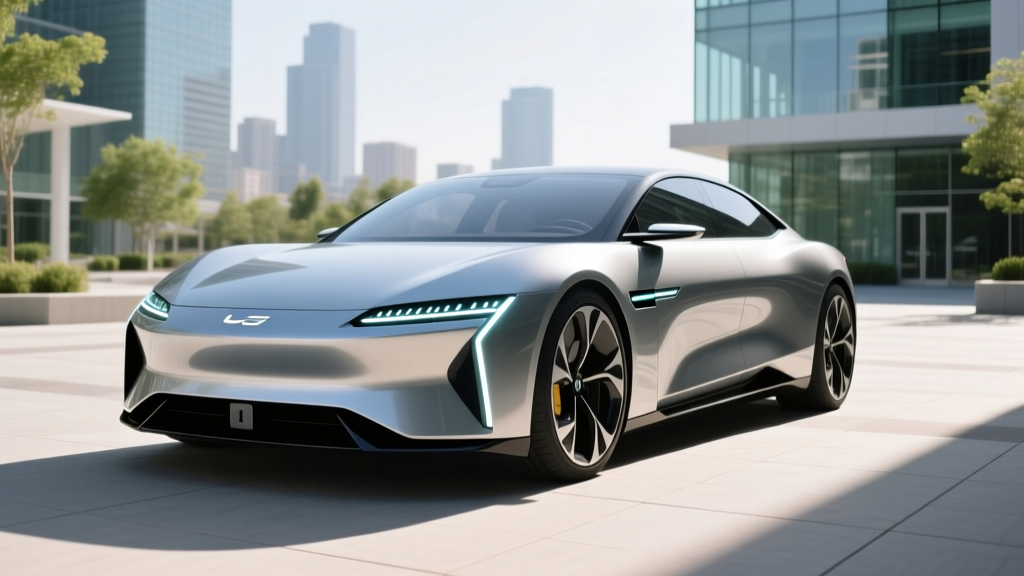
The Lucid Gravity has transitioned from a long-promised concept to a volume-reality. Following a significant Lucid Gravity EV production increase at the company's Casa Grande, Arizona factory through late 2025 and into 2026, delivery timelines have compressed from multi-month waits to a matter of weeks for many configurations. For buyers who have been watching from the sidelines, the question is no longer "when can I get one?" but "should I get one?"
As a three-row luxury electric SUV, the Gravity competes directly with the Tesla Model X, Rivian R1S, and the BMW iX in a segment where buyers demand genuine range, fast charging, and usable space. We've analyzed the finalized 2026 model-year specifications, real-world efficiency data, and ownership economics to deliver this comprehensive profile.
Lucid Gravity 2026: Core Specifications at a Glance
| Specification | Gravity Grand Touring AWD | Gravity Touring AWD |
|---|---|---|
| EPA Range | 440 miles | ~390 miles (est.) |
| Battery Capacity (usable) | ~118 kWh (NMC) | ~100 kWh (NMC) |
| Horsepower | 828 hp | ~600 hp (est.) |
| 0-60 mph | 3.5 seconds | ~4.5 seconds (est.) |
| Drivetrain | Dual-motor AWD | Dual-motor AWD |
| Peak DC Fast Charge | 300 kW (900V architecture) | ~250 kW |
| 10-80% DC Charge Time | ~20 minutes | ~24 minutes |
| Level 2 Home Charging | 19.2 kW (up to 80 mi/hr) | 19.2 kW |
| MPGe (Combined) | ~112 MPGe (est.) | ~105 MPGe (est.) |
| Efficiency | ~30 kWh/100 mi | ~32 kWh/100 mi |
| Towing Capacity | 6,000 lbs | 6,000 lbs |
| Base MSRP | $94,900 | $79,900 |
| Battery/Powertrain Warranty | 8 yr / 100,000 mi | 8 yr / 100,000 mi |
Note: Touring trim specs marked (est.) are based on Lucid's preliminary disclosures as of early 2026 and may be refined. Grand Touring figures reflect finalized EPA submissions. Source: Lucid Motors Official.
Real-World Range: What 440 EPA Miles Actually Means
Real-World Highway (70-75 mph): ~350-375 miles
Real-World Cold Weather (below 32°F): ~310-340 miles
Mixed Commute: ~390-420 miles
Lucid's engineering reputation rests on class-leading efficiency, and the Gravity largely delivers. The Grand Touring's 440-mile EPA figure is the highest of any production three-row electric SUV on the market. But as with every EV, the sticker number requires context.
At sustained highway speeds of 70-75 mph, aerodynamic drag dominates energy consumption. The Gravity's bluff-front SUV profile, despite active aero elements, can't match the sedan efficiency of the Air. Expect roughly 15-20% range reduction on long interstate runs — putting real highway range in the 350-375 mile window. That's still exceptional and enough to cover Los Angeles to Las Vegas or Boston to New York with minimal charging anxiety.
Cold-weather performance is mitigated by a standard heat pump, which recovers waste heat from the powertrain to warm the cabin rather than relying solely on resistive heating. In sub-freezing conditions, plan for a 20-25% reduction. The battery preconditioning system warms the pack when a DC fast charger is navigated to, preserving charge speed in cold temperatures — a critical feature for winter road trips.
The Gravity uses NMC (nickel manganese cobalt) chemistry, chosen for its high energy density. This is the same chemistry family used in the Air and by most long-range EVs. The trade-off versus LFP (lithium iron phosphate) is that NMC prefers not to sit at 100% state of charge for extended periods — Lucid recommends daily charging to 80-90% for routine use and reserving 100% for road trips.
Charging Speed: 900V Architecture Delivers
| Charging Level | Power | Miles Added per Hour | Notes |
|---|---|---|---|
| Level 1 (120V household) | ~1.4 kW | ~4 mi/hr | Emergency/trickle only |
| Level 2 (240V, 48A circuit) | 11.5 kW | ~38 mi/hr | Standard home install |
| Level 2 (240V, 80A circuit) | 19.2 kW | ~65-80 mi/hr | Requires upgraded panel/wiring |
| DC Fast Charge (peak) | 300 kW | N/A | 900V system, 10-80% in ~20 min |
| DC Fast Charge (sustained) | ~150-200 kW avg | N/A | Real-world average across curve |
The Gravity's 900-volt electrical architecture is one of the highest in production, rivaled only by Hyundai/Kia's E-GMP platform and Porsche's Taycan. Higher voltage means the vehicle can accept more power (kW) at lower amperage, reducing heat and improving charge efficiency.
At a capable 350 kW DC fast charger (such as Electrify America's latest stalls or Tesla Supercharger V4 with NACS adapter), the Gravity Grand Touring peaks at approximately 300 kW. However — and this is critical — peak rate is not sustained rate. The charge curve tapers progressively above 50% state of charge to protect battery health. The 10-80% time of roughly 20 minutes represents an average rate closer to 150-200 kW across that window.
Above 80%, charging slows dramatically to prevent lithium plating. Going from 80-100% can take nearly as long as 10-80%. For road-trip planning, plan your stops around the 10-80% window and skip the temptation to top off unless you'll be parked for a meal.
At home, the Gravity's 19.2 kW onboard charger is among the fastest available. If your electrical panel supports an 80-amp dedicated circuit (100-amp breaker), you can add roughly 65-80 miles of range per hour of charging — meaning a full overnight session easily replenishes a day's driving. Most homes will require a panel upgrade to support this, which can add $1,500-$3,500 to installation costs. A more common 48-amp circuit (60-amp breaker) still delivers a respectable 11.5 kW and ~38 miles per hour.
Performance, Handling, and Drivetrain
The Grand Touring's 828 horsepower and 3.5-second 0-60 time make the Gravity one of the quickest three-row SUVs ever produced — gas or electric. Dual permanent-magnet motors provide instant torque to all four wheels, with torque vectoring that shifts power between axles in milliseconds for traction and cornering stability.
Despite a curb weight north of 6,000 pounds, the Gravity's low center of gravity (battery pack under the floor) and available adaptive air suspension keep body roll well-controlled. The air suspension also enables adjustable ride height — lower for highway efficiency, higher for rough roads or light off-pavement use.
The 6,000-pound towing capacity is competitive with the Rivian R1S and sufficient for most boat, horse, or utility trailers. Note that towing at capacity will reduce range by roughly 40-50%, bringing real-world towing range down to approximately 200-220 miles for the Grand Touring.
Interior Space, Cargo, and Practicality
The Gravity's packaging is where the production increase matters most for families — Lucid has prioritized three-row usability over sleek-roofline styling compromises.
- Seating: Up to 7 passengers (standard second-row bench) or 6 (optional captain's chairs)
- Third-row legroom: ~33 inches — adequate for children and shorter adults on trips under an hour
- Second-row legroom: ~40 inches — generous for adults
- Cargo behind third row: ~20 cu ft
- Cargo behind second row (third row folded): ~58 cu ft
- Max cargo (all rear seats folded): ~105 cu ft
- Frunk (front trunk): ~12 cu ft — large enough for a carry-on or charging cables
The frunk is a notable practicality win that many competitors, including the BMW iX, lack entirely. Combined with the flat load floor when seats are folded, the Gravity offers genuine cargo versatility for family road trips, hardware store runs, or outdoor gear.
Pricing, Trims, and Federal Tax Credit Eligibility
| Trim | Base MSRP | Est. As-Tested | §30D Federal Credit Eligibility |
|---|---|---|---|
| Gravity Touring | $79,900 | $83,000-$87,000 | Not eligible (MSRP exceeds $80,000 SUV cap) |
| Gravity Grand Touring | $94,900 | $99,000-$110,000 | Not eligible (MSRP exceeds $80,000 SUV cap) |
| Gravity Pure (upcoming) | ~$69,900 (announced) | TBD | Potentially eligible if MSRP stays under $80,000 |
This is the hard truth for tax-credit seekers: under current IRS §30D rules, the federal clean vehicle credit is capped at an MSRP of $80,000 for SUVs, vans, and pickup trucks. Both the Gravity Touring ($79,900 base) and Grand Touring ($94,900) exceed or sit right at this threshold once destination charges and common options are factored in.
The Touring trim's $79,900 base price technically falls under the cap, but adding any factory options (premium paint, upgraded wheels, ADAS packages) pushes the MSRP above $80,000 and disqualifies the vehicle. Buyers should confirm the exact MSRP on their build sheet before assuming credit eligibility.
Even for vehicles under the MSRP cap, §30D eligibility also requires:
- Buyer adjusted gross income below $300,000 (joint) / $150,000 (single)
- Battery components and critical minerals meeting North American sourcing thresholds (phased in annually)
- Vehicle final assembly in North America (Gravity qualifies — assembled in Arizona)
The forthcoming Gravity Pure trim, announced at approximately $69,900, is the best candidate for federal credit eligibility. However, production of the Pure has been delayed and Lucid has not confirmed a firm delivery date as of early 2026. Consult a tax professional before making purchase decisions based on credit assumptions.
Technology, Driver Assistance, and Software
The Gravity features Lucid's latest glass-cockpit interface — a curved 34-inch 6K display spanning the driver's field of view, replacing traditional instrument clusters and central stacks. The system runs Lucid's proprietary software with over-the-air update capability, native navigation with charge-aware route planning, and wireless Apple CarPlay/Android Auto.
Driver assistance comes via Lucid's DreamDrive Pro system, which uses a sensor suite of cameras, radar, and LiDAR. Features include adaptive cruise control, lane centering, automatic emergency braking, blind-spot monitoring, and highway assist. Important: DreamDrive Pro is an SAE Level 2 system — it requires continuous driver engagement and does not constitute autonomous driving. Hands must remain on or near the wheel, and eyes on the road.
The Lucid Gravity's DreamDrive Pro assists with steering and speed on highways, but the driver is fully responsible for monitoring the environment and must be prepared to take over at any moment. This is the same SAE level as Tesla Autopilot, GM Super Cruise, and Ford BlueCruise.
A unique Gravity feature is the available "Surrealist Mode" ambient lighting and soundscape that transforms the cabin atmosphere during charging stops — a small but appreciated touch for families spending 20 minutes at a DC fast charger.
Pros, Cons, and Competitive Verdict
- Class-leading 440-mile EPA range (Grand Touring)
- 300 kW peak DC fast charging on 900V architecture
- 19.2 kW Level 2 onboard charger — fastest in class
- Spacious three-row interior with genuine frunk
- 828 hp and 3.5-sec 0-60 in Grand Touring
- 6,000-lb towing capacity
- Arizona-built with strong build quality reports from 2026 production ramp
- MSRP above §30D tax credit cap for most trims
- Lucid's service center network still limited vs. Tesla/BMW
- Third-row space tight for adults on long trips
- High starting price vs. Rivian R1S ($75,900) and Tesla Model X ($79,990)
- DreamDrive Pro ADAS is capable but not class-leading vs. GM Super Cruise
- Pure trim availability remains uncertain
Competitive positioning: The Gravity Grand Touring's range and charging speed are unmatched in the three-row electric SUV segment. The Rivian R1S (quad-motor, ~410 miles EPA, 200 kW DC charging) offers better off-road capability and a more robust adventure-oriented ecosystem. The Tesla Model X benefits from the Supercharger network and gullwing novelty but trails on range (~348 miles) and interior material quality. The BMW iX is a five-seater and doesn't directly compete on passenger capacity.
Who the Gravity suits best: Families who prioritize maximum range for road trips, want genuine three-row seating, value premium interior quality, and have access to home Level 2 charging. It's less ideal for buyers who need the lowest possible entry price, rely heavily on the federal tax credit, or live far from a Lucid service center.
Frequently Asked Questions
What is the real-world range of the Lucid Gravity?
The Grand Touring's 440-mile EPA rating translates to roughly 350-375 miles at highway speeds (70-75 mph) and 310-340 miles in cold weather below freezing. Mixed city/highway driving in moderate temperatures can approach the EPA figure.
How fast does the Lucid Gravity charge at home and on the road?
At a 350 kW DC fast charger, the Gravity peaks at 300 kW and charges from 10-80% in approximately 20 minutes. At home on a 240V/80A Level 2 circuit, it charges at up to 19.2 kW, adding 65-80 miles of range per hour.
Does the Lucid Gravity qualify for the $7,500 federal EV tax credit?
Most configurations do not. The §30D credit caps SUV eligibility at $80,000 MSRP. The Touring trim starts at $79,900 but options push it over. The upcoming Pure trim (~$69,900) may qualify, but availability is unconfirmed. Income limits and battery-sourcing rules also apply. See IRS guidelines.
Is the Lucid Gravity worth buying over the Rivian R1S or Tesla Model X?
If maximum range and fastest charging are your top priorities, the Gravity Grand Touring is the segment leader. Choose the R1S for off-road capability and adventure features, or the Model X for Supercharger network access and brand familiarity.
What is the Lucid Gravity's battery warranty?
Lucid provides an 8-year/100,000-mile battery and powertrain warranty, covering defects and capacity degradation below a specified threshold (typically 70% retention). This is competitive with industry standards.
How has the Lucid Gravity production increase affected delivery times?
The 2026 production ramp at Lucid's AMP-1 factory in Casa Grande, AZ has reduced delivery timelines from 4-6 months (at 2025 launch) to approximately 4-8 weeks for most Grand Touring and Touring configurations as of early 2026. The Pure trim remains pending.
What are the biggest drawbacks of the Lucid Gravity?
The primary concerns are pricing above the federal tax credit threshold, Lucid's still-growing service center network, and third-row space that's tighter than some competitors. Early-production software bugs have also been reported by some owners, though OTA updates have addressed most issues.