The Lucid Gravity Arrives Abroad: What European Buyers Need to Know
The Lucid Gravity, the brand's first three-row luxury SUV, has been turning heads in the U.S. since deliveries began. Now, with Lucid Gravity European expansion officially underway for the 2026 model year, the Silicon Valley automaker is betting its flagship SUV can compete against entrenched rivals like the BMW iX, Mercedes-Benz EQS SUV, and Rivian R1S on the continent. But European buyers face a different calculus than Americans: stricter charging infrastructure, CCS2 connector mandates, narrower streets, and no access to the U.S. §30D federal tax credit.
This review breaks down everything we know about the Lucid Gravity as it crosses the Atlantic — including EPA and WLTP range figures, real-world charging performance, battery chemistry, interior practicality, and how it stacks up against the European luxury EV SUV establishment. Whether you're reading from Munich, Amsterdam, or simply tracking Lucid's global ambitions from the U.S., this is the data-driven deep dive you need.
Real-World Expectation: ~350–380 miles at sustained highway speeds (70–80 mph); expect ~300–330 miles in cold weather (below 32°F) with cabin heating. WLTP figures for European-market models are expected to rate higher (~700+ km) due to the WLTP test cycle's more favorable methodology, but real-world results will align closely with the U.S. figures above.
Spec Sheet: Lucid Gravity 2026 at a Glance
| Specification | Gravity Grand Touring AWD | Gravity Touring AWD |
|---|---|---|
| EPA Range (est.) | 440 miles | ~390 miles |
| Battery Capacity | ~118 kWh usable (NMC lithium-ion) | ~105 kWh usable (NMC) |
| Drivetrain | Dual-motor AWD | Dual-motor AWD |
| Horsepower | 828 hp | ~600 hp |
| 0–60 mph | 3.5 seconds | ~4.5 seconds |
| Top Speed | 155 mph (electronically limited) | 145 mph |
| Max DC Fast Charge | 300+ kW (900V architecture) | ~250 kW |
| 10–80% DC Charge Time | ~20 minutes | ~25 minutes |
| Level 2 Home Charge Rate | 19.2 kW (AC) | 19.2 kW (AC) |
| Level 2 Miles per Hour | ~55–60 mi/hr at 19.2 kW | ~55–60 mi/hr |
| Efficiency (MPGe est.) | ~115 MPGe combined | ~110 MPGe combined |
| Efficiency (kWh/100mi) | ~29 kWh/100mi | ~31 kWh/100mi |
| Seating | Up to 7 passengers | Up to 7 passengers |
| Cargo (behind 3rd row) | ~22 cu ft | ~22 cu ft |
| Cargo (3rd row folded) | ~60 cu ft | ~60 cu ft |
| Cargo (max, all rows folded) | ~105 cu ft | ~105 cu ft |
| Towing Capacity | 6,000 lbs | 6,000 lbs |
| Base MSRP (U.S.) | $119,900 | $94,900 |
| Warranty (Battery/Powertrain) | 8 years / 100,000 miles | 8 years / 100,000 miles |
| Warranty (Vehicle) | 6 years / 75,000 miles | 6 years / 75,000 miles |
Note: European pricing will differ due to VAT (typically 19–25% depending on country), import duties, and regional homologation costs. Lucid has indicated European pricing will be announced on a country-by-country basis as pre-orders open.
Battery, Range, and Efficiency: Lucid's Proven Edge
Lucid's core competitive advantage has always been powertrain efficiency. The Gravity leverages the same 900-volt electrical architecture and miniaturized drive units that give the Lucid Air sedan class-leading range. The Grand Touring variant uses an NMC (nickel-manganese-cobalt) lithium-ion battery pack with approximately 118 kWh of usable capacity. Lucid does not offer an LFP (lithium iron phosphate) option for the Gravity — the energy density of NMC chemistry is necessary to achieve 440 miles of EPA range in a vehicle of this size and weight.
Efficiency is where the Gravity separates itself from competitors. At an estimated ~29 kWh per 100 miles, the Gravity Grand Touring is significantly more efficient than the Rivian R1S (~42 kWh/100mi) and the Mercedes EQS 580 SUV (~38 kWh/100mi). This matters for European buyers facing some of the highest electricity costs in the world — particularly in Germany, Denmark, and the UK, where public DC charging can exceed €0.60/kWh.
Real-World Range Considerations
The 440-mile EPA figure is impressive on paper, but real-world results depend heavily on driving conditions:
- Highway cruising (70–80 mph): Expect 350–380 miles. Aerodynamic drag increases exponentially at higher speeds, and the Gravity's SUV profile is less slippery than the Air sedan.
- Cold weather (below freezing): Battery chemistry and cabin heating reduce range by 20–30%. Expect ~300–330 miles in winter conditions. The Gravity includes a heat pump, which mitigates some cabin-heating losses compared to resistive heaters.
- City driving with regen: This is where the Gravity shines. Stop-and-go driving with aggressive regenerative braking can push real-world results close to or even above the EPA estimate.
- Towing: With a 6,000-lb trailer, expect range to drop by 40–50%, yielding roughly 200–250 miles. This is consistent with all large EV SUVs.
For European buyers planning Autobahn runs or Alpine passes, the combination of high efficiency and a large battery means fewer charging stops — a genuine advantage on routes where Ionity and Fastned station spacing can exceed 150 km in rural areas.
Charging Performance: 900V Architecture Meets European Networks
The Gravity's 900-volt architecture is one of the highest in production (matched only by Hyundai/Kia's E-GMP platform and Porsche's Taycan). Higher voltage allows faster charging at lower current, reducing heat buildup and improving sustained charge rates.
| Charging Method | Power / Rate | Speed |
|---|---|---|
| DC Fast Charge (peak) | 300+ kW | 10–80% in ~20 min (Grand Touring) |
| DC Fast Charge (sustained avg.) | ~200–220 kW | ~12–14 miles of range per minute |
| Level 2 Home (19.2 kW / 80A) | 19.2 kW | ~55–60 miles per hour of charging |
| Level 2 Home (11.5 kW / 48A) | 11.5 kW | ~33–35 miles per hour of charging |
| Level 1 (120V / 12A) | ~1.4 kW | ~4 miles per hour (emergency only) |
European Charging Compatibility
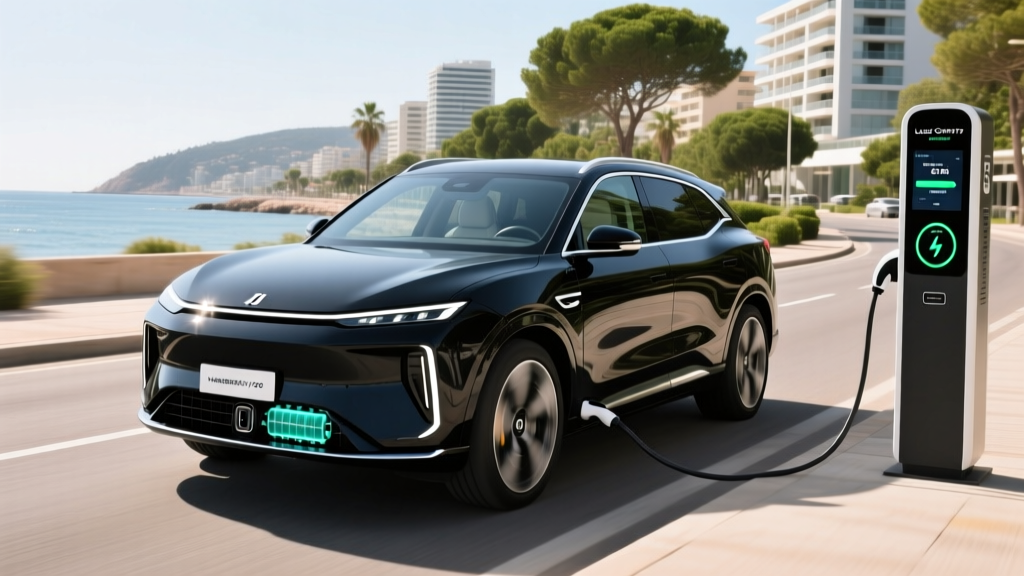
European-market Gravity models will be equipped with the CCS2 connector, the standard across the EU, UK, and most non-North American markets. This is critical: it means full compatibility with Ionity (350 kW stalls), Fastned (up to 400 kW on newer stations), Shell Recharge, and Tesla Superchargers that have opened to non-Tesla vehicles in Europe via the CCS2 standard.
At a 350 kW Ionity stall, the Gravity Grand Touring should sustain peak charging rates through the mid-state-of-charge window, tapering above 80% SoC as the battery management system protects cell longevity. In practice, a 10–80% charge in approximately 20 minutes means adding roughly 300 miles of range during a typical rest stop — competitive with the fastest-charging EVs on the market.
Home charging in Europe: Many European homes have three-phase AC power (400V), which supports the Gravity's 19.2 kW onboard charger. However, some older residential installations may be limited to 11 kW (16A three-phase) or even 7.4 kW (single-phase). Buyers should have an electrician assess their panel capacity before delivery. At 19.2 kW, a full 0–100% charge takes roughly 6–7 hours — ideal for overnight charging on off-peak electricity tariffs common across Europe.
Interior, Technology, and the Lucid User Experience
The Gravity's cabin is designed around a 34-inch curved glass display that stretches across the dashboard — a single, seamless panel handling instrumentation, infotainment, and climate controls. Lucid's software platform supports over-the-air updates, and the interface is among the most responsive in the luxury EV segment.
Passenger and Cargo Practicality
As a three-row SUV, the Gravity targets families who need genuine seven-passenger seating:
- Front legroom: ~41.5 inches
- Second-row legroom: ~39.0 inches
- Third-row legroom: ~32.5 inches (usable for children or short-trip adults; tight for long journeys)
- Frunk (front trunk): ~10 cu ft — large enough for a carry-on suitcase or charging cables
The ~22 cu ft behind the third row is competitive with the Rivian R1S and BMW iX (which only offers five seats). Fold the third row and you get ~60 cu ft; fold everything flat and the Gravity offers a van-like ~105 cu ft of cargo volume.
Driver Assistance: SAE Level 2 (Not Self-Driving)
The Gravity ships with Lucid's DreamDrive Pro suite, which includes adaptive cruise control, lane-centering assist, automated emergency braking, blind-spot monitoring, and a 360-degree camera system. DreamDrive Pro operates at SAE Level 2 — meaning the driver must remain fully engaged, with hands on the wheel and eyes on the road, at all times. Lucid has not announced a hands-free driving system comparable to GM's Super Cruise or Ford's BlueCruise for the Gravity as of early 2026.
Pricing, Trims, and Tax Credit Eligibility
The Lucid Gravity is positioned as a premium luxury SUV, and its pricing reflects that ambition. Here's the U.S. pricing structure for the 2026 model year:
| Trim | Base MSRP (U.S.) | §30D Tax Credit Eligible? | Effective Price (with credit) |
|---|---|---|---|
| Gravity Touring AWD | $94,900 | No — exceeds $80,000 SUV MSRP cap | $94,900 |
| Gravity Grand Touring AWD | $119,900 | No — exceeds $80,000 SUV MSRP cap | $119,900 |
| Gravity Pure (announced, base) | ~$79,900 | Potentially — at MSRP cap, subject to income + sourcing rules | ~$72,400 (if eligible) |
Key tax credit caveats: Under IRS §30D rules, SUVs are capped at an $80,000 MSRP limit. The Touring and Grand Touring trims exceed this cap and are ineligible for the federal credit. The upcoming Gravity Pure trim may qualify, but buyers must also meet adjusted gross income limits ($300,000 joint / $150,000 single), and the vehicle must satisfy battery component and critical mineral sourcing requirements that have tightened annually. Always verify current eligibility at IRS.gov and consult a tax professional before purchasing.
European Pricing Outlook
European buyers will not have access to the U.S. §30D credit. However, several EU countries offer their own EV incentives — Germany's Umweltbonus (recently restructured), France's ecological bonus, and Norway's VAT exemption for EVs, for example. These vary significantly by country and change frequently. Expect European Gravity pricing to start around €95,000–€110,000 for the Touring trim after VAT, with the Grand Touring pushing past €130,000, depending on local duties and homologation costs.
Lucid Gravity European Expansion: Timeline and Market Strategy
Lucid has confirmed that European deliveries of the Gravity are targeted for late 2026, beginning with key markets:
- Norway — Europe's most EV-friendly market, with VAT exemptions and a mature charging network
- Germany — Lucid's European headquarters are in Munich; the brand has been building its retail and service presence here since 2023
- Netherlands — strong EV adoption and favorable tax treatment for company-car EVs
- United Kingdom — right-hand-drive versions are expected but may follow the initial left-hand-drive launch
- Switzerland and Sweden — likely in the first or second wave based on Lucid's Air sedan rollout pattern
Lucid's European retail model mirrors Tesla's: direct-to-consumer sales through Lucid Studios and online configuration, bypassing traditional dealerships. Service is handled through Lucid Service Centers and a mobile service fleet. As of early 2026, Lucid operates Studios in Munich, Berlin, Zurich, Amsterdam, and Oslo, with more planned ahead of the Gravity's arrival.
The Gravity will face stiff competition in Europe. The BMW iX is a home-market favorite, the Mercedes EQS SUV offers comparable luxury, and the Rivian R1S is expected to begin its own European expansion around the same timeframe. Lucid's differentiators — superior efficiency, faster charging, and sedan-like refinement in an SUV package — will need to be communicated clearly to European buyers unfamiliar with the brand.
Pros and Cons: The Honest Assessment
Pros
- Class-leading efficiency (~29 kWh/100mi) reduces charging costs and stops
- 300+ kW DC fast charging with 900V architecture — among the fastest SUVs
- 440-mile EPA range (Grand Touring) is best-in-class for a three-row EV SUV
- Genuine seven-passenger seating with usable third row
- 105 cu ft max cargo volume with all rows folded
- Stunning 34-inch curved glass cockpit display
- 6,000-lb towing capacity
- Heat pump standard for improved cold-weather efficiency
Cons
- Base MSRP above $94,900 — no federal tax credit for most trims
- Lucid's European service network is still limited compared to BMW or Mercedes
- No hands-free driving system (Level 2 only) — rivals offer more advanced ADAS
- Brand recognition in Europe is low; resale value is uncertain
- Third-row legroom (~32.5 in) is tight for adults on long trips
- Right-hand-drive availability for UK/Australia not yet confirmed
- European pricing likely to be significantly higher than U.S. MSRP due to VAT and duties
Gravity vs. the Competition: European Luxury EV SUV Rivals
| Spec | Lucid Gravity GT | BMW iX xDrive50 | Mercedes EQS 580 SUV | Rivian R1S Dual-Motor |
|---|---|---|---|---|
| EPA Range | 440 mi | ~324 mi | ~305 mi | ~352 mi |
| Battery (usable kWh) | ~118 kWh | ~105 kWh | ~108 kWh | ~129 kWh |
| Max DC Charge kW | 300+ kW | ~200 kW | ~200 kW | ~220 kW |
| 10–80% Time | ~20 min | ~34 min | ~31 min | ~28 min |
| 0–60 mph | 3.5 sec | 4.4 sec | 4.4 sec | 4.5 sec |
| Seating | 7 | 5 | 5 (optional 7) | 7 |
| Base MSRP (U.S.) | $119,900 | $87,250 | $104,400 | $84,900 |
| Efficiency (kWh/100mi) | ~29 | ~37 | ~38 | ~42 |
The Gravity's advantages are clear: more range, faster charging, better efficiency, and seven seats standard. The BMW iX counters with a much lower price, broader European service infrastructure, and stronger brand cachet. The Rivian R1S offers competitive range and genuine off-road capability that the Gravity doesn't target. The Mercedes EQS SUV leans harder into traditional luxury materials and ride quality.
Who Should Buy the Lucid Gravity?
- You prioritize maximum range and charging speed in a three-row SUV
- You drive long distances frequently (Autobahn, cross-country, Nordic road trips)
- You want EV efficiency that minimizes charging costs in high-electricity-price markets
- You need seven seats but don't want a minivan or a body-on-frame truck
- You're early-adopter comfortable with a newer brand and limited service centers
- Budget is a primary concern — the BMW iX and Rivian R1S start $25,000–$35,000 lower
- You need hands-free highway driving (GM Super Cruise or Ford BlueCruise vehicles)
- You want an established service network across rural Europe
- You need a right-hand-drive vehicle immediately
Frequently Asked Questions
What is the real-world range of the Lucid Gravity?
The EPA estimates 440 miles for the Grand Touring AWD on 20-inch wheels. In real-world highway driving at 70–80 mph, expect 350–380 miles. In cold weather (below 32°F), range drops to approximately 300–330 miles. European WLTP figures will likely rate higher (~700+ km), but real-world driving will match the U.S. estimates closely.
How fast does the Lucid Gravity charge?
The Grand Touring supports peak DC fast charging above 300 kW via its 900V architecture, achieving a 10–80% charge in approximately 20 minutes. At home on a 19.2 kW Level 2 charger, the Gravity adds roughly 55–60 miles of range per hour, enabling a full overnight charge in 6–7 hours.
Does the Lucid Gravity qualify for the U.S. federal EV tax credit?
The Touring ($94,900) and Grand Touring ($119,900) trims exceed the §30D MSRP cap of $80,000 for SUVs and are ineligible. The upcoming Gravity Pure (~$79,900) may qualify, but buyers must also meet income limits ($300K joint / $150K single) and the vehicle must satisfy battery sourcing requirements. European buyers do not have access to the U.S. credit. Check current rules at IRS.gov.
When will the Lucid Gravity be available in Europe?
Lucid targets late 2026 for initial European deliveries, beginning with Norway, Germany, the Netherlands, and likely Switzerland and Sweden. UK right-hand-drive availability has not been confirmed as of early 2026.
Is the Lucid Gravity worth buying vs. the BMW iX or Rivian R1S?
If range, efficiency, and charging speed are your top priorities, the Gravity is objectively superior — 440 miles of range and 300+ kW charging outclass both rivals. However, the BMW iX starts ~$32,000 lower and has a far more established European service network. The Rivian R1S offers competitive range at a lower price with genuine off-road capability. The Gravity is the tech-forward choice for buyers who value efficiency above brand heritage.
What is the Lucid Gravity's battery warranty?
Lucid covers the Gravity's battery and powertrain for 8 years or 100,000 miles, whichever comes first. The battery warranty guarantees retention above a specified capacity threshold (typically 70–80% of original capacity, per Lucid's warranty documentation). The general vehicle warranty covers 6 years or 75,000 miles.
Can the Lucid Gravity use Tesla Superchargers in Europe?
Yes. In Europe, many Tesla Supercharger stations are already open to non-Tesla EVs via the CCS2 standard, which the European-market Gravity will use. Lucid owners can access these stalls through the Tesla app (non-Tesla charging flow). In the U.S., Lucid vehicles use the NACS connector (or adapter) for Supercharger access as of 2025.
Sources: EPA range and efficiency data via fueleconomy.gov; Lucid Gravity specifications from Lucid Motors official site; §30D tax credit rules from IRS.gov. European pricing and availability are preliminary and subject to change. Always verify specs with your local Lucid Studio before ordering.