If any EV proves that a three-row luxury SUV doesn't have to sacrifice efficiency for mass, it's the Lucid Gravity Dream Edition. Built on the same miniaturized powertrain architecture that gave the Air sedan its record-breaking efficiency, the Gravity is Lucid's bid to take on the Tesla Model X, Rivian R1S, and Mercedes EQS SUV — while delivering range numbers they simply can't match. We spent time with the flagship Dream Edition trim to find out whether its sticker price is justified by real-world capability.
Quick Verdict: A Tech-Forward Family Hauler With Class-Leading Range
The 2026 Lucid Gravity Dream Edition earns its premium with best-in-class EPA range, blistering acceleration, and one of the fastest charging architectures on sale. It's not perfect — the second-row captain's chairs limit seating to six, the Dream Edition's six-figure price puts it out of reach for most buyers, and Lucid's service-center footprint is still growing. But for households that want a genuine 400+ mile cruiser with three rows, this is currently the only EV that delivers.
Real-World Range Reality Check
EPA estimated: 440 miles (Dream Edition, 20-inch wheels)
Real-world expectation: ~360–390 miles on mixed highway driving at 70–75 mph; ~310–340 miles in sustained sub-freezing temperatures with cabin heat. Lucid's heat pump and thermal management system help mitigate winter losses, but physics still applies. Expect closer to the EPA number in mild-weather city/suburban driving with regen engaged.
Range, Battery, and Efficiency: The Numbers That Matter
The Gravity Dream Edition uses a 112 kWh usable battery pack (approximately 118 kWh gross) built with NMC (nickel manganese cobalt) pouch cells supplied by LG Energy Solution and Samsung SDI. Lucid's miniaturized motor and inverter design allows more battery volume within the same footprint — the same philosophy that gave the Air Grand Touring its 516-mile EPA rating.
| Spec | Value |
|---|---|
| EPA Range | 440 miles (20" wheels) |
| Battery (usable / gross) | 112 kWh / ~118 kWh, NMC |
| Drivetrain | Dual-motor AWD |
| Horsepower | 828 hp |
| 0–60 mph | 3.5 seconds |
| Top Speed | 145 mph (electronically limited) |
| Max DC Fast Charge | ~300+ kW (900V architecture) |
| 10–80% DC Charge Time | ~20 minutes (optimal conditions) |
| Level 2 Home Charge (AC) | 19.2 kW onboard charger (~70 mi/hr) |
| Efficiency (EPA combined) | ~112 MPGe / ~30 kWh/100 mi |
| Towing Capacity | 6,000 lbs |
| Base MSRP (Dream Edition) | $119,900 (before destination) |
| Battery / Powertrain Warranty | 8 years / 100,000 miles |
Efficiency is where Lucid separates itself from heavier competitors. At roughly 30 kWh per 100 miles, the Gravity consumes less energy per mile than the Rivian R1S (Tri-Motor, ~38 kWh/100 mi) or the Mercedes EQS 580 SUV (~39 kWh/100 mi), according to fueleconomy.gov. That efficiency directly translates to lower charging costs and more range from the same battery size.
Charging Speed: 900V Architecture in Practice
Like the Air, the Gravity runs on a true 900-volt electrical architecture — higher than most competitors still using 400V or 800V systems. Higher voltage means the vehicle can accept more power at a given current, which is why the Gravity peaks above 300 kW at compatible DC fast chargers.
| Charge Type | Max Power | Speed / Notes |
|---|---|---|
| Level 1 (120V / 12A) | ~1.4 kW | ~4–5 miles per hour (emergency/top-up only) |
| Level 2 (240V / 80A) | 19.2 kW | ~70 miles per hour; full charge in ~6 hours |
| DC Fast Charge (350 kW station) | 300+ kW peak | 10–80% in ~20 min; tapers significantly above 85% |
| NACS / Tesla Supercharger | ~250 kW (V3 stalls) | Native NACS port on 2025+ models; 10–80% in ~25 min |
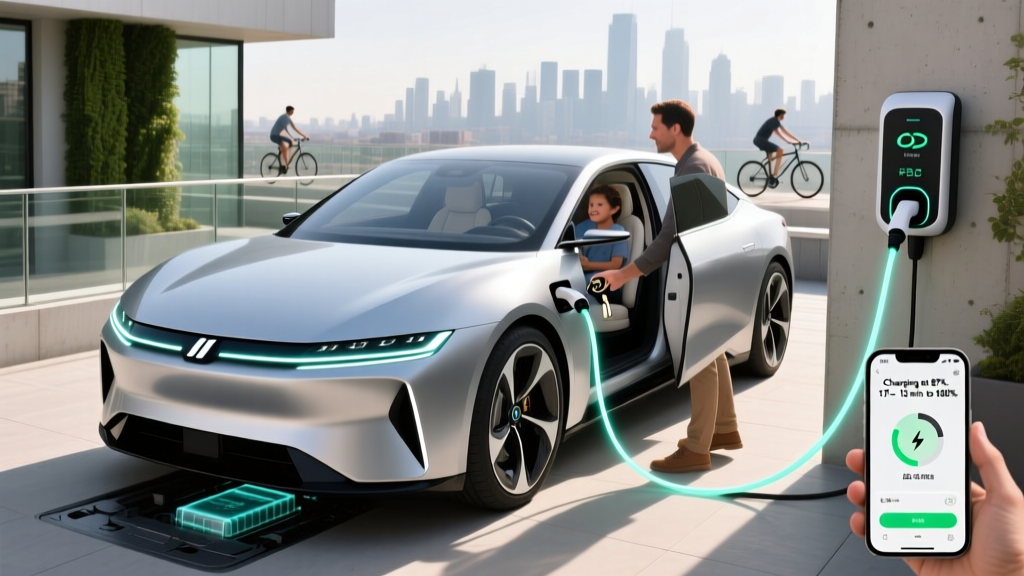
Charging-curve reality: The 300+ kW peak is sustained roughly from 10% to 40% State of Charge. From 40–80%, expect the rate to taper to between 150–200 kW. Above 85%, charging slows sharply to protect the NMC cells — this is normal for lithium-ion chemistry and not unique to Lucid. For road trips, plan your stops around the 10–80% window for the fastest experience. The 19.2 kW onboard AC charger is among the fastest available, meaning a full overnight replenishment on a properly equipped home Level 2 circuit.
Performance and Driving Dynamics
With 828 horsepower from its dual-motor AWD setup, the Dream Edition posts a 3.5-second 0–60 mph time — quick enough to embarrass most sports cars at stoplights, and remarkable for a 6,000-pound SUV. The standard Pure and Touring trims offer 600+ hp and slightly slower acceleration, but the Dream Edition is the performance flagship.
Ride quality is controlled by a standard adaptive air suspension with automatic ride-height adjustment. The system lowers the vehicle at highway speeds for efficiency, raises it for rough roads, and offers a configurable comfort mode for daily driving. Steering is precise if somewhat light — typical for the luxury-SUV segment — and the low center of gravity (battery pack mounted under the floor) keeps body roll well-controlled in corners.
Towing: The Gravity is rated for 6,000 pounds when properly equipped. Towing will reduce range by roughly 40–50%, so plan for 200–250 miles of effective range when pulling a boat or camper.
Interior, Cargo, and Technology
The Gravity seats up to six passengers in the Dream Edition (second-row captain's chairs are standard; a seven-seat bench is available on lower trims). Third-row space accommodates adults on shorter trips, with approximately 30 inches of legroom — competitive with the Model X but tighter than a full-size ICE SUV like the Chevrolet Tahoe.
Cargo volume is generous: ~42 cubic feet behind the third row, expanding to over 100 cubic feet with both rear rows folded. The front trunk (frunk) adds approximately 8 cubic feet — useful for charging cables, groceries, or a carry-on.
The centerpiece of the cabin is Lucid's 34-inch curved glass canopy display (branded as the "Clearview Cockpit"), which stretches across the dashboard. A secondary retractable "Pilot" touchscreen handles climate and media controls. The system runs on Lucid's proprietary software stack with wireless Apple CarPlay, Android Auto, and over-the-air updates. A 21-speaker Surreal Sound audio system by Mark Levinson is standard on the Dream Edition.
Driver assistance: Lucid's DreamDrive Pro suite uses a combination of cameras, radar, and LiDAR (on Dream Edition) for adaptive cruise, lane-centering, automatic emergency braking, and blind-spot monitoring. This is an SAE Level 2 system — the driver must remain fully engaged and hands-on at all times. It is not autonomous driving. Expect competent highway assist, but do not treat it as a substitute for attention.
Pricing, Trims, and Federal Tax Credit Eligibility
The 2026 Gravity lineup spans four trims. The Dream Edition sits at the top:
| Trim | MSRP (before destination) | Estimated Destination | Federal §30D Credit Eligibility |
|---|---|---|---|
| Pure (RWD, base) | $79,900 | $1,500 | Subject to battery-sourcing & income rules; MSRP under $80K SUV cap |
| Pure AWD | $84,900 | $1,500 | Same as above — verify current IRS sourcing list |
| Touring | $94,900 | $1,500 | Exceeds $80K MSRP cap for SUVs — likely ineligible |
| Dream Edition | $119,900 | $1,500 | Exceeds $80K MSRP cap — ineligible for new-vehicle §30D credit |
Tax credit reality: Under IRS §30D rules, new SUVs must have an MSRP of $80,000 or less to qualify for up to $7,500 in federal credits. The Dream Edition, at $119,900, far exceeds this cap and does not qualify. The Pure RWD trim may qualify depending on the buyer's adjusted gross income (≤$300K for joint filers, ≤$150K for single), and whether the battery's critical minerals and components meet current-year sourcing thresholds. These rules are updated annually — confirm eligibility with a tax professional and the fueleconomy.gov tax credit tool before purchasing.
The Pure trim can also be purchased as a qualified used EV (after initial ownership transfer) for up to $4,000 under the §25E credit, subject to a $25,000 maximum sale price — unlikely for the Gravity given its depreciation curve, but worth monitoring.
Who Should Buy the Lucid Gravity Dream Edition?
Pros
- Class-leading 440-mile EPA range — no three-row EV comes close
- 900V architecture enables 300+ kW DC fast charging
- 828 hp and 3.5-second 0–60 in a six-passenger SUV
- 19.2 kW onboard AC charger — fastest in class for home charging
- Premium interior with Clearview glass canopy and Mark Levinson audio
- Air suspension with adaptive ride height
- 6,000-lb towing capacity
Cons
- $121,400+ as-tested (Dream Edition) — no federal tax credit
- Limited service-center network vs. Tesla or legacy luxury brands
- Third-row legroom (~30 in.) is tighter than full-size ICE SUVs
- DreamDrive Pro is competent but not class-leading vs. Tesla FSD or GM Super Cruise
- Brand-new model — long-term reliability data is limited
- No seven-seat option on Dream Edition (captain's chairs only)
Decision Framework
Choose the Gravity Dream Edition if: You need 400+ miles of real range, three rows, and premium luxury — and you're not budget-constrained. It's the only EV that combines this range with this passenger capacity.
Choose the Rivian R1S (Tri-Motor) if: Off-road capability, adventure-oriented design, and a more established service network matter more than maximum range.
Choose the Tesla Model X Plaid if: You prioritize Supercharger network access, the lowest cost per mile of DC fast charging, and the most mature driver-assist software (FSD Supervised).
Choose the Gravity Pure if: You want Gravity's efficiency and space under $85K and may qualify for the §30D tax credit.
Warranty and Long-Term Ownership
Lucid covers the Gravity's battery and drive unit for 8 years or 100,000 miles, whichever comes first — matching the industry standard set by federal mandate. The battery warranty guarantees that capacity will not fall below 70% of original capacity during the coverage period. The limited vehicle warranty is 4 years / 50,000 miles.
For long-term ownership, NMC chemistry typically shows 10–15% degradation over 150,000–200,000 miles based on current industry data. Lucid's thermal management system (liquid cooling and heating) is designed to minimize calendar and cycle degradation. Routine maintenance is minimal — cabin air filter, brake fluid check, tire rotation, and wiper fluid. Expect to spend roughly $300–$500 per year on scheduled service, far less than a comparable ICE luxury SUV.
Frequently Asked Questions
What is the real-world range of the Lucid Gravity Dream Edition?
The EPA rates it at 440 miles. In real-world highway driving at 70–75 mph, expect 360–390 miles. In cold weather (below 32°F), that drops to approximately 310–340 miles with cabin heating. These are estimates — actual range varies with terrain, speed, temperature, and climate-control usage.
How fast does the Lucid Gravity charge?
On a 350 kW DC fast charger, the Gravity peaks above 300 kW and charges from 10–80% in approximately 20 minutes under optimal conditions. At home on a 240V/80A Level 2 circuit, the 19.2 kW onboard charger adds about 70 miles per hour, fully replenishing the pack in roughly 6 hours.
Does the Lucid Gravity Dream Edition qualify for the federal EV tax credit?
No. The Dream Edition's MSRP of $119,900 exceeds the $80,000 SUV cap under IRS §30D. The lower Pure trim may qualify if the buyer meets income requirements and the battery meets current critical-mineral and component sourcing thresholds. Always verify with a tax professional and irs.gov before purchasing.
Is the Lucid Gravity worth buying vs. the Tesla Model X or Rivian R1S?
It depends on priorities. The Gravity wins on range (440 vs. ~348 for Model X, ~400 for R1S Max Pack) and charging speed. The Model X wins on Supercharger access and driver-assist maturity. The R1S wins on off-road capability and brand recognition. All three are excellent — the right choice depends on your driving patterns and values.
Can the Lucid Gravity charge at Tesla Superchargers?
Yes. The 2025+ Gravity ships with a native NACS (North American Charging Standard) port, granting direct access to Tesla's Supercharger network without an adapter. At V3 stalls (250 kW max), expect 10–80% in approximately 25 minutes.
What is the biggest drawback of the Gravity Dream Edition?
Price and service infrastructure. At over $121,000 out the door with no federal tax credit, it's a significant investment. Lucid's service-center network is growing but still thin compared to Tesla or Mercedes-Benz — buyers in rural areas should verify service access before committing.
Sources: fueleconomy.gov (EPA range and efficiency data), IRS §30D Clean Vehicle Credit rules, Lucid Motors official specifications.