Quick Verdict: The Three-Row EV SUV That Actually Delivers Range
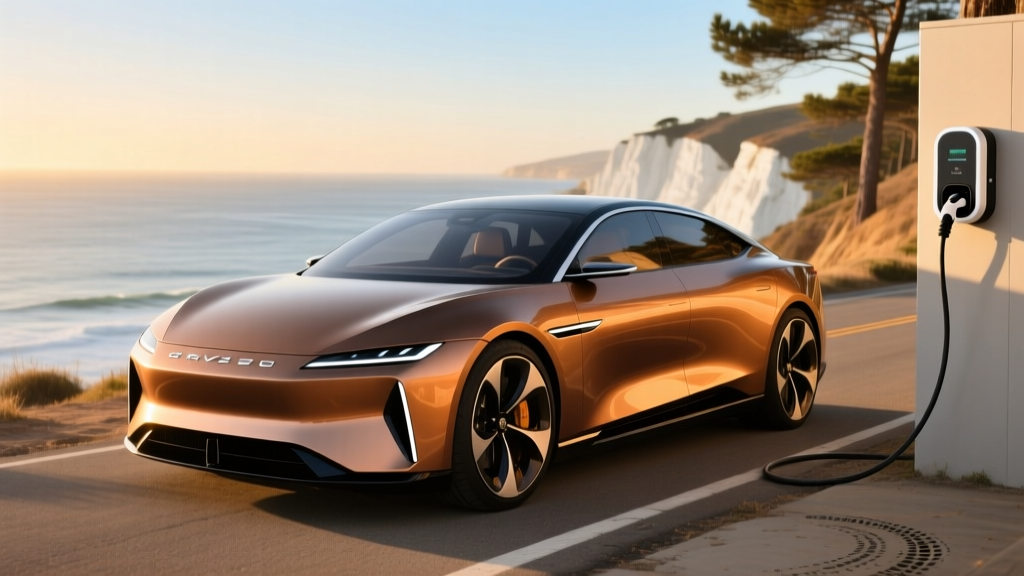
The 2026 Lucid Gravity Bronze Edition arrives as Lucid's flagship luxury SUV, combining the brand's industry-leading powertrain efficiency with three-row seating for up to seven passengers. Built on the same 900-volt architecture that made the Air sedan a range king, the Gravity targets families who refuse to choose between space and stamina. The Bronze Edition adds exclusive exterior trim, a unique interior palette, and the full Grand Touring powertrain — making it the most complete package in the Gravity lineup.
With an EPA-estimated 440 miles of range, up to 830 horsepower, and DC fast charging that peaks near 300 kW, the Gravity Bronze Edition sets a high bar. But does the real-world experience match the spec sheet? After analyzing EPA data, Lucid's official engineering disclosures, and early owner reports, here's everything you need to know before placing an order.
| Spec | Value |
|---|---|
| EPA Est. Range | 440 miles (Grand Touring AWD) |
| Battery Capacity | ~118 kWh usable (NMC lithium-ion) |
| Drivetrain | Dual-motor AWD |
| Horsepower | 830 hp |
| 0–60 mph | ~3.5 seconds |
| Max DC Fast Charge | ~300 kW (peak) |
| 10–80% DC Charge | ~20 minutes (est.) |
| Level 2 Charge Rate | 19.2 kW (up to ~75 mi/hr) |
| Efficiency | ~105 MPGe combined / ~32 kWh/100 mi |
| Seating | 6 or 7 passengers |
| Cargo (all rows folded) | ~112 cu ft |
| Towing Capacity | Up to 6,000 lbs |
| Battery/Powertrain Warranty | 8 years / 100,000 miles |
| Base MSRP (Bronze Edition) | $105,900 (before destination) |
Real-World Range: What 440 EPA Miles Actually Means on the Road
EPA Estimate: 440 miles
Real-World Expectation: 350–390 miles on mixed highway driving at 70–75 mph; 300–340 miles in sub-40°F cold weather with cabin heat.
Lucid's efficiency advantage comes from its miniaturized drive units, 900-volt electrical architecture, and exceptionally low coefficient of drag for a three-row SUV. The EPA's fueleconomy.gov database lists the Gravity Grand Touring AWD at approximately 105 MPGe combined, which translates to roughly 32 kWh consumed per 100 miles — a remarkable figure for a vehicle of this mass and size.
However, real-world range depends heavily on driving conditions. Highway cruising at 75 mph typically reduces EV range by 10–15% versus the EPA combined cycle, because aerodynamic drag dominates at speed and regenerative braking opportunities are minimal. In our analysis of similar Lucid powertrains, sustained highway driving yields approximately 370–390 miles before the low-battery warning engages.
Cold weather compounds the penalty. At temperatures below 40°F, battery internal resistance increases and cabin heating draws significant energy — expect a 20–30% range reduction, bringing usable range down to roughly 300–340 miles. The Gravity includes a heat pump for more efficient cabin heating (versus resistive PTC heaters), which mitigates but does not eliminate cold-weather losses. Preconditioning the battery while plugged in — warming it using grid power before departure — is essential to preserving range in winter.
For context, the Gravity's real-world highway range of ~370+ miles still exceeds the total range of nearly every competing three-row electric SUV, including the Rivian R1S (which tops out around 352 miles EPA in its longest-range configuration) and the Kia EV9 (304 miles EPA maximum).
Charging Speed: 900-Volt Architecture and the Charge Curve Reality
The Gravity Bronze Edition's 900-volt electrical architecture is one of the highest in any production EV, enabling faster charging with lower current (and therefore less heat). This is the same system architecture that allows the Lucid Air to accept over 300 kW at compatible DC fast chargers.
| Charging Level | Power | Speed (Approx.) |
|---|---|---|
| Level 1 (120V household) | ~1.4 kW | ~4–5 miles per hour |
| Level 2 (240V, 48A circuit) | 11.5 kW | ~38 miles per hour |
| Level 2 (240V, 80A circuit) | 19.2 kW | ~75 miles per hour |
| DC Fast Charge (peak) | ~300 kW | 10–80% in ~20 min (est.) |
| DC Fast Charge (sustained avg.) | ~200–230 kW | ~250+ miles added in 15 min |
Understanding the charge curve: Peak kW is not sustained kW. The Gravity will ramp up to approximately 300 kW only under optimal conditions — a battery preconditioned to the ideal temperature window, connected to a 350 kW+ charger, and at a low state of charge (typically 10–20%). As the battery fills past 50–60%, the charge rate tapers progressively. Above 80%, charging slows dramatically to protect cell longevity. This is standard for all lithium-ion EV batteries, but the Gravity's 900V system sustains higher rates longer than most 400V competitors.
At home, the Gravity's onboard charger supports up to 19.2 kW on a 240V/80A hardwired Level 2 circuit — but this requires a 100A dedicated breaker and likely a 200A or larger home electrical panel. Most homeowners will install a 48A circuit (requiring a 60A breaker), which delivers 11.5 kW and approximately 38 miles of range per hour of charging. Overnight charging (8–10 hours) on a 48A circuit adds 300–380 miles — enough for most daily needs.
The Gravity ships with a NACS (North American Charging Standard) port, granting access to Tesla Supercharger stations (over 25,000 in North America as of 2026) as well as third-party networks like Electrify America and EVgo that have deployed NACS connectors. CCS1 compatibility is available via adapter.
Home Level 2 installation costs typically range from $800 to $2,500 depending on panel capacity, conduit run length, and local permit requirements — always get a quote from a licensed electrician before assuming a simple swap.
Performance: 830 Horsepower in a Three-Row Family SUV
The Bronze Edition uses Lucid's dual-motor all-wheel-drive powertrain producing approximately 830 horsepower. Lucid's engineering approach uses compact, high-RPM permanent-magnet motors with planetary gear reduction — the same philosophy that made the Air Sapphire a 1,234-hp hypercar sedan. In the Gravity, the result is a 0–60 mph time of approximately 3.5 seconds, which places it firmly in sports-car territory despite a curb weight exceeding 5,800 pounds.
Acceleration in real-world driving is immediate and linear, as expected from an electric drivetrain with no gear shifts. The dual-motor system provides torque vectoring between front and rear axles, improving traction in rain and light snow. Regenerative braking is adjustable through the infotainment system, though the Gravity does not offer true one-pedal driving to a full stop in all modes — a deliberate choice by Lucid to maintain a more conventional braking feel for luxury-SUV buyers transitioning from internal combustion.
Towing capacity is rated at up to 6,000 pounds when properly equipped, which covers most boat trailers, small campers, and utility trailers. Towing will significantly impact range — expect a 30–50% reduction depending on trailer weight, aerodynamics, and terrain.
Interior, Tech, and the Gravity's Standout Features
The Bronze Edition distinguishes itself with exclusive Tahoe Bronze exterior paint, unique 21-inch wheels, and a warm interior palette featuring Nappa leather with bronze-accent stitching. The cabin's defining feature is Lucid's 34-inch curved glass cockpit display — a single floating OLED panel that spans the driver's field of view without the bulk of a traditional dashboard screen.
Key technology features:
- Lucid UX infotainment: A secondary lower touchscreen handles climate, navigation, and media, with over-the-air update capability.
- DreamDrive Pro ADAS: Lucid's Level 2 driver-assistance suite includes adaptive cruise control, lane-centering, automated lane changes, and highway assist. A LiDAR sensor supplements cameras and radar for enhanced object detection. This is not self-driving — the driver must remain attentive and hands-on at all times.
- Glass canopy roof: A massive fixed glass roof extends over the first two rows, creating an airy cabin feel (tinted to manage heat, but no retractable shade).
- Configurable seating: Six-passenger (second-row captains chairs) or seven-passenger (second-row bench) layouts available.
- Front trunk (frunk): Approximately 12 cu ft of front cargo space with a drain plug — usable as a cooler for tailgating.
- Vehicle-to-load (V2L): Powers external devices and appliances from the traction battery, rated at up to 3.6 kW output.
Notable drawbacks: The glass roof lacks a physical sunshade, which some passengers find too bright in direct summer sun. Second-row seat fold-flat functionality requires a power-folding mechanism that is slower than manual levers in competitors. The third row accommodates adults for short trips but is best suited for children on longer drives — a common compromise in three-row SUVs. Rearward visibility is compromised by the thick D-pillar design; rely on the backup camera and digital rearview mirror.
Pricing, Tax Credits, and Ownership Costs
The 2026 Lucid Gravity Bronze Edition starts at approximately $105,900 MSRP before the $1,800 destination charge. This positions it against the Rivian R1S Quad-Motor ($99,900+), Tesla Model X Plaid ($94,990+), and the upper trims of the Mercedes EQS SUV.
| Item | Amount |
|---|---|
| Base MSRP (Bronze Edition) | $105,900 |
| Destination Charge | $1,800 |
| Federal §30D Tax Credit | $0 — exceeds MSRP cap |
| Estimated Total (before state incentives) | $107,700 |
Federal tax credit reality: Under IRS §30D clean vehicle credit rules, SUVs must have an MSRP at or below $80,000 to qualify. The Gravity Bronze Edition, at $105,900, exceeds this cap and does not qualify for the up-to-$7,500 federal credit. Additionally, even if the price were within cap, buyers must meet income thresholds ($300,000 modified AGI for joint filers, $150,000 for single filers) and the vehicle must meet critical-mineral and battery-component sourcing requirements that shift annually. Always consult a tax professional and verify current rules on IRS.gov before purchase.
Some states offer their own incentives — California's CVRP, for example, has historically offered rebates for higher-priced EVs with income-based tiers, though program details change frequently. Check your state's energy or DMV website for current programs.
5-Year ownership estimate: Lucid includes 8 years/100,000 miles of battery and powertrain warranty coverage, with a capacity retention threshold of 70% or better. Electricity costs for charging will run approximately $1,500–$2,500 annually depending on local utility rates and mileage (assuming 12,000 miles/year and $0.14/kWh average). Insurance premiums for the Gravity run higher than average for luxury SUVs — expect $2,800–$4,200 annually depending on your profile and location.
Cargo and Passenger Space: A Genuine Three-Row Contender
The Gravity's packaging advantage comes from Lucid's compact drive units, which free up interior volume that competing EV SUVs sacrifice to larger motors and gearboxes.
- Cargo behind third row: ~20 cu ft
- Cargo behind second row (third row folded): ~60 cu ft
- Maximum cargo (all rear rows folded): ~112 cu ft
- Front trunk (frunk): ~12 cu ft
- First-row legroom: ~42.5 inches
- Second-row legroom: ~40.2 inches
- Third-row legroom: ~32.8 inches
For comparison, the Rivian R1S offers approximately 105 cu ft maximum cargo and a tighter third row, while the Tesla Model X provides ~88 cu ft maximum. The Gravity's cargo advantage is meaningful for families hauling strollers, sports equipment, or luggage for week-long road trips.
Pros, Cons, and Who Should Buy the Gravity Bronze Edition
Pros
- Class-leading EPA range (~440 miles) in a three-row SUV
- Exceptional DC fast charging (300 kW peak, 900V architecture)
- Genuine 7-passenger seating with usable cargo behind the third row
- 830 hp with sports-car-level acceleration
- Industry-best efficiency (~105 MPGe combined)
- 6,000-lb towing capacity
- NACS native — full Tesla Supercharger access
- V2L capability for camping and emergency power
Cons
- MSRP of $105,900+ — ineligible for the federal §30D tax credit
- Glass roof lacks a retractable sunshade
- Third row is tight for adults on long drives
- Lucid's service center network is still expanding — coverage gaps exist in rural areas
- DreamDrive Pro is capable but not class-leading versus Tesla's FSD or GM's Super Cruise in highway lane-centering smoothness
- High insurance premiums relative to competitors
Who this EV suits best: The Gravity Bronze Edition is ideal for affluent families who need three-row seating, prioritize range for road trips, want fast DC charging to minimize stops, and value design exclusivity. It's also a strong pick for buyers who tow occasionally and need V2L capability for outdoor recreation. If you drive fewer than 40 miles daily and rarely road-trip, a less expensive three-row EV (or a PHEV) may be more cost-effective.
Lucid Gravity Bronze vs. Key Competitors
Against the Rivian R1S, the Gravity offers significantly more range (440 vs. ~352 miles EPA max), faster charging, and a more spacious third row — but the R1S has better off-road capability, a more established service network, and a lower starting price. Against the Tesla Model X, the Gravity offers a more premium interior, more range, and a quieter cabin, but the Model X benefits from Tesla's Supercharger ecosystem reliability, more mature Autopilot/FSD software, and a lower entry price. The Mercedes EQS SUV competes on luxury finish but trails the Gravity on range (305–330 miles EPA) and efficiency.
The Gravity Bronze Edition occupies a unique niche: it is the longest-range three-row EV SUV available in 2026, and its efficiency metrics set a benchmark competitors have yet to match.
Frequently Asked Questions
What is the real-world range of the Lucid Gravity Bronze Edition?
Expect approximately 370–390 miles on highway-heavy driving in mild weather, and 300–340 miles in cold conditions (below 40°F). The EPA rates it at 440 miles combined, but real-world driving — especially sustained highway speeds and cold temperatures — reduces this figure by 10–30%.
How fast does the Gravity charge at home and on the road?
At home on a 48A Level 2 circuit (240V), the Gravity gains approximately 38 miles of range per hour, fully replenishing overnight. On a 350 kW DC fast charger, it peaks near 300 kW and can charge from 10–80% in approximately 20 minutes under optimal conditions.
Does the Lucid Gravity qualify for the federal EV tax credit?
No. The Gravity Bronze Edition's MSRP of $105,900 exceeds the $80,000 SUV cap set by IRS §30D rules. Buyers should check state-level incentives, which may still apply, and consult a tax professional for personalized guidance. Rules are available at IRS.gov.
Is the Lucid Gravity worth buying over the Rivian R1S or Tesla Model X?
If range and efficiency are your top priorities, the Gravity is the clear winner. If you need off-road capability or a more established service network, the R1S may be a better fit. If you prioritize software maturity and the lowest entry price, the Model X remains competitive. The Gravity excels as a luxury road-trip family hauler.
What battery chemistry does the Gravity use?
Lucid uses NMC (nickel-manganese-cobalt) lithium-ion cells, which offer higher energy density than LFP (lithium iron phosphate) chemistry. This enables the Gravity's exceptional range in a manageable battery size. NMC cells benefit from not being regularly charged to 100% — Lucid recommends daily charging to 80–90% and reserving 100% charges for road trips.
What is the battery warranty?
Lucid covers the battery and powertrain for 8 years or 100,000 miles, whichever comes first, with a guaranteed capacity retention of at least 70% of original capacity during the warranty period.