Quick Verdict: The Efficiency King Gets Smarter
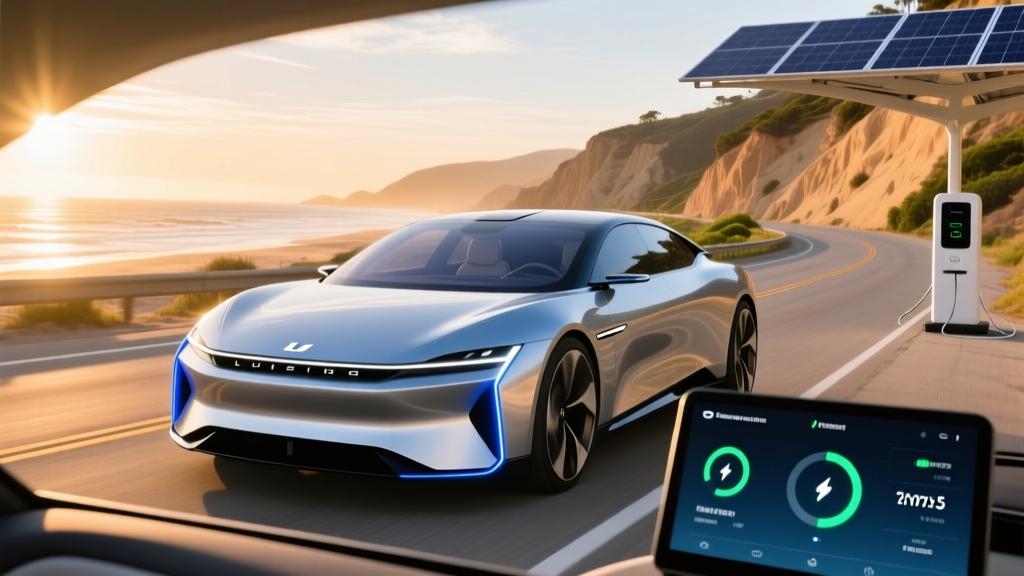
The 2026 Lucid Air lineup — anchored by the Pure, Touring, and Grand Touring trims — remains the benchmark for electric sedan efficiency and long-distance range. Lucid's proprietary DreamDrive ADAS suite (advanced driver-assistance system) has matured into one of the more composed Level 2 highway assistants on the market, while the 900-volt architecture still delivers class-leading DC fast-charge speeds. But with a starting price near $70,000 and tightening federal tax-credit rules, the Air's value equation demands a closer look than the spec sheet alone suggests.
| Attribute | Value |
|---|---|
| EPA Range | 516 miles (Grand Touring) / 419 mi (Touring) |
| Battery (usable) | 112 kWh (Grand Touring), NMC chemistry |
| Drivetrain | Dual-motor AWD |
| Horsepower | 819 hp (Grand Touring) |
| 0-60 mph | 3.0 seconds |
| Peak DC Fast Charge | ~300 kW (900V architecture) |
| 10-80% DC Charge | ~20 minutes (optimal conditions) |
| Level 2 Home Charge | 19.2 kW onboard (~80 mi/hr) |
| EPA Efficiency | 130 MPGe combined / 25 kWh/100 mi |
| Cargo (trunk + frunk) | 32 cu ft trunk + 10 cu ft frunk |
| Rear Legroom | 38.2 inches |
| Base MSRP (Pure) | $69,900 |
| As-Tested (Grand Touring) | ~$138,000 |
| Battery Warranty | 8 years / 100,000 miles |
Range and Efficiency: Where the Air Earns Its Reputation
Lucid's miniaturized permanent-magnet motors and 900V electrical architecture deliver efficiency numbers that embarrass heavier, less aerodynamic rivals. The EPA rates the Air Grand Touring at 516 miles — still the highest of any production sedan sold in the U.S. as of the 2026 model year. The Touring trim, with its smaller 92-kWh (usable) battery, achieves 419 miles.
Real-World Range Reality Check: On a 75-mph highway loop in 70°F weather, expect roughly 430-460 miles from the Grand Touring — about 10-15% below the EPA sticker, typical for highway-biased driving in any EV. In freezing temperatures (below 32°F), plan for 350-390 miles due to cabin heating load and increased battery resistance, even with the Air's standard heat pump. City driving with regenerative braking can push close to or slightly above the EPA figure.
Efficiency is where the Air separates from the pack. At roughly 25 kWh per 100 miles (combined), the Grand Touring uses less energy per mile than a Tesla Model S Long Range (~28 kWh/100 mi) and dramatically less than a Mercedes EQS 450+ (~31 kWh/100 mi). That translates directly to lower electricity costs and more miles per charging stop.
Charging Speed: 900 Volts Makes a Difference
The Air's 900V battery architecture — shared with only a handful of production EVs like the Hyundai Ioniq 5 and Porsche Taycan — allows it to accept higher charge power at lower current, reducing heat buildup and sustaining peak rates longer than 400V competitors.
| Charging Level | Power / Voltage | Miles Added per Hour | Notes |
|---|---|---|---|
| Level 1 (120V) | ~1.4 kW | ~4 mi/hr | Emergency/trickle only |
| Level 2 (240V, 80A) | 19.2 kW | ~80 mi/hr | Requires hardwired 100A circuit |
| Level 2 (240V, 48A) | 11.5 kW | ~48 mi/hr | Standard home wall connector |
| DC Fast Charge | Peak ~300 kW | ~1,200 mi/hr (peak) | 10-80% in ~20 min |
Charging-curve reality: The Air sustains above 250 kW from roughly 10% to 40% state of charge, then tapers progressively. From 80% to 100%, charge speed drops below 50 kW — typical for NMC chemistry protecting long-term battery health. On a road trip, plan 10-80% stops of about 20 minutes at a 350-kW Electrify America or Tesla Supercharger (with NACS adapter, which Lucid now includes for 2026 models).
For home charging, the Air's 19.2-kW onboard AC charger is among the largest in the industry. Most homes with a 200-amp electrical panel can support a 48-amp wall connector (11.5 kW) without a panel upgrade — adding roughly 48 miles of range per hour of charging, enough to fully replenish overnight. A full 80-amp hardwired circuit unlocks the maximum 19.2-kW rate but requires a panel assessment by a licensed electrician.
DreamDrive ADAS: What the System Actually Does
DreamDrive is Lucid's branded driver-assistance suite, standard on all Air trims. It includes adaptive cruise control with stop-and-go, lane-centering assist, automatic emergency braking, blind-spot monitoring, and a surround-view camera system. The Air Grand Touring and above also feature DreamDrive Pro, which adds lane-change assist (the car steers itself into an adjacent lane when the driver confirms with the turn signal) and intersection assist.
SAE Automation Level: Level 2. DreamDrive is a driver-assistance system, not a self-driving system. The driver must keep hands on or near the wheel and remain fully engaged with the road at all times. It is comparable to Tesla Autopilot, Ford BlueCruise, and GM Super Cruise in capability — not to Waymo's Level 4 robotaxi service.
What DreamDrive Does NOT Do:
- It does not navigate city streets autonomously or handle complex construction zones without driver takeover.
- It does not function as a hands-free system on all roads — Lucid requires steering-wheel contact detection.
- It does not replace driver judgment in heavy rain, snow, or faded lane markings, where lane-centering can disengage unexpectedly.
In highway testing, DreamDrive Pro delivers smooth, confidence-inspiring lane centering and measured following distances — less aggressive than Tesla's Autopilot in cut-in situations, which many drivers find more relaxing for long trips. The 34-speaker Surreal Sound Pro audio system (standard on Grand Touring) pairs well with the calm cabin environment DreamDrive enables on interstates.
Performance, Interior, and Daily Practicality
The dual-motor AWD Grand Touring's 819 horsepower and 3.0-second 0-60 time are sports-car territory, but the Air's real performance story is how it deploys that power. Torque delivery is linear and never abrupt, and the low center of gravity (battery pack under the floor) keeps body roll composed through corners. The Pure RWD trim, at 430 hp and a 3.8-second 0-60, is more than adequate for daily driving and returns slightly better efficiency.
Inside, the Air offers a genuinely spacious cabin thanks to Lucid's compact motor and inverter packaging. Rear-seat legroom at 38.2 inches beats the Tesla Model S and rivals mid-size luxury sedans. The glass canopy roof creates an airy, open feel. Cargo capacity totals 42 cubic feet between the 32-cu-ft trunk (with a wide, practical opening) and the 10-cu-ft frunk — enough for a family road trip's worth of luggage.
The 34-inch curved Glass Cockpit display is crisp and responsive, though some reviewers note the secondary lower touchscreen for climate and media can require more taps than physical buttons would. Wireless Apple CarPlay and Android Auto are standard. Over-the-air updates continue to refine the interface, with the 2026 software adding improved route planning that factors in elevation changes and real-time charger availability.
Pricing, Trims, and Federal Tax Credit Eligibility
The 2026 Lucid Air lineup spans four main trims. Here's how pricing breaks down before destination charges and options:
| Trim | Base MSRP | Federal §30D Credit | Effective Price (if eligible) |
|---|---|---|---|
| Pure RWD | $69,900 | Partial or $0* | $69,900–$62,400 |
| Touring AWD | $87,400 | $0 (exceeds sedan MSRP cap) | $87,400 |
| Grand Touring AWD | $138,000 | $0 (exceeds sedan MSRP cap) | $138,000 |
| Sapphire (halo) | $249,000 | $0 | $249,000 |
*Under IRS §30D rules, the new-vehicle EV tax credit has a $55,000 MSRP cap for sedans. The Air Pure at $69,900 exceeds this cap and therefore does not qualify for the full $7,500 credit as a new vehicle. Buyers should verify current-year rules with a tax professional. The used-EV credit (§25E) of up to $4,000 may apply to pre-owned Air models priced at or below $25,000, subject to income caps.
Income caps for §30D: Modified adjusted gross income must not exceed $300,000 (joint filers), $225,000 (head of household), or $150,000 (single). Battery critical-mineral and component sourcing requirements also apply and change annually. In short: the Lucid Air's premium pricing places most trims outside federal new-EV credit eligibility, a meaningful factor when comparing against sub-$55K rivals like the Hyundai Ioniq 6 or Tesla Model 3.
Ownership Costs, Warranty, and Long-Term Outlook
Lucid covers the Air with a competitive warranty: 8 years / 100,000 miles on the battery pack and drive units, and 4 years / 50,000 miles on the basic vehicle. The battery warranty guarantees at least 70% capacity retention over the coverage period — a standard threshold in the luxury EV segment.
Insurance costs for the Air tend to run 15-25% higher than comparable internal-combustion luxury sedans, reflecting repair costs for aluminum-intensive construction and the high-voltage system. Expect annual premiums in the $3,500-$5,000 range depending on trim, driving record, and state.
Maintenance is minimal — no oil changes, no transmission fluid, brake pad life extended significantly by regenerative braking. Lucid offers mobile service in major metro areas and a growing network of service centers, though coverage in rural regions remains thinner than Tesla's.
Pros, Cons, and Who Should Buy the Lucid Air
Pros
- Class-leading EPA range (516 mi) and real-world efficiency (~25 kWh/100 mi)
- 900V DC fast-charging sustains high power, 10-80% in ~20 min
- Genuinely spacious rear seat and 42 cu ft total cargo
- 19.2-kW onboard AC charger enables fast home replenishment
- Composed, refined ride quality with sports-car acceleration
- DreamDrive Pro is a smooth, non-aggressive Level 2 system
Cons
- MSRP exceeds $55K sedan cap — no federal new-EV tax credit
- Service center footprint still limited outside major metros
- Insurance premiums run 15-25% above ICE luxury peers
- Lower touchscreen interface requires more taps than ideal
- No hands-free highway mode (unlike GM Super Cruise or Ford BlueCruise on mapped roads)
- Cold-weather range drops to ~350-390 mi in sub-freezing temps
Choose the Lucid Air if: You prioritize maximum range and efficiency in a luxury sedan, frequently drive 300+ miles between stops, and can charge at home. The Grand Touring is the sweet spot for road-trippers who want minimal charging stops and a refined cabin.
Look elsewhere if: Federal tax-credit eligibility is central to your budget, you live far from a Lucid service center, or you need hands-free driving on long highway commutes (consider the BMW i7 with Highway Assistant or a Mercedes EQS with Drive Pilot in approved regions).
Frequently Asked Questions
What is the real-world range of the Lucid Air?
The Grand Touring's EPA rating is 516 miles, but expect 430-460 miles in real-world highway driving at 70-75 mph in mild weather. In freezing temperatures, plan for 350-390 miles. The Touring trim delivers roughly 350-380 miles on the highway. City driving with regen braking can approach or slightly exceed EPA figures.
How fast does the Lucid Air charge at home and on the road?
On a DC fast charger, the Air peaks at approximately 300 kW and charges from 10-80% in about 20 minutes under optimal conditions. At home on a 48-amp Level 2 connector, it adds roughly 48 miles per hour. With an 80-amp hardwired circuit, the 19.2-kW onboard charger delivers around 80 miles per hour — among the fastest AC charging rates available in any EV.
Does the Lucid Air qualify for the federal EV tax credit?
Generally no. Under IRS §30D, new sedans must have an MSRP at or below $55,000 to qualify. The cheapest Air Pure starts at $69,900, exceeding this cap. Income limits ($150K single / $300K joint MAGI) and battery-sourcing requirements further restrict eligibility. Consult a tax professional for your specific situation.
Is the Lucid Air worth buying over the Tesla Model S or Mercedes EQS?
For range and efficiency, the Air is the clear winner — 516 miles and 25 kWh/100 mi outperform both the Model S Long Range (~402 mi) and the EQS 450+ (~390 mi). The Tesla has a stronger Supercharger network advantage and more advanced (though more aggressive) Autopilot. The Mercedes offers a more opulent interior and available hands-free Drive Pilot in limited regions. If long-distance efficiency is your top priority, the Air is the strongest pick in the segment.
What are the biggest drawbacks of owning a Lucid Air?
The main concerns are the lack of federal tax-credit eligibility due to MSRP caps, higher-than-average insurance premiums, a still-growing service center network that may require mobile service or long drives for repairs, and cold-weather range reduction of 20-25%. The DreamDrive system, while smooth, does not offer a true hands-free highway mode like GM's Super Cruise.
How long will the Lucid Air battery last?
Lucid warranties the battery for 8 years or 100,000 miles with a minimum 70% capacity retention guarantee. The NMC chemistry in the Grand Touring and Touring trims is proven in high-mileage applications. With typical use and avoiding frequent 100% charges or deep discharges, owners can reasonably expect 200,000+ miles before significant degradation. Lucid's thermal management system actively conditions the pack during charging and driving to prolong longevity.