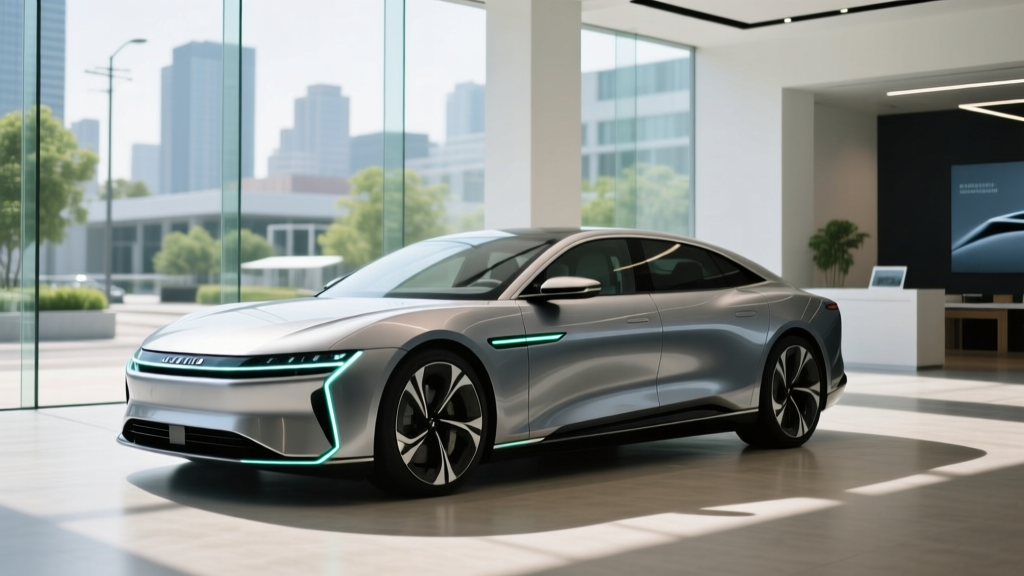
For buyers eyeing a luxury electric sedan without absorbing the steepest first-year depreciation, a Lucid Certified Pre-Owned (CPO) Air represents one of the most compelling value plays in the 2026 EV market. With EPA range figures that still eclipse nearly every competitor and a powertrain engineered around a 900-volt architecture, the Air holds up exceptionally well on the used market — provided you know exactly what to inspect, what the CPO warranty actually covers, and where the real-world ownership friction points lie.
This guide breaks down the specs, charging behavior, total cost picture, and CPO-specific considerations you need before signing on a pre-owned Lucid Air.
What the Lucid CPO Program Actually Covers
Lucid's Certified Pre-Owned program applies a multi-point inspection and extends specific warranty protections beyond the original factory coverage. Understanding these protections is critical because, unlike legacy luxury brands with decades of CPO refinement, Lucid's program is still maturing alongside the company's service infrastructure.
| Spec | Air Pure (RWD) | Air Touring (AWD) | Air Grand Touring (AWD) | Air Sapphire (AWD) |
|---|---|---|---|---|
| EPA Range | 419 mi | 425 mi | 516 mi | 427 mi |
| Battery (usable) | 88 kWh (NMC) | 112 kWh (NMC) | 112 kWh (NMC) | 118 kWh (NMC) |
| Horsepower | 430 hp | 620 hp | 819 hp | 1,234 hp |
| 0-60 mph | 5.2 sec | 3.4 sec | 3.0 sec | 1.89 sec |
| Drivetrain | RWD (single motor) | AWD (dual motor) | AWD (dual motor) | AWD (tri-motor) |
| EPA Efficiency | 136 MPGe / 24 kWh/100mi | 131 MPGe / 26 kWh/100mi | 131 MPGe / 25 kWh/100mi | 105 MPGe / 32 kWh/100mi |
| Max DC Charge Rate | 200 kW | 250 kW | 300+ kW | 300+ kW |
| 10-80% DC Time | ~30 min | ~22 min | ~20 min | ~20 min |
| Level 2 Home Rate | 19.2 kW (~80 mi/hr) | 19.2 kW (~80 mi/hr) | 19.2 kW (~80 mi/hr) | 19.2 kW (~80 mi/hr) |
| Original MSRP (base) | $69,900 | $87,400 | $125,600 | $249,000 |
The Lucid CPO warranty typically extends the original 8-year/100,000-mile battery and powertrain warranty from the original in-service date, and adds a comprehensive limited warranty covering major vehicle systems for a defined period (commonly 1 year/12,000 miles beyond the original 4-year/50,000-mile bumper-to-bumper). Always confirm the exact CPO terms on the specific vehicle's window sticker or Lucid's CPO documentation, as program details can shift.
Real-World Range: What the EPA Sticker Doesn't Tell You
EPA Estimate: 516 miles
Real-World Highway (70-75 mph, mild weather): ~420–450 miles
Real-World Highway (cold weather, 30°F or below): ~340–380 miles
Mixed City/Suburban: ~460–490 miles
The Air Grand Touring's efficiency is genuinely class-leading, but physics applies: sustained highway speeds and cold temperatures reduce range by 15-35%. The 112 kWh NMC battery pack gives you an enormous buffer, which is precisely why the Air remains practical for road trips even with real-world losses.
The Air Pure's 88 kWh pack and 419-mile EPA rating translate to roughly 340–370 highway miles in temperate conditions and 280–310 in deep cold. For daily commuting and moderate road trips, this is more than sufficient — but buyers coming from the Grand Touring's headline number should recalibrate expectations.
One factor that works in the Air's favor: its aerodynamic drag coefficient (approximately 0.197 Cd for the Grand Touring) is among the lowest of any production sedan. This means highway range loss is less severe than boxier EVs at the same speed. In EPA testing data on fueleconomy.gov, the Air Grand Touring consistently posts efficiency numbers that align closely with real-world mixed driving, provided you aren't running 80+ mph or blasting the cabin heater in single-digit temps without preconditioning.
Charging Speed: 900V Architecture Explained
The Lucid Air's 900-volt electrical architecture is one of the highest in any production EV, and it directly enables faster DC charging with lower current (and therefore less heat). Here's what that means at the plug:
| Charging Level | Power / Rate | Miles Added Per Hour | Notes |
|---|---|---|---|
| Level 1 (120V household) | ~1.4 kW | ~4–5 mi/hr | Emergency/trickle only |
| Level 2 (240V, 48A) | 11.5 kW | ~48 mi/hr | Standard home charger |
| Level 2 (240V, 80A) | 19.2 kW | ~80 mi/hr | Requires hardwired 100A circuit; Air's onboard charger maxes here |
| DC Fast (50 kW station) | 50 kW | ~200 mi/hr | Older/slower public chargers |
| DC Fast (150 kW station) | 150 kW | ~600 mi/hr | Common Electrify America/EVgo rate |
| DC Fast (350 kW station, Grand Touring/Sapphire) | Peak 300+ kW | ~1,200+ mi/hr (peak) | Requires 350 kW-capable station; sustained rate tapers above 60% SoC |
Charging curve reality check: The Air Grand Touring can peak above 300 kW on a compatible 350 kW charger, but that peak is sustained only between roughly 10-40% State of Charge. Above 60%, the rate tapers significantly — by 80% SoC, you're typically seeing 80-120 kW. This is normal lithium-ion behavior, but it means the advertised "10-80% in 20 minutes" requires ideal conditions: a warm battery (preconditioned), a non-congested 350 kW station, and starting at a low SoC.
For home charging, the Air's 19.2 kW onboard charger is among the fastest available. If your electrical panel supports a hardwired 100-amp circuit (a significant investment — expect $1,500–$3,500 for panel upgrades and installation from a licensed electrician), you can add roughly 80 miles of range per hour. Most buyers opt for a 48-amp Level 2 setup on a 60-amp circuit, delivering ~48 miles per hour — still enough to fully recharge overnight for all but the longest daily drives.
The Air uses a CCS1 connector on 2024–2025 models. Lucid has announced NACS (Tesla Supercharger) adapter compatibility, and newer model years may ship with NACS natively. For CPO buyers, confirm whether the vehicle includes a NACS adapter or whether you'll need to source one (typically $200–$250).
Interior Space, Tech, and Daily Livability
The Lucid Air's cabin is where the "luxury sedan" promise either lands or falls short depending on your priorities. The dimensions are genuinely generous:
- Cargo volume: 32.0 cu ft (trunk + frunk combined) — the rear trunk offers 22.1 cu ft with a wide-opening lid, and the front trunk (frunk) adds ~9.9 cu ft
- Rear legroom: 41.3 inches — more than a Mercedes S-Class, and noticeably more spacious than the Tesla Model S
- Front headroom: 39.6 inches (with glass canopy roof, which is standard on most trims)
- Seating: 5-passenger capacity, with available executive rear seating (reclining, massaging) on Grand Touring and above
The glass canopy roof is visually stunning and creates an airy cabin, but it does reduce headroom for taller drivers compared to a conventional steel roof. At 6'2" or taller, test the driving position carefully — some owners report the low-slung seating and fixed roof panel create a tighter fit than expected.
Infotainment: The Air uses a 34-inch curved glass cockpit display (Lucid calls it the "Glass Canopy Display") spanning the instrument cluster and center infotainment. The system runs Lucid's proprietary software, which is responsive and visually polished, but it does not support Apple CarPlay or Android Auto — a notable omission in 2026. Navigation, media, and vehicle controls are all handled through the native interface or voice commands.
Driver Assistance: Lucid's DreamDrive system uses 32 sensors (including LiDAR on Grand Touring and Sapphire trims) to deliver SAE Level 2 driver assistance. This includes adaptive cruise control, lane centering, and automated lane changes on highways. It is not self-driving — the driver must remain engaged and hands-on (or eyes-on, depending on the software version). DreamDrive competes with Tesla Autopilot, Ford BlueCruise, and GM Super Cruise in capability, though real-world reviews suggest it's slightly behind Super Cruise in hands-free highway confidence and behind Tesla's FSD (Supervised) in urban navigation. Always treat DreamDrive as a driver assist, not an autonomous system.
Pricing, Tax Credits, and the CPO Value Proposition
| Trim | Original MSRP | Typical CPO Price (2026) | Federal Used EV Credit (§25E) | Federal New EV Credit (§30D)* | Effective Price After Credits |
|---|---|---|---|---|---|
| Air Pure (RWD) | $69,900 | $48,000–$55,000 | Up to $4,000 | $7,500 (if new, subject to rules) | $44,000–$51,000 (CPO + §25E) |
| Air Touring (AWD) | $87,400 | $60,000–$70,000 | Up to $4,000 | $7,500 (if new) | $56,000–$66,000 |
| Air Grand Touring (AWD) | $125,600 | $82,000–$98,000 | Up to $4,000 | N/A (MSRP exceeds $55K sedan cap for new) | $78,000–$94,000 |
| Air Sapphire | $249,000 | $170,000–$200,000 | Up to $4,000 | N/A (MSRP cap) | $166,000–$196,000 |
Critical tax credit distinction for CPO buyers: The IRS §25E Used Clean Vehicle Credit offers up to $4,000 (or 30% of the sale price, whichever is lower) on eligible pre-owned EVs. Key requirements:
- Vehicle price cap: Sale price must be $25,000 or less for the full $4,000 credit (most CPO Airs exceed this — meaning you'd receive 30% of the actual sale price, up to $4,000, but since 30% of $55,000 = $16,500, the cap is $4,000 maximum)
- Buyer income limits: AGI must not exceed $75,000 (single), $112,500 (head of household), or $150,000 (joint filers)
- Vehicle eligibility: Must be at least 2 model years old, purchased from a licensed dealer, and the battery must be ≥7 kWh
- One-time use: The §25E credit can only be claimed once every 3 years per buyer
- Point-of-sale transfer: As of 2024, the credit can be transferred to the dealer at purchase, reducing your out-of-pocket cost directly
*The §30D New Clean Vehicle Credit ($7,500) applies only to new purchases and has strict MSRP caps ($55,000 for sedans — meaning only the Air Pure would qualify, and only if battery sourcing and critical mineral requirements are met). Most CPO buyers will rely on §25E. Consult a tax professional for your specific situation; rules are subject to change.
The depreciation advantage: A 2024 Air Grand Touring that stickered at $125,600 can be found in CPO inventory for $82,000–$98,000 in 2026 — a 22-35% reduction. This is where the value proposition crystallizes: you're getting 516-mile EPA range, 819 hp, and a luxury interior for the price of a new mid-tier luxury SUV. The trade-off is a potentially thinner service network (Lucid has ~30 service centers nationwide as of 2026, supplemented by mobile service) and a brand still proving its long-term reliability.
Pros, Cons, and the Honest Assessment
- Class-leading EPA range (516 mi Grand Touring) — no other production sedan matches this
- 900V architecture enables genuinely fast DC charging on compatible stations
- Spacious rear cabin with 41.3" legroom — more limousine than sport sedan
- 19.2 kW onboard charger means faster home charging than most competitors
- CPO pricing captures steep first-owner depreciation
- 8-year/100,000-mile battery warranty (still in effect on 2024–2025 CPO models)
- No Apple CarPlay or Android Auto — native software only
- Limited service center footprint (~30 locations) — mobile service fills gaps but isn't a full substitute
- Glass canopy roof reduces headroom for tall drivers
- DreamDrive ADAS is capable but trails GM Super Cruise and Tesla FSD in real-world polish
- NACS adapter may be required for Tesla Supercharger access (verify inclusion on CPO vehicle)
- Brand longevity and parts availability still unproven vs. legacy luxury OEMs
Lucid CPO vs. Key Competitors: Which Used Luxury EV Wins?
| Metric | Lucid Air GT (CPO) | Tesla Model S LR (CPO) | Mercedes EQS 450+ (CPO) | BMW i7 xDrive60 (CPO) |
|---|---|---|---|---|
| CPO Price Range | $82K–$98K | $62K–$78K | $68K–$85K | $90K–$110K |
| EPA Range | 516 mi | 402 mi | 352 mi | 318 mi |
| Efficiency | 131 MPGe | 120 MPGe | 97 MPGe | 82 MPGe |
| Max DC Charge | 300+ kW | 250 kW | 200 kW | 195 kW |
| Rear Legroom | 41.3" | 35.4" | 42.0" | 40.9" |
| Apple CarPlay | No | No | Yes (wireless) | Yes (wireless) |
| Service Network | ~30 centers + mobile | ~200+ service centers | ~400+ dealers | ~350+ dealers |
Choose the Lucid Air CPO if: Range is your top priority, you value efficiency and a spacious cabin, and you're comfortable with a smaller service network. The Grand Touring's 516-mile EPA rating is unmatched, and the CPO price makes it accessible at a fraction of its original cost.
Choose the Tesla Model S CPO if: You want Supercharger network access (native NACS), a more mature service infrastructure, and don't mind 114 fewer miles of range. The Model S also has a more established track record for long-term software updates and parts availability.
Choose the Mercedes EQS or BMW i7 CPO if: Dealer service access, traditional luxury brand cachet, and Apple CarPlay integration matter more than maximum range. Both offer more conventional luxury sedan ergonomics but significantly less range and slower charging.
Who the Lucid CPO Air Suits Best
The used Lucid Air is ideal for:
- Long-distance commuters who drive 60+ miles daily and want to charge only at home, avoiding public charging entirely on most days
- Road-trip-capable EV adopters who need 300+ real-world highway miles between stops and refuse to compromise on cabin comfort
- Luxury sedan buyers who want S-Class rear space without the S-Class price, and who value EV efficiency over brand heritage
- Tech-forward buyers who appreciate the Glass Canopy Display and 900V architecture, and who don't need CarPlay
It is less suited for:
- Buyers in areas far from Lucid service centers who cannot rely on mobile service for warranty work
- Those who need CarPlay/Android Auto for daily navigation or media
- Towing applications (the Air is not rated for towing)
- Buyers who prioritize a sporty, engaging driving experience — the Air is a grand tourer, not a sports sedan, despite the Sapphire's outrageous power
Frequently Asked Questions
What is the real-world range of a CPO Lucid Air?
The Grand Touring achieves ~420–450 highway miles in mild weather, dropping to ~340–380 in cold conditions (30°F and below). The Air Pure delivers ~340–370 highway miles in temperate weather. Mixed city driving typically yields results closer to the EPA sticker, as regenerative braking recovers energy in stop-and-go traffic.
How fast does the Lucid Air charge at home and on DC fast chargers?
At home on a 48-amp Level 2 charger, expect ~48 miles of range per hour. On a hardwired 80-amp circuit, the Air's 19.2 kW onboard charger delivers ~80 miles per hour. On DC fast chargers, the Grand Touring peaks above 300 kW (on 350 kW stations), achieving 10-80% in roughly 20 minutes under ideal conditions. The Air Pure peaks at ~200 kW, taking ~30 minutes for 10-80%.
How much does a CPO Lucid Air cost after tax credits?
A 2024 Air Pure CPO typically runs $48,000–$55,000 before the §25E used EV credit. Eligible buyers (income under $75K single / $150K joint) can claim up to $4,000, bringing the effective price to $44,000–$51,000. Grand Touring CPOs range from $82,000–$98,000 before the same credit.
Is a CPO Lucid Air worth buying vs. a new Tesla Model S or Mercedes EQS?
If range and efficiency are your top priorities, the Air Grand Touring at CPO pricing is unmatched — 516 EPA miles for under $100K is extraordinary. However, if service network density, CarPlay support, or brand longevity matter more, the Model S or EQS may be a safer bet. Test-drive all three and evaluate your nearest service options before deciding.
Does a CPO Lucid Air qualify for any federal tax credits?
Yes — the IRS §25E Used Clean Vehicle Credit provides up to $4,000 for eligible buyers purchasing from a licensed dealer, subject to income caps ($75K single, $150K joint) and a once-every-3-years limit. The §30D new-vehicle credit ($7,500) does not apply to CPO purchases. Always verify eligibility with a tax professional and confirm the vehicle's battery capacity and model-year eligibility before purchase.
What should I inspect on a CPO Lucid Air before buying?
Beyond the standard CPO inspection, request the battery State of Health (SoH) report from Lucid — the 112 kWh pack should show minimal degradation at 1–3 years old, typically 2-5% loss. Verify the NACS adapter is included if you plan to use Tesla Superchargers. Check for any open recalls (Lucid has issued a small number related to software and 12V battery systems). Confirm DreamDrive sensor calibration, particularly the LiDAR unit on Grand Touring models. And test the glass canopy roof for any wind noise or seal issues at highway speed.
What is the battery warranty on a CPO Lucid Air?
Lucid provides an 8-year/100,000-mile battery and powertrain warranty from the original in-service date, covering defects and capacity loss below a specified threshold (typically 70% of original capacity). On a 2024 model, this warranty extends through 2032 or 100,000 miles — providing substantial coverage on a CPO purchase. The CPO program may add additional limited warranty coverage; confirm exact terms with the selling dealer.