If you have been browsing EV forums or financial headlines lately, you have likely encountered the phrase Lucid bankruptcies — a cluster of search queries and rumor threads questioning whether the California-based automaker will survive long enough to honor its warranties and support its vehicles. The anxiety is understandable: EV buyers are committing to a platform for a decade or more, and the cautionary tales of Fisker, Lordstown, and early-era Tesla production hell loom large.
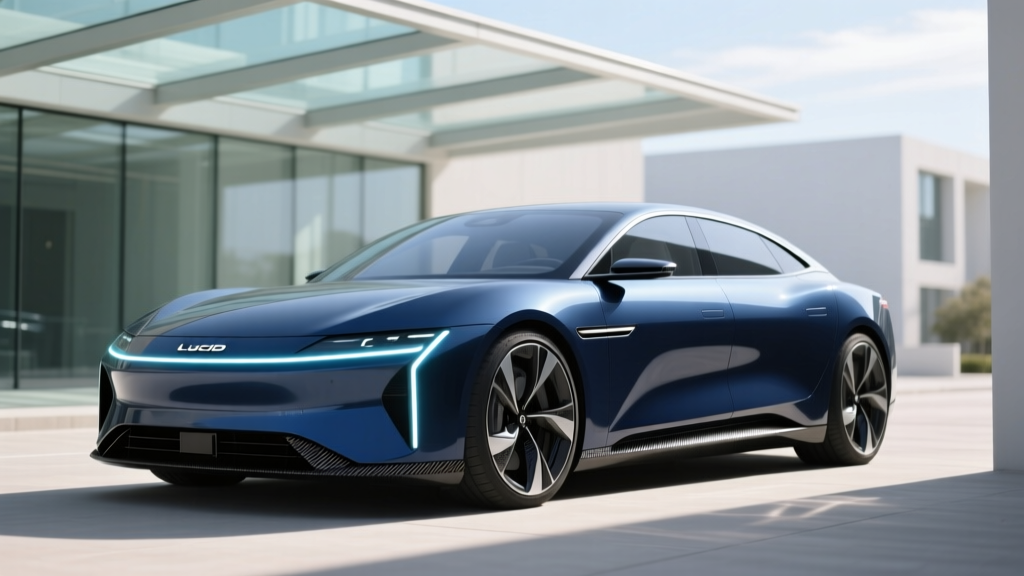
But headlines and balance sheets are two different things. Lucid Motors continues to produce and deliver the 2026 Lucid Air, a luxury electric sedan that remains one of the most efficient and longest-range EVs ever built. Below, we break down the financial context, then put the Air itself under the microscope — EPA range, real-world efficiency, charging speeds, pricing, tax credits, and whether this car makes sense for buyers who are understandably cautious.
Lucid's Financial Reality: Separating Rumor from Risk
As of early 2026, Lucid Group (NASDAQ: LCID) is not bankrupt. The company has significant backing from Saudi Arabia's Public Investment Fund (PIF), which holds a roughly 60% ownership stake and has injected billions in capital to sustain operations through the company's low-volume production ramp. Lucid's Gravity SUV is entering production, and the company has a licensing deal with Aston Martin for its powertrain technology.
That said, Lucid has burned cash at a steep rate, production volumes remain far below Tesla or even Rivian, and the company has faced repeated analyst downgrades. The "Lucid bankruptcies" search trend reflects genuine market uncertainty — not a current event. For buyers, the practical question is: if the worst happened, what would I be left with? We address that in the ownership section below.
2026 Lucid Air: Full Spec Breakdown
| Spec | Air Pure | Air Touring | Air Grand Touring | Air Sapphire |
|---|---|---|---|---|
| EPA Range | 419 mi | 425 mi | 516 mi | 427 mi |
| Battery (usable) | 88 kWh (NMC) | 92 kWh (NMC) | 112 kWh (NMC) | 118 kWh (NMC) |
| Drivetrain | RWD (single motor) | AWD (dual motor) | AWD (dual motor) | AWD (tri-motor) |
| Horsepower | 430 hp | 620 hp | 819 hp | 1,234 hp |
| 0-60 mph | 5.2 sec | 3.4 sec | 3.0 sec | 1.89 sec |
| Peak DC Charge | 200 kW | 250 kW | 300 kW | 300 kW |
| 10-80% DC Time | ~25 min | ~22 min | ~20 min | ~20 min |
| Level 2 Rate | 19.2 kW (~70 mi/hr) | 19.2 kW | 19.2 kW | 19.2 kW |
| Efficiency | 146 MPGe / 23 kWh/100mi | 131 MPGe / 26 kWh/100mi | 131 MPGe / 26 kWh/100mi | 109 MPGe / 31 kWh/100mi |
| Base MSRP | $69,900 | $77,900 | $109,900 | $249,000 |
Real-World Range: What the EPA Number Doesn't Tell You
Real-World Expectation: ~380-440 mi highway at 70 mph; ~310-350 mi in cold weather (below 32°F); ~430-470 mi mixed city/suburban driving.
The Lucid Air Grand Touring's 516-mile EPA figure is extraordinary — the highest of any production EV sold in the United States. But as with every EV, the EPA combined cycle is optimistic for sustained highway driving. In independent real-world testing at highway speeds (70-75 mph), the Grand Touring typically delivers between 380 and 440 miles depending on temperature, elevation changes, and tire selection.
The Air Pure's 419-mile EPA rating is arguably more impressive on a per-kWh basis: it achieves that range with an 88 kWh battery, reflecting Lucid's industry-leading drivetrain efficiency. In city and suburban driving, where regenerative braking recaptures energy, owners routinely report matching or even exceeding the EPA sticker.
Cold weather remains the universal EV penalty. Expect a 20-30% range reduction in sustained sub-freezing temperatures, which brings the Grand Touring down to roughly 310-350 real-world miles. The Air's heat pump helps mitigate cabin heating losses, but battery chemistry (NMC in all trims) is inherently less tolerant of cold than LFP.
Charging Speed: Class-Leading Architecture
| Level | Power / Voltage | Speed (miles added/hr) | Notes |
|---|---|---|---|
| Level 1 (120V) | ~1.4 kW | ~5-6 mi/hr | Emergency/trickle only |
| Level 2 (240V) | 19.2 kW | ~70 mi/hr | Requires 100A circuit; full overnight charge |
| DC Fast Charge | Up to 300 kW (Grand Touring) | ~300 mi in 20 min (10-80%) | 900V+ architecture; tapers above 80% |
Lucid uses a 900V+ electrical architecture (similar to Hyundai/Kia's E-GMP and Porsche's Taycan), which enables the Grand Touring and Sapphire to accept up to 300 kW at compatible DC fast chargers. On a 350 kW Electrify America or Ionity station, the 10-80% charge takes approximately 20 minutes — competitive with the fastest-charging EVs on the market.
The charge curve, however, is not flat. Peak 300 kW is sustained roughly from 10% to 40% state of charge, after which the rate tapers progressively. From 80-100%, charging slows significantly to protect the NMC cells — expect an additional 25-30 minutes for that final 20%. For road trips, the practical strategy is to charge 10-80% and go.
At home, the Air's 19.2 kW onboard charger is among the fastest in the luxury EV segment. This requires a dedicated 100-amp circuit and hardwired Level 2 station (such as a ChargePoint Home Flex or Tesla Wall Connector configured for J1772/NACS). Most homes with 200-amp electrical panels can accommodate this, but budget $1,500-$3,000 for the circuit upgrade and installation if your panel is at capacity. Always have a licensed electrician assess your service before committing to a charger spec.
Pricing, Tax Credits, and Total Cost
The 2026 Lucid Air lineup starts at $69,900 for the Pure RWD and climbs to $249,000 for the tri-motor Sapphire hypercar variant. Here is how the federal tax credit landscape applies:
| Trim | MSRP | §30D Credit Eligible? | Effective Price (est.) |
|---|---|---|---|
| Air Pure | $69,900 | Unlikely — MSRP exceeds $55,000 sedan cap; battery sourcing uncertain | ~$69,900 |
| Air Touring | $77,900 | No — exceeds $55,000 sedan MSRP cap | $77,900 |
| Air Grand Touring | $109,900 | No — exceeds $55,000 sedan MSRP cap | $109,900 |
| Air Sapphire | $249,000 | No — exceeds $55,000 sedan MSRP cap | $249,000 |
Under IRS §30D rules, new clean vehicle credits cap at $55,000 MSRP for sedans. Every Lucid Air trim exceeds this threshold, making the Air ineligible for the up-to-$7,500 federal credit regardless of battery sourcing or buyer income. This is a significant disadvantage versus competitors like the Tesla Model S (which starts near the cap) or the Hyundai Ioniq 6 (well under it).
However, buyers may still benefit from state-level incentives (California's CVRP, for example, though income caps apply), and the IRS's used EV credit (up to $4,000 on vehicles under $25,000) could apply to older Air models entering the secondary market in future years. Consult a tax professional for your specific situation — incentive rules change frequently.
Interior, Tech, and Daily Livability
The Air's cabin is genuinely spacious. Rear legroom measures 41.3 inches — more than a Mercedes S-Class — thanks to the skateboard platform and Lucid's compact motor packaging. Cargo volume is 32 cu ft combined (trunk + frunk), which is sedan-competitive and dwarfs the Tesla Model S's 28 cu ft.
The glass canopy roof is standard on Touring and above, flooding the cabin with light and creating an airy feel, though some owners note cabin heat buildup in summer (the glass is UV-treated but not heavily tinted).
Lucid's infotainment runs on a curved 34-inch glass cockpit display with a secondary lower touchscreen for climate and vehicle controls. The system is responsive but less polished than Tesla's or BMW's iDrive — app ecosystem is limited, and the navigation system, while functional, lacks the real-time traffic integration of Google Maps-based systems in competitors. Wireless Apple CarPlay and Android Auto are standard.
The Air's driver-assistance suite, branded DreamDrive Pro, includes adaptive cruise control, lane-centering, automatic emergency braking, and blind-spot monitoring. This is an SAE Level 2 system — the driver must remain fully engaged with hands on the wheel and eyes on the road. It is not "self-driving" and should not be confused with Waymo's Level 4 robotaxi service. DreamDrive Pro is competent but not class-leading; Tesla's Autopilot and GM's Super Cruise offer smoother lane-centering and, in Super Cruise's case, hands-free operation on mapped highways.
Warranty and the "Startup Risk" Question
Lucid provides the following factory coverage:
- Basic vehicle: 4 years / 50,000 miles
- Battery & powertrain: 8 years / 100,000 miles (capacity retention threshold: 70%)
- Roadside assistance: 4 years / 50,000 miles
The 8-year/100,000-mile battery warranty is industry-standard, matching Tesla, BMW, and Mercedes. The 70% capacity retention threshold means Lucid will repair or replace the battery if it degrades below 70% of original capacity within the warranty period. NMC chemistry in the Air typically degrades 8-12% over the first 100,000 miles based on early owner data — well within the warranty buffer.
But here is where the "Lucid bankruptcies" concern becomes concrete: a warranty is only as good as the company backing it. If Lucid were to cease operations, warranty claims would become unsecured creditor claims in bankruptcy proceedings. Parts availability, software updates, and authorized service centers could evaporate. This is the same risk early Fisker Karma buyers faced, and it is not theoretical.
Mitigation strategies for cautious buyers:
- Purchase from a dealer with strong independent service capability
- Consider an extended third-party warranty (though EV-specific coverage is still limited)
- Factor in that Lucid's PIF backing makes a sudden collapse less likely than a typical startup — but not impossible
- Recognize that even in a worst-case scenario, the Air's hardware is excellent; independent EV shops are increasingly capable of servicing orphaned EVs
Who Should Buy the 2026 Lucid Air — and Who Shouldn't
- Range is your top priority (516 mi EPA is unmatched)
- You value rear-seat space and ride comfort over sport handling
- You have home Level 2 charging and access to 350 kW DC fast chargers
- You accept startup risk in exchange for best-in-class efficiency
- You want the federal $7,500 tax credit (Air exceeds sedan MSRP cap)
- You need hands-free Level 2+ driving (GM Super Cruise or Tesla FSD Supervised)
- Long-term brand stability is a dealbreaker (consider BMW i5, Mercedes EQS, Tesla Model S)
- You want a certified dealer network in every metro area
Pros and Cons at a Glance
- 516-mile EPA range (Grand Touring) — highest of any production EV
- Class-leading efficiency: 23 kWh/100 mi on the Pure RWD
- 300 kW peak DC charging on a 900V+ architecture
- Massive rear-seat legroom (41.3 in) and 32 cu ft cargo
- Quiet, supple ride quality rivaling German luxury sedans
- 19.2 kW Level 2 onboard charger (fastest home charging in class)
- No federal tax credit eligibility (all trims exceed $55K sedan cap)
- DreamDrive Pro ADAS lags Tesla Autopilot and GM Super Cruise
- Limited service center network outside major metros
- Infotainment polish below Tesla, BMW, and Mercedes benchmarks
- Company financial uncertainty — warranty depends on Lucid's survival
- Cold-weather range loss significant with NMC chemistry (20-30%)
Frequently Asked Questions
Is Lucid going bankrupt in 2026?
No. As of early 2026, Lucid is not in bankruptcy. The company is majority-owned by Saudi Arabia's Public Investment Fund, which has provided billions in capital support. However, Lucid continues to operate at a significant loss, and long-term financial viability depends on scaling production with the Gravity SUV and future mid-size models.
What is the real-world range of the Lucid Air Grand Touring?
The EPA rates it at 516 miles. In real-world highway driving at 70 mph, expect 380-440 miles depending on conditions. In sub-freezing cold, plan for 310-350 miles. City and suburban driving with regenerative braking can approach or exceed the EPA figure.
How fast does the Lucid Air charge?
The Grand Touring and Sapphire accept up to 300 kW DC fast charging, achieving 10-80% in approximately 20 minutes on a 350 kW station. At home on a 19.2 kW Level 2 charger, you add roughly 70 miles of range per hour, enabling a full overnight charge.
Does the Lucid Air qualify for the $7,500 federal EV tax credit?
No. Under IRS §30D rules, sedans must have an MSRP at or below $55,000 to qualify. Every Lucid Air trim starts above that threshold. State incentives may still apply — check fueleconomy.gov for your state.
Should I buy a Lucid Air if I'm worried about the company's future?
It depends on your risk tolerance. The Air is objectively one of the best-engineered EVs on the market, and PIF backing reduces (but does not eliminate) the risk of sudden collapse. If you want zero startup risk, consider established alternatives like the BMW i5, Mercedes EQS, or Tesla Model S. If you prioritize range and efficiency above all else and can absorb the risk, the Air remains compelling.
What battery chemistry does the Lucid Air use?
All 2026 Lucid Air trims use NMC (nickel manganese cobalt) lithium-ion cells. NMC offers higher energy density than LFP, which is how Lucid achieves its exceptional range. The trade-off is slightly faster degradation over time and greater cold-weather sensitivity compared to LFP batteries used in some Tesla and BYD models.