Quick Verdict: The Lucid Air in 2026
The Lucid Air remains the efficiency benchmark among luxury electric sedans, squeezing over 4 miles per kWh from a powertrain that outclasses rivals in range-per-kWh. With the AMP-2 factory in King Abdullah Economic City (KAEC), Saudi Arabia ramping production through Lucid's majority owner — the Saudi Public Investment Fund (PIF) — the 2026 Air lineup benefits from stabilized output and new trim configurations. But US buyers need to weigh impressive engineering against a shifting federal tax-credit landscape and a service network that still lags German competitors.
| Spec | Air Pure | Air Touring | Air Grand Touring |
|---|---|---|---|
| EPA Range | 419 mi | 425 mi | 516 mi |
| Battery (usable) | 88 kWh (NMC) | 92 kWh (NMC) | 112 kWh (NMC) |
| Drivetrain | RWD, single motor | AWD, dual motor | AWD, dual motor |
| Horsepower | 430 hp | 620 hp | 819 hp |
| 0-60 mph | 5.0 sec | 3.4 sec | 3.0 sec |
| MPGe (combined) | 146 MPGe | 131 MPGe | 131 MPGe |
| Efficiency | 23 kWh/100mi | 26 kWh/100mi | 26 kWh/100mi |
| Peak DC Charge Rate | 200 kW | 250 kW | 250+ kW |
| 10-80% DC Time | ~28 min | ~22 min | ~20 min |
| Level 2 Home Rate | 19.2 kW (~80 mi/hr) | 19.2 kW (~80 mi/hr) | 19.2 kW (~80 mi/hr) |
| Base MSRP | $69,900 | $77,900 | $110,900 |
| Cargo (trunk + frunk) | 32 cu ft total | 32 cu ft total | 32 cu ft total |
| Rear Legroom | 37.6 in | 37.6 in | 37.6 in |
| Battery Warranty | 8 yr / 100,000 mi | 8 yr / 100,000 mi | 8 yr / 100,000 mi |
Lucid's Saudi Arabia Manufacturing: What US Buyers Should Know
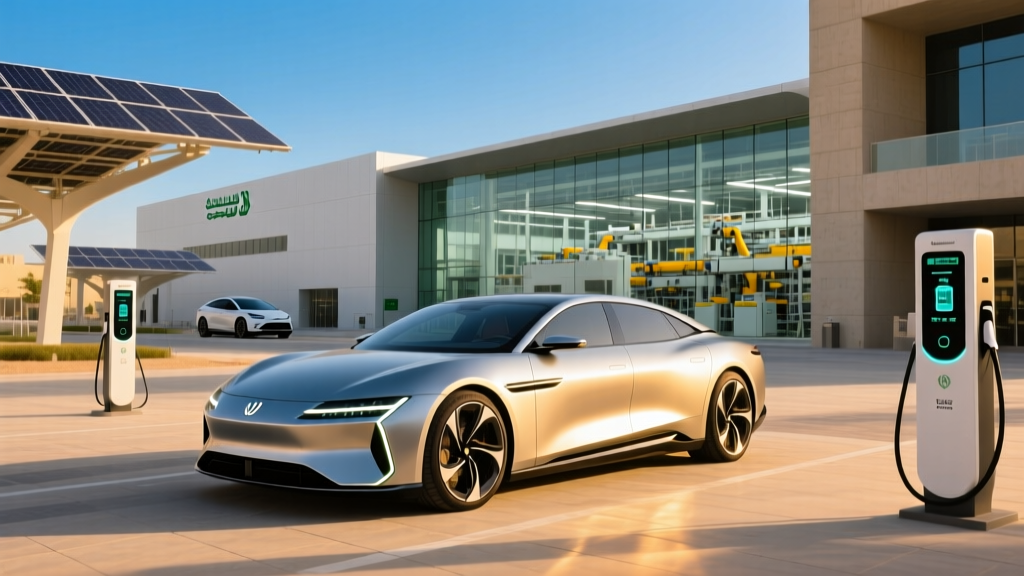
When discussing Lucid Saudi Arabia EV manufacturing, the focal point is the AMP-2 facility in KAEC, roughly 60 miles north of Jeddah. This plant — operated under Lucid's umbrella as part of the broader AMP Industrial strategy funded by PIF (which holds approximately 60% of Lucid Motors) — serves as a secondary production hub alongside the original AMP-1 factory in Casa Grande, Arizona.
For 2026, the KAEC plant primarily produces vehicles destined for the Middle East and European markets, though its existence has real implications for US buyers:
- Supply stability: Dual-factory production reduces the single-point-of-failure risk that plagued Lucid's 2022-2023 delivery timelines.
- Capital backing: PIF's continued investment gives Lucid a financial runway that startups like Fisker lacked, reducing bankruptcy risk for long-term warranty support.
- Tax-credit complexity: Vehicles assembled outside the US face §30D eligibility hurdles. More on this below.
The Arizona plant continues to build all US-market Air sedans as of early 2026. If you're buying stateside, your Air was almost certainly assembled in Casa Grande — not Saudi Arabia.
Real-World Range: Beyond the EPA Sticker
EPA Estimated Range: 516 miles
Real-World Highway (75 mph, moderate climate): ~410-440 miles
Real-World Cold Weather (30°F, highway): ~350-380 miles
Real-World City/Mixed (regenerative braking active): ~470-500 miles
Lucid's industry-leading efficiency — roughly 4.1 miles per kWh in the Grand Touring — means its real-world range still eclipses most competitors' sticker numbers. The 112 kWh usable NMC pack uses a 900V+ architecture that minimizes resistive losses, and the sedan's low drag coefficient (Cd 0.20) pays dividends at highway speeds.
However, the 516-mile EPA figure assumes a mix of city and highway driving with moderate temperatures. On a pure 75-mph highway run in 70°F weather, expect roughly 410-440 miles before needing a charger. In freezing conditions, lithium-ion chemistry and cabin heating demands cut range by 20-30%, landing around 350-380 miles. The Air's standard heat pump helps mitigate cold-weather losses compared to resistive heating systems, but physics still wins.
According to fueleconomy.gov, the Grand Touring's combined efficiency rating of 131 MPGe (26 kWh/100 mi) remains best-in-class for AWD luxury sedans above 5000 lbs.
Charging Speed: DC Fast and Home Level 2
| Charging Level | Power / Rate | Miles Added per Hour | Notes |
|---|---|---|---|
| Level 1 (120V) | ~1.4 kW | ~5-6 mi/hr | Emergency/trickle only |
| Level 2 (240V, 80A) | 19.2 kW | ~75-80 mi/hr | Requires hardwired 100A circuit; full overnight charge |
| Level 2 (240V, 48A) | 11.5 kW | ~45-50 mi/hr | Standard NEMA 14-50 or 60A circuit |
| DC Fast (peak) | 250 kW (Touring/GT) | — | 10-80% in ~20-22 min; tapers sharply above 80% |
| DC Fast (Pure) | 200 kW | — | 10-80% in ~28 min |
Lucid's 900V+ electrical architecture enables sustained high-power DC charging that few rivals match. The Grand Touring and Touring peak at approximately 250 kW on compatible CCS1 stations (and NACS via Lucid's included adapter for Tesla Supercharger access). The charge curve holds above 150 kW through roughly 60% SoC before tapering — meaning the 10-80% time of ~20 minutes reflects genuine sustained power, not a brief peak.
Above 80% SoC, charging slows dramatically to protect the NMC cells. A 80-100% top-off can add another 25-30 minutes. For road trips, plan stops at 10-80% intervals for optimal time efficiency.
At home, the Air's 19.2 kW onboard charger is among the fastest in the industry — but it demands a 100-amp dedicated circuit with 80-amp continuous draw. Most homes require a panel upgrade ($1,500-$3,000) plus the charger installation itself ($800-$1,500 for equipment and labor). On a more common 48-amp / 60A circuit, expect 11.5 kW and roughly 45-50 miles of range per hour of charging, which still refills a Grand Touring overnight.
Performance and Driving Dynamics
The Air Grand Touring's 819 hp and 3.0-second 0-60 mph time place it in supercar territory, but the real story is how it delivers that performance. Lucid's in-house-developed miniature motors — each roughly the size of a backpack — weigh significantly less than competitor powertrains, contributing to the Air's relatively low curb weight of ~5,236 lbs (Grand Touring).
The Touring trim's 620 hp and 3.4-second sprint is more than adequate for any real-world scenario, while the Pure's 430 hp RWD setup still hits 60 mph in 5.0 seconds — quicker than most gas-powered luxury sedans.
Ride quality benefits from standard adaptive air suspension across all trims. The cabin is whisper-quiet at highway speeds, aided by acoustic glass and the inherent silence of the electric drivetrain. One-pedal driving with aggressive regen is available, though Lucid's regen implementation is slightly less aggressive than Tesla's, which some drivers prefer for smoother coasting.
Pricing, Trims, and Federal Tax Credit Eligibility
| Trim | Base MSRP | As-Tested (typical) | §30D Credit Eligibility | Effective Price (est.) |
|---|---|---|---|---|
| Air Pure | $69,900 | $72,500 | Eligible — up to $7,500* | ~$62,400 - $65,000 |
| Air Touring | $77,900 | $82,000 | Eligible — up to $7,500* | ~$70,400 - $74,500 |
| Air Grand Touring | $110,900 | $118,000 | NOT eligible (MSRP cap exceeded) | $110,900+ |
*The IRS §30D clean vehicle credit provides up to $7,500 for qualifying new EVs. Eligibility depends on multiple factors that change annually:
- MSRP cap: Sedans must be priced at or below $55,000 to qualify. However, the Air Pure and Touring may qualify if classified as SUVs/trucks under IRS VIN-based rules — a nuance that requires dealer confirmation at point of sale. As of 2026, the Pure has been listed as eligible under the sedan cap exception through point-of-sale transfer, but verify with your dealer.
- Buyer income limits: AGI must not exceed $150,000 (single), $225,000 (head of household), or $300,000 (joint).
- Battery sourcing: Critical mineral and battery component requirements phase in annually. Lucid's NMC cells use supply chains that have partially met sourcing thresholds, but the exact credit amount ($3,750 or $7,500) depends on the model year's compliance percentage.
- Point-of-sale transfer: As of 2024+, buyers can transfer the credit to the dealer at purchase, reducing the out-of-pocket price immediately rather than waiting for tax filing.
The Grand Touring's $110,900+ MSRP exceeds all §30D caps regardless of classification. Buyers in this trim should look to state-level incentives (California's CVRP, for example) and consult a tax professional for personal eligibility.
Tech, Interior, and Daily Livability
The Air's interior centers on a curved 34-inch Glass Cockpit display spanning the dashboard, supplemented by a lower 17-inch retractable touchscreen for climate, navigation, and media. The UI is Lucid's proprietary system — responsive and visually clean, though it lacks Apple CarPlay and Android Auto, which remains a dealbreaker for some buyers accustomed to phone mirroring.
Driver assistance: Lucid's DreamDrive Pro uses 32 sensors including LiDAR, cameras, and radar. It provides highway lane-centering, adaptive cruise, and automated lane changes. This is an SAE Level 2 system — the driver must remain engaged with hands on the wheel at all times. It is not autonomous driving.
Cargo space: The Air offers 32 cubic feet total (22 cu ft trunk + 10 cu ft frunk), which is generous for a sedan but less than crossover rivals like the BMW iX or Tesla Model X. Rear legroom at 37.6 inches is competitive with the Mercedes EQS.
Notable drawbacks:
- No Apple CarPlay or Android Auto
- Service centers remain limited outside major metros — mobile service helps but isn't available everywhere
- Rear visibility is compromised by the sloping roofline; rely on the digital rearview mirror
- Insurance premiums run 15-25% higher than comparable gas sedans, per industry data
- Best-in-class efficiency (4+ mi/kWh)
- 516-mile EPA range (Grand Touring)
- 250 kW DC fast charging with sustained curve
- Spacious cabin with premium materials
- 900V architecture future-proofs charging
- Strong PIF backing reduces company-risk concerns
- No phone mirroring (CarPlay/Android Auto)
- Limited service center footprint
- Grand Touring ineligible for federal tax credit
- Higher insurance costs
- Brand awareness and resale value still unproven vs. Mercedes/BMW
- Saudi manufacturing may concern some ESG-focused buyers
Who Should Buy the 2026 Lucid Air?
Best for: Efficiency-obsessed luxury sedan buyers who prioritize maximum range per kWh, frequent long-distance commuters (especially in the Southwest where Lucid's service network is strongest), and tech-forward buyers who value powertrain innovation over brand cachet.
Look elsewhere if: You need CarPlay/Android Auto, live far from a Lucid service center, want a crossover/SUV form factor, or require third-row seating. The BMW iX, Tesla Model S, and Mercedes EQS each offer trade-offs worth considering.
Frequently Asked Questions
What is the real-world range of the 2026 Lucid Air?
The Grand Touring's EPA estimate is 516 miles, but expect 410-440 miles on highway road trips at 75 mph and 350-380 miles in freezing weather. City driving with regen braking can approach the EPA figure.
How fast does the Lucid Air charge at home and on the road?
On a 250 kW DC fast charger, the Touring and Grand Touring add 10-80% in approximately 20-22 minutes. At home on a 19.2 kW Level 2 charger (requiring a 100A circuit), you'll add roughly 80 miles per hour — enough for a full overnight charge.
Does the Lucid Air qualify for the federal EV tax credit?
The Air Pure and Touring may qualify for up to $7,500 under §30D, depending on MSRP classification, buyer income, and battery-sourcing compliance. The Grand Touring exceeds MSRP caps and does not qualify. Verify current eligibility at irs.gov and with your dealer.
Are Lucid Airs made in Saudi Arabia sold in the United States?
No. The AMP-2 plant in KAEC, Saudi Arabia produces vehicles primarily for Middle Eastern and European markets. US-market Air sedans are assembled at AMP-1 in Casa Grande, Arizona.
How does Lucid's Saudi ownership affect the company's stability?
PIF's ~60% ownership stake and continued capital injections provide Lucid with financial backing that reduces the insolvency risk that felled other EV startups. This matters for long-term warranty support and parts availability.
Is the Lucid Air worth buying over a Tesla Model S or Mercedes EQS?
If range efficiency and ride comfort are your top priorities, the Air is difficult to beat. The Model S offers a superior Supercharger network and Autopilot ecosystem. The EQS provides stronger brand prestige and dealer service infrastructure. Each has trade-offs — test-drive all three before deciding.
What is the battery warranty on the Lucid Air?
Lucid covers the battery and powertrain for 8 years or 100,000 miles, whichever comes first, with a capacity retention threshold of 70% or above during the warranty period.