If you have been tracking the luxury electric sedan market — or the EV sector on Wall Street — you have likely found yourself asking two questions at once: did Lucid stock split, and is the Lucid Air actually worth its premium price tag? The two questions are more connected than they first appear. A stock split often signals a company trying to broaden its retail investor base, and for Lucid Group (NASDAQ: LCID), retail confidence is tightly linked to whether its flagship sedan can win buyers away from Tesla, Mercedes-Benz, and BMW. This guide tackles both angles: the current status of any Lucid stock split, and a data-driven, 2026 Lucid Air profile covering EPA range, DC fast-charging speeds, real-world efficiency, tax credit eligibility, and how it stacks up against the competition.
Did Lucid Stock Split? The Investment Angle Explained
As of early 2026, Lucid Group has not executed a stock split. The shares continue to trade on NASDAQ under the ticker LCID. Unlike Tesla, which completed a 3-for-1 split in August 2022, or Amazon's 20-for-1 split the same year, Lucid has not announced or filed for a forward or reverse split with the SEC.
Why does this matter to an EV buyer? Because Lucid's financial health directly affects long-term parts availability, service-center expansion, software updates, and resale confidence. A stock split itself does not change a company's fundamentals — it simply divides existing shares into more units at a proportionally lower price. What does matter is Lucid's production volume, cash runway, and the backing of Saudi Arabia's Public Investment Fund (PIF), which holds a majority stake. PIF's continued capital injections have kept Lucid solvent through slower-than-expected sales volumes, but buyers should be aware that the company operates at a loss per vehicle and depends on future models (like the Gravity SUV and the upcoming mid-size platform) to reach profitability.
Bottom line for investors and buyers: No Lucid stock split has occurred. If you see headlines suggesting otherwise, verify them against Lucid's investor relations page or SEC filings before acting.
2026 Lucid Air: Quick Verdict
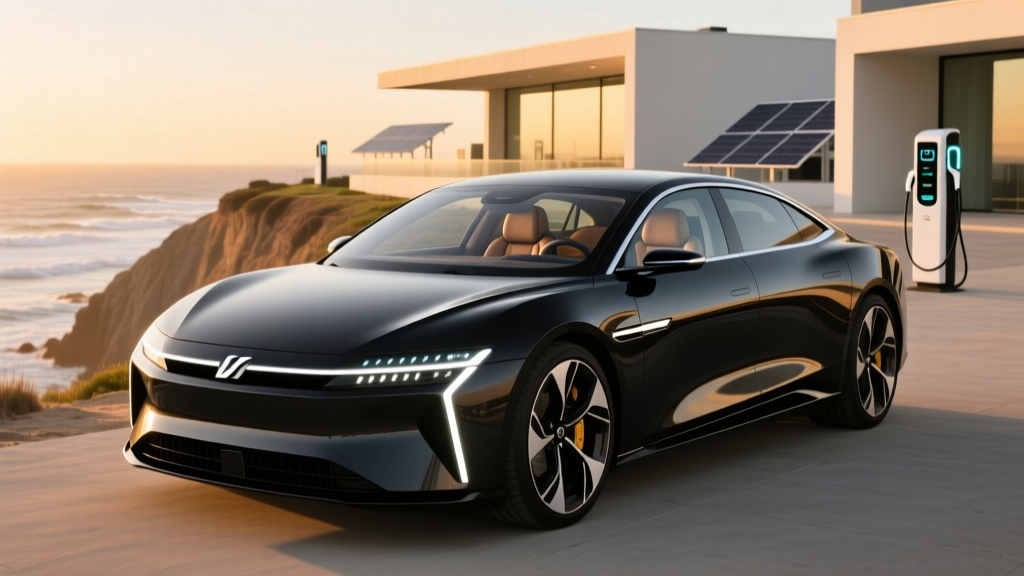
The Lucid Air remains one of the most efficient and longest-range luxury sedans on the market. Its powertrain engineering — developed in-house with miniaturized permanent-magnet motors — delivers class-leading MPGe figures and EPA range numbers that few competitors can touch. The trade-offs are a sparse service-center network, a high entry price that mostly excludes it from the federal EV tax credit, and an interior that, while beautifully minimalist, does not quite match the material opulence of a Mercedes EQS or the tech-theater of a Tesla Model S Plaid.
| Spec | Air Pure | Air Touring | Air Grand Touring | Air Sapphire |
|---|---|---|---|---|
| EPA Range | 419 mi | 406 mi | 516 mi | 427 mi |
| Battery (usable) | 88 kWh | 112 kWh | 112 kWh | 118 kWh |
| Chemistry | NMC | NMC | NMC | NMC |
| Drivetrain | RWD (single motor) | AWD (dual motor) | AWD (dual motor) | AWD (tri-motor) |
| Horsepower | 430 hp | 620 hp | 819 hp | 1,234 hp |
| 0-60 mph | 5.0 sec | 3.4 sec | 3.0 sec | 1.89 sec |
| Peak DC Charge Rate | 200 kW | 250 kW | 300 kW | 300 kW |
| 10-80% DCFC Time | ~30 min | ~22 min | ~20 min | ~20 min |
| Level 2 Home Charge | 19.2 kW (~77 mi/hr) | 19.2 kW (~77 mi/hr) | 19.2 kW (~77 mi/hr) | 19.2 kW (~77 mi/hr) |
| Base MSRP | $69,900 | $77,900 | $125,600 | $249,000 |
| EPA Efficiency (combined) | 146 MPGe | 134 MPGe | 131 MPGe | 109 MPGe |
Real-World Range: What the EPA Sticker Does Not Tell You
EPA Sticker: Up to 516 miles (Grand Touring with 19" wheels)
Real-World Expectation: ~410-450 mi highway (70-75 mph, mild weather); ~340-380 mi in cold weather (below 32°F); ~460-490 mi mixed city/highway in temperate conditions.
Lucid's efficiency advantage is not just marketing. The Air Grand Touring achieves roughly 4.6 miles per kWh — a figure that outpaces the Tesla Model S Long Range (~3.8 mi/kWh) and the Mercedes EQS 450+ (~3.5 mi/kWh). This comes from a combination of low drag coefficient (Cd 0.20), lightweight motor design, and a 900V electrical architecture that reduces resistive losses.
However, real-world highway driving at 75+ mph will erode that 516-mile figure by 10-15%. Cold weather compounds the loss: expect 20-30% range reduction in sub-freezing temperatures, as the battery must divert energy to thermal management. The Air does include a heat pump (standard on all trims), which mitigates cabin-heating losses, but the physics of lithium-ion cells in cold weather remain unavoidable. On a 300-mile winter road trip through the Rockies, you will still want to plan at least one DC fast-charging stop.
Charging Speed: DC Fast Charging and Home Level 2
Lucid's 900V battery architecture is one of the highest-voltage platforms in production (matched only by Porsche's Taycan at 800V and Hyundai/Kia's E-GMP at 800V). Higher voltage enables faster charging at lower current, reducing heat buildup and sustaining peak charge rates longer.
| Charging Method | Power (kW) | Miles of Range Added per Hour | Notes |
|---|---|---|---|
| Level 1 (120V household) | ~1.4 kW | ~5-6 mi/hr | Emergency/trickle only |
| Level 2 (240V, 48A home charger) | 11.5 kW | ~46 mi/hr | Typical residential setup |
| Level 2 (240V, 80A, Lucid Connected Home) | 19.2 kW | ~77 mi/hr | Requires 100A dedicated circuit; full overnight charge in ~6 hr |
| DC Fast Charge (Grand Touring, peak) | 300 kW | ~1,200 mi/hr (at peak) | 10-80% in ~20 min; requires 350 kW+ station |
| DC Fast Charge (Touring, peak) | 250 kW | ~1,000 mi/hr (at peak) | 10-80% in ~22 min |
| DC Fast Charge (Pure, peak) | 200 kW | ~800 mi/hr (at peak) | 10-80% in ~30 min |
Charging-curve reality check: The 300 kW peak on the Grand Touring is not sustained for the entire session. Like all EVs, the Air's charge rate tapers significantly above 80% State of Charge (SoC) to protect battery health. You will see 300 kW from roughly 10-35% SoC, then a gradual step-down to ~150 kW through 60%, and further tapering to ~50 kW by 80%. The 10-80% time of ~20 minutes already accounts for this curve. If you routinely charge to 100% on DC fast chargers, add another 20-25 minutes for the 80-100% segment.
For home charging, Lucid's available 80A Connected Home charger (sold separately, ~$1,200) is among the fastest Level 2 units available. However, it requires a 100-amp dedicated circuit, which may necessitate an electrical panel upgrade — a $1,500-$3,000 added cost depending on your home's existing service. Most buyers will install a standard 48A Level 2 charger on a 60A circuit, adding ~46 miles of range per hour, which is sufficient to fully recharge overnight for all but the longest daily commutes. Consult a licensed electrician to assess your panel capacity before committing to the 80A unit.
Performance and Driving Dynamics
The Lucid Air lineup spans an extraordinary performance range. The base Pure, with its single rear motor producing 430 hp, delivers a 5.0-second 0-60 mph time — quicker than most gas-powered sport sedans and more than adequate for daily driving. The dual-motor Touring (620 hp, 3.4 sec) and Grand Touring (819 hp, 3.0 sec) enter serious sports-car territory.
The Sapphire, with its tri-motor setup and 1,234 hp, is a 1.89-second hypercar rival that challenges the Tesla Model S Plaid and Rimac Nevera. However, the Sapphire is a limited-production halo model at $249,000 — it exists to demonstrate Lucid's engineering capability, not to drive volume.
For most buyers, the Touring is the sweet spot: dual-motor AWD for all-weather confidence, a sub-3.5-second 0-60, and over 400 miles of EPA range, all for roughly $78,000 before options. The air suspension (standard on Touring and above) provides a compliant ride that filters road imperfections effectively, and the steering — while not as communicative as a Porsche Taycan's — is precise and well-weighted for a luxury sedan.
Pricing, Trims, and Federal Tax Credit Eligibility
Here is where the Lucid Air faces its steepest headwind. The base Pure starts at $69,900, which technically falls under the IRS §30D MSRP cap of $55,000 for sedans. Wait — it does not. The §30D cap for new sedans is $55,000, and even the Air Pure at $69,900 exceeds that threshold. This means no new Lucid Air trim qualifies for the $7,500 federal EV tax credit based on MSRP alone.
IRS §30D Federal EV Tax Credit — Why the Lucid Air Does Not Qualify:
- MSRP Cap: Sedans must be ≤$55,000. Air Pure starts at $69,900. ❌
- Buyer Income Cap: AGI ≤$150K (single) / $300K (joint). Many Air buyers may exceed this. ⚠️
- Battery Sourcing: Critical minerals and battery components must meet phased-in domestic/free-trade-area requirements. Even if the MSRP qualified, sourcing rules would need separate verification. ⚠️
- Point-of-Sale Transfer: Available for qualifying vehicles, but irrelevant here since the Air fails the MSRP test.
Source: IRS Clean Vehicle Credit eligibility page. Rules are subject to change — consult a tax professional for your specific situation.
The lack of federal credit eligibility is a significant competitive disadvantage against the Tesla Model S (which also exceeds the MSRP cap but benefits from Tesla's brand and Supercharger network) and especially against used Lucid Air models, which may qualify for the up-to-$4,000 used-EV credit (§25E) if the sale price is $25,000 or less — though in practice, used Airs still command well above that threshold as of 2026.
Interior, Cargo, and Technology
The Air's cabin is defined by its "post-luxury" philosophy: expansive glass canopy roof, a 34-inch curved Glass Cockpit display floating above the dash, and a retractable lower Pilot Panel for climate and media controls. The design is striking and airy, with generous rear legroom (41.7 inches — more than the Mercedes EQS and rivaling the BMW 7 Series).
Cargo volume: 32.0 cubic feet behind the rear seats (including the frunk), which is competitive with full-size luxury sedans. The trunk opening is a conventional sedan shape rather than a hatchback, limiting the size of bulky items you can load — a notable practicality gap versus the Tesla Model S's liftgate design.
Driver assistance: Lucid's DreamDrive Pro system uses 32 sensors including lidar (on Grand Touring and above) for adaptive cruise control, lane-keeping, and automated parking. This is a SAE Level 2 driver-assistance system — the driver must remain fully engaged and hands on or near the wheel at all times. It is not a self-driving system. DreamDrive Pro is competent on highways but does not yet offer the hands-free capability of GM's Super Cruise or Ford's BlueCruise on mapped divided highways.
Pros
- Class-leading EPA range (516 mi Grand Touring)
- Best-in-class efficiency (~4.6 mi/kWh)
- 900V architecture enables 300 kW peak DC charging
- Spacious rear cabin with 41.7" legroom
- Standard heat pump for cold-weather efficiency
- Striking, minimalist interior design
Cons
- No federal §30D tax credit eligibility (MSRP exceeds $55K cap)
- Limited service-center network (fewer than 20 locations nationwide)
- Sedan trunk opening limits cargo flexibility
- DreamDrive Pro lags competitors in hands-free features
- Brand longevity and resale-value uncertainty
- No stock split or major retail-investor catalyst as of 2026
Lucid Air vs. Key Competitors
| Attribute | Lucid Air Touring | Tesla Model S LR | Mercedes EQS 450+ | BMW i7 xDrive50 |
|---|---|---|---|---|
| EPA Range | 406 mi | 402 mi | 352 mi | 318 mi |
| Base MSRP | $77,900 | $74,990 | $104,400 | $124,200 |
| Efficiency (mi/kWh) | ~4.2 | ~3.8 | ~3.5 | ~3.0 |
| Peak DC Charge kW | 250 kW | 250 kW | 200 kW | 195 kW |
| 0-60 mph | 3.4 sec | 3.1 sec | 5.9 sec | 4.5 sec |
| §30D Tax Credit | No (MSRP cap) | No (MSRP cap) | No (MSRP cap) | No (MSRP cap) |
| Service Network | Limited | Extensive | Dealer network | Dealer network |
Decision framework:
Choose the Lucid Air if: You prioritize maximum range and efficiency above all else, value distinctive design over brand cachet, and have reliable home charging (making the sparse public-charging-service-network issue less painful).
Choose the Tesla Model S if: You need the Supercharger network for frequent road trips, want over-the-air updates from a company with a proven long-term service track record, and prefer a hatchback cargo area.
Choose the Mercedes EQS or BMW i7 if: You want traditional luxury dealer service, hands-free driving on mapped highways (Mercedes' Drive Pilot is SAE Level 3 in limited conditions), and material quality that justifies the premium price.
Warranty, Battery Longevity, and Ownership Costs
Lucid provides a 4-year/50,000-mile basic vehicle warranty and an 8-year/100,000-mile battery and powertrain warranty, which is competitive with industry standards (Tesla offers 8 years/150,000 miles on Model S battery). The battery warranty guarantees that the pack will retain at least 70% of its original capacity during the coverage period.
Lucid uses NMC (nickel-manganese-cobalt) chemistry across the Air lineup. NMC offers higher energy density than LFP (lithium iron phosphate), which is why the Air achieves such impressive range in a sedan form factor. However, NMC cells are more sensitive to sustained high-SoC storage and extreme heat. For maximum longevity, Lucid recommends daily charging to 80-90% and reserving 100% charges for road trips — a practice consistent with NMC best practices across the industry.
Battery replacement cost, should it be needed out of warranty, is estimated at $18,000-$25,000 based on current NMC pack pricing for ~112 kWh units, though Lucid has not published official out-of-warranty replacement figures. As with any low-volume manufacturer, parts availability and service turnaround times are a legitimate concern for second and third owners.
Who Should Buy the Lucid Air?
The Lucid Air is best suited for:
- Tech-forward professionals who want maximum range for occasional long trips but primarily charge at home.
- Efficiency-focused buyers who care about kWh/mile as much as horsepower — the Air's engineering is genuinely best-in-class here.
- Design-conscious sedan buyers who find the Tesla Model S interior dated and the EQS too visually anonymous.
It is less ideal for:
- Frequent road-trippers who depend on dense public-charging networks — Tesla's Supercharger advantage remains real.
- Tax-credit-dependent buyers — the Air's MSRP disqualifies it from §30D.
- Resale-value-conscious buyers — Lucid's long-term depreciation curves are still being established, and brand uncertainty adds risk.
Frequently Asked Questions
Did Lucid stock split in 2025 or 2026?
No. As of early 2026, Lucid Group (LCID) has not executed or announced a stock split. Always verify against Lucid's official investor relations site or SEC filings before making investment decisions.
What is the real-world range of the Lucid Air?
The EPA rates the Grand Touring at 516 miles. In real-world highway driving at 70-75 mph in mild weather, expect ~410-450 miles. In cold weather (below freezing), expect ~340-380 miles due to battery thermal management demands and reduced cell efficiency.
How fast does the Lucid Air charge at home and on DC fast chargers?
On a 48A Level 2 home charger, the Air gains ~46 miles of range per hour. On a 350 kW DC fast charger, the Grand Touring peaks at 300 kW and charges from 10-80% in approximately 20 minutes, though the rate tapers significantly above 80% SoC.
Does the Lucid Air qualify for the federal EV tax credit?
No. The IRS §30D credit caps sedan MSRPs at $55,000. Even the base Air Pure at $69,900 exceeds this cap. See the IRS eligibility page for current rules, and consult a tax professional for your situation.
Is the Lucid Air worth buying vs. the Tesla Model S?
The Air wins on efficiency and range-per-kWh, interior spaciousness, and design distinctiveness. The Model S wins on Supercharger network access, proven long-term service infrastructure, hatchback practicality, and software ecosystem. Your priority ranking among these factors should drive the decision.
What are the biggest pros and cons of the Lucid Air?
Pros: class-leading range and efficiency, 900V fast-charging architecture, spacious cabin, striking design. Cons: no federal tax credit, limited service centers, conventional trunk opening, driver-assist features lag some competitors, brand longevity uncertainty.
How long will the Lucid Air battery last?
Lucid warranties the battery for 8 years/100,000 miles with a minimum 70% capacity retention guarantee. Based on NMC chemistry degradation data from similar packs in the industry, expect 10-15% capacity loss over 150,000 miles with proper charging habits (daily charge to 80-90%, avoid prolonged 100% storage).
Sources: EPA fuel economy data via fueleconomy.gov; Lucid Motors official specifications via lucidmotors.com/air; IRS §30D eligibility rules via irs.gov.