If you've searched "how much is a full charge on a Tesla" and found only vague answers, this guide gives you the exact math. Charging costs depend on three variables: your specific Tesla's battery capacity (in kWh), where you charge (home electricity rate vs. public DC fast charger pricing), and how depleted the battery is when you plug in. Below, we calculate full-charge costs for every current Tesla model — the Model 3, Model Y, Model S, Model X, and Cybertruck — using real utility rates and Supercharger pricing, then pair those numbers with range, efficiency, and ownership data you actually need to make a purchase decision.
The Quick Answer: Full Charge Costs by Tesla Model
A full 0–100% charge on a Tesla costs between $9 and $23 depending on the model and where you plug in. Home charging on a standard residential rate (~$0.16/kWh national average) is dramatically cheaper than DC fast charging on the Tesla Supercharger network (~$0.35/kWh average). Here's the breakdown by model:
| Model | Battery (kWh usable) | Home Charge ($0.16/kWh) | Supercharger ($0.35/kWh) | EPA Range |
|---|---|---|---|---|
| Model 3 RWD | 60 kWh (LFP) | ~$9.60 | ~$21.00 | 272 mi |
| Model 3 Long Range AWD | 79 kWh (NMC) | ~$12.64 | ~$27.65 | 341 mi |
| Model Y Long Range AWD | 79 kWh (NMC) | ~$12.64 | ~$27.65 | 320 mi |
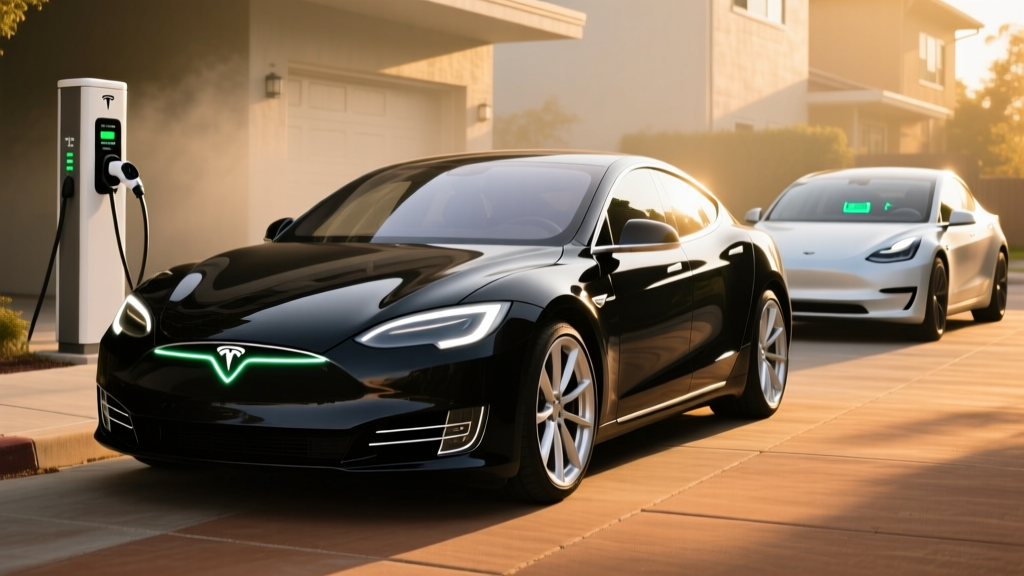
| Model S Long Range | 100 kWh (NMC) | ~$16.00 | ~$35.00 | 402 mi |
| Model X Long Range | 100 kWh (NMC) | ~$16.00 | ~$35.00 | 335 mi |
| Cybertruck AWD | 123 kWh (NMC) | ~$19.68 | ~$43.05 | 340 mi |
Important nuance: You rarely charge from 0 to 100%. Most owners charge from 20–80% daily, which costs roughly 60% of the figures above. LFP-equipped models (Model 3 RWD) can be charged to 100% daily without degradation concerns; NMC models are best kept at 80% for daily use per Tesla's own recommendation.
Home vs. Supercharger: Where the Real Savings Are
The single biggest factor in "how much is a full charge on a Tesla" is where you charge. Here's why home charging dominates on cost:
Home Level 2 Charging (240V)
A Tesla Wall Connector or third-party Level 2 charger delivers up to 11.5 kW (48 amps) on a 60-amp circuit. At the U.S. residential average of $0.16 per kWh (EIA, late 2024 data), filling a Model 3 Long Range's 79 kWh battery costs about $12.64. That's roughly $0.04 per mile — compared to $0.12–$0.15 per mile for a 30-MPG gas car at $3.50/gallon.
Time-of-use rates matter. Many utilities offer off-peak rates as low as $0.06–$0.08/kWh overnight. Schedule your Tesla to charge at midnight, and that same Model 3 Long Range full charge drops to $4.74–$6.32. This is where EV ownership economics really shine.
Tesla Supercharger Network (DC Fast Charging)
Supercharger pricing varies by location and time of day but averages $0.30–$0.40/kWh in most U.S. markets (urban centers and peak hours skew higher). Some stations offer off-peak discounts. At $0.35/kWh, a full Model Y charge costs ~$27.65 — still cheaper than filling a gas tank in most cases, but roughly 2.2× the cost of home charging.
Real-world Supercharger tip: Tesla's charging curve tapers significantly above 80% state of charge. Charging from 80–100% on a Supercharger is both slow (power drops to single-digit kW) and expensive per mile added. For road trips, charge to 80% and move on — it's faster and more economical.
Tesla Model 3 (2025): Range, Charging Speed & Efficiency Deep Dive
The refreshed "Highland" Model 3 remains Tesla's most affordable and most efficient vehicle. Here's what you need to know about charging and range across its trims:
| Spec | RWD | Long Range AWD | Performance AWD |
|---|---|---|---|
| Base MSRP | $38,990 | $44,990 | $52,990 |
| EPA Range | 272 mi | 341 mi | 315 mi |
| Battery (usable) | 60 kWh (LFP) | 79 kWh (NMC) | 79 kWh (NMC) |
| Efficiency | 25 kWh/100mi (132 MPGe) | 25 kWh/100mi (132 MPGe) | 27 kWh/100mi (123 MPGe) |
| Max DC Charge Rate | 170 kW | 250 kW | 250 kW |
| 10–80% DC Time | ~25 min | ~22 min | ~22 min |
| Level 2 Rate (max) | 11.5 kW (~44 mi/hr) | 11.5 kW (~44 mi/hr) | 11.5 kW (~44 mi/hr) |
| 0–60 mph | 5.8 sec | 4.2 sec | 2.9 sec |
| Horsepower | 271 hp | 346 hp | 510 hp |
| Drivetrain | RWD | Dual-Motor AWD | Dual-Motor AWD |
What Makes the Model 3 Stand Out
The Model 3's efficiency is its hidden superpower. At 25 kWh/100 miles, it extracts more range per kWh than almost any EV on the market. The LFP battery in the RWD trim offers excellent cycle life (3,000+ cycles before significant degradation) and can be charged to 100% daily without harm — ideal for commuters with predictable routes. The trade-off: LFP has lower energy density, which is why the RWD model has less range despite similar physical battery size.
Tesla Model Y (2025): The Best-Selling EV's Charging Profile
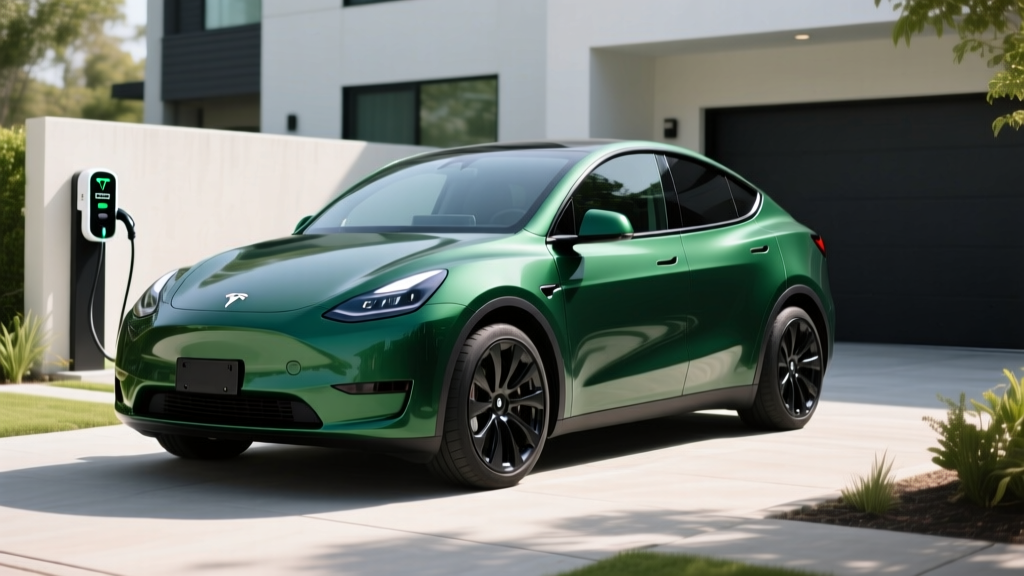
The Model Y is America's best-selling EV for good reason — crossover practicality with sedan-like efficiency. The 2025 "Juniper" refresh brought updated styling, improved suspension, and a quieter cabin.
| Spec | Long Range AWD | Performance AWD |
|---|---|---|
| Base MSRP | $46,990 | $51,490 |
| EPA Range | 320 mi | 293 mi |
| Battery (usable) | 79 kWh (NMC) | 79 kWh (NMC) |
| Efficiency | 27 kWh/100mi (123 MPGe) | 29 kWh/100mi (115 MPGe) |
| Max DC Charge Rate | 250 kW | 250 kW |
| 10–80% DC Time | ~22 min | ~22 min |
| Level 2 Rate (max) | 11.5 kW (~37 mi/hr) | 11.5 kW (~37 mi/hr) |
| 0–60 mph | 4.8 sec | 3.5 sec |
| Horsepower | 384 hp | 456 hp |
| Cargo (rear seats up) | 30.2 cu ft | 30.2 cu ft |
| Cargo (rear seats folded) | 72.0 cu ft | 72.0 cu ft |
Tesla Model S, Model X & Cybertruck: Premium and Utility Charging Costs
The larger Teslas carry bigger batteries and correspondingly higher full-charge costs, but they also deliver the longest range and most capability.
| Spec | Model S LR | Model X LR | Cybertruck AWD |
|---|---|---|---|
| Base MSRP | $79,990 | $84,990 | $79,990 |
| EPA Range | 402 mi | 335 mi | 340 mi |
| Battery (usable) | 100 kWh (NMC) | 100 kWh (NMC) | 123 kWh (NMC) |
| Efficiency | 25 kWh/100mi (130 MPGe) | 30 kWh/100mi (111 MPGe) | 36 kWh/100mi (93 MPGe) |
| Max DC Charge Rate | 250 kW | 250 kW | 250 kW |
| 10–80% DC Time | ~27 min | ~27 min | ~33 min |
| 0–60 mph | 3.1 sec | 3.8 sec | 3.9 sec |
| Horsepower | 670 hp | 670 hp | 600 hp |
| Towing Capacity | N/A | 5,000 lbs | 11,000 lbs |
Cybertruck efficiency note: The Cybertruck's stainless-steel exoskeleton and brick-like aerodynamics push its consumption to 36 kWh/100 miles — the least efficient Tesla by far. A full charge at home still costs only ~$19.68, but Supercharger costs on road trips add up fast. If you tow, expect range to drop 40–50%, making the effective range closer to 170 miles under heavy load.
Federal Tax Credit: What Teslas Qualify in 2025?
The IRS §30D federal EV tax credit offers up to $7,500 for qualifying new EV purchases — but eligibility depends on MSRP caps, buyer income limits, and battery component/mineral sourcing requirements that change annually. As of 2025, here's where Tesla models stand:
- Model 3 RWD and Long Range: Eligible for up to $7,500 (confirm current sourcing status on fueleconomy.gov).
- Model Y (all trims): Eligible for up to $7,500 (MSRP under the $80,000 SUV cap).
- Model S and Model X: Not eligible — MSRP exceeds the $80,000 SUV / $55,000 sedan cap set by the Inflation Reduction Act.
- Cybertruck: Eligibility varies by trim and sourcing. Base AWD ($79,990) is under the $80,000 truck cap, but confirm current status at purchase.
Income caps apply: Modified adjusted gross income must not exceed $150,000 (single), $225,000 (head of household), or $300,000 (joint filers). The credit can now be transferred to the dealer at point of sale as an instant discount — you don't need to wait until tax filing. Always verify current eligibility at IRS.gov before purchasing, as battery-sourcing rules tighten periodically.
| Model | Base MSRP | Max §30D Credit | Effective Price |
|---|---|---|---|
| Model 3 RWD | $38,990 | $7,500 | ~$31,490 |
| Model 3 Long Range | $44,990 | $7,500 | ~$37,490 |
| Model Y Long Range | $46,990 | $7,500 | ~$39,490 |
| Model S Long Range | $79,990 | $0 (over cap) | $79,990 |
| Model X Long Range | $84,990 | $0 (over cap) | $84,990 |
| Cybertruck AWD | $79,990 | Up to $7,500* | ~$72,490* |
*Cybertruck credit eligibility — verify current sourcing compliance at purchase.
Tesla Warranty, Battery Longevity & Degradation
Tesla's battery and drive unit warranty provides a baseline of protection, but real-world data suggests batteries outlast the warranty period significantly:
- Model 3 / Model Y: 8 years or 100,000 miles (whichever comes first), with Tesla guaranteeing minimum 70% battery capacity retention.
- Model S / Model X: 8 years or 150,000 miles, minimum 70% retention.
- Cybertruck: 8 years or 120,000 miles, minimum 70% retention.
- Basic vehicle warranty: 4 years or 50,000 miles across all models.
Real-world degradation: Tesla's 2023 Impact Report (the most recent comprehensive data published) showed Model 3/Y batteries losing approximately 15% capacity after 200,000 miles. LFP batteries in the Model 3 RWD tend to show even less degradation due to their superior cycle life, though they may exhibit slightly more variance in state-of-charge estimation. The practical takeaway: a Tesla battery should comfortably last 15–20 years of normal driving before approaching the 70% threshold.
Tesla Tech, Driver Assistance & Notable Drawbacks
Standout Features
- Supercharger network: 50,000+ DC fast chargers globally, with the highest reliability of any public charging network in the U.S. — consistently 95%+ uptime.
- Over-the-air updates: Tesla continuously improves vehicles post-purchase with software updates that can add range, performance, and features.
- Autopilot (included): SAE Level 2 driver assistance with adaptive cruise control and lane centering. Competent for highway use.
- FSD (Supervised): $8,000 option (or $99/month) for city-street capable Level 2 assist. Requires active driver supervision at all times — this is not self-driving.
- 15.4" touchscreen (Model 3/Y): Centralized infotainment with Netflix, YouTube, and gaming while charging.
Notable Drawbacks
- No physical stalks (Highland/Juniper): The refreshed Model 3 and Model Y moved turn signals to steering-wheel buttons and gear selection to the touchscreen — a polarizing change that frustrates many drivers.
- Minimalist interior: No instrument cluster, no physical buttons for climate or volume. Everything routes through the center screen.
- Panel gaps and build variance: Improved from earlier years, but still inconsistent compared to legacy luxury automakers, especially on Model S/X.
- Insurance costs: Tesla insurance premiums run 20–40% higher than comparable gas vehicles due to repair costs and parts pricing. Get quotes before buying.
- No Apple CarPlay / Android Auto: Tesla's proprietary infotainment is capable but closed. If you rely on phone projection, this is a dealbreaker.
Pros
- Lowest cost-per-mile in the EV market with home charging
- Supercharger network is the gold standard for road trips
- Class-leading efficiency (kWh/100mi)
- Strong OTA update track record
- LFP battery option for daily 100% charging
- Point-of-sale tax credit reduces upfront cost
Cons
- Touchscreen-only controls (no stalks, no buttons)
- Higher insurance premiums than competitors
- FSD is expensive and still Level 2 only
- No CarPlay/Android Auto
- Model S/X do not qualify for federal tax credit
- Cybertruck efficiency is poor for an EV
Who Should Buy a Tesla — And Who Shouldn't
Best for:
- Home-charging commuters: If you can install a Level 2 charger at home, a Model 3 RWD at ~$31,490 after the tax credit offers the lowest per-mile cost of any new car on the market. Schedule overnight charging on off-peak rates and your "fuel" cost drops below $5 for a full battery.
- Road-trip families: The Model Y Long Range plus the Supercharger network is the most practical EV road-trip setup available. 320 miles EPA range plus 250-kW charging means ~22-minute stops every 250 miles.
- Tech-forward buyers: OTA updates, the Tesla app, and the Supercharger ecosystem create an ownership experience that legacy automakers haven't matched.
Consider alternatives if:
- You can't charge at home: Relying solely on Superchargers doubles your fuel cost and adds weekly charging time. Consider a PHEV or wait until you have charging access.
- You want a traditional driving interface: The stalk-less, button-less Highland/Juniper interior is a dealbreaker for many. Test-drive before committing.
- You need a luxury sedan experience: The Model S is impressive but doesn't qualify for the tax credit, and the interior doesn't match BMW i5 or Mercedes EQE refinement.
Frequently Asked Questions
Is charging a Tesla cheaper than gas?
Yes, significantly — if you charge at home. A Model 3 Long Range full charge at home costs ~$12.64 and delivers ~300 real-world miles, or about $0.04/mile. A comparable gas car at 30 MPG and $3.50/gallon costs $0.12/mile — three times more. Supercharger costs (~$0.08–$0.10/mile) are still cheaper than gas but the gap narrows.
Does Tesla charge per minute or per kWh at Superchargers?
Tesla bills by the kWh at most U.S. Superchargers, which is the fairest method — you pay for the energy you receive. Some locations still use per-minute billing, which can penalize vehicles that charge more slowly (e.g., above 80% SoC or in cold weather). Check the station details in your Tesla's navigation before plugging in.
How long does it take to charge a Tesla at home?
On a Level 2 Tesla Wall Connector (11.5 kW / 48 amps), a full charge takes roughly 5–7 hours for a Model 3 and 7–9 hours for a Model S or Cybertruck. Most owners plug in overnight and wake to a full battery every morning. Level 1 charging (120V, ~1.4 kW) adds only ~3–5 miles per hour and is only practical as a trickle-charge supplement.
Does cold weather increase Tesla charging costs?
Indirectly, yes. Cold batteries charge more slowly (the car must warm the battery before accepting peak kW), and range drops 15–25% in sub-30°F weather. You'll need to charge more frequently in winter, increasing total monthly electricity spend. Preconditioning the battery via the Tesla app before charging — especially before Supercharger stops — mitigates slow charging.
What is the cheapest Tesla to charge?
The Model 3 RWD, with its 60 kWh LFP battery, costs the least to fill: ~$9.60 at home and ~$21 at a Supercharger for a full 0–100% charge. Its 272-mile EPA range and 132 MPGe efficiency make it the most economical Tesla to own on a per-mile basis.
Sources: fueleconomy.gov (EPA range and efficiency data), U.S. Energy Information Administration (electricity rates), IRS.gov (§30D tax credit rules). All pricing and specs reflect 2025 model year at time of publication. Verify current tax credit eligibility before purchase.