Quick Verdict: Efficiency King With a Minimalist Cabin
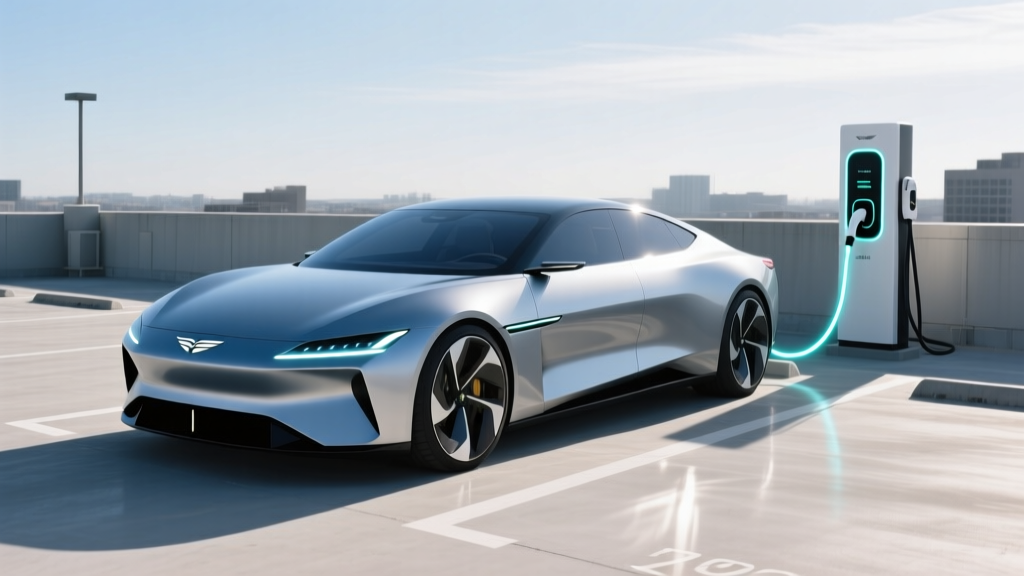
The Lucid Air Pure occupies a rare position in the luxury EV sedan market: it delivers class-leading efficiency and range at a price that undercuts the Tesla Model S, Mercedes EQS, and BMW i7 by tens of thousands of dollars. For 2026, the Pure trim remains the volume play for Lucid Motors, offering the same advanced powertrain architecture as the six-figure Grand Touring but with a single-motor rear-wheel-drive layout and a deliberately pared-back interior.
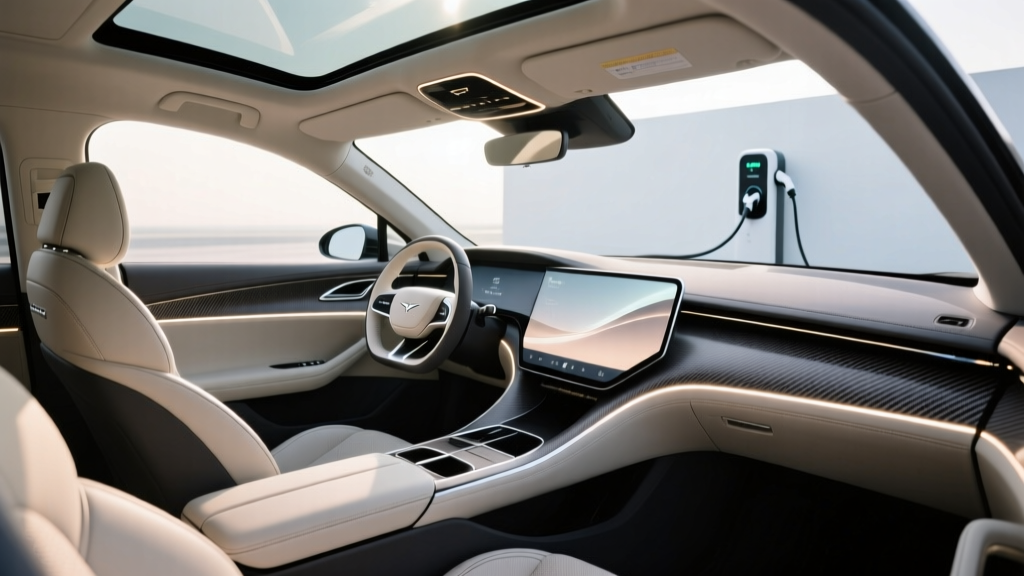
That interior is precisely what draws searchers and shoppers alike. The Lucid Air Pure interior trades traditional luxury signifiers — thick leather, wood trim, physical buttons — for a screen-dominant, sustainability-forward cabin that polarizes buyers. Some see elegant restraint; others see a $70,000 car that looks like a $45,000 car. This review breaks down whether the Air Pure's engineering brilliance compensates for its cabin controversies, with exact numbers on range, charging, pricing, and tax credit eligibility.
Lucid Air Pure Specs at a Glance
| Spec | Value |
|---|---|
| EPA Range | 419 miles (19" wheels) / ~384 miles (21" wheels) |
| Battery (Usable) | 88 kWh, NMC lithium-ion |
| Drivetrain | Single-motor RWD |
| Horsepower | 430 hp |
| 0–60 mph | 5.0 seconds |
| Peak DC Fast Charge | ~200 kW (CCS); NACS adapter available |
| 10–80% DC Charge Time | ~25 minutes (optimal conditions) |
| Level 2 Home Charging | 19.2 kW onboard charger (~60 mi/hr) |
| Efficiency (EPA) | 146 MPGe combined / 24 kWh/100 mi |
| Cargo Volume | 32 cu ft (trunk + frunk combined) |
| Rear Legroom | 41.1 inches |
| Base MSRP | $69,900 (before incentives) |
| Battery/Powertrain Warranty | 8 years / 100,000 miles |
Range & Efficiency: The Real-World Picture
The Air Pure's headline figure — 419 miles of EPA-estimated range — places it at the top of the luxury sedan segment. That number is achievable because Lucid's powertrain engineering is genuinely best-in-class for efficiency. At roughly 24 kWh per 100 miles, the Air Pure sips electrons at a rate that makes the Mercedes EQS 450+ (350 mi, ~30 kWh/100 mi) and the Tesla Model S Long Range (402 mi, ~28 kWh/100 mi) look comparatively thirsty, per fueleconomy.gov data.
- EPA Sticker: 419 miles (19" Aero wheels)
- Highway (70–80 mph, moderate temps): Expect ~350–380 miles
- Mixed city/highway (spring/fall): ~390–415 miles — close to EPA
- Cold weather (below 32°F, highway): ~280–330 miles (20–30% reduction)
- Note: The 21" wheel option drops EPA range to ~384 miles; plan real-world expectations around 320–350 miles highway with larger wheels.
The Air Pure's heat pump and thermal management system help mitigate cold-weather losses compared to EVs without active battery preconditioning, but physics is physics — expect meaningful range compression in sub-freezing conditions.
Charging Speed: DC Fast, Level 2, and Connector Reality
Lucid equips the Air Pure with a 19.2 kW onboard AC charger — one of the most powerful in any production EV. On a properly provisioned Level 2 home circuit (hardwired, 80A/240V), you can add roughly 60 miles of range per hour, meaning a near-empty battery reaches full in about 5–6 hours overnight. Most homes will need a panel evaluation; a 200-amp service panel is typically required to support a dedicated 80A circuit. Budget $1,200–$2,500 for a professional Level 2 installation depending on your electrical panel's proximity to the garage.
| Charging Level | Power | Rate | Time (10–80% or Full) |
|---|---|---|---|
| Level 1 (120V outlet) | ~1.4 kW | ~4 mi/hr | ~60+ hours (full) |
| Level 2 (240V, 48A) | 11.5 kW | ~36 mi/hr | ~8 hours (full) |
| Level 2 (240V, 80A) | 19.2 kW | ~60 mi/hr | ~5 hours (full) |
| DC Fast Charge (CCS) | Peak ~200 kW | Varies by SoC | ~25 min (10–80%) |
On DC fast charging, the Air Pure peaks around 200 kW on a CCS connector. The charge curve is reasonably flat through 60% state of charge (SoC), then tapers progressively — as is standard for NMC chemistry protecting cell longevity. Expect 10–80% in roughly 25 minutes on a 350 kW-capable station (the car won't pull 350 kW, but the station headroom helps maintain peak rate longer). On Electrify America or Tesla Superchargers (via Lucid's NACS adapter, included with newer deliveries), real-world sessions average around 140–160 kW sustained across the curve.
One practical note: the Air Pure's CCS native port means you'll rely on Lucid's provided NACS adapter for Tesla Supercharger access. The adapter works reliably, but it's an extra piece to carry and manage — something native-NACS vehicles don't require.
The Lucid Air Pure Interior: Minimalism Under the Microscope
Step inside the Air Pure and the design philosophy is immediately apparent: Lucid has stripped away nearly every physical control in favor of a expansive 34-inch curved glass cockpit display that floats above the dashboard. There is no traditional instrument cluster hood, no center stack of buttons, no rotary knobs. Climate, media, navigation, and vehicle settings all route through the touchscreen or voice commands.
Materials and Build Quality
Lucid uses what it calls "vegan" synthetic upholstery as standard on the Pure, with a textile-and-polyurethane composition that's durable and easy to clean but lacks the tactile warmth of Nappa leather (available on higher trims). The dashboard and door panels feature a mix of soft-touch materials and exposed structural elements that some reviewers describe as "architectural" and others call "unfinished." Alcantara headliner and real wood or aluminum accents are reserved for the Touring and Grand Touring trims.
Space and Practicality
Dimensionally, the Air Pure is a full-size luxury sedan, and it shows in passenger space. Rear legroom measures 41.1 inches — competitive with the BMW 7 Series and significantly more than the Tesla Model S (35.4 inches rear). Headroom is generous thanks to the skateboard platform's flat floor, and the rear seat comfortably accommodates three adults on longer trips.
Cargo capacity totals approximately 32 cubic feet when combining the 22 cu-ft trunk and the 10 cu-ft front trunk (frunk). The trunk opening is wide but the lid design creates a somewhat narrow vertical aperture — large suitcases fit, but loading bulky items requires more maneuvering than in a hatchback-liftback rival like the Model S or Porsche Taycan (which offers a hatchback rear).
Infotainment and Technology
The glass cockpit display runs Lucid's proprietary operating system, which is responsive and visually clean but lacks the app ecosystem of Tesla's platform. Wireless Apple CarPlay and Android Auto are standard — a significant advantage for buyers who prefer phone-mirrored navigation and media. The Air Pure includes a 10-speaker audio system (upgradable to a 21-speaker Surreal Sound system on higher trims), wireless phone charging, and five USB-C ports distributed across both rows.
Lucid's DreamDrive ADAS suite uses 32 sensors including LiDAR (a hardware advantage over Tesla's camera-only Autopilot) to deliver adaptive cruise control, lane-keeping, and automatic emergency braking. This is an SAE Level 2 driver-assistance system — the driver must remain fully engaged with hands on the wheel and eyes on the road at all times. It is not autonomous driving.
Performance: RWD Composure, Not Track-Day Aggression
The Air Pure's single rear-mounted motor produces 430 horsepower and propels the sedan to 60 mph in 5.0 seconds. That's brisk for daily driving and highway merging but noticeably a step below the dual-motor Air Touring (3.4 seconds) and the 2.0-second Grand Touring. The RWD layout gives the Pure a more traditional luxury-sedan feel — predictable, balanced, and confidence-inspiring in rain and moderate snow with all-season tires.
Ride quality is a strong point. The Air Pure uses a multi-link front and rear suspension with passive dampers (adaptive air suspension is standard on Touring and above). The setup is tuned for comfort over sportiness: it absorbs highway expansion joints and urban potholes with composure, though it does exhibit more body roll in aggressive cornering than the Porsche Taycan or BMW i7. For the target buyer — a luxury commuter prioritizing serenity over lap times — this tuning is appropriate.
Pricing, Trims, and Federal Tax Credit Eligibility
| Item | Amount |
|---|---|
| Base MSRP (Pure RWD) | $69,900 |
| Destination Fee | $1,250 |
| As-Tested (with 21" wheels, premium pkg) | ~$76,500 |
| Federal §30D Tax Credit (if eligible) | Up to $7,500 |
| Effective Price After Max Credit | ~$63,650 |
Eligibility for the IRS §30D Clean Vehicle Credit depends on several criteria that change periodically:
- MSRP Cap: Sedans must be priced at or below $55,000 to qualify. The Air Pure's $69,900 MSRP exceeds this cap, meaning it does not currently qualify for the $7,500 federal new-vehicle credit.
- Buyer Income Limits: Even for eligible vehicles, modified AGI must not exceed $150,000 (single) / $300,000 (joint).
- Battery Sourcing: Critical mineral and battery component requirements phase in annually through 2030.
- Point-of-Sale Transfer: Eligible credits can be transferred to the dealer at purchase for an immediate price reduction.
Bottom line: As of the 2026 model year, the Lucid Air Pure's MSRP disqualifies it from the new-vehicle §30D credit. However, buyers may find state-level incentives (California's CVRP, Colorado's state credit, etc.) that apply — check your state's energy office for current programs. A pre-owned Air Pure purchased for under $25,000 could qualify for the separate $4,000 used-EV credit if income requirements are met.
Warranty and Long-Term Ownership
Lucid covers the Air Pure's battery pack and electric powertrain for 8 years or 100,000 miles, whichever comes first, with a minimum 70% capacity retention threshold — meaning the warranty triggers if your battery degrades below 70% of its original 88 kWh capacity within that period. The limited vehicle warranty runs 4 years / 50,000 miles.
The NMC battery chemistry in the Air Pure is proven across the industry (Tesla, Hyundai, BMW all use NMC variants) and typically shows 8–12% degradation over the first 100,000 miles based on fleet data from similar platforms. Lucid's thermal management system — active liquid cooling and heating — is designed to keep cells in the optimal 20–40°C window, which is the single biggest factor in long-term battery health.
Insurance costs are worth researching before purchase. The Air Pure's repair costs (specialized aluminum body, sensor-laden bumpers, glass roof) push premiums above the segment average. Expect annual insurance in the $2,800–$4,200 range depending on your profile and state, per industry estimates.
Pros and Cons
Pros
- Class-leading 419-mile EPA range and 146 MPGe efficiency
- Spacious rear seat (41.1" legroom) — genuine full-size sedan comfort
- 19.2 kW onboard charger — fastest Level 2 in the segment
- Standard LiDAR for ADAS — hardware advantage over camera-only rivals
- Quiet, composed ride quality ideal for highway commuting
- Wireless CarPlay/Android Auto (Tesla still lacks this)
Cons
- Interior materials feel below the $70K price point for some buyers
- Touchscreen-only controls — no physical knobs for climate or volume
- Does NOT qualify for the $7,500 federal §30D credit (MSRP exceeds $55K cap)
- Trunk opening is narrow; no hatchback/liftback design
- Service center network still limited outside major metro areas
- Single-motor RWD only — no AWD option on the Pure trim
Who Should Buy the Lucid Air Pure?
Choose the Lucid Air Pure if:
- You prioritize maximum range and efficiency above all else in a luxury sedan
- Your daily commute is long (50+ miles) and you want to charge at home just 1–2x per week
- You value rear-seat space for adult passengers or car seats
- You prefer a minimalist, screen-forward interior design
- You can install a high-amperage Level 2 charger at home to exploit the 19.2 kW onboard charger
Look elsewhere if:
- You want traditional luxury materials (leather, wood, metal) — consider the BMW i7 or Mercedes EQS
- You need AWD for heavy snow — the Air Touring (dual-motor AWD) or a Rivian, Hyundai Ioniq 5 AWD may serve better
- You rely on the $7,500 federal credit to make the math work — the Pure's MSRP disqualifies it
- You prefer physical controls and tactile interfaces — the Tesla Model S or Genesis Electrified G80 offer more traditional layouts
Frequently Asked Questions
What is the real-world range of the Lucid Air Pure?
In mixed driving at moderate temperatures, owners report 380–415 miles — close to the 419-mile EPA figure. Highway driving at 75+ mph drops this to roughly 350–380 miles. In freezing weather, expect 280–330 miles. These numbers still lead the luxury sedan segment by a wide margin.
How fast does the Air Pure charge at home and on the road?
At home on a 240V/80A Level 2 circuit, the Air Pure adds roughly 60 miles of range per hour — a full charge in about 5 hours. On DC fast chargers, it peaks at ~200 kW and reaches 10–80% in approximately 25 minutes under optimal conditions. The 19.2 kW onboard charger is a standout feature that makes home charging genuinely practical for high-mileage drivers.
How much does the Lucid Air Pure cost after tax credits?
The base MSRP is $69,900 plus a $1,250 destination fee. Because the MSRP exceeds the $55,000 sedan cap set by the IRS for the §30D federal credit, the Air Pure does not qualify for the $7,500 new-vehicle credit. Your effective price is $71,150 before state incentives, which may still apply depending on your jurisdiction. Consult a tax professional and your state energy office for current programs.
Is the Lucid Air Pure worth buying over the Tesla Model S or Mercedes EQS?
If range and efficiency are your top priorities, the Air Pure is objectively superior — 419 miles and 146 MPGe beat the Model S Long Range (402 mi) and EQS 450+ (350 mi) handily. If you want a more established service network, the Model S wins. If you want a traditionally luxurious interior with physical controls and a plush ride, the EQS is the better fit. The Air Pure is best for buyers who value engineering excellence and can accept a minimalist cabin and a growing-but-limited service footprint.
Does the Air Pure interior feel cheap for the price?
This is the most debated aspect of the car. The synthetic upholstery, exposed structural elements, and screen-dominant layout feel intentionally austere — more Scandinavian design studio than German luxury lounge. Some buyers find it refreshing and modern; others expect more at $70,000. We strongly recommend an in-person sit before ordering. The build quality (panel gaps, switchgear, squeaks) is solid — it's the material choices and aesthetic philosophy that divide opinion, not execution quality.
Can I get AWD on the Air Pure?
No. The Pure trim is exclusively single-motor rear-wheel drive. If you need all-wheel drive, you'll need to step up to the Air Touring (dual-motor AWD, ~$77,400 MSRP) or higher. The RWD Pure handles rain and light snow competently with quality all-season tires, but it is not designed for severe winter traction.