Quick Verdict: The Efficiency King With a Tax-Credit Catch
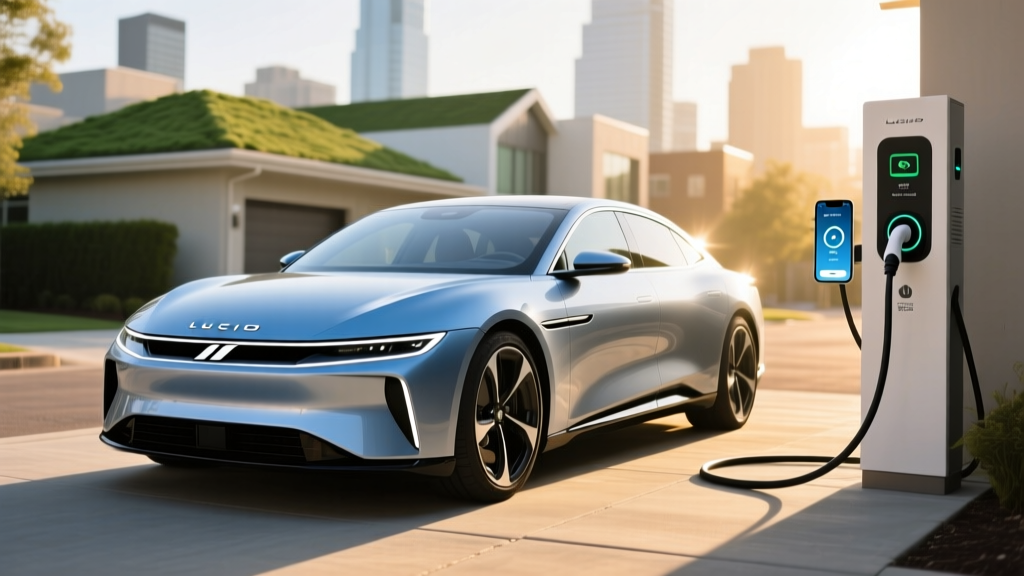
The Lucid Air Pure Advantage trim occupies a rare position in the luxury EV sedan market: it delivers class-leading efficiency and over 400 miles of EPA-estimated range at a price point that undercuts the Tesla Model S, Mercedes EQS, and BMW i7. But for buyers searching for lucid advantage credit eligibility, the answer is more nuanced than a simple yes or no. The Air Pure's base MSRP clears the IRS §30D sedan cap, yet battery-sourcing and buyer-income requirements will determine whether you actually see $7,500 come off the purchase price at the dealership.
This review covers the 2026 Lucid Air Pure Advantage — the entry point into Lucid's lineup — with exact specs on range, charging curves, real-world efficiency, interior space, and a detailed breakdown of federal tax credit eligibility under current IRS rules.
Range, Efficiency, and Battery Specs
The Air Pure Advantage pairs a single rear-mounted motor with Lucid's proprietary miniaturized drive unit, drawing from an 88 kWh usable battery pack (NMC lithium-ion chemistry). The result is an EPA-estimated 419 miles of range — the highest of any production sedan currently on sale in the U.S. Efficiency is rated at 146 MPGe combined (4.0 miles/kWh), which translates to roughly 25 kWh per 100 miles driven.
EPA estimate: 419 miles
Highway driving (70-80 mph): Expect 340–370 miles. The Air's low drag coefficient (0.208 Cd) helps, but sustained high speeds still reduce range 12–18% from the EPA sticker.
Cold weather (below 32°F): Plan for 280–330 miles with cabin heating active. The Air Pure does not include a standard heat pump as of the 2026 model year — resistance heating draws more from the pack in winter.
Mixed city/highway (moderate temps): 380–410 miles is achievable with moderate regen use.
| Spec | Value |
|---|---|
| EPA Range | 419 miles |
| Battery (usable) | 88 kWh, NMC chemistry |
| Efficiency | 146 MPGe / 25 kWh/100 mi |
| Drivetrain | Rear-wheel drive (single motor) |
| Horsepower | 430 hp |
| 0–60 mph | 5.0 seconds |
| Max DC Fast Charge | 200 kW (peak) |
| 10–80% DC Charge | ~33 minutes |
| Level 2 Home Charge | 19.2 kW / ~70 miles per hour |
| Connector | CCS1 (NACS adapter available) |
| Base MSRP | $69,900 (excl. $1,500 destination) |
| Battery/Powertrain Warranty | 8 years / 100,000 miles |
Charging: DC Fast, Level 2, and the Curve Reality
The Air Pure Advantage supports up to 200 kW peak DC fast charging via its CCS1 inlet. On a 350-kW Electrify America or EVgo station, you'll see the pack accept close to peak rate from roughly 10% to 40% state of charge, after which the curve tapers. From 10% to 80%, expect approximately 33 minutes. Above 80%, charge speed drops sharply — a typical session from 80% to 100% can add another 35–45 minutes. For road-trip planning, target 10–80% stops and skip topping off unless you're parking overnight.
At home, the Air Pure's onboard charger is a standout: it accepts up to 19.2 kW on Level 2 (80 amps on a hardwired 100-amp circuit). That translates to roughly 70 miles of range per hour of charging — enough to fully replenish the 88-kWh pack in about 5 hours. Most buyers will install a 48-amp Level 2 wallbox (11.5 kW), which adds approximately 42 miles per hour and fills the pack in roughly 8.5 hours overnight. If your electrical panel has capacity for a 100-amp dedicated circuit, the 19.2-kW option is worthwhile; otherwise, a standard 48-amp setup handles daily needs.
Lucid provides a NACS adapter for Tesla Supercharger access, expanding the public charging network significantly. Supercharger V3 stalls (250 kW peak) will charge the Air Pure at its 200-kW ceiling, making 15–25 minute stops practical on most corridors.
Performance and Driving Dynamics
The single rear motor produces 430 horsepower and launches the Air Pure to 60 mph in 5.0 seconds. That's not supercar territory, but it's genuinely quick for a 4,600-pound luxury sedan — comparable to a BMW 540i or Mercedes E450 in straight-line acceleration. The rear-wheel-drive layout gives the Air a balanced, composed feel through corners, and Lucid's tuning prioritizes ride comfort over sportiness. Regenerative braking offers two modes (standard and strong), but the Air does not offer true one-pedal driving to a complete stop — you'll still use the friction brake at low speeds.
The Air Pure lacks the dual-motor AWD option available on the Touring and Grand Touring trims. If you live in a region with heavy snow or need the traction of all-wheel drive, the Pure RWD may not be the right fit. For dry and mild-winter climates, the RWD setup is more than adequate and contributes to the class-leading efficiency.
Interior Space, Cargo, and Technology
The Air Pure's cabin is a study in minimalist luxury. Lucid's "space concept" design yields generous interior volume for a sedan of its footprint:
- Front legroom: 45.3 inches
- Rear legroom: 39.5 inches
- Trunk (rear): 22.1 cubic feet
- Frunk (front): 7.1 cubic feet
- Total cargo: 29.2 cubic feet
The rear seat comfortably fits two adults over six feet tall, with a flat floor (no transmission tunnel) making the middle position usable for shorter trips. The 22.1-cubic-foot trunk swallows four full-size suitcases with room to spare — significantly more than the Tesla Model S (28 cu ft total including frunk, but a less usable trunk shape).
Infotainment runs on Lucid's in-house OS displayed on a 34-inch curved glass cockpit screen. Wireless Apple CarPlay and Android Auto are standard. The DreamDrive Pro ADAS suite includes adaptive cruise control, lane-centering, automatic emergency braking, and blind-spot monitoring. This is an SAE Level 2 driver-assistance system — the driver must keep hands on the wheel and eyes on the road at all times. Lucid has not yet released a hands-free highway driving feature comparable to GM's Super Cruise or Ford's BlueCruise, which is a notable gap at this price point.
- No hands-free Level 2+ highway driving feature (e.g., Super Cruise equivalent)
- No heat pump standard — cold-weather range loss is more pronounced than competitors with standard heat pumps
- Rear visibility is limited by the sloping roofline; the camera-based rearview mirror helps but has a learning curve
- Service center network is still sparse outside major metros — mobile service covers some areas but not all
- No AWD option on the Pure trim
Pricing, Trims, and Federal Tax Credit Eligibility
The 2026 Lucid Air Pure Advantage starts at $69,900 (plus $1,500 destination, for a total of $71,400). That's the entry point to the Lucid lineup. The next step up is the Air Touring at approximately $87,400, followed by the Grand Touring and Sapphire models well into six figures.
Now, the critical question for buyers researching the lucid advantage credit: does the Air Pure qualify for the IRS §30D federal clean vehicle tax credit?
- ✅ MSRP cap: Sedans must be under $55,000 — the Air Pure at $69,900 does NOT meet this threshold.
- ❌ Result: The Lucid Air Pure Advantage is NOT eligible for the $7,500 federal §30D new-vehicle tax credit.
- ⚠️ Buyer income cap: Even if the MSRP qualified, buyers must have AGI below $150,000 (single) / $300,000 (joint).
- ⚠️ Battery sourcing: Critical minerals and battery component requirements must be met (moot here since MSRP already disqualifies).
- 📌 Point-of-sale transfer: Available for qualifying vehicles, but again not applicable to the Air Pure.
Source: IRS.gov §30D Clean Vehicle Credit. Rules are subject to change; consult a tax professional before purchasing.
This is the key takeaway: the Air Pure Advantage's MSRP exceeds the $55,000 sedan cap established under the Inflation Reduction Act. Luxury sedans over that threshold simply do not qualify, regardless of where the battery is sourced or the buyer's income. If the federal credit is a dealbreaker, you'd need to look at vehicles like the Tesla Model 3 Long Range, Hyundai Ioniq 6, or BMW i4 — all sedans under $55,000 that may qualify depending on sourcing and income.
State and local incentives may still apply. California's CVRP rebate, Colorado's state tax credit, and various utility company incentives can reduce the effective price. Check your state's energy office and local utility for current programs.
Lucid Air Pure vs. Key Competitors
| Spec | Lucid Air Pure | Tesla Model S LR | BMW i5 eDrive40 | Mercedes EQS 450+ |
|---|---|---|---|---|
| EPA Range | 419 mi | 402 mi | 295 mi | 390 mi |
| Base MSRP | $69,900 | $79,990 | $66,800 | $104,400 |
| Battery | 88 kWh NMC | ~100 kWh | 84.3 kWh NMC | 108.4 kWh NMC |
| 0–60 mph | 5.0 sec | 3.1 sec | 5.7 sec | 5.9 sec |
| Peak DC Charge | 200 kW | 250 kW | 205 kW | 200 kW |
| §30D Credit Eligible? | ❌ No (MSRP cap) | ❌ No (MSRP cap) | ❌ No (MSRP cap) | ❌ No (MSRP cap) |
| Efficiency (MPGe) | 146 | 124 | 99 | 97 |
The Air Pure's advantage is clear: it delivers the most range per kilowatt-hour of any sedan here, at a lower starting price than the Model S and EQS. The BMW i5 is closer in price but gives up over 120 miles of range. None of these luxury sedans qualify for the federal credit — that's a function of the $55,000 MSRP cap, not a Lucid-specific limitation.
- Class-leading 419-mile EPA range
- Best-in-class efficiency (146 MPGe)
- Spacious rear seat and large trunk
- 19.2-kW Level 2 onboard charger
- Undercut competitors on price-to-range ratio
- Smooth, refined ride quality
- No federal tax credit (MSRP above $55K cap)
- No hands-free highway driving assist
- No AWD option on Pure trim
- No standard heat pump (cold-weather range hit)
- Limited service center footprint
- 200-kW DC peak trails Tesla's 250 kW
Who Should Buy the Lucid Air Pure Advantage?
The Air Pure Advantage is best suited for:
- Long-distance commuters who drive 60+ miles daily and want to charge once or twice a week at home rather than daily.
- Road-trip enthusiasts in the western and southern U.S. where Electrify America and Tesla Supercharger coverage is strong. The 419-mile range means fewer stops on 500-mile drives.
- Luxury sedan buyers transitioning from a BMW 5 Series, Mercedes E-Class, or Audi A6 who want EV efficiency without sacrificing interior space or ride quality.
- Home-charging owners with a garage or dedicated parking spot where a Level 2 charger can be installed. The 19.2-kW onboard charger makes overnight replenishment effortless.
The Air Pure is not ideal for buyers who need AWD for harsh winters, require the most advanced hands-free driving assist, or depend on the $7,500 federal credit to make the math work. It's also not a family hauler — if you need three rows or significant towing capacity, look at SUV platforms.
Warranty and Long-Term Ownership
Lucid covers the Air Pure's battery and powertrain for 8 years or 100,000 miles, whichever comes first. The battery warranty guarantees the pack will retain at least 70% of its original capacity during that period — consistent with industry norms from Tesla, BMW, and Mercedes. The basic vehicle warranty is 4 years / 50,000 miles.
Long-term battery degradation data on Lucid's NMC packs is still limited given the company's relatively short production history (Air deliveries began in late 2021). Early owner reports and fueleconomy.gov data suggest degradation is in line with industry averages — roughly 5–8% capacity loss over the first 50,000 miles. Lucid's thermal management system actively conditions the battery, which should support long-term health.
Insurance costs for the Air Pure tend to run 15–25% higher than comparable gas sedans, reflecting the vehicle's repair costs and luxury classification. Get quotes before purchasing to factor this into your total cost of ownership.
Frequently Asked Questions
Does the Lucid Air Pure Advantage qualify for the federal EV tax credit?
No. The Air Pure's $69,900 MSRP exceeds the IRS §30D sedan cap of $55,000. This is a price-cap rule, not a reflection of the vehicle's battery sourcing or any other factor. No luxury sedan priced above $55,000 qualifies for the $7,500 new-vehicle credit under current law. State incentives may still apply — check your state's energy office.
What is the real-world highway range of the Lucid Air Pure?
Expect 340–370 miles at highway speeds of 70–80 mph in moderate temperatures. In cold weather (below freezing), plan for 280–330 miles due to resistance heating and reduced battery efficiency. The EPA sticker of 419 miles reflects a mixed driving cycle that includes significant city/regenerative driving.
How fast does the Air Pure charge on a road trip?
At a 350-kW DC fast charger, the Air Pure peaks at 200 kW and charges from 10% to 80% in approximately 33 minutes. Above 80%, the charge rate tapers significantly. Plan stops around the 10–80% window for the fastest turnaround. On Tesla Superchargers (via NACS adapter), speeds are similar at V3 stalls.
Is the Lucid Air Pure better than the Tesla Model S?
It depends on your priorities. The Air Pure offers more EPA range (419 vs. 402 miles), significantly better efficiency (146 vs. 124 MPGe), and a lower starting price ($69,900 vs. $79,990). The Model S counters with faster acceleration (3.1 sec 0–60), the Supercharger network native access, Autopilot with optional FSD (Supervised), and a more established service network. Neither qualifies for the federal tax credit.
Does the Air Pure have a heat pump?
As of the 2026 model year, the Air Pure does not include a standard heat pump. Cabin heating uses resistance elements, which draw more energy from the battery in cold weather. This contributes to the more pronounced cold-weather range loss compared to EVs with standard heat pumps (like the Hyundai Ioniq 5 or Tesla Model Y).
Can I get AWD on the Air Pure?
No. The Pure trim is rear-wheel drive only. If you need dual-motor AWD, you'll need to step up to the Air Touring ($87,400) or higher trims, which offer Lucid's dual-motor all-wheel-drive system.
Sources: fueleconomy.gov, IRS §30D Clean Vehicle Credit, Lucid Motors official specifications.