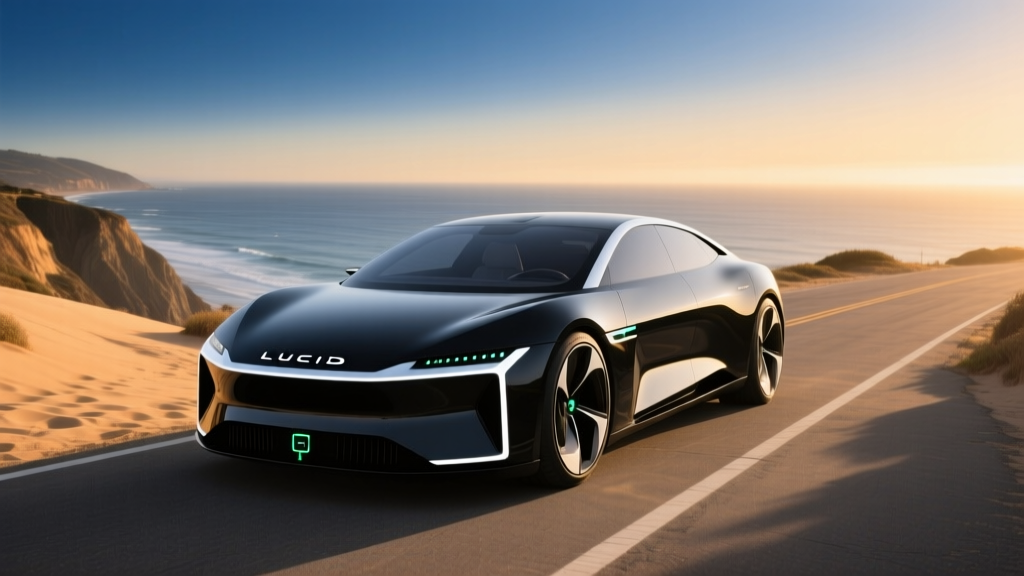
Lucid built its reputation on engineering excess — the Air Grand Touring with its 516-mile EPA range and 1,050 horsepower proved the company could out-efficiency Tesla and out-luxury Mercedes. But the volume play has always been the Air Pure, the brand's most affordable sedan and the closest thing to a Lucid Motors $50,000 EV you can put in your driveway. For 2026, the Air Pure carries a base MSRP that undercuts the BMW i5, slots below the Tesla Model S, and delivers class-leading efficiency that makes its EPA range more honest than most competitors. Here's what the numbers actually look like when you own one.
Quick Verdict: Who the Air Pure Is For
The 2026 Lucid Air Pure is a rear-wheel-drive luxury sedan aimed at buyers who prioritize range, efficiency, and interior space over 0-60 bragging rights. It's the EV equivalent of a Lexus ES in temperament — serene, spacious, and remarkably frugal with electrons. If you're a commuter covering 40-80 miles daily with occasional road trips, this trim is the sweet spot. If you need AWD traction for mountain winters or want the sub-3-second launch of the Sapphire, you'll need to climb the Air lineup or look at the Tesla Model S Plaid.
Choose the Air Pure if: You want the longest real-world range per dollar in a luxury sedan, you charge at home most nights, and you value cabin space over quarter-mile times.
Choose the Air Touring or Grand Touring if: You need dual-motor AWD, you regularly drive in freezing climates, or you want 600+ HP for highway passing confidence.
Look at the BMW i5 eDrive40 instead if: You want a more traditional luxury brand dealership experience and don't need 400+ miles of range.
Range, Battery, and Efficiency: The Numbers That Matter
The Air Pure uses an 88 kWh usable battery pack (92 kWh gross) with NMC (nickel manganese cobalt) lithium-ion chemistry. Lucid's miniaturized drive unit and proprietary inverter design give this car an efficiency advantage that no competitor has matched in the luxury sedan segment.
| Spec | Value |
|---|---|
| EPA Estimated Range | 419 miles |
| Battery (Usable / Gross) | 88 kWh / 92 kWh |
| Battery Chemistry | NMC (Nickel Manganese Cobalt) |
| EPA Efficiency | 140 MPGe combined (24 kWh/100 mi) |
| Drivetrain | RWD, single rear motor |
| Horsepower | 430 hp |
| 0-60 mph | 5.0 seconds |
| Top Speed | 145 mph |
| Cargo Volume (Trunk + Frunk) | 32.0 cu ft (trunk) — no frunk |
| Rear Legroom | 41.5 inches |
| Curb Weight | ~4,770 lbs |
| Battery/Powertrain Warranty | 8 years / 100,000 miles |
| Base MSRP | $69,900 (before incentives) |
EPA vs. Real-World Range
The 419-mile EPA figure is one of the highest of any production EV. In real-world mixed driving at 65-75 mph in moderate temperatures (55-80°F), expect 370-395 miles before needing a charge. On a pure highway trip at 80 mph with climate control running, plan for 340-360 miles. In cold weather (below 30°F), range drops to approximately 290-320 miles due to cabin heating demands and increased battery resistance, even with the Air's standard heat pump. The Air Pure's efficiency is genuinely best-in-class — you'll see 3.5-4.0 mi/kWh in warm city driving, which is where this car stretches its legs.
Lucid achieves this efficiency through several engineering choices: a 900V+ electrical architecture that reduces current and resistive losses, a single-motor rear-drive layout that eliminates front-axle drivetrain drag, and an exceptionally low drag coefficient of 0.20 Cd. According to fueleconomy.gov, the Air Pure's combined 24 kWh/100 mi figure beats the Tesla Model S Long Range (28 kWh/100 mi) and the BMW i5 eDrive40 (29 kWh/100 mi).
Charging Speed: DC Fast, Level 2, and the 900V Advantage
The Air Pure's 900V electrical architecture is a significant advantage for DC fast charging. Higher voltage means the car can accept more power at lower amperage, which keeps charging cables manageable and reduces heat generation in the battery pack.
| Charging Level | Power / Rate | Speed |
|---|---|---|
| Level 1 (120V household) | ~1.4 kW | ~4-5 miles per hour |
| Level 2 (240V home, 48A) | 11.5 kW | ~38 miles per hour |
| Level 2 (240V, 80A capable) | 19.2 kW | ~63 miles per hour |
| DC Fast Charge (peak) | ~220 kW | 10-80% in ~25 minutes |
| DC Fast Charge (350 kW station) | Sustained ~180 kW avg | ~200 miles in 15 minutes |
At a 350 kW Electrify America or Tesla Supercharger V4 station (with NACS adapter, now included with all new Lucids), the Air Pure peaks around 220 kW. However, like all EVs, it doesn't sustain that peak. The charge curve tapers noticeably above 60% SoC, and above 80% the rate drops sharply to protect battery longevity. A realistic 10-80% session takes approximately 25 minutes. If you're only adding 150-200 miles of range (say, from 30% to 65%), expect that in 12-15 minutes — which is the practical road-trip use case.
For home charging, a 48-amp Level 2 wall connector on a NEMA 14-50 or hardwired circuit replenishes roughly 38 miles of range per hour, meaning a full overnight charge from 10% to 100% takes about 10 hours. If your home electrical panel supports an 80-amp circuit (requiring 100A breaker capacity), the Air can accept 19.2 kW, cutting that to roughly 6 hours. Most buyers will be fine with a 48A setup — you rarely arrive home at 10%.
Home install cost note: A 48A hardwired Level 2 installation typically runs $800-$2,000 depending on panel proximity and local permitting. A panel upgrade from 100A to 200A service adds $1,500-$3,500. Always get a quote from a licensed electrician before purchasing equipment.
Performance and Driving Impressions
With 430 horsepower routed to the rear wheels, the Air Pure hits 60 mph in 5.0 seconds — quick by any sedan standard and more than adequate for highway merging and passing. The single-motor RWD layout gives it a lighter, more agile feel than dual-motor competitors; the car weighs under 4,800 lbs, which is remarkably light for a full-size luxury sedan with a 400+ mile battery.
The steering is precise but light, and the ride quality is composed without being floaty. Lucid's regenerative braking offers adjustable levels through the touchscreen, but the Air does not offer true one-pedal driving to a full stop — you'll still use the friction brake at low speeds. The turning circle is generous at 40.4 feet, which makes tight urban parking lots a bit more work than a compact EV.
Where the Air Pure genuinely impresses is in its highway composure. At 80 mph, cabin noise is minimal, and the suspension handles expansion joints and broken pavement with a maturity that rivals the Mercedes EQS. This is a car designed for long, fast interstate drives — and its efficiency at those speeds is what sets it apart.
Interior, Tech, and Cargo Practicality
The Air's cabin is genuinely spacious. Rear legroom measures 41.5 inches, which exceeds the BMW 5 Series and approaches limousine territory. The trunk offers 32.0 cubic feet — enormous for a sedan and larger than many compact SUVs. There is no frunk (front trunk); the space is occupied by HVAC and power electronics.
The infotainment system runs on a 34-inch curved glass "canopy" display that spans the upper dash, supplemented by a lower retractable touchscreen for secondary controls. The system supports wireless Apple CarPlay and Android Auto, over-the-air updates, and includes built-in navigation with real-time charger routing. The UI is visually striking but has drawn criticism for burying some climate and seat controls behind the lower screen — something to test during a dealership sit-in.
Driver assistance comes via Lucid's DreamDrive Pro system, which includes adaptive cruise control, lane-centering, automatic emergency braking, blind-spot monitoring, and a 360-degree camera. DreamDrive Pro is a Level 2 SAE driver-assist system — it requires continuous driver supervision and does not permit hands-off or eyes-off driving. It's competent on highways but does not offer the hands-free capability of GM's Super Cruise or Ford's BlueCruise on mapped roads.
ADAS Level Clarification: Lucid DreamDrive Pro is an SAE Level 2 system. The driver must keep hands on or near the wheel and remain fully attentive. It is not autonomous driving. Only Level 4 services like Waymo operate without a human driver — and those are robotaxi services, not consumer vehicles.
Pricing, Tax Credits, and Total Cost
The 2026 Lucid Air Pure starts at $69,900 (including destination). A well-equipped example with the Surreal Stealth paint, 20-inch wheels, and DreamDrive Pro package can reach approximately $76,000-$78,000 as-tested.
| Item | Amount |
|---|---|
| Base MSRP (Air Pure) | $69,900 |
| Typical As-Tested Price | $74,000 - $78,000 |
| Federal §30D Tax Credit (if eligible) | Up to $7,500 (see caveats below) |
| Effective Price After Max Credit | ~$62,400 - $70,500 |
| Estimated 5-Year Charging Cost (home, $0.14/kWh) | ~$3,200 |
| Estimated 5-Year Gas Equivalent (30 MPG, $3.50/gal) | ~$8,750 |
Federal §30D Tax Credit Eligibility — Key Rules (2026)
- MSRP Cap: Sedans must have an MSRP at or below $55,000 to qualify. The Air Pure at $69,900 exceeds this cap and does NOT qualify for the new-vehicle §30D credit.
- Income Limits: Modified AGI must not exceed $150,000 (single), $225,000 (head of household), or $300,000 (joint).
- Battery Sourcing: Critical minerals and battery components must meet escalating domestic-content thresholds.
- Point-of-Sale Transfer: Eligible credits can be transferred to the dealer at purchase for an immediate price reduction.
Bottom line: The new Air Pure does not qualify for the $7,500 federal credit due to the sedan MSRP cap. However, a used Air Pure (model year 2023-2024, purchased from a dealer for $25,000 or less) may qualify for the up-to-$4,000 used EV credit (30% of sale price, max $4,000) if buyer income is under $75,000/$112,500/$150,000. Always verify current rules at IRS.gov and consult a tax professional.
State and utility incentives may still apply. California's CVRP, Colorado's state credit, and various utility rebates for home charger installation can collectively offset $2,000-$5,000 depending on your jurisdiction. Check your state energy office and local utility for current programs.
Pros, Cons, and Competitive Position
Pros
- Best-in-class efficiency at 140 MPGe combined (24 kWh/100 mi)
- 419-mile EPA range — longest of any luxury sedan
- Massive rear legroom (41.5 in) and trunk (32.0 cu ft)
- 900V architecture enables fast DC charging at 350 kW stations
- Composed highway ride, low cabin noise
- Competitive pricing vs. Model S, EQS, and i5
Cons
- RWD only — no AWD option on the Pure trim
- Does not qualify for $7,500 federal new-vehicle credit (MSRP cap)
- DreamDrive Pro is Level 2 only; no hands-free highway driving
- Limited service center network vs. Tesla, BMW, Mercedes
- Infotainment learning curve; some controls buried in menus
- No frunk; trunk-only cargo
Against the Tesla Model S Long Range ($79,990, 402 mi EPA, dual-motor AWD), the Air Pure sacrifices 17 miles of range and all-weather traction but saves roughly $10,000 and delivers a more traditional luxury interior. Against the BMW i5 eDrive40 ($70,200, 295 mi EPA), the Air Pure offers 124 more miles of range and significantly more rear space for roughly the same price, but the BMW has a far larger dealer and service network. The Mercedes EQS 450+ starts above $100,000 and is no longer a realistic cross-shop at this price point.
Warranty and Long-Term Ownership
Lucid covers the Air Pure's battery and drive unit for 8 years or 100,000 miles, whichever comes first. The battery warranty guarantees retention of at least 70% of original capacity during the coverage period. The limited vehicle warranty is 4 years / 50,000 miles, which matches most luxury competitors but falls short of Hyundai's 5-year/60,000-mile bumper-to-bumper coverage.
NMC battery degradation data from early 2022-2023 Air owners suggests approximately 3-5% capacity loss in the first 30,000 miles, with the curve flattening significantly thereafter. This is consistent with industry norms for liquid-cooled NMC packs. If you charge primarily at home on Level 2 and avoid frequent DC fast charging above 90% SoC, long-term degradation should remain manageable. Lucid's battery thermal management system is robust, and the 900V architecture reduces charging-related heat stress compared to 400V competitors.
Insurance costs for the Air Pure are higher than average for the segment. Expect annual premiums in the $2,400-$3,200 range depending on your state, driving record, and coverage level — roughly 15-25% more than a comparable BMW 5 Series. Get quotes before purchasing.
Frequently Asked Questions
What is the real-world range of the Lucid Air Pure?
The EPA rates it at 419 miles. In real-world mixed driving at moderate temperatures, expect 370-395 miles. Highway-only driving at 80 mph yields approximately 340-360 miles, and cold weather below 30°F reduces range to roughly 290-320 miles. The Air Pure's best-in-class efficiency means its real-world numbers hold up better than most EVs.
How fast does the Air Pure charge at home and on the road?
On a 48-amp Level 2 home charger, it adds roughly 38 miles of range per hour (11.5 kW). At a 350 kW DC fast charger, it peaks around 220 kW and charges from 10-80% in approximately 25 minutes. The 900V architecture gives it an efficiency edge at high-power stations.
Does the Lucid Air Pure qualify for the federal EV tax credit?
No. The new-vehicle §30D credit has a $55,000 MSRP cap for sedans, and the Air Pure starts at $69,900. However, a qualifying used Air Pure purchased for $25,000 or less may be eligible for the up-to-$4,000 used EV credit if buyer income limits are met. Check IRS.gov for current rules.
Is the Air Pure worth buying over the Tesla Model S?
If you prioritize interior luxury, rear-seat space, and efficiency over AWD traction and hands-free driver assist, the Air Pure is compelling at $10,000 less than a Model S Long Range. If you need all-weather capability, the Supercharger network without adapters, or FSD (Supervised), the Model S remains the choice. Both are excellent; they serve different priorities.
Can the Air Pure tow or handle road trips?
Lucid does not rate the Air Pure for towing, and it's not designed for it. For road trips, the 419-mile range and ~25-minute fast-charge sessions make it one of the most capable long-distance EVs available. Plan stops around 300-340 miles in real-world highway conditions, and you'll rarely feel range-constrained.
What is the warranty coverage on the battery?
The battery and drive unit are covered for 8 years or 100,000 miles, with a capacity retention guarantee of at least 70% of original capacity. The bumper-to-bumper warranty is 4 years / 50,000 miles.