Who Owns Lucid Motors? The PIF Connection Explained
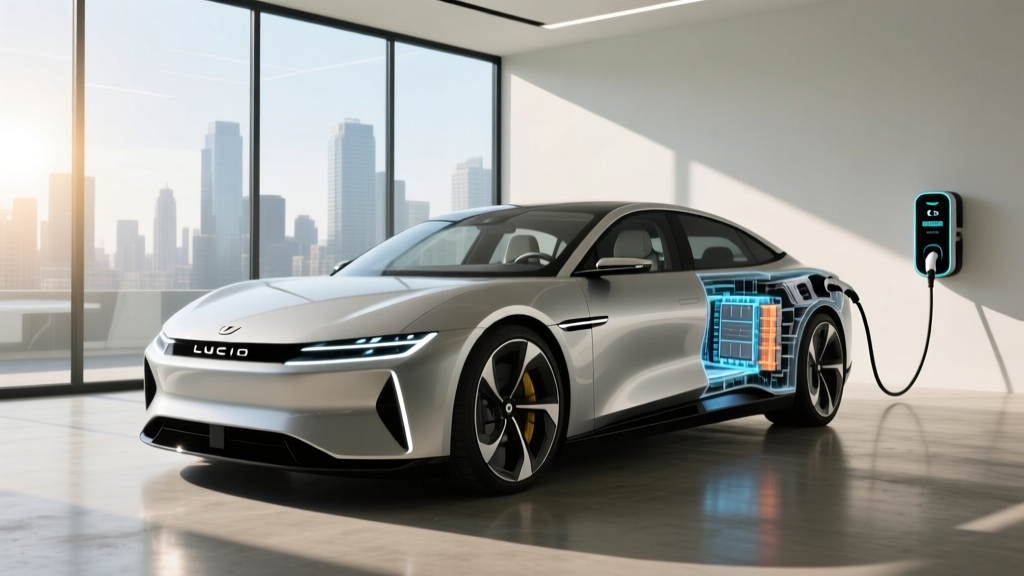
The question "who is Lucid owned by?" comes up constantly in EV circles, and the answer shapes how buyers evaluate the company's long-term viability. Lucid Group, Inc. (NASDAQ: LCID) is a publicly traded American automaker headquartered in Newark, California — but its largest financial backer is the Public Investment Fund (PIF) of Saudi Arabia, which holds roughly 60% of Lucid's outstanding shares as of early 2026. PIF has injected billions through direct equity purchases and convertible notes, giving Lucid a capital runway that most EV startups lack.
Peter Rawlinson, Lucid's CEO and CTO, remains the public face and technical architect behind the Air's powertrain. Rawlinson previously served as chief engineer on the Tesla Model S, and his engineering philosophy — miniaturized motors, high-voltage architecture, obsessive efficiency — defines every Lucid product. So while Saudi sovereign wealth provides the balance sheet, Lucid's engineering DNA is distinctly Silicon Valley.
For prospective buyers, the PIF ownership matters because it signals financial staying power in an industry that has bankrupted dozens of startups. Lucid also operates a state-of-the-art manufacturing plant in Casa Grande, Arizona (AMP-1), with capacity to build over 150,000 vehicles annually once fully scaled. The Gravity SUV is now entering production alongside the Air sedan.
2026 Lucid Air: At-a-Glance Specifications
Before we dig into real-world performance, here is the full spec breakdown for the current Lucid Air lineup. Lucid uses NMC (nickel-manganese-cobalt) lithium-ion pouch cells supplied primarily by Samsung SDI and LG Energy Solution — chosen for high energy density over the LFP chemistry used in standard-range Teslas.
| Spec | Air Pure RWD | Air Touring AWD | Air Grand Touring AWD | Air Sapphire |
|---|---|---|---|---|
| EPA Range | 419 mi | 425 mi | 516 mi | 427 mi |
| Battery (usable) | 88 kWh (NMC) | 112 kWh (NMC) | 112 kWh (NMC) | 118 kWh (NMC) |
| Horsepower | 430 hp | 620 hp | 819 hp | 1,234 hp |
| 0–60 mph | 5.0 sec | 3.4 sec | 3.0 sec | 1.89 sec |
| Drivetrain | RWD (single motor) | AWD (dual motor) | AWD (dual motor) | AWD (tri-motor) |
| Peak DC Charge | 220 kW | 300 kW | 300 kW | 300 kW |
| 10–80% DC Time | ~30 min | ~22 min | ~22 min | ~25 min |
| Level 2 Rate | 19.2 kW (77 mi/hr) | 19.2 kW (77 mi/hr) | 19.2 kW (77 mi/hr) | 19.2 kW (77 mi/hr) |
| MPGe (combined) | 146 MPGe | 136 MPGe | 131 MPGe | 110 MPGe |
| Efficiency | 23 kWh/100mi | 25 kWh/100mi | 26 kWh/100mi | 30 kWh/100mi |
| Base MSRP | $69,900 | $77,900 | $110,900 | $249,000 |
Sources: EPA fueleconomy.gov, Lucid Motors official specs. Specs reflect 2025–2026 model year data.
Real-World Range: What the EPA Sticker Doesn't Tell You
EPA sticker: 516 miles
Real-world highway (70 mph, 65°F): ~410–440 miles
Real-world cold weather (30°F, mixed driving): ~340–380 miles
Real-world city/commute (moderate speeds, regen): ~460–500 miles
Lucid's Air Grand Touring holds the EPA range crown among production sedans at 516 miles. But as with every EV, the real number depends on how and where you drive. In independent highway loop testing at sustained 70 mph speeds, the Grand Touring typically delivers 410–440 miles before needing a charge — still exceptional, but roughly 15–20% below the EPA combined figure.
Cold weather compounds the gap. At 30°F, lithium-ion cells experience higher internal resistance, and cabin heating draws significant energy even with the Air's standard heat pump. Expect a 25–35% range reduction in freezing conditions, landing around 340–380 miles. That's still enough for most road trips with a single 20-minute DC fast-charge stop.
City commuters benefit most from the Air's efficiency. Regenerative braking recaptures energy in stop-and-go traffic, and the Air's slippery 0.20 Cd drag coefficient matters less at low speeds. Daily commuters routinely report 460–500 real-world miles on the Grand Touring trim.
Charging Speed: 300 kW Peak, but Read the Curve
| Level | Power | Miles Added per Hour | Use Case |
|---|---|---|---|
| Level 1 (120V) | 1.4 kW | ~3–4 mi/hr | Emergency / trickle top-up |
| Level 2 (240V, 80A) | 19.2 kW | ~77 mi/hr | Home overnight charging |
| DC Fast Charge | Up to 300 kW | ~300 mi in 22 min (10–80%) | Road trips |
Lucid's 900-volt electrical architecture (compared to the 400V systems in most competitors) enables peak charging rates up to 300 kW on Touring, Grand Touring, and Sapphire trims. At a compatible 350 kW Electrify America or Ionity station, the Air can add roughly 200 miles of range in about 12 minutes.
However, the charging curve tapers significantly. The 300 kW peak only holds between roughly 10–40% State of Charge. Above 60%, the rate drops to ~150 kW, and above 80%, it falls further to ~50–70 kW as the battery management system protects cell longevity. The 10–80% time of ~22 minutes is competitive with the best in class (Tesla Model S, Porsche Taycan), but don't expect 300 kW for the entire session.
At home, the Air's onboard charger accepts up to 19.2 kW on a hardwired Level 2 circuit (requiring a 100-amp breaker). This adds roughly 77 miles of range per hour, meaning a full overnight session replenishes even the 112 kWh pack from empty. Most owners with a 48-amp Level 2 station (11.5 kW) will still wake up to a full charge — it simply takes 10–11 hours instead of 6.
Connector note: Lucid currently ships with a CCS1 port. A NACS (Tesla Supercharger) adapter is available, and Lucid has committed to native NACS ports on future production runs. Verify adapter availability with your dealer, as Tesla Supercharger access is a significant factor for road-trip charging reliability.
Pricing, Tax Credits, and Total Cost Reality
| Trim | Base MSRP | §30D Credit Eligible? | Effective Price (if eligible) |
|---|---|---|---|
| Air Pure RWD | $69,900 | No — exceeds $55,000 sedan MSRP cap | $69,900 |
| Air Touring AWD | $77,900 | No — exceeds $55,000 sedan MSRP cap | $77,900 |
| Air Grand Touring | $110,900 | No — exceeds $55,000 sedan MSRP cap | $110,900 |
| Air Sapphire | $249,000 | No — exceeds $55,000 sedan MSRP cap | $249,000 |
This is where the rubber meets the road for most buyers. Under current IRS §30D Clean Vehicle Credit rules, new electric sedans must have an MSRP at or below $55,000 to qualify for the up-to-$7,500 federal tax credit. Every Lucid Air trim exceeds this cap, meaning no Air variant currently qualifies for the new-vehicle federal credit.
Buyer income caps also apply: modified adjusted gross income must not exceed $150,000 (single), $225,000 (head of household), or $300,000 (joint filers). Even if the Air were under the MSRP cap, many buyers in this price segment would exceed the income thresholds.
However, state and local incentives may still apply. California's CVRP rebate, utility-company charging credits, and HOV lane access can collectively offset $2,000–$5,000 depending on your jurisdiction. Consult your state's energy office and a tax professional for specifics.
5-year ownership cost context: The Air Pure RWD, at ~$69,900, costs roughly $0.04–$0.06 per mile to "fuel" on average U.S. electricity rates ($0.16/kWh). Over 15,000 miles/year, that's $900–$1,200 annually vs. $2,200–$2,800 for a comparable gas sedan at 25 MPG and $3.75/gallon. Insurance premiums for the Air run 20–40% higher than average sedans — budget $2,500–$4,000/year depending on your profile.
Performance, Interior, and Technology
Every Lucid Air delivers on the performance promise, but the Grand Touring and Sapphire occupy different universes. The Grand Touring's 819 hp dual-motor AWD system hits 60 mph in 3.0 seconds while achieving 131 MPGe — a combination no internal-combustion sedan can approach. The Sapphire's 1,234 hp tri-motor setup (two rear, one front) is hypercar territory at 1.89 seconds to 60 mph.
Interior space: The Air's packaging is remarkable. Despite its sleek roofline, rear-seat legroom measures 41.3 inches — more than a Mercedes S-Class. Cargo volume totals 32 cubic feet across the trunk (22 cu ft) and front trunk/frunk (10 cu ft). The "Space Concept" interior philosophy eliminates a traditional dashboard bulkhead, creating an airy, open cabin.
Infotainment: A 34-inch curved glass cockpit display spans the driver's field of view, running Lucid's proprietary LucidOS. Wireless Apple CarPlay and Android Auto are standard. The system is responsive but lacks the extensive third-party app ecosystem of Tesla's infotainment. Navigation integrates with charge planning — the car preconditions the battery when routing to a DC fast charger, which is essential for achieving peak 300 kW rates.
Driver assistance: Lucid's DreamDrive Pro system uses 32 sensors including lidar, radar, and cameras. It provides adaptive cruise control, lane centering, and automatic emergency braking. This is an SAE Level 2 system — the driver must remain fully engaged with hands on or near the wheel. Lucid has not yet released a hands-free highway driving feature comparable to GM's Super Cruise or Ford's BlueCruise, though OTA updates continue to refine capabilities.
Warranty Coverage and Battery Longevity
Lucid provides the following warranty structure for the 2026 Air:
- Basic vehicle warranty: 4 years / 50,000 miles
- Battery and powertrain warranty: 8 years / 100,000 miles
- Battery capacity retention: Lucid warrants that the battery will retain at least 70% of original capacity during the 8-year/100,000-mile period
The 70% retention threshold is industry-standard, matching Tesla, Hyundai, and Ford. Independent long-term testing of Lucid's NMC cells suggests degradation of approximately 5–8% over the first 50,000 miles, with the curve flattening significantly thereafter. The Air's advanced liquid thermal management system — which actively heats and cools cells — is a key factor in preserving long-term State of Health (SoH).
For high-mileage drivers, the 100,000-mile powertrain cap is worth noting. Some competitors (Hyundai/Kia) offer 10-year/100,000-mile battery warranties, and Tesla's Model S covers 8 years/150,000 miles. If you drive 20,000+ miles annually, you'll reach Lucid's mileage cap before the 8-year time limit.
Pros, Cons, and Who Should Buy the Lucid Air
- Class-leading EPA range (516 mi Grand Touring)
- Best-in-class efficiency (146 MPGe Pure RWD)
- Exceptional rear-seat legroom (41.3 in) and cargo space (32 cu ft)
- 900V architecture enables 300 kW peak DC charging
- 19.2 kW Level 2 onboard charger (fastest in class)
- PIF backing provides long-term financial stability
- Standard heat pump for cold-weather efficiency
- No federal §30D tax credit eligibility (all trims exceed $55K sedan cap)
- CCS port requires adapter for Tesla Supercharger access
- Service center network still limited outside major metros
- Infotainment app ecosystem less mature than Tesla's
- No hands-free highway driving feature (yet)
- Insurance premiums 20–40% above segment average
- Brand-new company — long-term parts availability unproven
Choose the Air Pure RWD if: You want maximum efficiency (146 MPGe), 419 miles of range, and a luxury EV sedan under $70K. Ideal for long-distance commuters who value low running costs.
Choose the Air Touring AWD if: You need all-weather traction, want 425 miles of range, and seek a balance of performance (620 hp) and price.
Choose the Air Grand Touring if: Range is your top priority. The 516-mile EPA figure is unmatched, and 819 hp makes it a legitimate sports sedan. Best for frequent road-trippers who want minimal charging stops.
Choose the Air Sapphire if: You want a 1,234 hp hypercar that seats four comfortably and costs less than a Bugatti. This is a low-volume halo — buy it if you can.
Look elsewhere if: You need a federal tax credit (consider the Tesla Model 3 or Hyundai Ioniq 6), require an extensive dealer/service network (Tesla or BMW), or want hands-free highway driving (GM Super Cruise or Ford BlueCruise).
Lucid Air vs. Key Competitors
| Attribute | Lucid Air GT | Tesla Model S LR | BMW i7 xDrive60 | Mercedes EQS 580 |
|---|---|---|---|---|
| EPA Range | 516 mi | 402 mi | 318 mi | 371 mi |
| Base MSRP | $110,900 | $79,990 | $119,300 | $125,950 |
| Peak DC Charge | 300 kW | 250 kW | 195 kW | 200 kW |
| 0–60 mph | 3.0 sec | 3.1 sec | 4.5 sec | 4.1 sec |
| MPGe (combined) | 131 | 120 | 82 | 87 |
| §30D Credit | No | No (over MSRP cap) | No | No |
| Supercharger Native | No (adapter) | Yes | No (adapter) | No (adapter) |
The Air Grand Touring dominates on range and efficiency. The Model S offers better Supercharger integration and a lower starting price. The i7 and EQS provide more traditional luxury dealership experiences but trail significantly on range and charging speed. None of these luxury sedans qualify for the federal new-EV credit under current rules.
Frequently Asked Questions
Who is Lucid owned by?
Lucid Group is a publicly traded company (NASDAQ: LCID), but Saudi Arabia's Public Investment Fund (PIF) holds approximately 60% of shares. PIF has invested over $9 billion in Lucid through equity purchases and convertible debt instruments. CEO Peter Rawlinson leads the company's engineering and product direction.
What is the real-world range of the Lucid Air?
The Air Grand Touring's EPA rating is 516 miles, but expect 410–440 miles at highway speeds (70 mph) and 340–380 miles in freezing weather. City driving with regenerative braking can approach the EPA figure at 460–500 miles. The Air Pure RWD (419 mi EPA) delivers roughly 350–380 real-world highway miles.
How fast does the Lucid Air charge?
Touring, Grand Touring, and Sapphire trims peak at 300 kW DC fast charging, achieving 10–80% in approximately 22 minutes at a compatible 350 kW station. The Pure RWD peaks at 220 kW (~30 min). At home on a Level 2 (240V, 80A) circuit, all trims accept 19.2 kW, adding ~77 miles per hour.
Does the Lucid Air qualify for the federal EV tax credit?
No. Under current IRS §30D rules, new electric sedans must have an MSRP at or below $55,000 to qualify for the up-to-$7,500 credit. The cheapest Lucid Air (Pure RWD) starts at $69,900, placing every trim above the cap. Buyer income limits ($150K single / $300K joint) would also disqualify many buyers in this price segment. Check IRS.gov for the latest rules.
Is the Lucid Air worth buying vs. a Tesla Model S?
If range and efficiency are your top priorities, the Air Grand Touring's 516-mile EPA rating and 131 MPGe are unmatched. The Model S Long Range (402 mi EPA, $79,990) costs $31,000 less and offers native Supercharger access — a significant advantage for road trips. The Air wins on interior space (41.3 in rear legroom vs. 35.4 in) and charging speed (300 kW vs. 250 kW). Tesla wins on price, charging network, and Autopilot maturity.
Where is the Lucid Air built?
Lucid manufactures the Air at its AMP-1 factory in Casa Grande, Arizona. The facility is vertically integrated, handling stamping, body-in-white, paint, battery pack assembly, and final assembly under one roof. This U.S. manufacturing footprint is a selling point for buyers who prioritize domestic production.