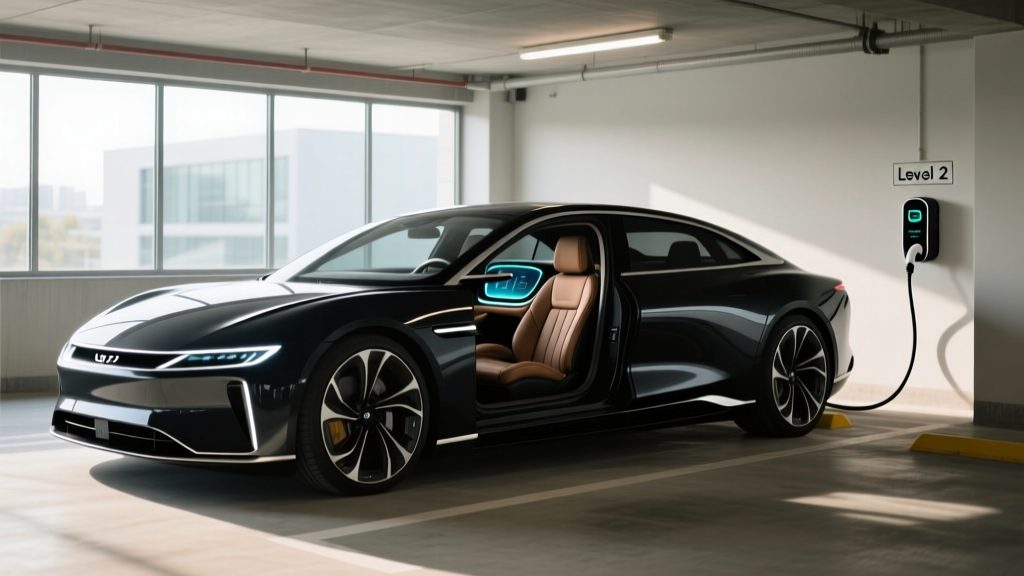
If you have been watching the luxury EV sedan market, the Lucid Air likely sits at the top of your shortlist — and for good reason. With EPA-estimated range figures that embarrass nearly every competitor and a 900-volt electrical architecture enabling some of the fastest DC fast-charging speeds in production, the Air is a technical showcase. But with base pricing climbing well past six figures on upper trims, many buyers are exploring a Lucid Air lease as a way to access this technology without absorbing long-term depreciation risk on a low-volume luxury EV.
This review covers every number that matters for a 2025–2026 Lucid Air lease decision: real-world range reconciliation, charging-curve behavior, tax credit mechanics under the IRS §30D leased-vehicle loophole, and how the Air stacks up against the Mercedes-Benz EQS, BMW i7, and Tesla Model S.
Lucid Air Lineup: Trims, Range, and Pricing at a Glance
Lucid offers the Air across four primary trims for the current model year. Below is the spec matrix you need before signing any lease agreement.
| Trim | Drivetrain | Horsepower | 0–60 mph | Battery (usable kWh) | EPA Range | Base MSRP |
|---|---|---|---|---|---|---|
| Air Pure | RWD | 430 hp | 5.0 sec | 88 kWh (NMC) | 419 mi | $69,900 |
| Air Touring | AWD Dual-Motor | 620 hp | 3.4 sec | 92 kWh (NMC) | 425 mi | $87,400 |
| Air Grand Touring | AWD Dual-Motor | 1,050 hp | 3.0 sec | 112 kWh (NMC) | 512 mi | $125,600 |
| Air Sapphire | AWD Tri-Motor | 1,234 hp | 1.89 sec | 118 kWh (NMC) | 427 mi | $249,000 |
All trims use nickel-manganese-cobalt (NMC) lithium-ion chemistry. Lucid has not offered an LFP (lithium iron phosphate) variant, which makes sense given the Air's performance and energy-density targets — LFP cells are heavier and less energy-dense, better suited to cost-optimized platforms.
Real-World Range: What to Actually Expect
EPA sticker: Up to 512 miles (Grand Touring). Real-world highway: Expect 380–430 miles at 70–75 mph in moderate temperatures. The Air's class-leading efficiency — roughly 4.0–4.5 miles per kWh on the Grand Touring — helps it hold range better than most luxury EVs at speed. Cold-weather impact: At 20°F, plan for a 20–30% reduction, dropping the Grand Touring to roughly 350–400 miles. The Air's heat pump and thermal management system mitigate this better than older EVs, but physics is physics. City driving: You will see numbers close to or slightly above EPA estimates thanks to aggressive regenerative braking recapturing energy in stop-and-go traffic.
Charging Speed: 900-Volt Architecture in Practice
The Lucid Air's 900-volt electrical system is its most underappreciated advantage. Most EVs run 400-volt architectures; the Air's higher voltage allows faster charging at lower current, reducing heat buildup and enabling sustained high charge rates.
| Charging Level | Power / Rate | Speed / Time | Notes |
|---|---|---|---|
| Level 1 (120V household) | ~1.4 kW | ~3–4 mi/hr | Emergency/trickle only |
| Level 2 (240V home) | Up to 19.2 kW | ~70–80 mi/hr | Requires 100A circuit; most homes install 48A (11.5 kW, ~45 mi/hr) |
| DC Fast Charge | Peak 300 kW | 10–80% in ~20 min (Grand Touring) | Sustains above 200 kW longer than most competitors due to 900V system |
A critical note on the DC fast-charging curve: the Air Grand Touring peaks near 300 kW at low state of charge (SoC), but more importantly, it sustains above 200 kW through roughly 55–60% SoC before tapering. This means real-world highway charging stops yield more usable miles per minute than competitors that spike to a high peak and immediately fall off. On a 350-kW Electrify America or Tesla Supercharger (with NACS adapter), you can realistically add 200+ miles in a 15-minute stop.
For home Level 2 charging, the Air's onboard charger accepts up to 19.2 kW — but this requires a hardwired wall connector on a dedicated 100-amp circuit. Most residential installations use a 60-amp circuit with a 48-amp charger (11.5 kW), which adds roughly 45 miles of range per hour and fully replenishes even the 112-kWh Grand Touring battery overnight.
Efficiency: The Air's Secret Weapon
Range gets headlines, but efficiency determines how much you spend per mile and how often you stop to charge. The Lucid Air Grand Touring achieves an EPA-rated 146 MPGe combined (approximately 4.5 mi/kWh or 22 kWh/100mi). The Air Pure and Touring trims rate slightly lower in MPGe due to different gearing and, in the Touring's case, the drag of dual-motor AWD, but still outperform nearly every rival luxury sedan.
For context, the Mercedes-Benz EQS 580 achieves roughly 97 MPGe combined, and the BMW i7 xDrive60 lands near 82 MPGe. The Air's miniaturized drive units — each motor is roughly the size of a carry-on bag — reduce weight and parasitic losses, contributing to this efficiency gap. On a Lucid Air lease, this translates to lower electricity costs over the lease term: at $0.16/kWh national average, fueling the Grand Touring costs roughly $3.50 per 100 miles versus $14–16 per 100 miles in a comparable gasoline luxury sedan.
Lease Pricing, Tax Credits, and Total Monthly Cost
Here is where a Lucid Air lease becomes strategically interesting. Under IRS §30D, the federal EV tax credit has strict requirements for purchased vehicles: buyer income caps ($150K single / $300K joint), vehicle MSRP caps ($55K for sedans), and battery critical-mineral and North American assembly sourcing rules. The Air Grand Touring at $125,600 MSRP and the Sapphire at $249,000 far exceed the $55K sedan MSRP cap, making them ineligible for the $7,500 purchase credit.
However, there is a well-documented commercial vehicle lease loophole (IRC §45W). When you lease rather than buy, the $7,500 credit goes to the leasing company (the legal owner), and many automakers — Lucid included at various points — pass this savings through as a "lease cash" incentive or capitalized-cost reduction. This has been a moving target; Lucid's lease incentives have ranged from $0 to $7,500 depending on the quarter and trim. Always confirm the current lease cash offer directly with Lucid or your leasing dealer before signing.
| Trim | MSRP | Est. Lease Cash | Est. Monthly Payment* | Due at Signing |
|---|---|---|---|---|
| Air Pure | $69,900 | Up to $7,500 | $750–$900 | $5,000–$7,500 |
| Air Touring | $87,400 | Up to $7,500 | $1,000–$1,200 | $5,000–$8,000 |
| Air Grand Touring | $125,600 | Up to $7,500 | $1,500–$1,800 | $7,500–$10,000 |
| Air Sapphire | $249,000 | Varies | $3,000+ | $15,000+ |
*Estimates based on typical money factors and residual values for 36-month luxury EV leases. Actual payments depend on credit tier, negotiated cap cost, local taxes, and dealer fees. Consult IRS.gov §30D/§45W guidance for current rules.
Interior Space, Cargo, and Daily Livability
The Air's cabin is genuinely spacious — a direct result of Lucid's compact drive-unit packaging freeing up interior volume. Key dimensions:
- Front legroom: 45.3 inches
- Rear legroom: 37.6 inches
- Trunk (rear): 22.1 cubic feet
- Frunk (front): 10.0 cubic feet
- Total cargo: 32.1 cubic feet
That rear cargo volume is notably larger than the Tesla Model S (28 cu ft combined) and the Mercedes EQS sedan (22 cu ft trunk only, no frunk). The Air's glass canopy roof creates an airy, open cabin feel, though some owners note it increases solar heat gain in summer — Lucid offers a tinted film option worth considering in hot climates.
The infotainment system uses a 34-inch curved glass cockpit display with a retractable lower touchscreen. It is visually impressive and responsive, though some users report a learning curve with the menu hierarchy. Wireless Apple CarPlay and Android Auto are standard. The available DreamDrive Pro ADAS suite includes adaptive cruise, lane-centering, and automatic lane-change assist — this is an SAE Level 2 driver-assistance system, meaning you must keep your hands on the wheel and eyes on the road at all times. It is not autonomous driving.
Pros, Cons, and the Honest Drawbacks
Pros
- Class-leading EPA range (512 mi Grand Touring)
- Exceptional efficiency — lowest kWh/100mi in luxury sedan segment
- 900V architecture with sustained fast-charge performance
- Massive interior and cargo space for the class
- Lease loophole can unlock $7,500 incentive on trims that fail purchase MSRP cap
- Quiet, refined ride quality with adaptive air suspension
Cons
- Limited service center network — many regions rely on mobile service only
- Infotainment learning curve; no physical knobs for climate or volume
- Build-quality inconsistencies reported by early owners (panel gaps, trim rattles)
- Higher insurance premiums vs. established luxury brands (get quotes before signing)
- Residual value uncertainty makes lease-end purchase a gamble
- Charging port location (rear driver-side) can be awkward at some pull-through stalls
Lucid Air vs. Key Competitors: Which Luxury EV Sedan Wins?
If you are cross-shopping a Lucid Air lease, you are likely also considering these alternatives:
- Tesla Model S: More Supercharger access, faster infotainment updates, and a larger service network. But the Model S interior materials and ride quality feel a generation behind the Air, and efficiency is notably worse (~3.5 mi/kWh vs. the Air's ~4.5).
- Mercedes-Benz EQS: Superior interior luxury and brand cachet, but range tops out at 390 miles and efficiency is 20–25% worse. The EQS is also heavier, which shows in braking and handling.
- BMW i7: The most traditionally "luxurious" of the group, with excellent build quality and an available theater screen for rear passengers. Range peaks at 318 miles, and efficiency trails the Air significantly.
The Air wins on range, efficiency, and interior space. It loses on service infrastructure, brand recognition, and residual value predictability. For a lease — where you hand the car back and walk away — that residual value risk shifts to the leasing company, which is precisely why a Lucid Air lease makes strategic sense for cautious luxury buyers.
Warranty Coverage and Long-Term Battery Outlook
Lucid provides the following warranty coverage:
- Basic vehicle: 4 years / 50,000 miles
- Battery and drive unit: 8 years / 100,000 miles (capacity retention threshold: 70% of original)
- Roadside assistance: 4 years / 50,000 miles
The 70% battery capacity retention threshold over 8 years is industry-standard, matching Tesla, BMW, and Mercedes. For a 36-month lease, you will be well within the warranty period, and battery degradation data from early Air owners (verified via fueleconomy.gov and owner forums) suggests the NMC packs lose roughly 3–5% capacity in the first 30,000 miles before stabilizing — consistent with modern NMC chemistry under good thermal management.
Who Should Lease the Lucid Air?
Choose the Lucid Air if: You want maximum range and efficiency in a luxury sedan, you drive 15,000+ miles per year (where range and charging speed matter most), you have reliable home Level 2 charging, and you prefer to avoid long-term depreciation risk on a low-volume EV brand.
Look elsewhere if: You live in an area with no nearby Lucid service center and cannot tolerate mobile-service-only repairs, you need a proven dealer network for peace of mind, or you want to keep the vehicle 7+ years (where purchase and long-term ownership may make more sense).
Frequently Asked Questions
What is the real-world range of the Lucid Air?
The EPA rates the Grand Touring at 512 miles. In real-world highway driving at 70–75 mph in moderate temperatures, expect 380–430 miles. In cold weather (below 30°F), plan for 350–400 miles. City driving with regenerative braking can match or slightly exceed EPA estimates.
How fast does the Lucid Air charge?
On a 350-kW DC fast charger, the Air Grand Touring peaks at 300 kW and charges from 10–80% in approximately 20 minutes, adding 200+ miles in a 15-minute stop. At home on a 48-amp Level 2 charger (11.5 kW), expect roughly 45 miles of range per hour of charging.
Does the Lucid Air qualify for the federal EV tax credit?
For outright purchase, most Air trims exceed the IRS §30D $55,000 sedan MSRP cap, making them ineligible. However, through a lease, the commercial clean vehicle credit (§45W) may allow the leasing company to claim $7,500 and pass savings to you as lease cash. Confirm current incentive availability with Lucid directly. Review current rules at IRS.gov.
Is a Lucid Air lease better than buying?
For most buyers, yes — the lease structure unlocks the $7,500 incentive loophole on trims that fail the purchase MSRP cap, protects you from residual-value risk on a low-volume brand, and keeps you within the full warranty period for the entire ownership experience.
How does the Lucid Air compare to the Tesla Model S?
The Air offers significantly more range (512 vs. 405 mi), better efficiency (~4.5 vs. ~3.5 mi/kWh), more interior space, and a more premium cabin. The Model S counters with a vastly larger Supercharger and service network, more mature software, and stronger brand recognition.
What are the biggest drawbacks of the Lucid Air?
Limited service center coverage, infotainment complexity, some reported build-quality inconsistencies, higher insurance costs, and uncertain long-term resale value. For a lease, the resale concern is largely the leasing company's problem, not yours.