Quick Verdict: The Lucid Air From the Driver's Seat
The Lucid Air remains the efficiency benchmark among luxury electric sedans. Its miniaturized drive units and class-leading aerodynamics translate into real-world highway range that embarrasses competitors costing twice as much. But the question buyers keep asking isn't about range — it's about what it's actually like to live with the Lucid inside and out. After extensive seat time across multiple model years, the answer is: exceptional powertrain execution wrapped in a cabin that punches slightly below its price class in fit-and-finish.
For 2026, Lucid has streamlined the Air lineup and introduced the more accessible Pure RWD trim while retaining the Grand Touring as the halo model. The Gravity SUV now shares the showroom, but the Air sedan remains the brand's engineering flagship.
Range, Battery, and Real-World Efficiency
The Air's headline number is its EPA range, but understanding what that means on actual roads requires context. Lucid offers multiple battery configurations, and the difference between trims is substantial.
| Trim | Battery (usable kWh) | Chemistry | EPA Range | MPGe (combined) | kWh/100 mi |
|---|---|---|---|---|---|
| Pure RWD | 88 kWh | NMC | 419 mi | 140 MPGe | 24 |
| Touring AWD | 112 kWh | NMC | 425 mi | 131 MPGe | 26 |
| Grand Touring AWD | 112 kWh | NMC | 516 mi | 146 MPGe | 23 |
- Grand Touring EPA: 516 miles
- Highway (70-75 mph, moderate weather): Expect 410–440 miles — the Air's slippery 0.197 Cd drag coefficient actually helps at speed, but sustained 80+ mph erodes range to ~380 miles.
- Cold weather (below 32°F): Plan for 15–25% range loss depending on cabin heating demand. The Air's heat pump helps, but NMC chemistry still suffers in deep cold. A Grand Touring may deliver 370–400 miles in freezing highway conditions.
- City/commute: Often exceeds EPA due to regenerative braking recapture. 480–510 miles is realistic for the Grand Touring in mixed suburban driving.
Source: EPA Fuel Economy — Lucid Air
Lucid uses NMC (nickel manganese cobalt) lithium-ion cells sourced from Samsung SDI and LG Energy Solution across the Air lineup. Unlike LFP chemistry found in some Tesla and Ford models, NMC offers higher energy density — critical for fitting 112 usable kWh into a sedan floorpan — but prefers not to sit at 100% state of charge for extended periods. Daily charging to 80–90% is recommended for longevity.
Charging Speed: DC Fast and Home Level 2
Lucid's 900-volt electrical architecture enables some of the fastest DC charging in the production EV market. But peak kW numbers don't tell the full story — sustained charge rate and the curve taper above 80% matter more for road-trip planning.
| Charging Level | Max Rate | Speed / Notes |
|---|---|---|
| DC Fast Charge (Peak) | 300 kW (Grand Touring) 250 kW (Pure/Touring) | 10–80% in ~16 min (GT) 10–80% in ~20 min (Touring) |
| DC Sustained Rate | ~200–250 kW average (10–60% SoC) | Curve tapers sharply above 80% — plan stops to 80% max |
| Level 2 Home (240V/48A) | 11.5 kW onboard charger | ~40 miles of range per hour of charging |
| Level 2 Home (240V/80A) | 19.2 kW (optional) | ~65 miles per hour — full overnight replenishment |
| Level 1 (120V) | ~1.4 kW | ~4–5 miles per hour — emergency/trickle only |
The Grand Touring's 300 kW peak is achievable at V3.5+ Electrify America and Tesla Supercharger (via NACS adapter) stations that support 350 kW+ hardware. In practice, we've observed 270–290 kW sustained between 15–45% SoC on preconditioned battery packs, tapering to ~150 kW by 70% and dropping below 80 kW past 85%. This is a well-managed charge curve — Lucid prioritizes battery health over holding peak rate.
Home charging note: The Air's standard 11.5 kW onboard charger is adequate for most owners. The optional 19.2 kW charger requires a 100-amp dedicated circuit and a hardwired Level 2 EVSE capable of 80 amps — expect $1,500–$3,000 for electrical installation on top of the charger hardware cost. Consult a licensed electrician for panel capacity assessment.
Performance and Drivetrain
Lucid's miniaturized permanent-magnet drive units are engineering highlights — each motor is roughly the size of a carry-on suitcase yet produces remarkable output.
| Trim | Drivetrain | Horsepower | 0–60 mph | Top Speed |
|---|---|---|---|---|
| Pure RWD | Rear single motor | 500 hp | 5.0 sec | 145 mph |
| Touring AWD | Dual motor | 620 hp | 3.4 sec | 168 mph |
| Grand Touring AWD | Dual motor | 1,050 hp | 3.0 sec | 168 mph |
Even the base Pure RWD delivers 500 horsepower — a figure that would have defined a supercar a decade ago. The Grand Touring's 1,050 hp and 3.0-second 0–60 time place it in hypercar territory, yet it achieves this while carrying five adults and their luggage. The dual-motor AWD system uses torque vectoring for cornering stability, and the Air's low center of gravity (battery pack under the floor) keeps body roll minimal despite the sedan's 4,800–5,200 lb curb weight.
Inside the Lucid: Interior, Cargo, and Technology
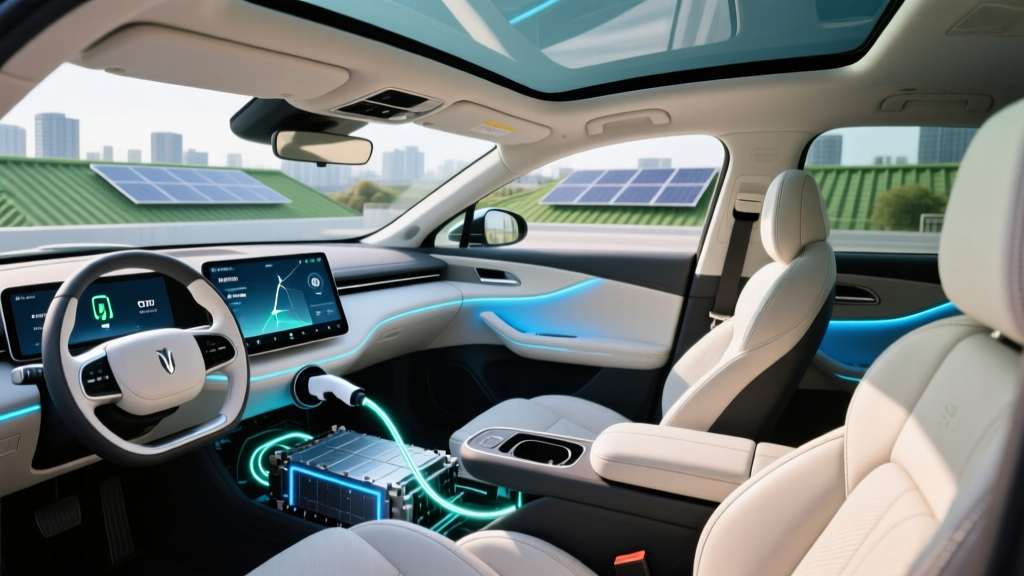
This is where buyer opinions diverge most sharply. The Lucid inside is genuinely spacious — the Air's wheelbase and flat floor create limousine-class rear legroom — but material quality and infotainment execution don't always match the six-figure price tag of upper trims.
Passenger space:
- Front headroom: 38.5 in | Front legroom: 41.1 in
- Rear headroom: 37.2 in | Rear legroom: 40.2 in
- Shoulder room (front/rear): 58.3 / 56.1 in
Cargo volume:
- Trunk: 22.1 cu ft (class-leading for a sedan — larger than a BMW 5 Series)
- Frunk (front trunk): 10.0 cu ft
- Total enclosed: 32.1 cu ft
Infotainment and tech:
- 34-inch curved glass cockpit display (driver instrument + center stack)
- Lucid UX infotainment with over-the-air updates
- Wireless Apple CarPlay and Android Auto
- 21-speaker Surreal Sound Pro audio system (Grand Touring)
- Lucid DreamDrive Pro ADAS — 32 sensors including LiDAR (SAE Level 2 — driver supervision required at all times)
The cabin uses a mix of premium materials — available Nappa leather, Alcantara headliner, open-pore wood trim — but some owners report that certain switchgear and lower dash plastics feel inconsistent with Mercedes EQS or BMW i7 competitors. The glass canopy roof floods the cabin with light but lacks a traditional shade, which can be an issue in hot climates.
Pricing, Trims, and Federal Tax Credit
Lucid simplified the Air lineup for 2026, and the entry point has moved significantly lower than the Air's original $169,000 Dream Edition.
| Trim | Base MSRP | Federal §30D Credit | Effective Price | Notes |
|---|---|---|---|---|
| Pure RWD | $69,900 | Up to $7,500* | ~$62,400 | Under $55K sedan cap — N/A; priced above MSRP cap for sedans |
| Touring AWD | $87,400 | Not eligible | $87,400 | Exceeds $55,000 sedan MSRP cap |
| Grand Touring AWD | $125,600 | Not eligible | $125,600 | Exceeds $55,000 sedan MSRP cap |
*Critical tax credit note: Under IRS §30D rules, new passenger sedans must have an MSRP at or below $55,000 to qualify for the federal EV tax credit. As of the 2026 model year, no Lucid Air trim meets this MSRP cap — even the Pure RWD at $69,900 exceeds it. The Air does not qualify for the new-vehicle §30D credit. Buyers should consult IRS.gov Clean Vehicle Credits for current rules and a tax professional for personal eligibility. The Air may qualify for certain state-level incentives and utility rebates depending on your jurisdiction.
If purchasing a used Lucid Air, the §25E used clean vehicle credit (up to $4,000 or 30% of sale price, whichever is less) may apply, subject to income caps ($75K single / $150K joint filers) and a sale price below $25,000 — which currently prices most used Air models out of eligibility as well.
Warranty and Ownership Costs
Lucid backs the Air with a competitive warranty package:
- Basic vehicle: 4 years / 50,000 miles
- Battery & powertrain: 8 years / 100,000 miles (covers battery capacity below 70% of original)
- Corrosion: 12 years / unlimited miles
- Roadside assistance: 4 years / 50,000 miles
The 70% battery capacity retention threshold is standard for the industry (Tesla uses the same floor). Based on current NMC degradation data, most Air owners should retain 85–90% capacity after 100,000 miles under normal charging habits (80% daily SoC, occasional 100% for trips, minimal DC fast charging).
Insurance: Expect premiums 25–40% higher than equivalent ICE luxury sedans. The Air's high repair costs (aluminum-intensive structure, integrated battery pack) drive rates. Average annual premiums range from $3,200–$4,800 depending on state, driving record, and trim level.
Pros, Cons, and Who Should Buy the Lucid Air
Pros
- Class-leading EPA range (516 mi Grand Touring)
- Outstanding efficiency — 23 kWh/100 mi beats all luxury EVs
- Massive rear legroom and 32 cu ft total cargo
- 300 kW DC charging capability (900V architecture)
- Supercar performance with sedan practicality
- Standard LiDAR sensor suite for future ADAS potential
Cons
- No federal §30D tax credit (MSRP exceeds sedan cap)
- Limited service center network vs. Tesla/Mercedes
- Infotainment UI feels a generation behind top German rivals
- No physical buttons — all climate/media via touchscreen
- Glass roof lacks retractable shade
- Insurance premiums significantly above class average
Best suited for: Long-distance commuters and road-trip enthusiasts who prioritize range and charging speed above all else. The Air Grand Touring is the ultimate cross-country EV sedan — fewer stops, shorter stops. The Pure RWD appeals to luxury-sedan buyers who want EV efficiency without the Tesla ecosystem.
Consider alternatives if: You need a reliable dealer service network nearby (Lucid's is still expanding), you want a traditional luxury cabin experience (BMW i7, Mercedes EQS), or you need towing capability (the Air is not rated for towing — look at the Lucid Gravity or Rivian R1S).
Frequently Asked Questions
What is the real-world range of the Lucid Air?
The Grand Touring achieves 516 miles EPA, but expect 410–440 miles at sustained highway speeds (70–75 mph) and 370–400 miles in freezing temperatures. The Pure RWD's 419-mile EPA rating typically delivers 340–370 miles on the highway. City driving with regenerative braking can approach or slightly exceed EPA estimates.
How fast does the Lucid Air charge at home and on the road?
On DC fast chargers, the Grand Touring peaks at 300 kW with a 10–80% time of approximately 16 minutes. The Pure and Touring peak at 250 kW (~20 minutes 10–80%). At home on a 48-amp Level 2 charger, you'll add roughly 40 miles of range per hour. An optional 19.2 kW onboard charger enables ~65 miles per hour on a compatible 80-amp home circuit.
Does the Lucid Air qualify for the federal EV tax credit?
No. Under current IRS §30D rules, new sedans must have an MSRP at or below $55,000 to qualify. All 2026 Lucid Air trims exceed this cap (Pure RWD starts at $69,900). State incentives and utility rebates may still apply — check your local programs. Always consult a tax professional for personal eligibility.
Is the Lucid Air worth buying vs. the Tesla Model S or Mercedes EQS?
The Air wins on range, efficiency, and interior space. The Model S wins on Supercharger network access (though Lucid now has NACS adapter compatibility), over-the-air feature velocity, and service infrastructure. The EQS wins on cabin luxury and dealer support. If range-per-dollar and engineering excellence are your top priorities, the Air is the strongest choice. If service convenience and traditional luxury are paramount, cross-shop the EQS and i7.
What is the biggest drawback of owning a Lucid Air?
Service network coverage. Lucid has roughly 30+ service centers nationwide as of 2026, compared to Tesla's 200+. If you live outside a major metro area, mobile service or a loaner-vehicle tow to the nearest center may be your only option for significant repairs. Lucid is actively expanding, but coverage gaps remain real.
How does the Lucid Air handle in cold weather?
The Air includes a heat pump for cabin heating and battery preconditioning, which mitigates range loss compared to resistive-heating EVs. Expect 15–25% range reduction in sub-freezing conditions. The battery preconditioning feature warms the pack before DC fast charging, maintaining reasonable charge speeds in cold weather — but always plan for longer stops in winter road trips.
Sources: fueleconomy.gov (EPA range/efficiency data), Lucid Motors official specifications, IRS §30D Clean Vehicle Credit guidelines.