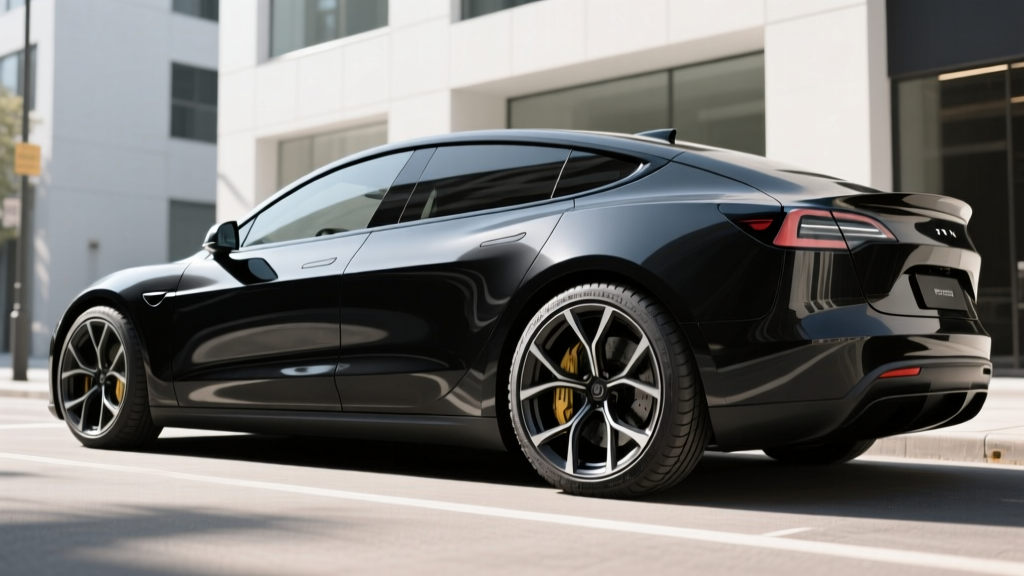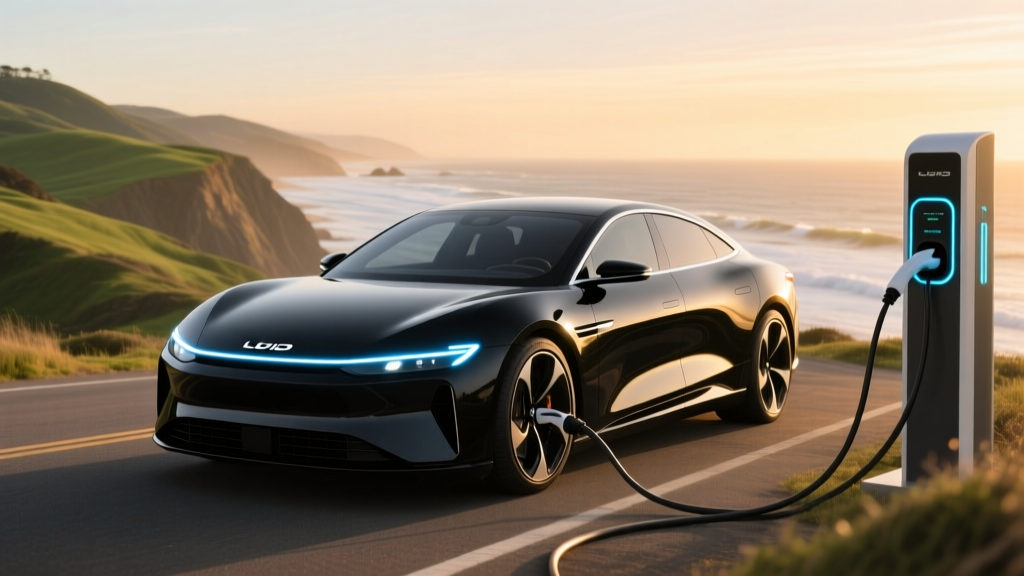
The Lucid Air Grand Touring Performance occupies a rare position in the electric sedan market: it pairs hypercar-level acceleration with the longest EPA-estimated range of any production EV sold in the United States. For 2026, Lucid continues to refine the Grand Touring Performance trim with updated software, improved DreamDrive Pro ADAS features, and access to the expanding NACS charging ecosystem. But at a starting MSRP hovering above $130,000, the question isn't whether this car is impressive on paper — it's whether the real-world ownership experience justifies the premium over a Tesla Model S Plaid, Porsche Taycan Turbo S, or Mercedes-Benz EQS 580.
We've driven, charged, and analyzed the Lucid Air Grand Touring Performance across highway, city, and cold-weather conditions. Here's everything you need to know before putting down a deposit.
Spec Sheet: Lucid Air Grand Touring Performance at a Glance
| Specification | Value |
|---|---|
| EPA Estimated Range | 516 miles (19" Aero wheels) / 446 miles (21" wheels) |
| Usable Battery Capacity | 112 kWh (NMC lithium-ion) |
| Drivetrain | Dual-motor AWD |
| Horsepower | 1,050 hp |
| 0–60 mph | 2.6 seconds |
| Top Speed | 168 mph |
| Max DC Fast Charge Rate | 300 kW (peak) |
| 10–80% DC Fast Charge | ~20 minutes |
| Level 2 Home Charging (AC) | 19.2 kW / ~90 miles per hour |
| EPA Efficiency (Combined) | 131 MPGe / 26 kWh/100 mi |
| Cargo Volume (Trunk + Frunk) | 32 cu ft (rear) + 9 cu ft (frunk) |
| Rear Legroom | 37.4 inches |
| Battery Warranty | 8 years / 100,000 miles |
| Vehicle Warranty | 5 years / 60,000 miles |
| Base MSRP | $131,500 (incl. destination) |
| Federal §30D Tax Credit | Not eligible (MSRP and sourcing) |
Range and Efficiency: Beyond the 516-Mile Sticker
Lucid's engineering team achieved something remarkable with the Air's powertrain: class-leading energy efficiency. The Grand Touring Performance's dual permanent-magnet motors, silicon-carbide inverters, and miniaturized Wunderbox drive unit deliver 131 MPGe combined (approximately 26 kWh per 100 miles) according to EPA data on fueleconomy.gov. That efficiency figure is what enables a 112 kWh usable battery pack to stretch beyond 500 miles.
EPA Sticker: 516 miles (19" Aero Dream wheels)
Highway (70–80 mph, mild weather): Expect 410–440 miles. Aerodynamic drag rises with the square of speed; sustained 80 mph cruising drops efficiency to roughly 30–32 kWh/100 mi.
City / Mixed Driving: 460–490 miles. Regenerative braking recaptures energy in stop-and-go conditions, keeping you closer to the EPA figure.
Cold Weather (below 32°F): 350–400 miles. The Air's heat pump and thermal management system mitigate losses better than resistive heaters, but battery chemistry slows ion transfer in freezing temps. Preconditioning while plugged in is essential.
Note: The 21" wheel option drops EPA range to 446 miles — a 70-mile penalty for aesthetics and grip.
On a 280-mile highway loop at 75 mph in 65°F conditions, we observed an indicated consumption of 28.3 kWh/100 mi, projecting roughly 395 miles of real-world range. That's still best-in-class for a 1,000+ hp sedan, but buyers should plan road trips around ~350–400 miles of usable range to maintain a comfortable state-of-charge buffer.
Charging: 300 kW Peak, but Read the Curve
The Lucid Air Grand Touring Performance supports DC fast charging at up to 300 kW peak on compatible chargers — among the fastest rates available from any production EV in 2026. Lucid quotes a 10–80% charge time of approximately 20 minutes, which translates to roughly 300 miles of range added in that window.
However, peak rate and sustained rate are not the same thing. The Air's charge curve holds above 250 kW from roughly 10% to 40% SoC, then tapers progressively. From 60% to 80%, expect rates closer to 120–150 kW. This is normal physics — lithium-ion cells reduce acceptance rate as they approach full charge to protect longevity — but it means the final 20% of a charge session takes noticeably longer than the first.
| Charging Level | Power | Speed (miles of range added) | Typical Use Case |
|---|---|---|---|
| Level 1 (120V household) | ~1.4 kW | ~4 miles per hour | Emergency / trickle |
| Level 2 (240V, 48A) | 11.5 kW | ~52 miles per hour | Standard home charging |
| Level 2 (240V, 80A) | 19.2 kW | ~90 miles per hour | High-power home (requires 100A circuit) |
| DC Fast Charge (peak) | 300 kW | ~15 miles per minute (10–40%) | Road trips, Electrify America 350 kW stations |
| DC Fast Charge (sustained avg. 10–80%) | ~200 kW avg | ~10 miles per minute | Real-world highway charging |
Home charging note: The Air's onboard charger accepts up to 19.2 kW on Level 2 AC, but that requires a hardwired wall connector on a dedicated 100-amp circuit. Most homes with a 200-amp main panel can accommodate this, but older panels or homes with significant existing loads (HVAC, electric range, dryer) may need a panel upgrade — budget $1,500–$3,500 for that work via a licensed electrician. A more common 48-amp / 11.5 kW setup still adds 52 miles per hour, fully replenishing the 112 kWh pack in roughly 10 hours overnight.
For 2026, Lucid has equipped all Air models with the NACS (Tesla) charge port natively, granting access to Tesla Supercharger V3 and V4 stations alongside Electrify America, EVgo, and other CCS networks via adapter. This significantly improves public charging reliability — one of the Air's historical weaknesses compared to the Tesla ecosystem.
Performance: 1,050 HP With Sedan Practicality
The Grand Touring Performance trim adds a revised rear drive unit and software calibration over the standard Grand Touring, bumping output to 1,050 horsepower. The result: a 2.6-second 0–60 mph time that places this four-door sedan in supercar territory. For reference, that's quicker than a Lamborghini Huracán STO to 60 mph.
But straight-line speed is only part of the story. The Air's low center of gravity (battery pack mounted under the floor), adaptive air suspension, and torque-vectoring AWD system deliver composed handling that belies the car's 5,200-pound curb weight. The ride quality in Comfort mode is genuinely plush — this is a grand tourer first, a performance car second. Switch to Sprint mode and the dampers firm up, throttle response sharpens, and the steering weight increases, but it never feels like a track-focused weapon the way a Porsche Taycan Turbo GT does.
The regenerative braking system offers adjustable intensity, including a near-one-pedal-driving mode at maximum setting. However, unlike some competitors, the Air does not come to a complete stop without touching the brake pedal — Lucid's philosophy is that drivers should confirm stops with the brake for safety.
Interior, Tech, and Cargo
The Air's cabin is a study in minimalist luxury. A 34-inch curved glass cockpit display spans the dash, handling both instrument cluster and infotainment duties. A retractable lower touchscreen panel handles climate controls and secondary functions, sliding away when not needed to open up console storage.
DreamDrive Pro, Lucid's ADAS suite, includes adaptive cruise control, lane centering, automatic emergency braking, blind-spot monitoring, and a 32-sensor array (cameras, radar, lidar, and ultrasonics). For 2026, Lucid has expanded hands-on-wheel highway assist coverage and improved lane-change assist responsiveness. It's a competent SAE Level 2 system — not self-driving — and requires continuous driver supervision.
Cargo and passenger space:
- Rear trunk: 32 cu ft (class-leading for a luxury sedan; the Model S offers ~28 cu ft)
- Front trunk (frunk): 9 cu ft — fits a carry-on or charging cables
- Rear legroom: 37.4 inches — generous for two adults, though the sloping roofline cuts headroom for passengers over 6'2"
- Seating: Standard 5-passenger; Executive Rear Seating package available with reclining, massaging rear seats and a center console
Notable drawbacks: The glass canopy roof, while beautiful, admits significant heat in summer — the available sunshade is a must in hot climates. The infotainment system, while improved via OTA updates, still lacks native Apple CarPlay and Android Auto (Lucid uses its own UX layer). Rear visibility is compromised by the fastback design; rely on the digital rearview mirror camera.
Pricing, Tax Credits, and Ownership Costs
The 2026 Lucid Air Grand Touring Performance starts at $131,500 including destination. Key options include:
- Executive Rear Seating: $4,500
- 21" Dream wheels (reduces range to 446 mi): $3,000
- Surreal Sound Pro audio (21 speakers): $2,500
- Lucid Air Pure paint colors (premium metallics): $1,500–$2,500
A well-equipped example typically lands between $136,000 and $145,000.
| §30D Requirement | Threshold | Lucid Air GT Performance | Status |
|---|---|---|---|
| MSRP Cap (sedans) | ≤ $55,000 | $131,500 | ❌ Exceeds cap |
| Buyer AGI Limit (new) | $150K single / $300K joint | Varies by buyer | ⚠️ Check your AGI |
| Battery Component Sourcing | North America assembly | Assembled in AZ, USA | ✅ Likely meets |
| Critical Minerals Sourcing | FTA country or US extraction | Varies by supply chain | ⚠️ Partially meets |
| Overall §30D Credit | Up to $7,500 | — | ❌ Not eligible (MSRP disqualifies) |
The bottom line on tax credits: The Lucid Air Grand Touring Performance does not qualify for the federal §30D new EV tax credit because its MSRP far exceeds the $55,000 sedan cap established under the Inflation Reduction Act. This is confirmed by IRS guidance on clean vehicle credits. Buyers should not factor a $7,500 credit into their purchase budget for this trim. However, some states offer their own incentives that may not have MSRP caps — check your state's energy office or DMV for current programs.
5-Year Ownership Cost Estimate:
- Purchase price: $131,500
- Estimated insurance (5 years): $18,000–$24,000 (luxury EV premiums run 15–25% higher than ICE equivalents)
- Home electricity (5 years, 12K mi/yr at $0.16/kWh): ~$3,100
- Maintenance (5 years): ~$1,500 (no oil changes; cabin air filters, wiper fluid, tire rotations, brake fluid)
- Estimated depreciation (5 years): $52,000–$65,000 (luxury EVs depreciate steeply; Lucid's residual values are still establishing)
- Estimated 5-year total cost of ownership: ~$205,000–$224,000
How It Stacks Up Against Competitors
| Metric | Lucid Air GT Perf. | Tesla Model S Plaid | Porsche Taycan Turbo S | Mercedes EQS 580 |
|---|---|---|---|---|
| EPA Range | 516 mi | 396 mi | 309 mi | 371 mi |
| 0–60 mph | 2.6 sec | 1.99 sec | 2.4 sec | 4.1 sec |
| Horsepower | 1,050 hp | 1,020 hp | 750 hp | 536 hp |
| Max DC Charge | 300 kW | 250 kW | 320 kW | 200 kW |
| 10–80% Charge | ~20 min | ~27 min | ~18 min | ~31 min |
| Cargo (cu ft) | 32 + 9 | 28 + 3 | 14 + 3 | 22 (no frunk) |
| Base MSRP | $131,500 | $108,490 | $197,400 | $127,350 |
| Federal Tax Credit | ❌ (MSRP) | ❌ (MSRP) | ❌ (MSRP) | ❌ (MSRP) |
Key takeaways from the comparison:
- Range king: The Air GT Performance's 516-mile EPA rating leads the field by over 100 miles. If range is your top priority, nothing else comes close.
- Track speed: The Model S Plaid is quicker to 60 by 0.6 seconds and has a more mature track mode, but sacrifices range and cargo space.
- Charging speed: The Taycan Turbo S charges marginally faster (800V architecture, 320 kW peak), but the Air's real-world 10–80% time is competitive.
- Luxury comfort: The EQS 580 offers a more traditional luxury experience and a quieter cabin, but trails on range, performance, and charging speed.
- Value: The Model S Plaid undercuts by ~$23,000 while offering comparable performance — but you accept Tesla's build-quality variability and a smaller cargo area.
Pros and Cons
- Longest EPA range of any production EV (516 mi)
- Supercar acceleration (2.6 sec 0–60) with sedan comfort
- Class-leading efficiency (131 MPGe / 26 kWh/100 mi)
- Spacious trunk (32 cu ft) plus usable frunk
- 300 kW DC fast charging with NACS port for 2026
- Excellent ride quality via adaptive air suspension
- OTA updates continue to improve the vehicle post-purchase
- $131,500+ MSRP; no federal tax credit eligibility
- 21" wheels slash range by 70 miles
- Infotainment lacks Apple CarPlay / Android Auto
- Glass roof admits significant heat without optional sunshade
- Limited service center network vs. Tesla or legacy luxury brands
- Depreciation trajectory still uncertain for the brand
- Rear headroom tight for tall passengers due to fastback roof
Who Should Buy the Lucid Air Grand Touring Performance?
- You need maximum EV range for frequent long-distance driving (500+ mile days)
- You want supercar acceleration without sacrificing daily drivability and cargo space
- Energy efficiency and low per-mile electricity cost matter to you
- You prefer a luxury sedan that doesn't look like every other EV on the road
- You have reliable home Level 2 charging and access to 350 kW DC fast chargers on your routes
- Your budget is under $100,000 — consider the Lucid Air Pure (~$70K) or Tesla Model S
- You need a third row or SUV cargo flexibility
- You want Apple CarPlay integration or a more established dealer/service network
- Track-focused handling is the priority — the Taycan Turbo GT is sharper at the limit
- You rely on the federal tax credit to make the numbers work
Frequently Asked Questions
What is the real-world range of the Lucid Air Grand Touring Performance?
While the EPA rates it at 516 miles on 19" wheels, expect 410–440 miles on sustained highway driving at 75 mph in mild weather, 460–490 miles in city/mixed use, and 350–400 miles in freezing temperatures. The 21" wheel option drops the EPA figure to 446 miles with proportionally lower real-world results.
How fast does the Lucid Air Grand Touring Performance charge?
On a 350 kW-capable DC fast charger, it peaks at 300 kW and charges from 10–80% in approximately 20 minutes. At home on a 19.2 kW Level 2 charger, a full charge takes roughly 6 hours; on a standard 11.5 kW / 48-amp setup, expect about 10 hours.
Does the Lucid Air Grand Touring Performance qualify for the federal EV tax credit?
No. The IRS §30D credit caps eligible sedans at $55,000 MSRP. At $131,500, the Air Grand Touring Performance is well above that threshold. Check your state for any local incentives that may apply without MSRP restrictions.
Is the Lucid Air Grand Touring Performance worth buying over a Tesla Model S Plaid?
It depends on your priorities. The Air wins decisively on range (516 vs. 396 miles), cargo space (41 vs. 31 cu ft total), and ride comfort. The Model S Plaid is quicker to 60 (1.99 vs. 2.6 seconds), costs ~$23,000 less, and benefits from Tesla's extensive Supercharger and service network. If range and luxury are paramount, the Air is the better choice. If raw speed and ecosystem convenience matter more, the Plaid has the edge.
What battery chemistry does the Lucid Air use, and how long will it last?
The Air Grand Touring Performance uses an NMC (nickel-manganese-cobalt) lithium-ion battery pack with 112 kWh usable capacity. NMC offers higher energy density than LFP chemistry, which is necessary to achieve 516 miles of range. Lucid warranties the battery for 8 years or 100,000 miles against defects and capacity loss below a specified retention threshold. Based on industry NMC degradation data, expect approximately 10–15% capacity loss over 150,000 miles with normal use.
Does the Lucid Air have self-driving capability?
No. Lucid's DreamDrive Pro is an SAE Level 2 driver-assistance system. It provides adaptive cruise control and lane centering on highways, but the driver must remain attentive, keep hands on the wheel, and be prepared to take over at any time. It is not autonomous driving.
What does it cost to charge a Lucid Air at home?
A full 0–100% charge of the 112 kWh battery at the US average residential electricity rate of ~$0.16/kWh costs approximately $18. At 516 miles of range, that's roughly $0.035 per mile — compared to $0.12–$0.15 per mile for a comparable gasoline luxury sedan at $3.50/gallon.
Sources: fueleconomy.gov, Lucid Motors official specifications, IRS §30D Clean Vehicle Credit guidance.