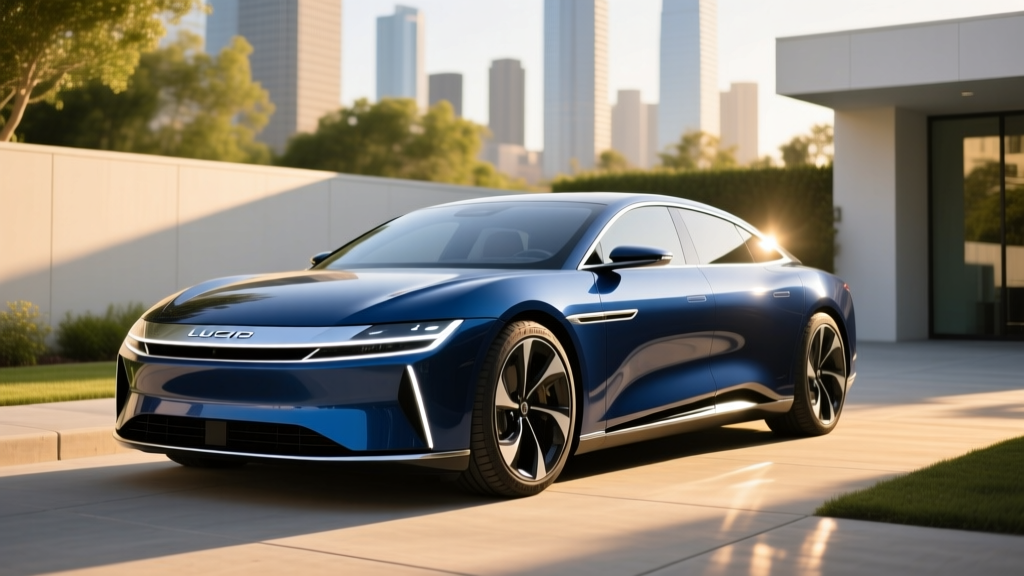
If you've been tracking the luxury electric sedan market, you've likely noticed that Lucid Motors has been quietly undercutting its German rivals on price while delivering class-leading efficiency and range. For 2026, the Lucid Air lineup has settled into a mature product cadence, and dealer inventory levels mean that Lucid Air deals are more attainable than at the brand's rocky 2022 launch. But before you sign a purchase agreement, you need to understand what you're actually getting — and what the fine print on tax credits, real-world range, and charging infrastructure really looks like.
This review covers every 2026 Lucid Air trim currently in production, with exact EPA figures, battery chemistry details, charging-curve realities, and a clear-eyed look at federal incentive eligibility. Whether you're cross-shopping the Tesla Model S, Mercedes EQS, or BMW i7, this is the data you need.
2026 Lucid Air at a Glance: Full Spec Breakdown
| Spec | Air Pure RWD | Air Touring AWD | Air Grand Touring AWD | Air Sapphire |
|---|---|---|---|---|
| Base MSRP | $69,900 | $87,400 | $125,600 | $249,000 |
| EPA Range | 419 mi | 425 mi | 512 mi | 427 mi |
| Battery (usable kWh) | 88 kWh | 112 kWh | 112 kWh | 118 kWh |
| Chemistry | NMC | NMC | NMC | NMC |
| Drivetrain | RWD (single motor) | AWD (dual motor) | AWD (dual motor) | AWD (tri-motor) |
| Horsepower | 430 hp | 620 hp | 819 hp | 1,234 hp |
| 0–60 mph | 5.0 sec | 3.4 sec | 3.0 sec | 1.89 sec |
| Efficiency (MPGe) | 146 MPGe | 131 MPGe | 131 MPGe | 110 MPGe |
| kWh/100 mi | 23 | 26 | 26 | 31 |
| Max DC Charge Rate | 200 kW | 300 kW | 300 kW | 300 kW |
| 10–80% DC Time | ~28 min | ~20 min | ~20 min | ~22 min |
| Level 2 Rate | 19.2 kW (77 mi/hr) | 19.2 kW (77 mi/hr) | 19.2 kW (77 mi/hr) | 19.2 kW (77 mi/hr) |
| Battery Warranty | 8 yr / 100,000 mi | 8 yr / 100,000 mi | 8 yr / 100,000 mi | 8 yr / 100,000 mi |
Sources: EPA Fuel Economy, Lucid Motors official specifications.
Real-World Range: What the EPA Sticker Doesn't Tell You
The Grand Touring's 512-mile EPA estimate is the highest of any production sedan on the market. But real-world results depend heavily on how and where you drive.
- Highway (70–80 mph, moderate temps): Expect ~390–430 miles on the Grand Touring. Lucid's drag coefficient of 0.197 Cd is exceptionally low, which helps highway efficiency more than most competitors.
- City/mixed driving: Closer to the EPA sticker — 470–510 miles on the Grand Touring is achievable thanks to aggressive regenerative braking and low-speed efficiency.
- Cold weather (below 32°F / 0°C): Plan for 20–30% range reduction, putting the Grand Touring at roughly 350–410 miles and the Pure RWD at ~290–335 miles. The Air uses a heat pump for cabin heating, which mitigates some loss compared to resistive heaters, but battery chemistry (NMC) still suffers in deep cold.
Lucid's efficiency advantage comes from its proprietary miniaturized drive units and 900V+ electrical architecture. The Air Pure RWD achieves 146 MPGe combined — roughly 4.3 miles per kWh — which is among the best of any full-size luxury EV. That efficiency translates directly into lower charging costs and more usable range from a smaller battery.
Charging Speed: 900V Architecture Pays Off
Lucid's 900-volt electrical architecture (shared conceptually with the Hyundai Ioniq 5 and Porsche Taycan) enables faster DC charging than 400V systems, but the real-world charge curve tells a more nuanced story than the peak kW number alone.
| Charging Level | Power / Rate | Miles Added per Hour | Notes |
|---|---|---|---|
| Level 1 (120V household) | ~1.4 kW | ~4–5 mi/hr | Emergency/trickle only |
| Level 2 (240V, 48A circuit) | 19.2 kW | ~77 mi/hr | Full overnight charge in ~6 hr (112 kWh pack) |
| DC Fast (350 kW station) | Peak 300 kW | ~1,200 mi/hr (peak) | 10–80% in ~20 min; tapers significantly above 80% |
| DC Fast (150 kW station) | ~145 kW sustained | ~580 mi/hr | 10–80% in ~38 min |
A few critical notes on charging the Air:
- Peak kW is not sustained kW. The 300 kW peak on Touring, Grand Touring, and Sapphire trims holds only between roughly 10–40% State of Charge (SoC). Above 60%, the curve tapers to ~150 kW, and above 80% it drops below 50 kW. This is normal for NMC chemistry but worth understanding if you're planning road-trip charging stops.
- Preconditioning matters. The Air's navigation system will precondition the battery when you route to a DC fast charger. Without preconditioning (cold-soaked battery), expect peak rates 30–50% lower in winter.
- Connector: NACS (native). For 2026, all Lucid Air models ship with the Tesla-style NACS charge port, granting direct access to Tesla Superchargers (V3 and V4) without an adapter. This is a significant practical advantage over CCS-only vehicles now that the Supercharger network dominates US fast-charging infrastructure.
- Home charging at 19.2 kW is fast for Level 2. Most home chargers deliver 11.5 kW (48A on a 60A circuit). To get the Air's full 19.2 kW Level 2 rate, you'll need an 80A circuit and a hardwired EVSE rated for 80A continuous. This may require a panel upgrade in older homes — budget $500–$2,500 for electrical work depending on your panel capacity.
Pricing, Trims, and the Federal Tax Credit Question
Lucid Air pricing has stabilized since the brand's early production struggles. Here's what the 2026 lineup costs and how federal incentives factor in.
| Trim | Base MSRP | As-Tested (typical options) | §30D Credit Eligible? | Effective Price (if eligible) |
|---|---|---|---|---|
| Air Pure RWD | $69,900 | $72,000–$75,000 | Potentially — see rules below | ~$62,400–$67,500 |
| Air Touring AWD | $87,400 | $92,000–$98,000 | No — exceeds MSRP cap | $87,400+ |
| Air Grand Touring AWD | $125,600 | $130,000–$142,000 | No — exceeds MSRP cap | $125,600+ |
| Air Sapphire | $249,000 | $249,000+ | No — exceeds MSRP cap | $249,000 |
§30D Federal Tax Credit: The Fine Print
Under current IRS §30D rules, the new clean vehicle credit offers up to $7,500, but eligibility for the Lucid Air is extremely limited:
- MSRP cap for sedans: $55,000. Only the Air Pure RWD at $69,900 base exceeds this cap — meaning no 2026 Lucid Air trim currently qualifies for the full §30D new-vehicle credit based on MSRP alone.
- Buyer income caps: AGI must not exceed $150,000 (single), $225,000 (head of household), or $300,000 (joint filers).
- Battery sourcing requirements: Critical minerals and battery components must meet escalating domestic-content thresholds. Lucid sources cells from various suppliers, and compliance varies by build date.
- Point-of-sale transfer: If a vehicle qualifies, the credit can be transferred to the dealer at purchase for an immediate price reduction rather than waiting for tax filing.
Bottom line: As of 2026, do not count on the $7,500 federal credit for any Lucid Air trim. The Air Pure RWD's $69,900 MSRP exceeds the $55,000 sedan cap. Some buyers may find state-level incentives (California's CVRP, for instance, though funding fluctuates) or utility rebates that partially offset the cost. Always consult a tax professional and verify current rules at irs.gov.
Interior, Cargo, and Technology
The Lucid Air's cabin occupies a distinct niche — minimalist and airy (the glass canopy roof is standard on Touring and above), but not as overtly plush as a Mercedes EQS or as tech-forward as a Tesla Model S.
Passenger and Cargo Dimensions
- Front headroom: 39.6 inches
- Rear headroom: 37.8 inches (Glass Canopy roof adds ~1.5 inches of perceived space)
- Rear legroom: 41.3 inches — genuinely limousine-like and more than the Model S (39.6 in) or BMW i7 (39.8 in)
- Trunk (rear): 32.0 cu ft (larger than the Model S at 28 cu ft)
- Frunk (front trunk): 10.0 cu ft — usable for a carry-on or charging cables
- Total cargo: 42.0 cu ft with rear seats up
Tech and Driver Assistance
- Infotainment: 34-inch curved glass cockpit display with a retractable lower touchscreen. The system runs Lucid's proprietary software — responsive, but the app ecosystem is limited compared to Tesla or Android Automotive-based systems.
- DreamDrive Pro ADAS: Lucid's Level 2 driver-assistance suite includes adaptive cruise, lane centering, and automated lane changes on highways. It uses LiDAR (a key differentiator from Tesla's camera-only approach). However, DreamDrive Pro is not a hands-free system — you must keep your hands on the wheel. This is SAE Level 2, not autonomous driving.
- Audio: 21-speaker Surreal Sound system by Mark Levinson (standard on Touring and above) — widely praised as one of the best factory audio setups in any vehicle.
- Over-the-air updates: Lucid regularly pushes OTA improvements to powertrain efficiency, UI, and ADAS features.
Lucid DreamDrive Pro is an SAE Level 2 system. It requires continuous driver supervision. It does not stop at all red lights, navigate complex construction zones autonomously, or handle unmapped roads. You are legally and practically the driver at all times.
Who Should Buy the Lucid Air — And Who Shouldn't
- You prioritize real-world range and efficiency above all else in a luxury sedan
- You need genuine rear-seat legroom for adults (not just children)
- You want NACS native access to Tesla Superchargers without an adapter
- You value a quiet, refined ride over sporty handling dynamics
- You commute long distances and want to minimize charging stops
- You need hands-free highway driving (GM Super Cruise or Ford BlueCruise offer true hands-free on mapped highways)
- You want a sport-sedan driving experience — the Porsche Taycan and BMW i7 M70 are sharper in corners
- You need the federal tax credit — no Air trim qualifies under current MSRP caps
- You live in a region with limited Lucid service centers (the brand's service network is still expanding)
- Cargo flexibility is paramount — there's no hatchback/SUV variant of the Air; consider the Lucid Gravity (SUV) if you need fold-flat cargo
Lucid Air vs. Key Competitors
| Attribute | 2026 Lucid Air Grand Touring | 2026 Tesla Model S Long Range | 2026 Mercedes EQS 580 | 2026 BMW i7 xDrive60 |
|---|---|---|---|---|
| EPA Range | 512 mi | 402 mi | 371 mi | 318 mi |
| Starting Price | $125,600 | $79,990 | $120,350 | $124,200 |
| 0–60 mph | 3.0 sec | 3.1 sec | 4.1 sec | 4.5 sec |
| Rear Legroom | 41.3 in | 39.6 in | 38.7 in | 39.8 in |
| Max DC Charge | 300 kW | 250 kW | 200 kW | 195 kW |
| Efficiency (kWh/100mi) | 26 | 28 | 33 | 35 |
| Charge Port | NACS (native) | NACS (native) | CCS (NACS adapter avail.) | CCS (NACS adapter avail.) |
Pros and Cons
- Industry-leading EPA range (512 mi on Grand Touring)
- Best-in-class efficiency — lower charging costs per mile
- Massive rear-seat legroom (41.3 in) in a sedan footprint
- Native NACS port — no adapter needed for Superchargers
- 900V architecture enables 300 kW peak DC charging
- Excellent 19.2 kW Level 2 home charging capability
- Quiet, refined ride quality
- LiDAR-equipped ADAS (DreamDrive Pro)
- Glass canopy roof creates an exceptionally airy cabin
- No trim qualifies for the §30D federal tax credit (MSRP cap)
- Service center network still limited in many states
- Infotainment app ecosystem lags Tesla and Android Automotive
- DreamDrive Pro requires hands-on — no hands-free highway mode
- Dealer inventory and delivery timelines can be unpredictable
- Higher trims (Grand Touring, Sapphire) are firmly in six-figure territory
- Resale value track record is short compared to established luxury brands
- No hatchback or wagon variant for maximum cargo flexibility
Ownership Costs and Warranty
Lucid covers the Air with a competitive warranty package:
- Battery & Drive Unit: 8 years / 100,000 miles (whichever comes first), with a capacity retention threshold of 70% — consistent with industry norms.
- Vehicle Limited Warranty: 4 years / 50,000 miles.
- Roadside Assistance: 4 years / 50,000 miles.
Insurance costs for the Air tend to run 15–25% higher than equivalent gas sedans due to repair costs for the aluminum structure and battery. Get quotes before committing — premium variance between insurers can be $1,000+/year.
Maintenance is minimal: no oil changes, no transmission fluid, brake pad wear is greatly reduced by regenerative braking. Expect to budget for cabin air filter replacement, tire rotation, and wiper fluid — roughly $200–$400/year in routine maintenance.
Frequently Asked Questions
What is the real-world range of the Lucid Air?
The EPA rates the Grand Touring at 512 miles, the Touring at 425 miles, the Pure RWD at 419 miles, and the Sapphire at 427 miles. In real-world highway driving at 70–80 mph in moderate temperatures, expect the Grand Touring to deliver ~390–430 miles. In cold weather (below freezing), plan for 20–30% less. City driving with regenerative braking can approach or even slightly exceed EPA estimates on the Pure and Grand Touring trims.
How fast does the Lucid Air charge at home and on the road?
At a 350 kW DC fast charger, the Touring, Grand Touring, and Sapphire can peak at 300 kW, achieving a 10–80% charge in approximately 20 minutes (with battery preconditioning). The Pure RWD peaks at 200 kW (~28 minutes 10–80%). At home on a Level 2 charger, all trims accept up to 19.2 kW, adding roughly 77 miles of range per hour — but you need an 80A dedicated circuit to achieve this rate. On a standard 48A home charger (11.5 kW), expect ~46 miles per hour of charging.
Does the Lucid Air qualify for the federal EV tax credit?
Under current IRS §30D rules, no 2026 Lucid Air trim qualifies. The federal credit caps sedan eligibility at $55,000 MSRP, and the least expensive Air (Pure RWD) starts at $69,900. Buyer income limits ($150K single / $300K joint) and battery-sourcing requirements add further restrictions. State incentives may partially offset cost — check your state's EV rebate program and consult a tax professional for personalized guidance.
Is the Lucid Air worth buying over a Tesla Model S or Mercedes EQS?
If range and efficiency are your top priorities, the Air Grand Touring's 512-mile EPA rating is unmatched. If you want the lowest price for strong range, the Tesla Model S Long Range at ~$79,990 and 402 miles is the value play. If brand prestige, dealership service infrastructure, and interior opulence matter most, the Mercedes EQS or BMW i7 may serve you better despite their lower range figures. The Air's native NACS port is a major practical advantage for road-trippers who rely on Tesla Superchargers.
What are the biggest drawbacks of owning a Lucid Air?
The most-cited owner complaints center on Lucid's still-growing service center network (some regions have no nearby facility), an infotainment system that lacks the app depth of Tesla, and the absence of a true hands-free driving mode. Delivery timelines can also be unpredictable, and resale value data is limited given the brand's youth. The lack of federal tax credit eligibility also means you're paying full MSRP on a premium-priced vehicle.
Does the Lucid Air use LFP or NMC battery chemistry?
All 2026 Lucid Air trims use NMC (nickel manganese cobalt) lithium-ion cells. NMC offers higher energy density than LFP, which is essential for the Air's range targets, but it requires more careful charge management (avoiding prolonged 100% SoC storage) and is more sensitive to extreme cold. Lucid's battery management system includes a buffer to protect long-term health, and the 8-year/100,000-mile warranty covers capacity below 70%.
Always verify current pricing, incentives, and specifications directly with Lucid Motors and the IRS before making a purchase decision. Rules and availability change frequently.