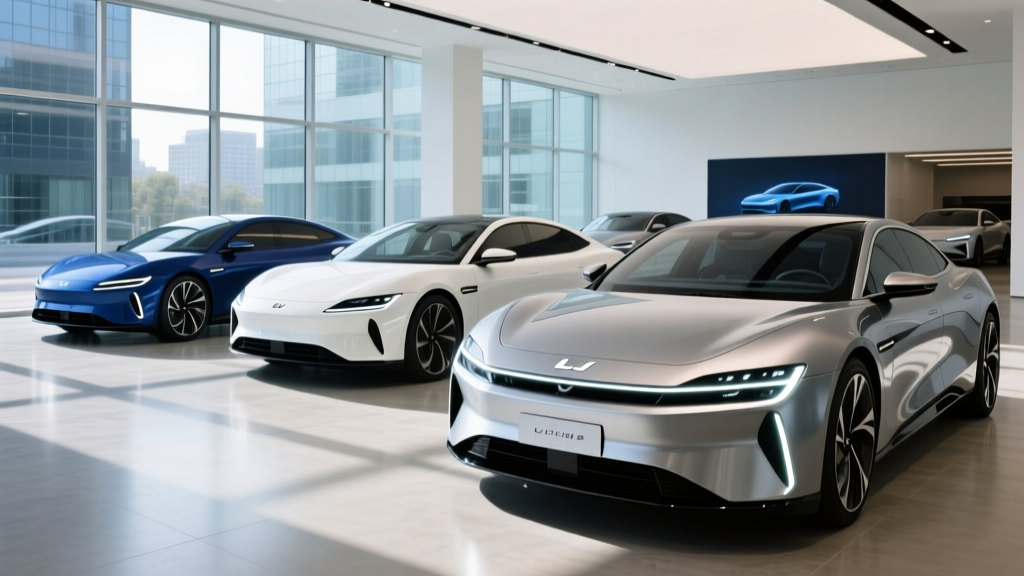
If you've caught the latest Lucid Motors spot and found yourself asking who is in the Lucid commercial, you're not alone. The brand's advertising has leaned heavily into cinematic, aspirational storytelling—often featuring everyday drivers, professional athletes, and occasionally celebrity cameos—rather than the tech-bro bravado of some competitors. But beyond the faces on screen, the real star of every Lucid ad is the engineering underneath: class-leading efficiency, a 900V+ architecture, and EPA range figures that embarrass most of the luxury EV segment.
Below, we look past the casting call to deliver what actually matters for buyers: a data-driven, 2026-model-year review of the Lucid Air lineup—including the Pure, Touring, Grand Touring, and the 1,234-hp Sapphire—with exact range, charging, pricing, and tax-credit figures.
Lucid Air Quick Specs: 2026 Lineup at a Glance
| Spec | Air Pure | Air Touring | Air Grand Touring | Air Sapphire |
|---|---|---|---|---|
| EPA Range | 419 mi | 425 mi | 516 mi | 427 mi |
| Battery (usable) | 88 kWh (NMC) | 92 kWh (NMC) | 112 kWh (NMC) | 118 kWh (NMC) |
| Drivetrain | RWD (single motor) | AWD (dual motor) | AWD (dual motor) | AWD (tri-motor) |
| Horsepower | 430 hp | 620 hp | 819 hp | 1,234 hp |
| 0–60 mph | 5.0 sec | 3.4 sec | 3.0 sec | 1.89 sec |
| Peak DC Charge | 200 kW | 250 kW | 300 kW | 300 kW |
| 10–80% DC Time | ~30 min | ~22 min | ~20 min | ~22 min |
| Base MSRP | $69,900 | $87,400 | $125,600 | $249,000 |
Sources: fueleconomy.gov, Lucid Motors official specs.
Real-World Range: Beyond the EPA Sticker
EPA Sticker: Up to 516 miles (Grand Touring with 19" wheels).
Real-World Expectation: Expect ~430–460 miles on mixed highway/city driving at 70–75 mph. In freezing temperatures (below 32°F), plan for a 20–30% reduction, landing around 350–400 miles. The Air's industry-leading efficiency (up to 146 MPGe combined / ~24 kWh/100 mi) helps it hold range better than most luxury EVs, but physics still applies.
Lucid's 900V+ electrical architecture and proprietary miniaturized drive units give the Air a genuine efficiency edge. Where a competitor might push 3.0–3.5 miles per kWh, the Grand Touring achieves roughly 4.6 mi/kWh. That means even when cold weather and highway speeds sap 25% of capacity, the Air still out-ranges most rivals at their best-case sticker numbers.
Charging Speed: 900V Architecture Pays Off
Charging speed is where Lucid's high-voltage platform earns its keep. The Grand Touring and Sapphire can accept up to 300 kW at a compatible DC fast charger, adding roughly 200 miles in about 12 minutes under ideal conditions. However, as with all EVs, the charge curve tapers significantly above 80% SoC—a 10–80% session takes about 20 minutes, but 80–100% can add another 25+ minutes. Plan road-trip stops around the 10–80% window for the best time efficiency.
| Charging Level | Power / Rate | Miles Added per Hour |
|---|---|---|
| Level 1 (120V) | ~1.4 kW | ~5 mi/hr |
| Level 2 (240V, 48A) | ~11.5 kW | ~46 mi/hr |
| DC Fast (Pure, 200 kW peak) | 10–80% in ~30 min | N/A |
| DC Fast (GT/Sapphire, 300 kW peak) | 10–80% in ~20 min | N/A |
At home on a Level 2 Wall Connector or equivalent (hardwired, 60A circuit), most Air owners will see a full overnight replenishment. A 112 kWh battery from 20% to full takes roughly 9–10 hours at 11.5 kW—perfect for off-peak electricity rates.
Performance and Driving Dynamics
The Air Pure's 430 hp and 5.0-second 0–60 time already outpace most gas-powered luxury sedans. Step up to the Touring (620 hp, 3.4 sec) and you're in genuine sports-sedan territory. The Grand Touring's 819 hp and 3.0-second sprint are supercar-adjacent, delivered with the silent, instantaneous torque only an EV provides.
Then there's the Sapphire: a tri-motor, 1,234-hp halo car that hits 60 mph in 1.89 seconds—making it one of the quickest production sedans ever built. It includes track-tuned suspension, carbon-ceramic brakes, and a dedicated Sapphire drive mode. But at $249,000, it's a low-volume statement piece, not the volume seller.
Across all trims, the Air's ride quality leans toward grand-touring comfort rather than sport-sedan stiffness (outside the Sapphire). The steering is precise but light—some enthusiasts find it less communicative than a BMW i5 or Porsche Taycan. Regenerative braking is adjustable but doesn't quite achieve true one-pedal driving at low speeds the way a Tesla does.
Interior, Cargo, and Technology
The Air's cabin is airy (pun intended) thanks to an available glass canopy roof and a minimalist, screen-forward dash. The 34-inch curved Glass Cockpit display floats above the steering yoke or wheel, with a retractable lower Pilot Panel for climate and media controls.
- Front legroom: 46.2 inches
- Rear legroom: 37.7 inches (competitive with a Mercedes S-Class)
- Trunk: 32 cu ft (rear) + 10 cu ft frunk = 42 cu ft total
- Infotainment: Lucid UX with native navigation, OTA updates, wireless CarPlay/Android Auto
- Driver assist: DreamDrive Pro (ADAS suite) — includes adaptive cruise, lane centering, blind-spot monitoring
ADAS Reality Check: Lucid's DreamDrive Pro is a SAE Level 2 driver-assist system. It is not self-driving. The driver must remain fully engaged, hands on the wheel (or yoke), and eyes on the road at all times. It does not currently offer hands-free highway driving the way GM's Super Cruise or Ford's BlueCruise do on mapped roads.
Pricing, Trims, and Federal Tax Credit Eligibility
Here's where the math gets tricky—and where buyers need to pay close attention to IRS §30D rules. The federal EV tax credit is not a flat $7,500 for everyone. Eligibility depends on three factors: buyer income caps, vehicle MSRP caps, and battery/critical-mineral sourcing requirements.
| Trim | Base MSRP | MSRP Cap (Sedans) | Max Potential Credit |
|---|---|---|---|
| Air Pure | $69,900 | $55,000 (sedan cap) | ❌ Not eligible — exceeds sedan MSRP cap |
| Air Touring | $87,400 | $55,000 | ❌ Not eligible |
| Air Grand Touring | $125,600 | $55,000 | ❌ Not eligible |
| Air Sapphire | $249,000 | $55,000 | ❌ Not eligible |
The hard truth: As of 2026, no Lucid Air trim qualifies for the §30D federal tax credit. The IRS classifies the Air as a sedan, and the sedan MSRP cap is $55,000. Even the base Pure at $69,900 exceeds this threshold. (If the IRS were to reclassify it as an SUV—which it has not—the cap would be $80,000, and the Pure would still fall short.)
Additionally, buyers must meet income caps (AGI ≤ $150,000 single / $300,000 joint) and the vehicle's battery must meet critical-mineral and component sourcing requirements. Always verify current rules at IRS.gov §30D and consult a tax professional before purchase.
State incentives may apply. Some states offer rebates or HOV-lane access regardless of federal eligibility—check your local DMV or energy office.
Pros, Cons, and the Competition
✅ Pros
- Best-in-class EPA range (516 mi, Grand Touring)
- Top-tier efficiency (up to 146 MPGe)
- Spacious rear seat and generous cargo for a sedan
- 300 kW DC fast charging on GT/Sapphire
- Exceptional ride comfort and cabin quietness
❌ Cons
- No federal tax credit (MSRP exceeds cap)
- Smaller service-center network than Tesla/BMW/Mercedes
- DreamDrive ADAS lacks hands-free highway mode
- High starting price vs. Tesla Model S, BMW i5
- Limited brand awareness and resale data
Is the Lucid Air Worth It vs. Key Competitors?
| Metric | Lucid Air GT | Tesla Model S LR | BMW i5 M60 | Mercedes EQS 580 |
|---|---|---|---|---|
| EPA Range | 516 mi | 402 mi | 295 mi | 371 mi |
| Starting Price | $125,600 | $79,990 | $84,100 | $104,400 |
| 0–60 mph | 3.0 sec | 3.1 sec | 3.7 sec | 4.1 sec |
| Peak DC Charge | 300 kW | 250 kW | 205 kW | 200 kW |
| Federal Credit? | No | No (over cap) | No | No |
Choose the Lucid Air if: You prioritize maximum range and efficiency above all else, want a true luxury sedan experience with rear-seat space rivaling an S-Class, and can absorb the premium price without a federal credit.
Choose the Tesla Model S if: You want Supercharger network access (though Lucid now has NACS adapters), Autopilot/FSD functionality, and a lower starting price—though with ~114 fewer miles of range.
Choose the BMW i5 if: You value dealer service infrastructure, traditional luxury brand cachet, and a more engaging driving feel—accepting significantly less range.
Who Is in the Lucid Commercial—And Who Is the Air Really For?
Lucid's commercials typically feature a rotating cast of professional drivers, lifestyle-focused families, and occasionally recognizable athletes or cultural figures—but the brand has largely avoided A-list celebrity endorsements in favor of letting the car's design and engineering speak for itself. The real question isn't who's on screen, but who the Air is built for:
- Long-distance commuters who want 500+ miles and hate charging stops
- Luxury sedan buyers who've owned an S-Class or 7 Series and want to go electric without compromising rear-seat comfort
- Efficiency obsessives who appreciate the engineering behind 4.6 mi/kWh
- Performance seekers (Sapphire trim) who want a sub-2-second sedan
The Air is not ideal for buyers who need a sub-$50K price point, rely on the federal tax credit, or want the most extensive service network. It's a premium product for buyers who value range, efficiency, and space—and who don't mind paying for it.
Frequently Asked Questions
What is the real-world range of the Lucid Air?
The Grand Touring achieves an EPA-estimated 516 miles. In real-world mixed highway driving at 70–75 mph, expect ~430–460 miles. In freezing weather, plan for 350–400 miles. The Pure and Touring deliver proportionally less, around 350–380 real-world miles.
How fast does the Lucid Air charge?
The Grand Touring and Sapphire peak at 300 kW DC fast charging, reaching 10–80% in approximately 20 minutes. The Pure peaks at 200 kW (~30 min 10–80%). Home Level 2 charging at 11.5 kW adds about 46 miles per hour.
Does the Lucid Air qualify for the federal EV tax credit?
No. Under current IRS §30D rules, the sedan MSRP cap is $55,000, and even the base Air Pure at $69,900 exceeds this. No Air trim qualifies for the $7,500 federal credit. State incentives may still apply—check local programs.
How much does the Lucid Air cost?
The 2026 Air Pure starts at $69,900, the Touring at $87,400, the Grand Touring at $125,600, and the Sapphire at $249,000. Destination fees and options add to these figures. No federal tax credit applies.
Is the Lucid Air better than a Tesla Model S?
The Air Grand Touring offers 114 more miles of EPA range and faster peak DC charging (300 vs. 250 kW). The Model S starts ~$45K lower, has access to the mature Supercharger network (though Lucid now supports NACS via adapter), and offers Autopilot/FSD. The Air wins on range and luxury; the Model S wins on price and software ecosystem.
What battery chemistry does the Lucid Air use?
All Air trims use NMC (nickel-manganese-cobalt) lithium-ion cells supplied primarily by Samsung SDI and LG Energy Solution. Lucid has not adopted LFP chemistry for the Air lineup. The battery warranty covers 8 years or 100,000 miles (whichever comes first), with a capacity retention threshold of 70%.