The Lucid Air remains the efficiency benchmark in the luxury electric sedan segment. While Tesla and Mercedes-Benz battle for attention with flashy tech, Lucid has quietly engineered the most energy-efficient production EV on the market — a car that squeezes more miles per kilowatt-hour than anything else at its price point. As Lucid Motors expands its footprint internationally — with trademark registrations and dealership filings across Europe signaling a broader push beyond the U.S. and Middle East — American buyers are getting a product refined by global-scale ambition.
This review covers the 2026 Lucid Air lineup end to end: real-world range, charging speed, pricing after federal tax credits, and whether it still justifies its premium against the Tesla Model S, Mercedes EQS, and BMW i7.
2026 Lucid Air: Quick Verdict
The Lucid Air Pure delivers 419 miles of EPA-estimated range starting under $70,000 — a combination of efficiency and value no competitor matches. The Grand Touring pushes that to 512 miles with dual-motor AWD and 819 horsepower. If range and charging speed are your top priorities in a luxury sedan, the Air is the segment leader. Its weaknesses are a less polished software experience than Tesla and a service-center network that's still thin outside major metros.
| Spec | Air Pure | Air Touring | Air Grand Touring | Air Sapphire |
|---|---|---|---|---|
| EPA Range | 419 mi | 425 mi | 512 mi | 427 mi |
| Battery (usable) | 88 kWh (NMC) | 112 kWh (NMC) | 112 kWh (NMC) | 118 kWh (NMC) |
| Drivetrain | RWD | AWD Dual-Motor | AWD Dual-Motor | AWD Tri-Motor |
| Horsepower | 430 hp | 620 hp | 819 hp | 1,234 hp |
| 0–60 mph | 5.0 sec | 3.4 sec | 3.0 sec | 1.89 sec |
| Efficiency | 146 MPGe / 23 kWh/100mi | 131 MPGe / 26 kWh/100mi | 131 MPGe / 26 kWh/100mi | 110 MPGe / 31 kWh/100mi |
| Peak DC Charge | 200 kW | 300 kW | 300 kW | 300 kW |
| 10–80% DCFC | ~28 min | ~22 min | ~22 min | ~25 min |
| Base MSRP | $69,900 | $87,400 | $125,600 | $249,000 |
Range & Efficiency: Real-World Numbers
Lucid's efficiency advantage comes from its miniaturized drive units and 900-volt electrical architecture. The Air Pure achieves 23 kWh per 100 miles — roughly 25% more efficient than the Tesla Model S Long Range (30 kWh/100mi) and nearly 40% better than the Mercedes EQS 580 (38 kWh/100mi). That means you spend less at the charger and gain more range from a smaller battery, reducing vehicle weight and improving handling.
According to fueleconomy.gov, the Air Pure's combined MPGe of 146 leads the luxury EV sedan class. The trade-off: the Pure is RWD only, which may concern buyers in snowy climates.
Charging Speed: DC Fast & Home Level 2
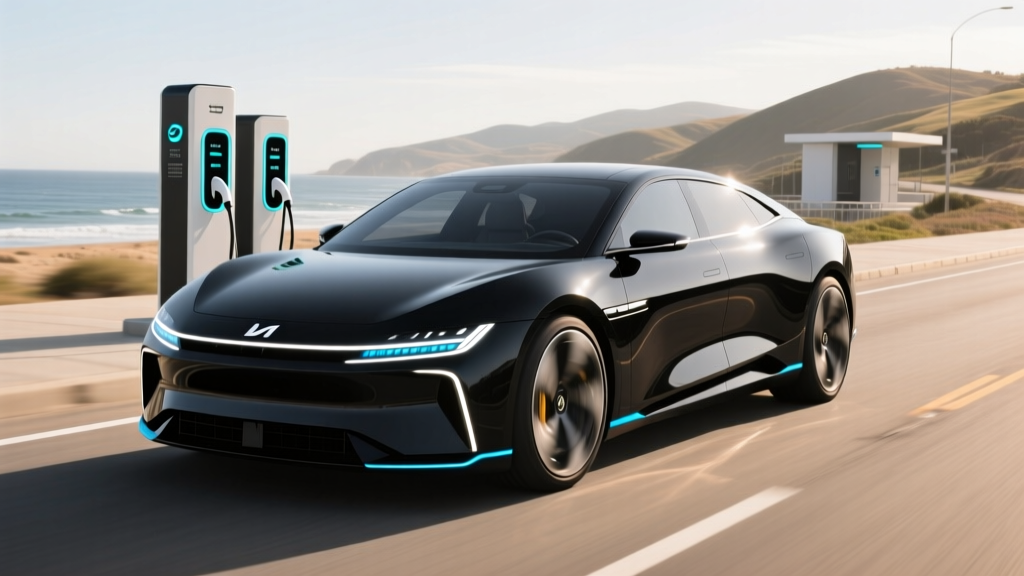
The Air's 900V architecture enables some of the fastest DC charging in production. The Touring, Grand Touring, and Sapphire accept up to 300 kW at compatible chargers (such as Electrify America's latest 350 kW stations). The Pure caps at 200 kW — still competitive, but noticeably slower on long road trips.
| Charging Method | Power (kW) | Miles Added/Hour | Notes |
|---|---|---|---|
| Level 1 (120V household) | 1.4 kW | ~3–4 mi/hr | Emergency/top-up only |
| Level 2 (240V, 48A home) | 11.5 kW | ~35–40 mi/hr | Full overnight charge in ~10 hrs |
| Level 2 (240V, 80A home) | 19.2 kW | ~60–68 mi/hr | Requires 100A circuit; full charge ~6 hrs |
| DC Fast (Pure, 200 kW peak) | 200 kW | ~500+ mi/hr (peak) | 10–80% in ~28 min |
| DC Fast (Touring/GT, 300 kW peak) | 300 kW | ~700+ mi/hr (peak) | 10–80% in ~22 min; tapers above 80% |
Charging curve reality: Like all EVs, the Air doesn't sustain peak kW for the full session. The 300 kW rate holds from roughly 10–40% SoC, then tapers to ~180 kW through 60%, and drops below 100 kW past 80%. For road-trip planning, budget 25–30 minutes for a 10–80% stop, not the theoretical minimum. Also note that preconditioning the battery (via the navigation system routing to a charger) is essential for hitting peak rates in cool weather.
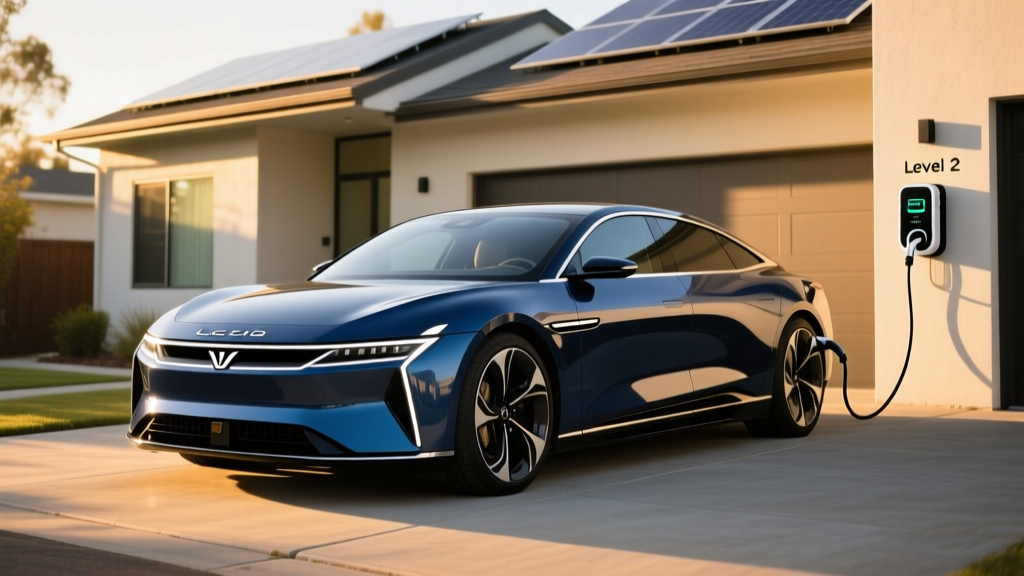
At home, a Level 2 Wall Connector on a 60A circuit (48A continuous) adds roughly 35–40 miles per hour of charging. Most Air owners charging overnight will wake to a full battery regardless of trim. Expect home installation costs of $800–$2,500 depending on panel capacity and conduit run; a 200A panel upgrade may be required in older homes.
Performance & Driving Dynamics
The Air lineup spans sensible commuter to hypercar territory. The Pure's 430 hp and 5.0-second 0–60 time are more than adequate for daily driving and highway merging. The Grand Touring's 819 hp and 3.0-second sprint place it in supercar territory while maintaining sedan practicality. The Sapphire, with 1,234 hp and a 1.89-second 0–60, exists primarily as a halo — few buyers will choose it over the more balanced Grand Touring.
All Air models use Lucid's proprietary permanent-magnet synchronous motors, which are among the smallest and lightest in the industry. This packaging advantage creates a surprisingly spacious cabin (detailed below) and contributes to the car's low curb weight relative to competitors — the Pure weighs roughly 4,750 lbs versus the Model S at 4,560 lbs and the EQS at 5,600 lbs.
Ride quality is firm but compliant. The adaptive air suspension (standard on Touring and above, optional on Pure) smooths highway expansion joints well. Steering is precise but light — this is a grand tourer, not a sports sedan. For track-day thrills, the Porsche Taycan still edges the Air in engagement.
Interior Space, Cargo & Technology
The Air's compact drive units free up remarkable interior volume:
- Rear legroom: 41.5 inches (class-leading; Model S offers 35.4 in)
- Trunk: 32 cu ft (with 22 cu ft additional in the front trunk/frunk)
- Total cargo: 54 cu ft combined — more than many midsize SUVs
The cabin design is minimalist but premium, with available Nappa leather, open-pore wood, and a curved 34-inch glass cockpit display. The infotainment system runs Lucid's custom OS, which is visually clean but occasionally sluggish compared to Tesla's responsiveness. Wireless Apple CarPlay and Android Auto are standard. The available Surreal Sound Pro audio system (21 speakers) is among the best in any vehicle at any price.
Driver assistance: Lucid's DreamDrive Pro uses 32 sensors including lidar (standard on all trims) for adaptive cruise, lane-keeping, and automated parking. It is a SAE Level 2 system — meaning the driver must remain fully attentive and hands-on or eyes-on at all times. It is not self-driving. DreamDrive Pro is competent on highways but doesn't yet match Tesla's Autopilot or GM's Super Cruise in lane-change confidence or hands-free operational design domains.
Pricing, Tax Credits & Ownership Costs
Lucid's 2026 pricing positions the Air Pure as a value leader in luxury EVs, while the Grand Touring and Sapphire compete with the upper echelon of German sedans.
| Trim | Base MSRP | As-Tested (typical) | §30D Credit Eligible? | Est. Net Price |
|---|---|---|---|---|
| Air Pure | $69,900 | $72,500 | Yes (if under income cap & battery sourcing met) | ~$62,500–$65,000 |
| Air Touring | $87,400 | $93,000 | Yes (sedan MSRP cap is $55,000 — see note below) | $87,400+ |
| Air Grand Touring | $125,600 | $135,000 | No — exceeds $55,000 sedan MSRP cap | $125,600+ |
| Air Sapphire | $249,000 | $249,000 | No — exceeds $55,000 sedan MSRP cap | $249,000 |
IRS §30D tax credit details: Under current IRS rules, the federal clean vehicle credit provides up to $7,500 for qualifying new EVs. Key eligibility requirements:
- MSRP cap: Sedans must have an MSRP of $55,000 or less. This means only the Air Pure qualifies — and only if configured below the cap (options can push it over).
- Buyer income cap: AGI must not exceed $150,000 (single), $225,000 (head of household), or $300,000 (joint).
- Battery sourcing: Critical minerals and battery components must meet escalating domestic-content thresholds. Verify current-year compliance on the manufacturer's window sticker or IRS guidance.
- Point-of-sale transfer: Eligible buyers can transfer the credit to the dealer for an immediate price reduction at purchase.
Consult a tax professional before relying on credit eligibility — rules change annually and individual circumstances vary.
Battery Warranty & Longevity
Lucid provides an 8-year / 100,000-mile battery and powertrain warranty, with a capacity retention threshold of 70% over that period. This is industry-standard, matching Tesla and most legacy automakers. The Air uses NMC (nickel-manganese-cobalt) lithium-ion cells across all trims — chosen for high energy density rather than the LFP chemistry used in some lower-cost EVs.
NMC batteries generally degrade slightly faster than LFP under heavy fast-charging use, but Lucid's advanced thermal management system (liquid cooling with active heating and cooling) mitigates this. For maximum longevity, follow best practices: avoid routinely charging to 100%, minimize consecutive DC fast charges, and let the car precondition in extreme temperatures.
Battery replacement cost (out of warranty) is estimated at $18,000–$25,000 for the 112 kWh pack, based on current industry pricing for large-format NMC packs. This is a worst-case scenario; most owners will never need a replacement.
Lucid Motors' European Expansion: What It Means
Lucid has been steadily building its international presence, with trademark registrations and retail filings across key European markets. While the Air is already sold in select European countries and the Middle East, broader trademark activity signals an accelerating push into Germany, the Nordics, and potentially the UK and Benelux regions by 2027.
For U.S. buyers, this global expansion matters in two ways:
- Production scale: Higher volumes from European sales help Lucid amortize R&D costs and potentially stabilize or reduce pricing over time.
- Charging infrastructure: Lucid's partnership with Tesla's Supercharger network (via NACS adapter) already gives U.S. owners access to 20,000+ stalls. In Europe, the Air charges natively on CCS2 infrastructure, which is denser than the U.S. public network in most Western European countries.
The Air competes in Europe against the Mercedes EQS, BMW i7, Porsche Taycan, and Tesla Model S — all strong contenders. Lucid's efficiency advantage is even more valuable in markets where electricity costs €0.30–0.50/kWh, making the Air's low kWh/100mi a genuine wallet benefit, not just a spec-sheet win.
Pros, Cons & Who Should Buy
- Class-leading efficiency (23 kWh/100mi on Pure)
- 512-mile EPA range on Grand Touring — highest of any production EV
- Spacious rear seat and massive 54 cu ft total cargo
- 300 kW DC fast charging (Touring and above)
- Lidar-based DreamDrive Pro standard on all trims
- Air Pure under $70K with available $7,500 tax credit
- Software/infotainment less refined than Tesla or Mercedes
- Limited service center network outside major U.S. metros
- DreamDrive Pro is competent but not class-leading for hands-free driving
- Only Pure trim qualifies for federal tax credit
- No LFP battery option (NMC only across lineup)
Who this EV suits best:
- Long-distance commuters: The Air Pure's 419-mile range and low running costs make it ideal for 60–100 mile daily round trips with home charging.
- Road-trip families: The Grand Touring's 512-mile range and 54 cu ft of cargo space eliminate range anxiety on multi-state trips.
- Luxury sedan buyers who value efficiency: If you want premium materials and space without the energy waste of heavier competitors, the Air is unmatched.
- Not ideal for: Buyers who prioritize hands-free driving tech (look at GM Super Cruise), track-day dynamics (Porsche Taycan), or who lack home charging access (Lucid's service and support infrastructure is still maturing).
2026 Lucid Air FAQ
What is the real-world range of the 2026 Lucid Air?
The Air Pure delivers roughly 350–380 miles on the highway in mild weather (EPA: 419 mi). The Grand Touring achieves 420–460 highway miles (EPA: 512 mi). Cold weather below 30°F reduces range 15–20% across all trims.
How fast does the Lucid Air charge at home and on the road?
At home on a 48A Level 2 charger, the Air adds 35–40 miles per hour, fully charging overnight. On DC fast chargers, the Touring and Grand Touring peak at 300 kW (10–80% in ~22 minutes), while the Pure peaks at 200 kW (~28 minutes).
How much does the Lucid Air cost after the federal tax credit?
The Air Pure starts at $69,900. If you qualify for the full $7,500 §30D credit (income under cap, battery sourcing met, MSRP under $55,000 after options), the effective price drops to approximately $62,400. Higher trims (Touring at $87,400+, Grand Touring at $125,600+) exceed the $55,000 sedan MSRP cap and do not qualify.
Does the Lucid Air qualify for the federal EV tax credit?
Only the Air Pure qualifies, and only when its final MSRP (including destination and qualifying options) stays at or below $55,000 — which is tight given the $69,900 base. Buyers should verify eligibility on the window sticker and consult the IRS §30D guidance. Income caps and battery-sourcing rules also apply.
Is the Lucid Air worth buying over the Tesla Model S or Mercedes EQS?
If range and efficiency are your top priorities, yes — the Air leads both categories decisively. If you want the most mature software and charging network, the Model S wins. If interior luxury and brand prestige matter most, the EQS or i7 may edge it. The Air is the engineer's choice; the Model S is the technologist's; the EQS is the traditionalist's.
What battery chemistry does the Lucid Air use?
All 2026 Air trims use NMC (nickel-manganese-cobalt) lithium-ion cells, chosen for high energy density. Lucid does not currently offer an LFP option. The battery is covered by an 8-year/100,000-mile warranty with a 70% capacity retention threshold.
Is Lucid's DreamDrive Pro self-driving?
No. DreamDrive Pro is an SAE Level 2 driver-assistance system. It handles adaptive cruise control, lane centering, and automated parking, but requires the driver to remain fully attentive and ready to take over at any moment. It is not autonomous.