Quick Verdict: The Ultra-Range Electric Truck That Actually Delivers
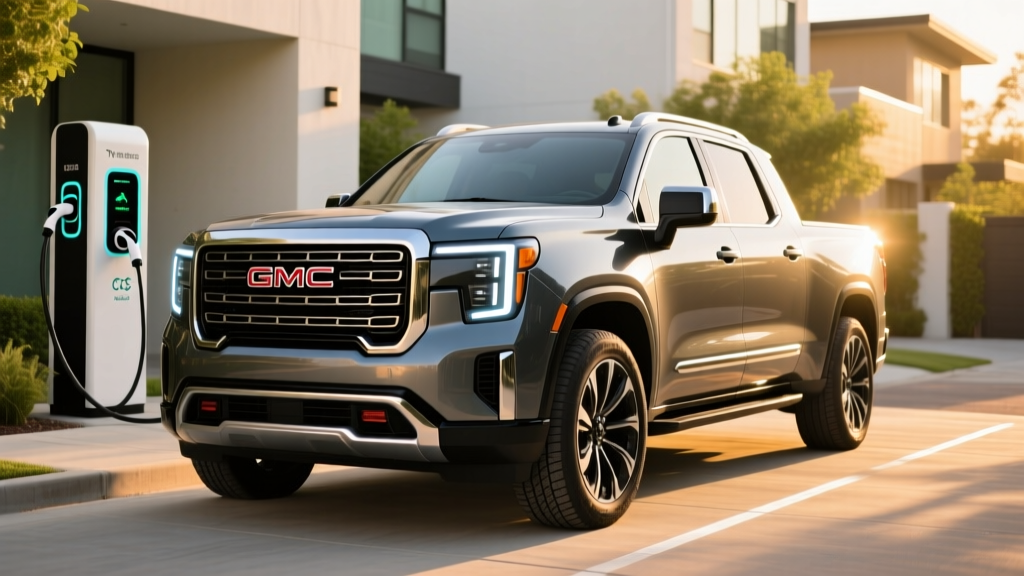
The 2026 GMC Sierra EV Denali Edition 1 occupies a rare position in the electric pickup segment: it pairs a class-leading 440-mile EPA range estimate with 754 horsepower and a 350 kW DC fast-charging architecture that few competitors can match. After spending time with the Sierra EV's specs, charging behavior, and ownership economics, it's clear GMC has engineered this truck around long-haul capability rather than just city commuting. The trade-off is a starting MSRP that pushes well past $90,000 and a curb weight that impacts efficiency under load. For buyers who need serious range, legitimate towing capacity, and access to both NACS and CCS charging networks, the Sierra EV Denali makes a compelling — if expensive — case.
Range, Battery & Real-World Efficiency
Real-World Expectation: ~370–400 miles mixed driving; ~320–350 miles sustained highway at 75 mph; ~280–310 miles in sub-freezing temperatures with cabin heat. Expect further reduction when towing — approximately 180–250 miles depending on trailer weight and terrain.
The Sierra EV Denali Edition 1 uses a massive Ultium-platform battery pack with an estimated usable capacity of approximately 200+ kWh, employing GM's latest-generation NMC (nickel manganese cobalt) pouch cells. This is among the largest battery packs in any production passenger vehicle, and it's the primary reason the Sierra EV achieves its 440-mile EPA figure.
GMC publishes a combined efficiency rating of approximately 70 MPGe (equivalent), which translates to roughly 48–50 kWh per 100 miles in mixed driving. That's not efficient by compact EV standards, but it's competitive for a full-size electric truck weighing over 9,000 pounds. Highway efficiency degrades noticeably — expect 52–56 kWh/100 mi at sustained 70–75 mph speeds, which is where the real-world range drops below the EPA sticker.
Cold weather remains the great equalizer for all EVs, and the Sierra EV's enormous battery is no exception. GM equips the truck with a heat pump and battery preconditioning system, but the sheer thermal mass of a 200+ kWh pack means cold-soak range loss is still significant. Plan for 25–35% range reduction in sustained sub-32°F conditions.
| Specification | Value |
|---|---|
| EPA Range (Est.) | 440 miles |
| Battery Capacity (Usable, Est.) | ~200+ kWh (NMC pouch cells, Ultium platform) |
| Drivetrain | Dual-motor AWD (e4WD) |
| Horsepower | 754 hp (max output mode) |
| Torque | 785 lb-ft |
| 0–60 mph | ~4.3 seconds (est.) |
| Max Towing Capacity | 10,000 lbs (with Max Tow package) |
| Max Payload | ~1,800 lbs (est.) |
| MPGe (Combined, Est.) | ~70 MPGe |
| Efficiency | ~48–50 kWh/100 mi (mixed) |
| Base MSRP (Edition 1) | $99,495 (incl. destination) |
| Battery/Powertrain Warranty | 8 years / 100,000 miles |
Charging Speed: DC Fast, Level 2 & Home Setup
The Sierra EV Denali supports up to 350 kW peak DC fast charging on compatible stations — a figure that places it among the fastest-charging production trucks available. However, peak rate and sustained rate are different realities. The Sierra EV's enormous battery can absorb high power for longer than smaller packs, but expect the charge curve to taper significantly above 80% state of charge.
| Charging Level | Max Rate | Speed / Time |
|---|---|---|
| DC Fast Charge (CCS/NACS) | 350 kW peak | 10–80% in ~35–40 minutes (est.); adds ~100 miles in ~10 min at peak |
| Level 2 (240V, 48A home charger) | 11.5 kW | ~21 miles per hour of charging; full charge in ~19–20 hours |
| Level 2 (240V, 80A capable) | 19.2 kW | ~35 miles per hour; full charge in ~11–12 hours (requires compatible EVSE and electrical panel) |
| Level 1 (120V standard outlet) | ~1.4 kW | ~3 miles per hour; emergency/trickle use only |
A critical ownership note: with a 200+ kWh battery, home charging on a standard 48-amp Level 2 unit takes roughly 19–20 hours from empty to full. Most owners will never deplete the battery fully, but this means you need a disciplined plug-in routine or an 80-amp circuit installation to keep overnight top-ups practical. An 80-amp Level 2 EVSE requires a 100-amp dedicated circuit, which may necessitate a panel upgrade in older homes — budget $1,500–$3,500 for electrical work depending on your existing service. Consult a licensed electrician for your specific setup.
The Sierra EV comes equipped with a NACS (North American Charging Standard) port, granting access to Tesla Supercharger stations via GM's integration. It also supports CCS1 through adapters, ensuring broad public charging network compatibility across Electrify America, EVgo, and ChargePoint stations.
Performance, Towing & Drivetrain
The dual-motor e4WD system in the Sierra EV Denali Edition 1 produces up to 754 horsepower and 785 lb-ft of torque in its maximum output mode. GMC estimates a 0–60 mph time in the low 4-second range, which is remarkable for a truck with a curb weight exceeding 9,000 pounds. Instant electric torque delivery makes the Sierra EV feel significantly quicker than its numbers suggest, particularly in passing maneuvers and highway merging.
Towing capacity reaches 10,000 pounds with the available Max Tow package. This is competitive with the Ford F-150 Lightning (10,000 lbs) and the Rivian R1T (11,000 lbs). However, towing at or near maximum capacity dramatically impacts range — expect 180–250 miles depending on trailer aerodynamics, weight, and grade. GMC's trailering technology suite includes ProGrade Trailering with Hitch Guidance, trailer tire monitoring, and an integrated trailer brake controller.
The Sierra EV's four-wheel steering system (available on Denali trims) reduces the turning circle and improves low-speed maneuverability — a meaningful feature for a truck of this size. Air suspension is standard on the Denali Edition 1, providing adjustable ride height for off-road clearance, highway efficiency, and easier bed access.
Interior, Cargo & Technology
The Sierra EV Denali's cabin is anchored by a 16.8-inch diagonal infotainment touchscreen running GM's latest Google Built-in interface, complemented by an 11-inch driver information cluster and an available heads-up display. The system supports wireless Apple CarPlay and Android Auto, over-the-air updates, and native Google Maps navigation with real-time charging station routing.
The MultiPro MidGate is the Sierra EV's signature utility feature — a power-operated partition between the bed and cabin that folds down to extend the effective bed length into the rear of the cab. With the MidGate open and the front pass-through open, GMC claims you can carry items up to approximately 11 feet long inside the vehicle. The bed itself measures roughly 5 feet 11 inches with the MidGate closed.
Passenger space is generous for a crew-cab configuration, with an estimated 44+ inches of front legroom and 43+ inches in the rear. The flat floor (no transmission tunnel) improves rear-seat comfort for a middle passenger. Cargo volume behind the rear seats is substantial, and the eTrunk (front trunk) adds lockable, weather-sealed storage under the hood — a practical advantage over conventional pickups.
Driver assistance technology includes GM's Super Cruise on compatible mapped roads — an SAE Level 2 hands-free driving system that requires the driver to remain attentive and ready to take over at all times. Super Cruise coverage continues to expand across the U.S. and Canada, but it is not autonomous driving. The Sierra EV also includes Enhanced Automatic Emergency Braking, HD Surround Vision cameras, and trailer-side blind-zone monitoring.
Pricing, Trims & Federal Tax Credit Eligibility
The 2026 GMC Sierra EV Denali Edition 1 starts at an MSRP of approximately $99,495, including destination charges. GMC has indicated that additional Sierra EV trims — including lower-priced Denali and potentially AT4 variants — will follow, with pricing expected to reach the $70,000–$80,000 range in subsequent model-year rollouts. However, for the 2026 model year, the Edition 1 is the primary offering.
| Item | Amount |
|---|---|
| Base MSRP (Edition 1, incl. destination) | $99,495 |
| Federal §30D EV Tax Credit (maximum) | Up to $7,500 (see eligibility below) |
| Estimated Price After Max Federal Credit | ~$91,995 (if eligible) |
| MSRP Cap for Trucks (§30D) | $80,000 — Sierra EV Denali Edition 1 exceeds this cap |
Some states and utilities offer additional EV rebates that are not subject to the federal MSRP cap — check your state energy office and local utility for programs. The fueleconomy.gov site maintains a searchable database of eligible vehicles and incentive information.
Ownership Costs, Warranty & Long-Term Outlook
GM backs the Sierra EV's battery and powertrain with an 8-year/100,000-mile limited warranty, with a capacity retention threshold typically set at 60–70% of original capacity (confirm exact terms with your dealer at purchase). The vehicle limited warranty covers 3 years/36,000 miles bumper-to-bumper.
Operating costs favor the Sierra EV significantly over a comparable gas-powered Sierra Denali. At a national average electricity rate of $0.16/kWh and 48 kWh/100 mi efficiency, fuel cost runs approximately $7.68 per 100 miles. A gas Sierra Denali 4WD at 16 mpg combined and $3.50/gallon costs roughly $21.88 per 100 miles — nearly three times the energy expense. Over 15,000 miles annually, that's a fuel savings of approximately $2,100 per year, though the Sierra EV's higher purchase price and potentially higher insurance premiums offset some of that advantage.
Insurance costs for high-value electric trucks tend to run 15–30% above comparable gas models due to battery replacement cost exposure and higher repair complexity. Obtain quotes before committing to a purchase.
How It Compares: Sierra EV Denali vs. Key Rivals
The Sierra EV Denali competes directly with the Ford F-150 Lightning, Rivian R1T, and the Chevrolet Silverado EV (its GM platform sibling). Here's how the key metrics stack up:
| Spec | 2026 GMC Sierra EV Denali Ed. 1 | Ford F-150 Lightning (Platinum) | Rivian R1T (Dual-Motor Max) |
|---|---|---|---|
| EPA Range | ~440 mi | ~320 mi | ~410 mi |
| Battery (Usable, Est.) | ~200+ kWh | ~131 kWh | ~149 kWh |
| Peak DC Charge | 350 kW | 150 kW | 200+ kW |
| Horsepower | 754 hp | 580 hp | 665 hp |
| 0–60 mph | ~4.3 sec | ~3.8 sec | ~3.5 sec |
| Max Towing | 10,000 lbs | 10,000 lbs | 11,000 lbs |
| Starting MSRP | $99,495 | ~$85,000 | ~$92,000 |
| Tax Credit Eligible | No (MSRP cap) | Varies by trim | No (MSRP cap) |
The Sierra EV's range and charging speed advantages are substantial on paper. The F-150 Lightning remains the value and tax-credit play, while the Rivian R1T offers superior on-road dynamics and a slightly higher tow rating. The Silverado EV shares the Ultium platform but targets a different design and price positioning.
- Maximum range is your top priority for long-distance towing and road trips
- You want 350 kW DC fast charging for minimal station dwell time
- The MidGate utility feature solves a real cargo problem for you
- Budget is not your primary constraint and you accept the tax-credit ineligibility
- You need federal tax credit eligibility (Lightning trims under $80K MSRP)
- You prioritize lower purchase price or better on-road handling (Rivian)
- You don't regularly drive 300+ miles between charging stops
Pros & Cons
- Class-leading 440-mile EPA range — reduces charging stops on long hauls
- 350 kW peak DC charging — among the fastest in any production truck
- 754 hp with instant torque — effortless acceleration and merging
- MidGate design extends cargo length beyond conventional bed limits
- NACS + CCS compatibility — broadest charging network access
- Super Cruise hands-free driving on mapped highways (SAE Level 2)
- Air suspension and four-wheel steering improve ride and maneuverability
- $99,495 starting MSRP — exceeds §30D tax credit cap for trucks
- 9,000+ lb curb weight impacts efficiency and tire wear
- 200+ kWh battery means very long Level 2 home charge times (19–20 hrs empty-to-full)
- Towing range drops to ~180–250 miles at max capacity
- Cold-weather range loss of 25–35% is significant on a pack this large
- Limited trim availability at launch — lower-priced options TBD
- Insurance premiums likely 15–30% above gas Sierra equivalents
Frequently Asked Questions
What is the real-world range of the 2026 GMC Sierra EV Denali?
The EPA estimates 440 miles for the Edition 1 trim. In real-world mixed driving, expect approximately 370–400 miles. Sustained highway driving at 75 mph reduces this to roughly 320–350 miles. In sub-freezing temperatures, plan for 280–310 miles. When towing near the 10,000-pound maximum, range can drop to 180–250 miles depending on conditions.
How fast does the Sierra EV Denali charge?
On a 350 kW DC fast charger, the Sierra EV can add approximately 100 miles of range in about 10 minutes at peak rate, with a 10–80% charge taking roughly 35–40 minutes. At home on a 48-amp Level 2 charger (11.5 kW), you'll gain about 21 miles per hour of charging. An 80-amp Level 2 setup (19.2 kW) increases that to approximately 35 miles per hour but requires a dedicated 100-amp circuit.
Does the 2026 Sierra EV Denali qualify for the federal EV tax credit?
No — the Sierra EV Denali Edition 1 at $99,495 exceeds the IRS §30D MSRP cap of $80,000 for trucks, vans, and SUVs. Buyers should not expect the $7,500 federal credit for this trim. If GMC releases lower-priced trims at or below the $80,000 threshold in future model years, those may qualify — subject to buyer income limits ($150K single / $300K joint for new vehicles), battery critical-mineral sourcing rules, and North American assembly requirements. Always verify at irs.gov before purchasing.
Is the Sierra EV Denali worth buying over the F-150 Lightning or Rivian R1T?
It depends on your priorities. If maximum range and fast charging are non-negotiable — especially for long road trips or highway towing routes — the Sierra EV's 440-mile EPA estimate and 350 kW charging are genuine advantages. If budget matters more and you want tax-credit eligibility, the F-150 Lightning in lower trims is a stronger value. If on-road handling and a more refined driving experience are priorities, the Rivian R1T is worth cross-shopping.
What is the battery warranty on the Sierra EV?
GM provides an 8-year/100,000-mile limited warranty on the battery and powertrain components. The warranty typically guarantees that the battery will retain a minimum percentage of its original capacity (commonly 60–70%) over the warranty period. Confirm the exact retention threshold with your dealer, as terms can vary by model year.
How much does it cost to charge the Sierra EV at home?
At a national average residential rate of $0.16/kWh and an efficiency of ~48 kWh/100 miles, you'll spend approximately $7.68 per 100 miles driven. A full charge of the 200+ kWh battery from empty would cost roughly $32 at home. Public DC fast charging is typically 2–3x more expensive per kWh, running $0.30–$0.50/kWh depending on the network and time of day.
Sources: fueleconomy.gov (EPA range and efficiency data), irs.gov (§30D clean vehicle credit rules), nhtsa.gov (safety and compliance). All specifications are based on manufacturer-published data and EPA estimates for the 2026 model year. Real-world range and charging times vary with conditions. Confirm final pricing and tax-credit eligibility with your dealer and tax professional before purchase.