Lucid's Make-or-Break Year: Scaling the Air to 18,000 Units
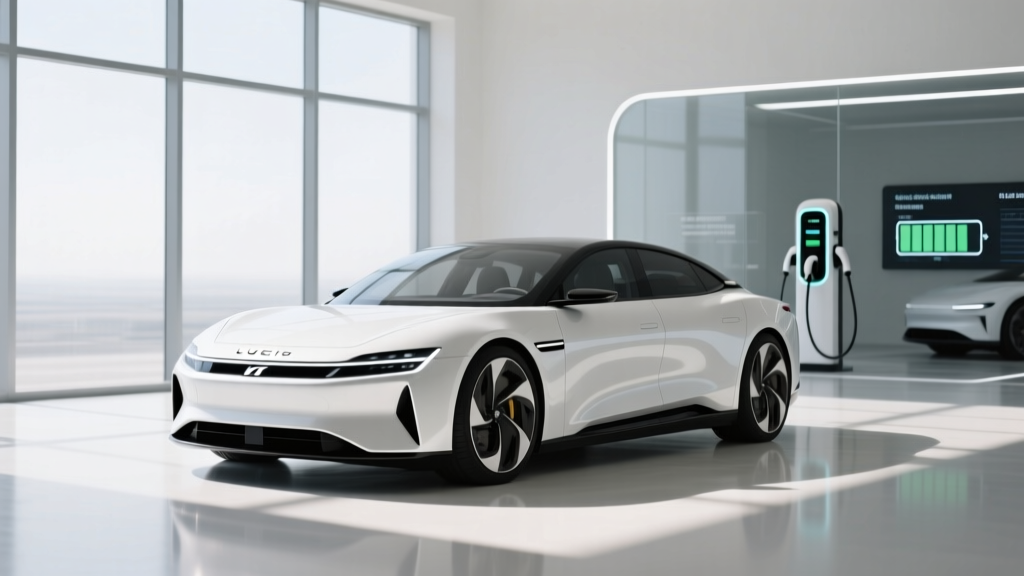
Lucid Motors entered 2026 with a target that matters more than any single spec sheet: an 18,000-unit annual production goal across its lineup. For a company that delivered roughly 8,400 vehicles in 2024, hitting that number means nearly doubling output while simultaneously ramping its new Gravity SUV. But the sedan that started it all — the Lucid Air — remains the engineering flagship, and the 2026 model year brings meaningful updates to pricing, software, and manufacturing efficiency at the Casa Grande, Arizona plant.
This review examines whether the 2026 Lucid Air is worth your money right now, and whether Lucid's production ambitions mean better availability, faster delivery times, and a more stable ownership experience for buyers.
2026 Lucid Air at a Glance: Full Spec Breakdown
| Specification | Air Pure | Air Touring | Air Grand Touring | Air Sapphire |
|---|---|---|---|---|
| Base MSRP | $69,900 | $87,400 | $112,400 | $250,500 |
| EPA Range | 419 mi | 425 mi | 516 mi | 427 mi |
| Battery (usable) | 88 kWh (NMC) | 112 kWh (NMC) | 112 kWh (NMC) | 118 kWh (NMC) |
| Drivetrain | RWD, single motor | AWD, dual motor | AWD, dual motor | AWD, tri-motor |
| Horsepower | 430 hp | 620 hp | 819 hp | 1,234 hp |
| 0–60 mph | 5.0 sec | 3.4 sec | 3.0 sec | 1.89 sec |
| MPGe (combined) | 146 MPGe | 131 MPGe | 130 MPGe | 116 MPGe |
| Efficiency (kWh/100mi) | 23 kWh | 26 kWh | 26 kWh | 29 kWh |
| Max DC Charge Rate | 200 kW | 300 kW | 300 kW | 300 kW |
| 10–80% DC Time | ~28 min | ~20 min | ~20 min | ~22 min |
| Level 2 Home Charge | 19.2 kW (75 mi/hr) | 19.2 kW (75 mi/hr) | 19.2 kW (75 mi/hr) | 19.2 kW (75 mi/hr) |
| Battery/Powertrain Warranty | 8 yr / 100,000 mi | 8 yr / 100,000 mi | 8 yr / 100,000 mi | 8 yr / 100,000 mi |
Sources: EPA Fueleconomy.gov, Lucid Motors Official Specifications.
Real-World Range: What 516 EPA Miles Actually Means
Real-World Highway (70 mph, 72°F): ~380–420 miles (Grand Touring), ~330–360 miles (Pure)
Cold Weather (30°F, highway): ~310–350 miles (Grand Touring), ~260–290 miles (Pure)
City/Mixed Commuting: Near or slightly above EPA estimates thanks to regenerative braking
The Lucid Air Grand Touring's 516-mile EPA rating remains the highest of any production sedan sold in the United States. But as with every EV, that number represents a laboratory test cycle, not a guarantee. In real-world highway driving at sustained speeds of 70–75 mph, expect the Grand Touring to deliver roughly 380–420 miles before needing a charge. The Air Pure, with its smaller 88 kWh battery and lighter curb weight, achieves remarkable efficiency — its 146 MPGe combined translates to just 23 kWh per 100 miles, making it one of the most energy-efficient large sedans on the market.
Cold weather is the equalizer for all lithium-ion batteries. The Air's NMC (nickel-manganese-cobalt) chemistry, combined with its heat pump-equipped thermal management system, handles winter better than older EV architectures, but you should still plan for a 20–30% range reduction in sub-freezing temperatures. Lucid's battery preconditioning feature — activated when you set a navigation destination to a charger — warms the pack to optimal temperature before you arrive, which helps preserve charging speed even in cold conditions.
The key advantage of a 516-mile EPA sedan is psychological as much as practical: you can realistically plan 350-mile highway legs between charges with a comfortable buffer, something very few EVs allow without route anxiety.
Charging Speed: 300 kW Peak, But Mind the Curve
| Charging Level | Power | Speed (approx.) | Use Case |
|---|---|---|---|
| Level 1 (120V household) | 1.4 kW | ~5 mi/hr | Emergency / overnight trickle |
| Level 2 (240V home, 48A) | 11.5 kW | ~45 mi/hr | Standard home charging |
| Level 2 (240V, 80A circuit) | 19.2 kW | ~75 mi/hr | Full-speed home (requires 100A circuit) |
| DC Fast Charge (peak) | 300 kW | ~200 mi in 15 min (10–50%) | Road-trip rapid stops |
| DC Fast Charge (sustained avg) | ~170 kW avg | 10–80% in ~20 min | Typical highway charging session |
Lucid's 900-volt electrical architecture is one of the highest-voltage platforms in any production EV, and it pays dividends at DC fast chargers. The Touring, Grand Touring, and Sapphire trims can accept a peak 300 kW at compatible chargers — though chargers capable of delivering that rate remain relatively rare on public networks. At Electrify America's latest 350 kW stalls or Tesla Supercharger V4 stations (with the Air's NACS adapter, now standard on 2026 models), you'll see peak rates above 250 kW in the early portion of the charge curve.
Here's the charging-curve reality that spec sheets rarely show: the Air sustains above 200 kW from roughly 10% to 40% state of charge, then tapers progressively. From 60% to 80%, you're typically seeing 100–130 kW. This is normal for NMC chemistry — it protects long-term battery health — but it means the 10–80% time of approximately 20 minutes is an average, not a sustained rate. The Air Pure, limited to 200 kW peak, adds about 8 minutes to that 10–80% window.
For home charging, the Air's onboard charger supports up to 19.2 kW on Level 2, but only if you install a hardwired wall connector on a dedicated 100-amp circuit. Most residential installations use a 60-amp circuit (delivering 48 amps / 11.5 kW), which still replenishes roughly 45 miles of range per hour — enough to fully recharge even the Grand Touring's 112 kWh pack overnight in about 10 hours.
Performance and Driving Dynamics
Even the base Air Pure hits 60 mph in 5.0 seconds with 430 horsepower from a single rear motor — brisk for a 4,600-pound luxury sedan. The dual-motor Touring drops that to 3.4 seconds with 620 hp, while the Grand Touring's 819 hp delivers a 3.0-second run that puts it in supercar territory.
The Sapphire, with its tri-motor layout producing 1,234 hp, is a 1.89-second halo car that exists mostly to demonstrate Lucid's powertrain capability. It's extraordinary, but at $250,500, it's not the volume seller driving that 18,000-unit production goal.
Across all trims, the Air's driving character is defined by its low center of gravity (the battery pack sits under the floor), precise steering, and a ride quality that leans comfortable rather than sporty. This is a grand tourer, not a track car — which is exactly what most luxury sedan buyers want. The cabin is remarkably quiet at highway speeds, aided by the aerodynamic efficiency (a 0.20 drag coefficient) that also contributes to the Air's class-leading range.
Pricing, Tax Credits, and the Production-Goal Reality
| Trim | Base MSRP | Federal §30D Credit | Effective Price (if eligible) |
|---|---|---|---|
| Air Pure | $69,900 | Up to $7,500 (see rules) | ~$62,400 |
| Air Touring | $87,400 | Not eligible (MSRP cap) | $87,400 |
| Air Grand Touring | $112,400 | Not eligible (MSRP cap) | $112,400 |
| Air Sapphire | $250,500 | Not eligible (MSRP cap) | $250,500 |
Under current IRS §30D rules, the federal EV tax credit is capped at $7,500 for new vehicles, but eligibility requires meeting several conditions simultaneously:
- MSRP cap: Sedans must have an MSRP at or below $55,000. The Air Pure at $69,900 exceeds this cap, meaning no 2026 Air trim currently qualifies for the §30D new-vehicle credit.
- Buyer income limits: Modified AGI must not exceed $150,000 (single), $225,000 (head of household), or $300,000 (joint).
- Battery sourcing: Critical minerals and battery components must meet phased-in domestic-content thresholds.
- Point-of-sale transfer: Eligible credits can be transferred to the dealer at purchase, reducing the out-of-pocket price.
This is a significant factor for Air shoppers. Lucid has acknowledged that bringing a sub-$55,000 variant to market is part of its longer-term strategy, but as of 2026, the Air lineup sits above the sedan MSRP cap. Buyers should consult a tax professional and the IRS §30D guidelines for any rule updates or state-level incentive stacking.
Regarding the 18,000 EV production goal: Lucid's Casa Grande facility has a stated annual capacity exceeding 30,000 units, but actual output has trailed targets since the Air's launch. Hitting 18,000 combined Air and Gravity units in 2026 requires steady demand, supply-chain stability (particularly for battery cells), and efficient line throughput. For buyers, the upside is that delivery wait times have shortened considerably — most Air trims are now configurable with estimated delivery windows of 4–8 weeks rather than the multi-month delays of 2023–2024.
Interior Space, Technology, and Daily Usability
The Air's cabin is spacious by luxury-sedan standards. Rear legroom measures 41.3 inches — more than a Mercedes EQS or BMW i7 — thanks to the "Space Concept" architecture that pushes the firewall forward. Cargo volume is 32 cubic feet combined (22 cu ft trunk + 10 cu ft frunk), enough for a week's luggage for four adults.
The 34-inch curved glass canopy display spans the driver's instrument cluster and central infotainment screen. Lucid's software has matured significantly since 2022: the 2026 model year includes wireless Apple CarPlay and Android Auto, over-the-air updates, improved voice recognition, and a more responsive navigation system with real-time charger availability. The available DreamDrive Pro ADAS suite includes adaptive cruise control with lane centering, automated parking, and a 360-degree camera system. Note: DreamDrive Pro is an SAE Level 2 driver-assistance system — it requires active driver supervision at all times and is not a self-driving system.
Drawbacks are worth noting. The Air's build quality, while improved, still draws occasional reports of minor panel-gap inconsistencies compared to German luxury competitors. The service center network remains far smaller than Tesla's, though Lucid has expanded mobile service coverage in major metro areas. And the Air's low-slung sedan profile means ingress and egress require more effort than the crossover-style Gravity.
Pros, Cons, and the Competition
Pros
- Class-leading 516-mile EPA range (Grand Touring)
- Best-in-class efficiency: 23 kWh/100 mi on the Pure
- 900V architecture enables 300 kW DC fast charging
- Spacious rear seat with 41.3 inches of legroom
- 19.2 kW Level 2 onboard charger (fastest home charging in class)
- Quiet, refined highway ride quality
Cons
- No trim qualifies for the $7,500 federal tax credit (MSRP cap)
- Service center network still limited outside major metros
- Build quality improving but not yet at German luxury parity
- DC fast charging infrastructure for 300 kW is sparse
- No NMC variant offers LFP's 100% daily-charge tolerance
- Sedan-only body style limits cargo versatility vs. SUVs
Against the Tesla Model S (402 mi EPA, $79,990 base), the Air wins on range, efficiency, and rear-seat comfort, but loses on Supercharger network exclusivity (though the Air's NACS adapter narrows this gap) and software polish. The Mercedes EQS (390 mi, $105,550) offers a more opulent interior and wider dealer network but trails significantly on range and efficiency. The BMW i7 (318 mi, $106,700) prioritizes driving dynamics over range. None match the Air's combination of 500+ mile range and sub-25 kWh/100mi efficiency.
Who Should Buy the 2026 Lucid Air?
Choose the Air Pure if: You want maximum efficiency, 400+ miles of real range, and the lowest entry price — and you don't need AWD. Ideal for warm-climate commuters and high-mileage drivers who prioritize cost-per-mile.
Choose the Air Touring if: You need dual-motor AWD for snow or rain, want strong acceleration, and can accept that no federal credit applies at this price point.
Choose the Air Grand Touring if: You regularly drive 300+ mile highway routes and want the largest real-world range buffer of any EV sedan on the market. This is the road-trip king.
Look elsewhere if: You need an SUV-style ride height, require a sub-$55K price for tax credit eligibility, or live far from a Lucid service center and want dealer-proximity peace of mind.
Frequently Asked Questions
What is the real-world range of the 2026 Lucid Air?
The Grand Touring delivers approximately 380–420 miles on the highway in mild weather, dropping to 310–350 miles in freezing conditions. The Air Pure achieves roughly 330–360 highway miles. City driving with regenerative braking can match or slightly exceed EPA estimates.
How fast does the Lucid Air charge at home and on the road?
On a DC fast charger, the Touring and Grand Touring peak at 300 kW and charge from 10–80% in approximately 20 minutes. At home on a standard 60-amp Level 2 circuit, you'll add about 45 miles of range per hour (11.5 kW). With a dedicated 100-amp circuit and hardwired charger, the Air's 19.2 kW onboard charger can add up to 75 miles per hour.
Does the Lucid Air qualify for the federal EV tax credit?
As of 2026, no. The §30D credit caps sedan MSRP at $55,000, and the least expensive Air Pure starts at $69,900. State incentives may still apply — check your state's energy office and consult a tax professional for current eligibility.
Is the Lucid Air worth buying vs. a Tesla Model S or Mercedes EQS?
If range and efficiency are your top priorities, the Air is objectively superior — no competitor matches 516 EPA miles or 23 kWh/100 mi in a full-size sedan. If you prioritize service network density, software ecosystem, or brand cachet, the Model S or EQS may be better fits. Test-drive all three before deciding.
What are the biggest pros and cons of owning a Lucid Air?
Pros: unmatched range and efficiency, fast home charging, spacious cabin, refined ride. Cons: no federal tax credit eligibility, limited service centers, build quality still maturing, 300 kW chargers are rare in the wild.
What is Lucid's 18,000 EV production goal and why does it matter for buyers?
Lucid has targeted 18,000 combined vehicle deliveries for 2026 across the Air sedan and Gravity SUV. For buyers, higher production volume means shorter delivery waits, better parts availability, and greater long-term company stability — all important considerations when investing in a vehicle from a younger automaker.
What battery chemistry does the Lucid Air use?
All 2026 Air trims use NMC (nickel-manganese-cobalt) lithium-ion cells. NMC offers higher energy density than LFP, which is essential for fitting 112+ kWh into a sedan platform. The trade-off: Lucid recommends charging to 80% for daily use and reserving 100% charges for road trips to optimize long-term battery health.
What is the battery and powertrain warranty?
Lucid covers the Air's battery pack and drive units for 8 years or 100,000 miles, whichever comes first. The limited vehicle warranty is 4 years / 50,000 miles. The battery warranty guarantees a minimum capacity retention threshold (typically 70–75% of original capacity, per Lucid's terms) during the coverage period.