The Verdict on a Lowered Tesla Model Y
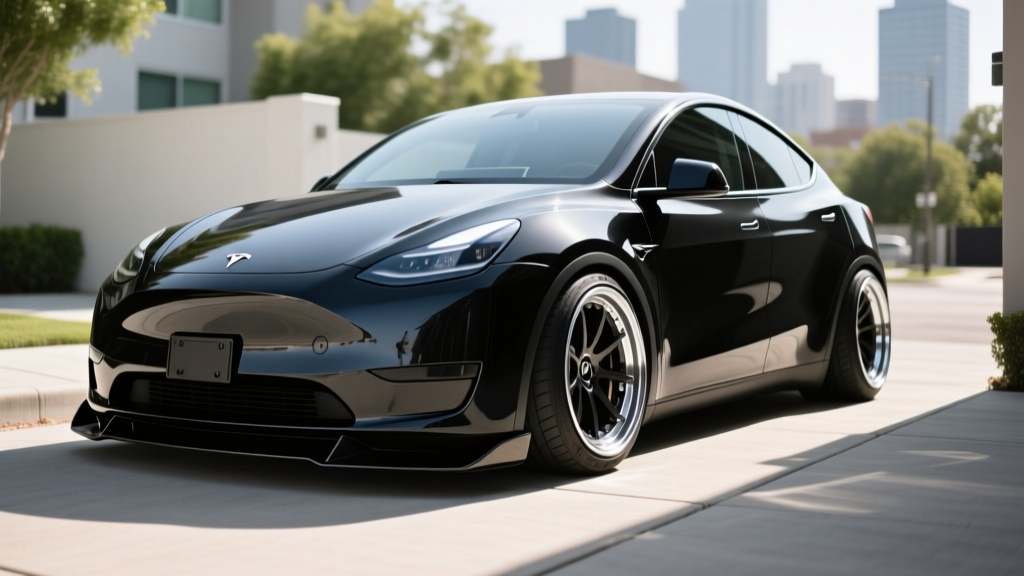
The refreshed 2025–2026 Tesla Model Y (internally dubbed "Juniper") is already one of the most popular electric vehicles in the United States. Naturally, aftermarket enthusiasts have gravitated toward lowering it — fitting coilovers, lowering springs, or air-ride kits to achieve a more aggressive stance. But dropping the ride height of an EV is not the same as dropping a gas car. The Model Y's battery pack, regenerative braking calibration, aerodynamic drag coefficient, and suspension geometry all interact in ways that affect range, warranty coverage, and daily drivability.
This guide walks through what happens when you lower a Tesla Model Y, how the stock 2026 model performs as a baseline, and whether the modification is worth the trade-offs for your use case.
2026 Tesla Model Y Baseline Specs
Before modifying, it helps to understand exactly what you're working with. The current Model Y lineup includes Long Range Rear-Wheel Drive, Long Range All-Wheel Drive, and Performance trims. Tesla updated the battery chemistry and pack sizing across the refresh.
| Spec | Long Range RWD | Long Range AWD | Performance |
|---|---|---|---|
| EPA Range | 320 mi | 302 mi | 280 mi |
| Usable Battery | ~75 kWh (NMC) | ~75 kWh (NMC) | ~75 kWh (NMC) |
| 0-60 mph | 5.6 sec | 4.6 sec | 3.5 sec |
| Horsepower | 346 hp | 384 hp | 456 hp |
| Drivetrain | RWD (single motor) | AWD (dual motor) | AWD (dual motor) |
| MPGe (combined) | 122 MPGe | 115 MPGe | 108 MPGe |
| Efficiency | 28 kWh/100 mi | 29 kWh/100 mi | 31 kWh/100 mi |
| Base MSRP | $44,990 | $47,990 | $52,490 |
Sources: fueleconomy.gov, Tesla Model Y Design Studio.
Real-World Range: Stock vs. Lowered
EPA range for the 2026 Model Y Long Range AWD is 302 miles. In real-world highway driving at 70–75 mph, expect roughly 250–275 miles in mild weather. In freezing temperatures (below 32°F / 0°C), range can drop to 210–240 miles due to battery internal resistance and cabin heating demand. The heat pump in the Juniper refresh mitigates some cold-weather loss compared to older Model Y variants.
How Lowering Affects Range
Lowering a Model Y by 1.0–1.5 inches changes the aerodynamic profile. In theory, a lower ride height reduces frontal area and under-body turbulence, which could marginally improve the drag coefficient. However, real-world reports from owners who have installed lowering springs (such as Eibach Pro-Kit or H&R Sport Spring sets) suggest the range impact is negligible — typically within ±2% of stock.
The bigger range variable is wheel and tire selection. Many owners pair a lowered stance with larger aftermarket wheels (21" or 22") and lower-profile performance tires. Upsizing from the stock 19" Gemini wheels to 21" can reduce range by 8–12% due to increased rolling resistance and unsprung weight. If you lower the car but keep the factory wheel/tire package, expect range to remain close to stock EPA figures.
Cold-Weather Range With a Lowered Setup
Cold weather compounds range loss regardless of ride height. A lowered Model Y with winter tires on stock 19" wheels will see similar cold-weather degradation as a stock Model Y. However, if you're running wider summer performance tires (common on lowered builds), you'll face additional cold-weather penalties due to stiffer tire compounds and the impracticality of those tires below 45°F.
Charging Speed: Does Lowering Change Anything?
Lowering your Model Y does not affect the charging system — the battery pack, onboard charger, and thermal management remain untouched. Here are the stock charging specs for the 2026 Model Y:
| Charging Level | Power / Rate | Speed |
|---|---|---|
| Level 1 (120V household) | ~1.4 kW | ~4 miles/hour |
| Level 2 (240V home / Wall Connector) | 11.5 kW (48A) | ~37 miles/hour |
| DC Fast Charge (Supercharger) | Peak 250 kW | 10–80% in ~22 minutes |
Key nuance: the 250 kW peak on V3 Superchargers is not sustained. The charge curve tapers significantly above 60% state of charge (SoC). Expect the average charge rate from 10–80% to be closer to 120–140 kW. Tesla's V4 Superchargers (rolling out through 2025–2026) may offer improved sustained rates, but the Model Y's current architecture caps at ~250 kW peak.
Preconditioning the battery before arriving at a Supercharger is essential for achieving peak charge rates. Navigate to the Supercharger in the car's navigation system, and the Model Y will automatically warm the battery to optimal temperature — typically adding 5–10 minutes of prep in cold weather.
Ride Quality, Handling, and Ground Clearance Trade-Offs
The stock 2026 Model Y Juniper already rides noticeably better than the pre-refresh model, thanks to revised damper tuning and additional sound-deadening. Lowering it introduces several dynamics changes:
What Improves
- Cornering stability: Lowering the center of gravity by ~1.0 inch reduces body roll. Paired with stiffer lowering springs or adjustable coilovers, turn-in response sharpens.
- Highway stability: Reduced aerodynamic lift at high speeds makes the car feel more planted above 80 mph.
- Aesthetics: The Juniper Model Y's wheel gap is smaller than the pre-refresh car, but a 1.0–1.2" drop on quality springs delivers a flush, aggressive look that many owners prefer.
What Gets Worse
- Ride comfort: Shorter springs and reduced suspension travel mean more impact from potholes, speed bumps, and expansion joints. On poorly maintained roads, a lowered Model Y can feel harsh — especially with 21" wheels and thin sidewalls.
- Ground clearance: Stock front clearance is roughly 6.7 inches. A 1.2-inch drop brings it to ~5.5 inches — adequate for most driveways but problematic for steep ramps, speed humps, and winter snow accumulation.
- Snow and ice clearance: If you live in a region with heavy snowfall, reduced ground clearance means the undercarriage (and battery skid plate) will contact packed snow more readily.
- Tire wear: Lowering changes camber and toe angles. Without a professional alignment post-install, expect accelerated inner-tire wear. Camber-adjustment kits may be needed to bring geometry back into spec.
Warranty and Insurance Implications
This is where many owners get tripped up. Tesla's warranty covers the battery pack and drive units for 8 years or 120,000 miles (Long Range/Performance) and the vehicle limited warranty for 4 years or 50,000 miles.
Lowering springs alone are unlikely to void your battery or drive-unit warranty. However, if a suspension-related failure occurs (e.g., a cracked subframe mount, premature control-arm bushing wear, or damper failure) and Tesla can attribute it to the aftermarket springs or altered geometry, that specific repair may be denied under warranty. The Magnuson-Moss Warranty Act protects consumers, but the burden of proof can be frustrating in practice.
For insurance, most carriers will not surcharge you for lowering springs, but you should disclose the modification. In the event of a total-loss claim, undisclosed modifications can complicate payouts. Some specialty insurers (Hagerty, Grundy) are more modification-friendly for enthusiast-owned EVs.
Pricing and Federal Tax Credit Eligibility
| Trim | Base MSRP | Federal §30D Credit | Effective Price |
|---|---|---|---|
| Long Range RWD | $44,990 | Up to $7,500* | ~$37,490 |
| Long Range AWD | $47,990 | Up to $7,500* | ~$40,490 |
| Performance | $52,490 | Up to $7,500* | ~$44,990 |
*Federal EV tax credit eligibility under IRS §30D depends on buyer income limits (AGI ≤ $150,000 single / $300,000 joint), vehicle MSRP caps ($80,000 for SUVs — all Model Y trims qualify), and battery component/critical-mineral sourcing requirements. The credit can now be transferred to the dealer at point of sale as an instant discount. Rules are subject to legislative change; consult a tax professional for your specific situation.
Aftermarket Lowering Costs
Budget for the modification itself:
- Lowering springs (Eibach, H&R, Mountain Pass Performance): $350–$600 for the set
- Adjustable coilovers (MPP, Unplugged Performance, KW): $1,800–$3,500
- Professional installation + alignment: $400–$800
- Camber correction kit (if needed): $200–$400
Total investment for a quality spring-and-align setup: roughly $800–$1,400. For a full coilover system with corner balancing: $2,500–$4,500.
Cargo, Passenger Space, and Daily Practicality
Lowering does not change the Model Y's interior dimensions. The Juniper refresh retains the practical cargo volume that makes the Model Y a family favorite:
- Cargo volume (rear seats up): 30.2 cu ft
- Cargo volume (rear seats folded): 72.0 cu ft
- Front trunk (frunk): 4.1 cu ft
- Rear legroom: 41.6 inches
- Front headroom: 40.9 inches
- Rear headroom: 39.4 inches
One practical concern with a lowered Model Y: loading cargo over the rear bumper. The lower ride height reduces the lift-over height slightly, which is actually a small benefit for loading heavy items like strollers or luggage.
Standout Tech and Notable Drawbacks
Tech Highlights
- 15.4-inch touchscreen with the refreshed Juniper UI, faster processor, and improved responsiveness
- Ambient lighting and ventilated front seats (new for the refresh)
- Rear-seat touchscreen (8" display for climate and media controls)
- Tesla Autopilot included standard — adaptive cruise, lane centering, automatic emergency braking
- Full Self-Driving (Supervised) available as a $8,000 add-on or $99/month subscription — this is a SAE Level 2 system requiring constant driver attention, not autonomous driving
- Over-the-air updates continue to add features; Tesla's software cadence remains industry-leading
Drawbacks
- No Apple CarPlay or Android Auto — Tesla's proprietary infotainment only
- Turn-signal stalks removed in the Juniper refresh — signals are now on the steering wheel, which draws mixed reactions
- Minimal physical buttons — climate, mirror, and glovebox controls all live on the touchscreen
- Panel-gap variability remains a Tesla hallmark; inspect your delivery carefully
Tesla Autopilot and FSD (Supervised) are SAE Level 2 driver-assistance systems. You must keep your hands on the wheel and eyes on the road at all times. Tesla's cabin camera monitors driver attention. These systems are not self-driving — only Level 4 services like Waymo operate without a human driver in defined geographic areas.
Who Should Lower Their Model Y — and Who Shouldn't
Lower your Model Y if:
- You prioritize aesthetics and cornering feel over ride comfort
- You live in an area with well-maintained roads and minimal snow
- You plan to pair the drop with a quality alignment and keep stock wheels
- You're comfortable with potential suspension warranty gray areas
Keep it stock if:
- You commute on rough roads, construction zones, or gravel driveways
- You regularly encounter deep snow or steep speed bumps
- You want to preserve full factory warranty coverage without ambiguity
- You prioritize maximum range and ride comfort over stance
Pros and Cons of a Lowered Tesla Model Y
- Sharper handling and reduced body roll
- More aggressive, flush stance — especially on the Juniper body
- Slightly improved high-speed stability
- Lower lift-over height for cargo loading
- Wide range of quality aftermarket options (MPP, Eibach, KW)
- Harsher ride on imperfect roads
- Reduced ground clearance — risky for snow, speed bumps, steep driveways
- Alignment changes can cause premature tire wear if uncorrected
- Potential suspension warranty complications
- No meaningful range improvement — and possible loss if paired with larger wheels
- Resale value impact: some buyers view modifications negatively
Frequently Asked Questions
What is the real-world range of a lowered Tesla Model Y?
With stock wheels and tires, a lowered Model Y Long Range AWD delivers approximately 250–275 miles in highway driving at 70 mph in mild weather, and 210–240 miles in freezing conditions. These figures are within ~2% of stock. If you add larger wheels and performance tires, subtract another 8–12%.
How fast does the Model Y charge at home and on DC fast chargers?
At home on a Tesla Wall Connector (Level 2, 240V, 48A), the Model Y charges at 11.5 kW, adding roughly 37 miles per hour — a full overnight charge from 20–80% takes about 4 hours. On a V3 Supercharger, it peaks at 250 kW, reaching 10–80% in approximately 22 minutes, though the rate tapers significantly above 60% SoC.
How much does a 2026 Tesla Model Y cost after tax credits?
The Long Range RWD starts at $44,990 and can drop to approximately $37,490 after the maximum $7,500 federal §30D credit (if you meet income and sourcing requirements). The Performance trim at $52,490 drops to roughly $44,990. Always verify current eligibility on irs.gov before purchasing.
Is a lowered Model Y worth it vs. competitors?
If you're considering a lowered Model Y for style and handling, compare it against stock alternatives like the Hyundai Ioniq 5 N (performance-oriented, 285-mile range, ~$67,500) or the Ford Mustang Mach-E GT (3.5-sec 0-60, ~$59,995). The Model Y still wins on Supercharger network access, software, and cargo space — but the Ioniq 5 N offers a factory-tuned performance experience with full warranty coverage and no aftermarket risk.
Does lowering void the Tesla warranty?
Lowering springs alone do not automatically void the entire warranty. Under the Magnuson-Moss Warranty Act, Tesla must demonstrate that the modification caused a specific failure to deny a claim. However, suspension-related issues (damper leaks, bushing wear, subframe stress) may face scrutiny. Battery and drive-unit coverage (8 years/120,000 miles) is generally unaffected by a spring swap, but document everything and keep your stock springs for reinstallation if needed.
What's the best lowering option for a Model Y?
For a mild daily-driver drop, Eibach Pro-Kit or H&R Sport Springs (~1.0–1.2" drop, $350–$500) paired with a professional alignment offer the best cost-to-benefit ratio. For adjustable ride height and damping, Mountain Pass Performance (MPP) Comfort Coilovers or KW Variant 3 ($2,200–$3,500) are enthusiast favorites. Always get a four-wheel alignment within 100 miles of installation.