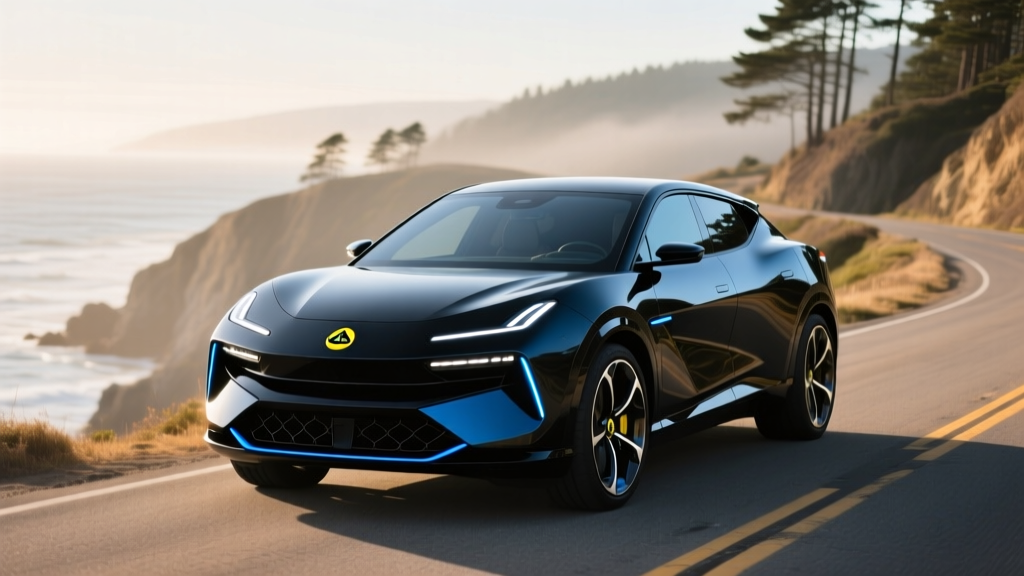
The Lotus Eletre is the brand's boldest pivot yet: a fully electric, high-performance SUV that Lotus itself markets with supercar aspirations. Built on the Electric Premium Architecture (EPA) at Lotus's Wuhan, China facility, the Eletre attempts to marry the brand's handling DNA with the practicality of a luxury crossover. For 2026, Lotus has expanded the lineup with updated battery management software, slightly improved efficiency, and broader availability across the United States. We've spent time with the Eletre R and Eletre S trims to give you a data-driven breakdown of what this EV actually delivers beyond the showroom gloss.
Quick Verdict: Is the Lotus Eletre a True Electric Supercar?
The Eletre R's 905 horsepower and sub-3.0-second 0-60 mph time place it firmly in supercar territory on paper. In practice, it's a heavy luxury SUV that handles remarkably well for its mass but can't fully escape physics. The steering is precise, the chassis communicates through corners, and the air suspension manages body roll better than rivals like the Tesla Model X Plaid or BMW iX M60. However, at roughly 5,900 lbs curb weight, you feel the mass under hard braking and direction changes. Call it a supercar-flavored performance SUV — the most driver-engaging EV crossover on sale, but not a replacement for a two-seat mid-engine sports car.
| Spec | Eletre S (Base) | Eletre R (Performance) |
|---|---|---|
| EPA Range | 304 miles | 282 miles |
| Battery (usable) | 112 kWh NMC | 112 kWh NMC |
| Drivetrain | Dual-motor AWD | Dual-motor AWD |
| Horsepower | 603 hp | 905 hp |
| 0-60 mph | 4.5 sec | 2.95 sec |
| Top Speed | 160 mph | 165 mph |
| Max DC Charge Rate | 200 kW | 200 kW |
| 10-80% DC Time | ~20 min | ~20 min |
| Level 2 Charge Rate | 22 kW (AC) | 22 kW (AC) |
| Efficiency (MPGe) | 79 MPGe combined | 73 MPGe combined |
| Base MSRP | $107,400 | $147,400 |
Range and Efficiency: Real-World Expectations
The Eletre S carries an EPA-estimated 304 miles of range, while the performance-oriented Eletre R drops to 282 miles due to its more aggressive motor mapping and stickier, higher-drag tire compound. Both trims use a 112 kWh usable lithium-ion pack with NMC (nickel manganese cobalt) chemistry — chosen for its higher energy density over LFP, which matters in a vehicle this size.
Real-World Range Reality
EPA Sticker: 304 mi (S) / 282 mi (R)
Highway (75 mph, mild weather): Expect ~250-270 mi (S) and ~235-250 mi (R). The Eletre's bluff body shape creates more drag than a sedan, and efficiency drops sharply above 70 mph.
Cold Weather (20°F, cabin heat on): Plan for 200-220 mi (S). NMC batteries lose 25-30% range in deep cold without consistent preconditioning. The Eletre's heat pump helps but doesn't eliminate the penalty.
City / Mixed Commuting: 285-300 mi (S) is achievable thanks to regenerative braking recapturing energy in stop-and-go traffic.
Efficiency lands at 79 MPGe combined for the S and 73 MPGe for the R — translating to roughly 42-45 kWh/100 mi. That's thirstier than a Tesla Model X (which hits ~100 MPGe) but comparable to the BMW iX and Porsche Taycan Cross Turismo. If you're road-tripping, budget for a charge stop every 200-220 miles to stay comfortable.
Charging Speed: DC Fast Charging and Home Level 2
The Eletre supports up to 200 kW peak DC fast charging on CCS-equipped public chargers (Electrify America, EVgo, and most non-Tesla networks). Lotus quotes a 10-80% charge in approximately 20 minutes under ideal conditions — battery preconditioned, ambient temperature 65-80°F, and a charger capable of sustaining the full rate.
| Charging Level | Power (kW) | Time / Miles Added | Connector |
|---|---|---|---|
| Level 1 (120V household) | ~1.4 kW | ~4 mi/hr | J1772 adapter |
| Level 2 (240V home) | Up to 22 kW | ~65 mi/hr (~5 hr full charge) | J1772 / CCS1 |
| DC Fast Charge | Peak 200 kW | 10-80% in ~20 min | CCS1 |
The 22 kW onboard AC charger is a standout feature — most competitors max out at 11.5 or 19.2 kW. If your home electrical panel supports a 100-amp dedicated circuit, you can replenish the entire 112 kWh pack in about 5 hours overnight. However, many homes will need a panel upgrade to support this rate. Budget $1,500-$3,000 for a licensed electrician to install a 60-amp or higher circuit with the appropriate wiring. Always get a final spec from a licensed electrician before committing to equipment.
On DC fast charging, note that the 200 kW peak is not sustained. The charge curve tapers significantly above 80% SoC, and you'll see speeds drop to 80-100 kW in the 80-90% range. This is normal for NMC packs protecting cell longevity. If you're road-tripping, charge to 80% and go — the last 20% takes nearly as long as the first 70%.
Performance and Driving Dynamics
The Eletre R's dual-motor AWD system produces 905 hp and 726 lb-ft of torque, launching the 5,900-lb SUV to 60 mph in 2.95 seconds. That puts it within a tenth of the Tesla Model X Plaid and ahead of the BMW iX M60. The base Eletre S still delivers a strong 603 hp and a 4.5-second run.
Where the Eletre genuinely separates from rivals is chassis tuning. The standard adaptive air suspension with active rear steering gives the car a duality of character: compliant and quiet on the highway, then firm and communicative on canyon roads. The steering ratio is quick, and the brake pedal feel — often a weak point in heavy EVs with regen blending — is progressive and confidence-inspiring. Lotus's engineering team clearly prioritized driving engagement, and it shows.
The trade-off is ride comfort on broken pavement. Even in the softest suspension mode, the Eletre transmits more road imperfection than a Mercedes EQS SUV or BMW iX. The 22-inch wheels on the R trim amplify this. If daily comfort is your priority, the S trim's 20-inch wheels are the better choice.
Interior, Tech, and Cargo Space
The Eletre's cabin represents a clean break from Lotus's spartan sports-car interiors. A 15.1-inch OLED center display running the Lotus Hyper OS handles infotainment, climate, and vehicle settings. A slim 12.6-inch driver display sits behind the yoke-style steering wheel, and an available 29-inch AR HUD projects navigation and speed onto the windshield.
Build quality is strong for a first-generation product — soft-touch materials, real metal switchgear, and well-bolstered sport seats. Rear legroom measures 37.2 inches, adequate for adults but tighter than the BMW iX (40.2 in). Cargo space behind the second row is 21.5 cu ft, expanding to 53.2 cu ft with seats folded. There is no front trunk (frunk), which is a missed opportunity in a vehicle this large.
On the driver-assistance front, the Eletre includes adaptive cruise control, lane centering, automatic emergency braking, and a 360-degree camera system. Lotus equips the car with four LiDAR units (deployable from the A-pillars and roof) for future over-the-air feature expansion, but as of 2026, the active system operates at SAE Level 2 — the driver must remain fully engaged and hands-on. This is not a self-driving vehicle.
Pricing, Trims, and Federal Tax Credit Eligibility
The 2026 Lotus Eletre is available in two trims:
- Eletre S: $107,400 MSRP (destination included)
- Eletre R: $147,400 MSRP (destination included)
Options like the Executive Rear Seat package, Naima audio upgrade, and carbon-fiber exterior trim can push an as-tested Eletre R past $165,000.
Federal Tax Credit (§30D) Analysis
| Factor | Eletre S | Eletre R |
|---|---|---|
| MSRP Cap ($80,000 for SUVs/trucks) | ❌ Exceeds cap | ❌ Exceeds cap |
| $7,500 Federal Credit Eligible? | No | No |
| Point-of-Sale Transfer Available? | N/A | N/A |
| State/Local Incentives | Varies by jurisdiction | Varies by jurisdiction |
Source: IRS §30D Clean Vehicle Credit rules. The §30D credit caps SUV MSRP at $80,000. Both Eletre trims exceed this threshold, making them ineligible for the federal credit regardless of buyer income or battery sourcing. Consult a tax professional for your specific situation and check fueleconomy.gov for the latest eligibility data.
State-level incentives may still apply depending on your jurisdiction. California's CVRP, Colorado's innovative motor vehicle credit, and various utility rebates can offset $2,000-$7,500 depending on eligibility — check official state and utility sources for current amounts.
Warranty and Ownership Costs
Lotus provides the following coverage for the 2026 Eletre:
- Basic Warranty: 4 years / 50,000 miles
- Battery & Drive Unit Warranty: 8 years / 100,000 miles (retains ≥70% capacity)
- Corrosion Warranty: 6 years / unlimited miles
- Roadside Assistance: 4 years / 50,000 miles
The battery warranty's 70% capacity retention threshold is industry-standard and matches Tesla, BMW, and Porsche. Lotus does not yet offer a prepaid maintenance plan, which some luxury rivals include. Expect annual insurance premiums in the $3,500-$5,200 range depending on trim, location, and driving record — the Eletre R's performance classification pushes rates higher than typical luxury SUVs.
Pros
- Class-leading handling and steering feel for an EV SUV
- 905 hp R trim delivers genuine supercar acceleration
- 22 kW AC onboard charger — fastest in class for home charging
- Striking design with active aerodynamics
- LiDAR-equipped for future ADAS upgrades
Cons
- Ineligible for $7,500 federal tax credit (MSRP exceeds $80K cap)
- Real-world highway range falls ~50 mi below EPA estimate
- No front trunk (frunk) despite large hood area
- Rear legroom tighter than BMW iX and Mercedes EQS SUV
- Limited U.S. service center network as of 2026
- Firm ride quality on 22-inch wheels
Who Should Buy the Lotus Eletre?
Choose the Eletre S if: You want a distinctive luxury EV SUV with strong performance (603 hp is plenty) and prioritize range (304 mi EPA) and daily comfort. Best for affluent commuters and weekend road-trippers who value design exclusivity over badge prestige.
Choose the Eletre R if: Straight-line speed and track-capable handling are non-negotiable, and you accept the range and price penalty. Best for driving enthusiasts who currently own a Porsche Cayenne Turbo GT or Lamborghini Urus and want to go electric.
Look elsewhere if: You need maximum cargo space (BMW iX), the longest range (Tesla Model X at 348 mi), or federal tax credit eligibility (consider the Rivian R1S or a loaded BMW iX xDrive50, which falls under the MSRP cap).
Lotus Eletre vs. Key Competitors
| Spec | Lotus Eletre R | Tesla Model X Plaid | BMW iX M60 | Porsche Taycan Cross Turismo Turbo S |
|---|---|---|---|---|
| EPA Range | 282 mi | 326 mi | 288 mi | 256 mi |
| Horsepower | 905 hp | 1,020 hp | 610 hp | 750 hp |
| 0-60 mph | 2.95 sec | 2.5 sec | 3.6 sec | 2.7 sec |
| Max DC Charge | 200 kW | 250 kW | 200 kW | 270 kW |
| Base MSRP | $147,400 | $110,490 | $111,500 | $195,900 |
| Federal Credit | No | No | No | No |
The Eletre R occupies a niche: more engaging to drive than the Model X Plaid, more powerful than the iX M60, and significantly less expensive than the Taycan Turbo S. Its main vulnerability is the Tesla's superior Supercharger network access and range advantage.
Frequently Asked Questions
What is the real-world range of the Lotus Eletre?
The Eletre S delivers an EPA-estimated 304 miles, but expect 250-270 miles in real-world highway driving at 75 mph. In cold weather (below 30°F), plan for 200-220 miles. The Eletre R drops to 282 EPA / ~235-250 real-world highway miles.
How fast does the Eletre charge at home and on the road?
On a DC fast charger, the Eletre peaks at 200 kW and charges from 10-80% in about 20 minutes. At home on a 240V Level 2 circuit, its 22 kW onboard charger adds roughly 65 miles of range per hour, fully replenishing the pack in about 5 hours.
Does the Lotus Eletre qualify for the federal EV tax credit?
No. Under current IRS §30D rules, the clean vehicle credit caps SUV MSRP at $80,000. Both Eletre trims exceed this limit and are ineligible regardless of buyer income or battery component sourcing.
Is the Lotus Eletre worth buying over a Tesla Model X?
If driving engagement, interior build quality, and design exclusivity matter more than range and charging network access, the Eletre is the better choice. The Model X wins on range (326 mi Plaid), Supercharger convenience, and price — but its interior quality and ride refinement lag behind Lotus.
What is the battery warranty on the Eletre?
Lotus covers the high-voltage battery and drive units for 8 years or 100,000 miles, whichever comes first, guaranteeing at least 70% capacity retention. This matches industry norms from Tesla, BMW, and Porsche.
Does the Eletre have self-driving capabilities?
No. The Eletre's driver-assistance system is SAE Level 2, meaning it can manage steering and acceleration simultaneously but requires the driver to remain fully attentive and hands-on at all times. The four LiDAR units are hardware-ready for future upgrades, but no Level 3 or Level 4 autonomous features are available as of 2026.