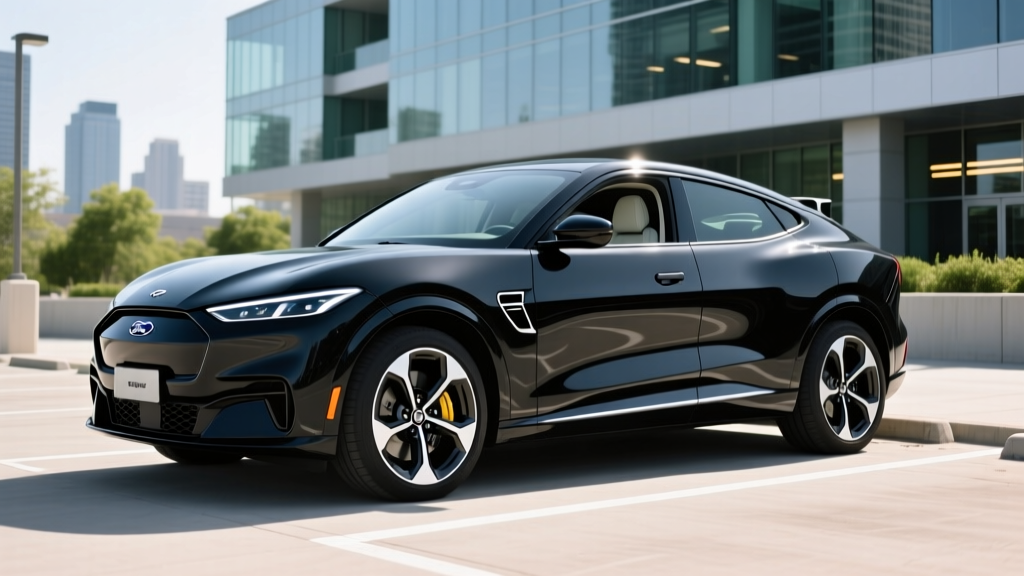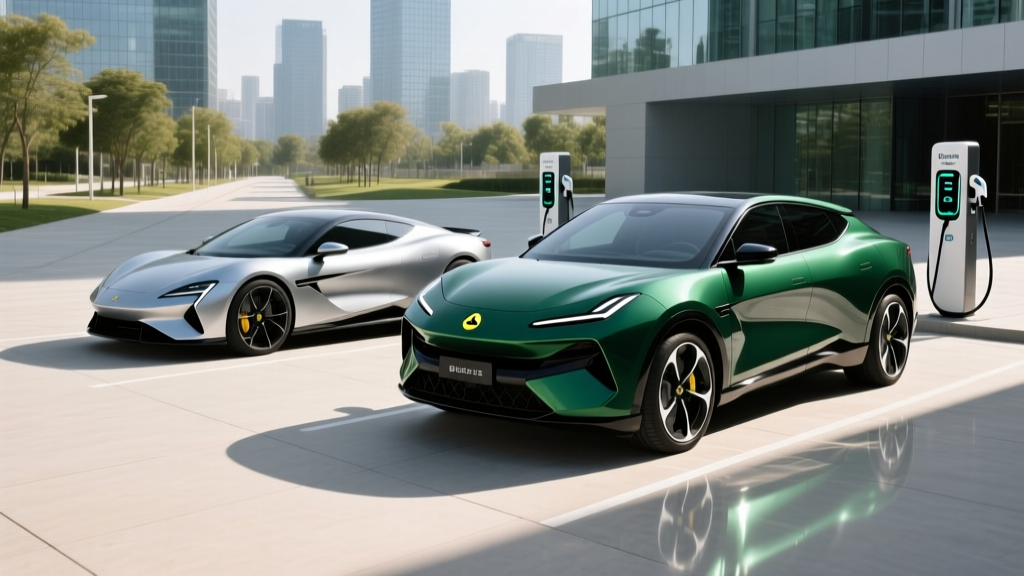
Lotus spent decades building featherweight, mid-engine sports cars. Now the British brand sells two fully electric vehicles in the U.S.: the Eletre SUV and the Emeya luxury sedan. Both ride on Lotus's 800-volt Electric Premium Architecture (EPA), prioritize performance handling over efficiency, and carry six-figure price tags. But do these Lotus EVs deliver enough real-world substance to justify the cost against Tesla, Porsche, and Lucid?
This profile covers the 2026 model-year lineup available to U.S. buyers, with exact EPA figures, charging data, and tax-credit reality checks.
Lotus EV Lineup at a Glance
| Spec | 2026 Eletre (Base AWD) | 2026 Eletre R (Performance) | 2026 Emeya (Base AWD) | 2026 Emeya R (Performance) |
|---|---|---|---|---|
| EPA Range | 304 mi | 270 mi | 310 mi | 275 mi |
| Battery (usable) | 112 kWh NMC | 112 kWh NMC | 102 kWh NMC | 102 kWh NMC |
| Horsepower | 603 hp | 905 hp | 611 hp | 905 hp |
| 0-60 mph | 4.5 s | 2.95 s | 4.15 s | 2.78 s |
| Drivetrain | Dual-motor AWD | Dual-motor AWD | Dual-motor AWD | Dual-motor AWD |
| Peak DC Charge | 230 kW | 230 kW | 350 kW | 350 kW |
| 10-80% DC Time | ~20 min | ~20 min | ~18 min | ~18 min |
| Level 2 Rate | 22 kW | 22 kW | 22 kW | 22 kW |
| Base MSRP | $109,900 | $149,900 | $96,900 | $149,900 |
| Efficiency (MPGe) | 79 MPGe | 72 MPGe | 83 MPGe | 74 MPGe |
| Battery Warranty | 8 yr / 100,000 mi | 8 yr / 100,000 mi | 8 yr / 100,000 mi | 8 yr / 100,000 mi |
Real-World Range: What the EPA Sticker Doesn't Tell You
Emeya R: EPA 275 miles — expect ~220-240 mi highway; cold-weather drops to ~185-200 mi.
Lotus packs large NMC (nickel-manganese-cobalt) battery packs into both models — 112 kWh usable in the Eletre and 102 kWh in the Emeya. The chemistry prioritizes energy density and high discharge rates over the cycle-life advantages of LFP. That's the right call for a performance vehicle, but it means you'll see typical NMC degradation curves: roughly 8-12% capacity loss over the first 100,000 miles based on industry averages for similar packs.
The Eletre R and Emeya R trade roughly 30-35 miles of range for their 905-hp powertrains and wider, stickier tires. If your commute involves stop-and-go city driving with regen braking, you'll actually see range close to or slightly above the EPA number. Sustained 75-80 mph highway driving is where these Lotus EVs fall short of their stickers — a physics reality for any heavy, high-drag performance vehicle.
Both models include a heat pump for cabin conditioning, which reduces cold-weather range loss compared to resistive heating. But 30°F days still cut usable range by 15-25%.
800V Charging Speeds: DC Fast and Home Level 2
The 800-volt architecture is the defining technical advantage of these Lotus EVs. Higher voltage means faster charging at compatible DC stations and less heat buildup in the battery during sustained fast charging.
| Charge Type | Eletre | Emeya | Real-World Notes |
|---|---|---|---|
| DC Fast Charge (Peak) | 230 kW | 350 kW | Peak sustained only up to ~50-55% SoC; tapers sharply above 80% |
| 10-80% DC Time | ~20 min | ~18 min | Requires 350 kW station (e.g., Electrify America Hypercharger); 150 kW stations add ~5-7 min |
| Level 2 Home (240V) | 22 kW (on-board) | 22 kW (on-board) | Full charge in ~5-6 hr; requires 100A dedicated circuit — most homes need a panel upgrade |
| Level 2 (Standard 11.5 kW) | 11.5 kW | 11.5 kW | Typical home setup; full charge in ~10 hr |
| Level 1 (120V) | ~1.4 kW | ~1.4 kW | ~3-4 mi/hr — emergency use only |
The Emeya's 350 kW peak DC rate is among the fastest in any production sedan. On a 350 kW Electrify America or IONITY stall with preconditioned battery, you'll see the charge curve hold above 300 kW through roughly 40% SoC, then taper. The 10-80% time of ~18 minutes is real, but only if the station delivers its rated power and the battery is preconditioned (navigate to a charger using the car's built-in routing to trigger thermal prep).
Home charging is where buyers should plan carefully. The 22 kW on-board charger is impressive, but extracting that speed requires a hardwired Level 2 wallbox on a dedicated 100-amp circuit. Most residential panels (200A total) cannot support this without a $2,000-$5,000 panel upgrade. A more practical 48-amp / 11.5 kW circuit delivers a full overnight charge in roughly 10 hours, which is adequate for nearly all daily use.
Both models use the NACS (Tesla-style) connector for 2026, ensuring access to Tesla Superchargers via Lotus's confirmed network agreement. CCS adapters are no longer needed for non-Tesla networks, as most public operators have transitioned to NACS or provide native NACS cables.
Performance and Driving Dynamics
Lotus engineers tuned these platforms for handling first, straight-line speed second. The Eletre and Emeya share adaptive air suspension, active rear-wheel steering (up to 3.5 degrees), and torque-vectoring rear differentials on R trims.
The base Eletre's 603 hp and 4.5-second 0-60 time feel effortless in daily driving. The Eletre R's 905 hp and sub-3-second launch are supercar territory — but the real story is the chassis. At 5,700+ lbs (Eletre R), mass is the enemy, and Lotus counters with a 50/50 weight distribution, carbon-ceramic brakes (optional), and a stability control system that allows meaningful slip angles before intervening.
The Emeya sedan sits lower and lighter (~5,400 lbs for the base AWD), giving it sharper turn-in and slightly better efficiency. The Emeya R's 2.78-second 0-60 time rivals the Porsche Taycan Turbo GT and Lucid Air Sapphire in straight-line acceleration.
Interior Space, Tech, and Driver Assistance
Cargo volume: The Eletre offers 21.4 cu ft behind the rear seats and 54.2 cu ft with seats folded — competitive with the BMW iX. A small front trunk (frunk) adds ~1.5 cu ft for charging cables. The Emeya sedan provides 16.8 cu ft of trunk space and no frunk.
Passenger space: Both models seat five. Rear legroom in the Eletre is generous at 39.8 inches. The Emeya's low roofline cuts rear headroom to 37.1 inches — tall passengers will notice.
Infotainment: A 15.1-inch OLED center display runs Lotus's HyperOS (Android Automotive-based). Wireless Apple CarPlay and Android Auto are standard. The system is responsive but the menu hierarchy takes a week of daily use to internalize. A 12.6-inch driver display and optional 55-inch AR head-up display round out the cockpit.
Audio: The optional KEF Reference system (23 speakers, 2,160 watts) is one of the best factory audio systems in any vehicle at any price.
Lotus's Intelligent Drive system includes adaptive cruise, lane centering, automatic lane change, and highway assist. This is an SAE Level 2 system — the driver must remain fully engaged, hands on or near the wheel, eyes on the road. It is not self-driving and does not approach the capability of Waymo's Level 4 robotaxi service. Lotus does not currently offer a hands-free highway system comparable to GM's Super Cruise or Ford's BlueCruise.
Pricing, Trims, and Federal Tax Credit Reality
These are premium vehicles, and the pricing reflects it. Here's what 2026 buyers actually pay before incentives:
| Model | Base MSRP | As-Tested (Typical Options) | Federal §30D Credit | Effective Price After Credit |
|---|---|---|---|---|
| Eletre Base AWD | $109,900 | $118,000-$125,000 | $0 (MSRP cap exceeded) | $109,900+ |
| Eletre R | $149,900 | $160,000+ | $0 (MSRP cap exceeded) | $149,900+ |
| Emeya Base AWD | $96,900 | $105,000-$115,000 | $0 (MSRP cap exceeded) | $96,900+ |
| Emeya R | $149,900 | $160,000+ | $0 (MSRP cap exceeded) | $149,900+ |
Why No Federal Tax Credit?
Under IRS §30D rules, the federal EV tax credit of up to $7,500 applies only to vehicles with an MSRP at or below $80,000 for SUVs, pickups, and vans, or $55,000 for sedans (source: IRS.gov). Every Lotus EV sold in the U.S. exceeds these MSRP caps, making none of them eligible for the federal purchase credit regardless of buyer income or battery sourcing.
Some state and local incentives (e.g., California's CVRP rebate, Colorado's state tax credit) may still apply and are not subject to federal MSRP caps. Check your state energy office for current programs.
Who Should Buy a Lotus EV — and Who Shouldn't
- You want a luxury performance SUV with genuine handling dynamics, not just straight-line speed
- You value 800V fast-charging infrastructure and regularly road-trip on corridors with 350 kW chargers
- You want exclusivity — Lotus sells a fraction of the volume of Porsche, BMW, or Tesla
- You can absorb $110,000+ without relying on federal tax credits
- You want a grand-touring electric sedan with sub-3-second acceleration (R trim) and air suspension comfort
- You prefer sedan efficiency over SUV practicality
- 350 kW DC charging speed is a priority for your route patterns
- You need federal tax credit savings — consider a Tesla Model Y, Hyundai Ioniq 5, or Chevrolet Equinox EV
- You prioritize maximum range per dollar — the Lucid Air Pure offers 400+ miles of EPA range starting below $80,000
- Hands-free highway driving matters — GM's Super Cruise and Ford's BlueCruise offer SAE Level 2 hands-free capability that Lotus does not
- Dealer service network proximity is critical — Lotus has fewer than 30 U.S. service points as of 2026
Pros
- Class-leading 800V DC charging (Emeya at 350 kW)
- Genuine sports-car handling despite 5,400-5,700 lb curb weight
- Standard air suspension, rear-wheel steering, torque vectoring (R trims)
- Distinctive design — no one confuses a Lotus with a Tesla
- KEF Reference audio is best-in-class
- NACS connector standard — full Supercharger access
Cons
- No federal tax credit eligibility (MSRP caps)
- Real-world highway range falls 15-20% below EPA sticker
- Limited U.S. dealer and service network
- No hands-free driver-assist system
- Infotainment learning curve
- 22 kW home charging requires costly panel upgrade for most homes
How Lotus EVs Compare to Key Competitors
At these prices, the competitive set is narrow but formidable:
- vs. Porsche Taycan (sedan) / Cayenne EV (upcoming): The Emeya matches the Taycan on performance and beats it on DC charging speed. The Taycan has a more mature dealer network and better-established resale values.
- vs. Lucid Air: The Air Pure (419 mi EPA, ~$75,000) dominates on range and efficiency. The Emeya counters with sharper handling and faster DC charging.
- vs. Tesla Model X Plaid: The Eletre R matches the Model X Plaid on acceleration but offers a more luxurious interior and a less polarizing brand experience. Tesla wins on Supercharger network maturity and software updates.
- vs. BMW iX M60: The Eletre's 304-mile EPA range trails the iX xDrive50 (~320 mi), but the Lotus handles better and charges faster on 800V infrastructure.
Ownership Costs and Long-Term Outlook
Lotus provides an 8-year / 100,000-mile battery and powertrain warranty with a guaranteed capacity retention threshold of 70% — industry standard for premium EVs. The vehicle limited warranty is 4 years / 50,000 miles.
Insurance premiums run 15-25% higher than comparable Porsche or BMW models due to limited collision-repair data and low production volumes. Expect $3,500-$5,000 annually for a clean-record driver on an Eletre Base AWD (source: industry averages via IIHS repairability indices).
Depreciation is the wild card. Lotus has minimal U.S. EV resale history. Early adopters should plan for 50-60% depreciation over 5 years — steeper than Tesla or Porsche, which have more established certified-pre-owned markets.
Charging costs at home (at $0.14/kWh national average) run roughly $15.50 for a full Eletre charge and $14.30 for the Emeya. Public DC fast charging at $0.40-$0.50/kWh pushes a 10-80% session to $35-$45 for the Eletre.
Frequently Asked Questions
What is the real-world range of Lotus EVs?
The base Eletre delivers an EPA-estimated 304 miles, but expect 250-270 miles on highway road trips and 210-230 miles in cold weather. The Emeya R's 275-mile EPA rating translates to roughly 220-240 miles highway.
How fast do Lotus EVs charge at home and on the road?
The Emeya peaks at 350 kW on DC fast chargers, achieving 10-80% in approximately 18 minutes on a compatible 350 kW station. The Eletre peaks at 230 kW (~20 minutes). At home, both accept up to 22 kW on Level 2, but most homes will use an 11.5 kW setup for a full overnight charge.
Does any Lotus EV qualify for the federal EV tax credit?
No. Under current IRS §30D rules, all Lotus models exceed the MSRP caps ($80,000 for SUVs, $55,000 for sedans). State incentives may still apply — check your state energy office.
How much does a Lotus EV cost after incentives?
The Eletre starts at $109,900 and the Emeya at $96,900. Without federal tax credit eligibility, buyers pay full MSRP plus options, destination, and state registration fees. Typical as-tested prices range from $115,000 to $165,000.
Is a Lotus EV worth buying over a Porsche or Tesla?
If you prioritize exclusivity, 800V charging speed, and handling dynamics, the Lotus is compelling. If you need dealer network proximity, hands-free driving assist, federal tax credit savings, or proven resale values, Porsche or Tesla remain safer choices.
What connector do Lotus EVs use?
2026 Lotus EVs use the NACS (North American Charging Standard) connector, providing native access to Tesla Superchargers and all major public networks that have transitioned to NACS.
What battery chemistry do Lotus EVs use?
Both the Eletre and Emeya use NMC (nickel-manganese-cobalt) lithium-ion packs — 112 kWh usable in the Eletre, 102 kWh in the Emeya. NMC provides higher energy density and peak discharge rates than LFP, at the cost of slightly faster long-term degradation.
Sources: EPA / fueleconomy.gov, IRS §30D Clean Vehicle Credits, Lotus Cars USA official specifications.