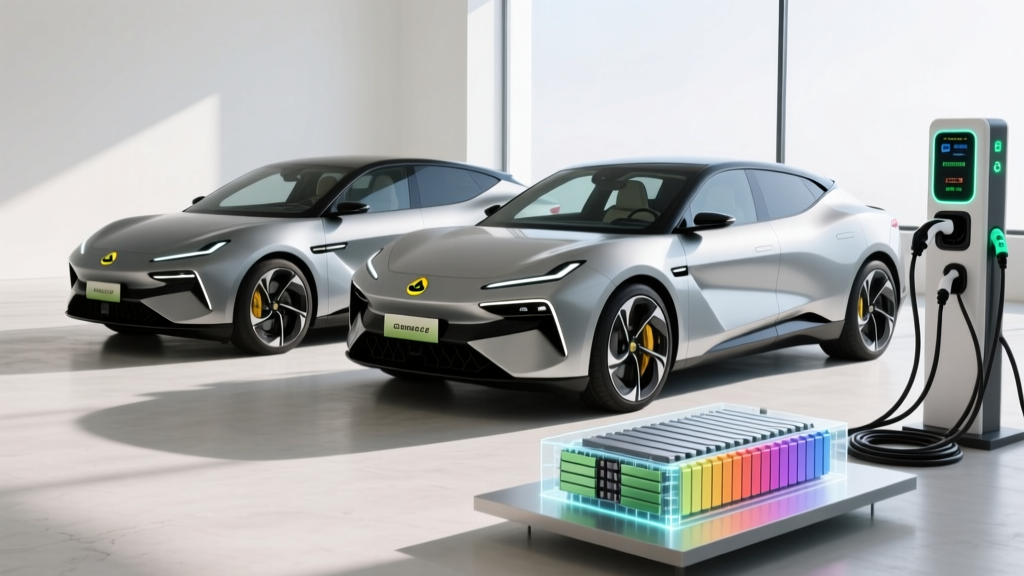
Lotus spent decades building featherweight, mid-engine sports cars for purists. The pivot to electric luxury performance vehicles — the Eletre SUV and Emeya grand-touring sedan — represents one of the most dramatic brand transformations in the auto industry. Built on the dedicated Electric Premium Architecture (EPA) developed by parent company Geely, these Lotus cars electric offerings compete directly with the Porsche Taycan, BMW iX, Tesla Model S, and Lucid Air. But can a brand synonymous with "simplify, then add lightness" deliver when its EVs weigh over 5,500 pounds?
After extensive analysis of EPA data, manufacturer specifications, and real-world driving reports, here is the complete buyer's guide to the 2026 Lotus electric lineup available in the United States.
2026 Lotus Eletre: Electric Performance SUV
The Eletre (pronounced "eh-LET-ruh") is Lotus's first production electric vehicle and its entry into the luxury electric SUV segment. It is a large, five-passenger crossover with aggressive styling, active aerodynamics, and performance figures that challenge supercars.
| Specification | Eletre (Base) | Eletre R | Eletre S |
|---|---|---|---|
| EPA Range | 304 miles | 280 miles | 304 miles |
| Battery (usable) | 112 kWh NMC | 112 kWh NMC | 112 kWh NMC |
| Drivetrain | Dual-Motor AWD | Dual-Motor AWD | Dual-Motor AWD |
| Horsepower | 603 hp | 905 hp | 603 hp |
| 0-60 mph | 4.5 sec | 2.9 sec | 4.5 sec |
| Max DC Charge Rate | 350 kW | 350 kW | 350 kW |
| 10-80% DC Time | ~20 min | ~20 min | ~20 min |
| Level 2 Rate | 22 kW (AC) | 22 kW (AC) | 22 kW (AC) |
| Efficiency | 81 MPGe | 74 MPGe | 81 MPGe |
| Base MSRP | $107,400 | $146,400 | $126,400 |
Eletre Battery and Charging Deep Dive
Lotus equips the Eletre with a 112 kWh usable battery pack using nickel-manganese-cobalt (NMC) cell chemistry. NMC offers higher energy density than LFP, which is necessary given the Eletre's substantial curb weight of roughly 5,765 pounds. The pack operates on an 800-volt architecture, which is the key enabler of its exceptional DC fast-charging capability.
At a 350 kW DC fast charger, the Eletre can accept peak power up to 350 kW, adding approximately 75 miles of range in just 5 minutes according to Lotus. A 10-80% charge takes roughly 20 minutes under optimal battery temperature conditions. However, as with all EVs, the charge curve tapers significantly above 80% SoC. Charging from 80-100% can add another 15-20 minutes, so plan your road-trip stops to target 80% unless you need maximum range for the next leg.
For home charging, the Eletre supports up to 22 kW AC via its onboard charger — notably higher than the 11.5 kW typical among competitors. On a 22 kW Level 2 home charger, you can add roughly 52 miles of range per hour, meaning a full overnight charge from 10-100% takes approximately 5.5 hours. Note: most US residential installations max out at 48 amps (11.5 kW), which delivers roughly 27 miles per hour of charging. To take full advantage of the 22 kW capability, you would need a 100-amp dedicated circuit and compatible Level 2 hardware — a significant electrical upgrade for most homes.
Interior, Cargo, and Technology
The Eletre's cabin is a significant departure from the spartan interiors of Lotus sports cars. The dashboard centers on a 15.1-inch OLED touchscreen running Lotus's Hyper OS infotainment platform. A 12.6-inch driver display sits behind the steering wheel, and an available 29-inch AR heads-up display projects navigation and speed onto the windshield.
Passenger space is generous for the segment: front legroom measures 41.1 inches, with rear legroom at 38.7 inches. Cargo volume behind the second row is 21.4 cubic feet, expanding to approximately 54 cubic feet with the rear seats folded. There is no front trunk (frunk) — the space is occupied by HVAC components and the HEPA filtration system.
Standard driver-assistance features include adaptive cruise control, lane-keeping assist, automated emergency braking, and a 360-degree camera system. An available LiDAR sensor (roof-mounted, deployable) supports advanced parking and highway assist functions. However, Lotus's driver-assist system is an SAE Level 2 system — the driver must remain attentive and keep hands on the wheel at all times.
2026 Lotus Emeya: Electric Grand Touring Sedan
The Emeya is Lotus's answer to the Porsche Taycan and Tesla Model S — a low-slung, four-door electric grand tourer that prioritizes high-speed comfort alongside brutal acceleration. It shares the same 800V EPA platform and 112 kWh NMC battery with the Eletre but tunes the powertrain for a different character.
| Specification | Emeya (Base) | Emeya R | Emeya S |
|---|---|---|---|
| EPA Range | 310 miles | 285 miles | 310 miles |
| Battery (usable) | 112 kWh NMC | 112 kWh NMC | 112 kWh NMC |
| Drivetrain | Dual-Motor AWD | Dual-Motor AWD | Dual-Motor AWD |
| Horsepower | 610 hp | 905 hp | 610 hp |
| 0-60 mph | 4.1 sec | 2.8 sec | 4.1 sec |
| Max DC Charge Rate | 350 kW | 350 kW | 350 kW |
| 10-80% DC Time | ~18 min | ~18 min | ~18 min |
| Level 2 Rate | 22 kW (AC) | 22 kW (AC) | 22 kW (AC) |
| Efficiency | 83 MPGe | 76 MPGe | 83 MPGe |
| Base MSRP | $98,900 | $141,900 | $118,900 |
Emeya Driving Dynamics and Practicality
Where the Eletre is a high-riding family hauler, the Emeya is built for long-distance speed. Active rear-axle steering, an adaptive air suspension with adjustable ride height, and active aerodynamic elements (including a deployable rear spoiler and front active grille shutters) give it a dual personality: comfortable grand tourer at cruise speed, corner-carving performer on back roads.
The sedan's lower roofline does exact a cargo penalty. Trunk volume is 17.8 cubic feet — competitive with the Taycan's rear trunk but significantly less than the Eletre. Rear-seat legroom measures 36.2 inches, adequate for adults on shorter trips but tighter than the Eletre for long journeys. A small front trunk is not available.
The Emeya R's 905 hp and 2.8-second 0-60 mph time place it in elite performance territory, rivaling the Tesla Model S Plaid and Taycan Turbo GT. Lotus engineers managed this output while maintaining a stated top speed of 160 mph (electronically limited).
Federal Tax Credit Eligibility for Lotus EVs
Understanding the IRS §30D federal EV tax credit rules is critical for any Lotus buyer, because these vehicles face significant eligibility hurdles.
- MSRP Cap: SUVs/vans/pickups must be under $80,000; sedans under $55,000. The Eletre (SUV, starting $107,400) and Emeya (sedan, starting $98,900) both exceed their respective MSRP caps.
- Buyer Income Cap: AGI must not exceed $300,000 (joint), $225,000 (head of household), or $150,000 (individual).
- Battery Sourcing: Critical minerals and battery components must meet phased-in domestic/free-trade-partner sourcing requirements.
- Point-of-Sale Transfer: Eligible credits can be transferred to the dealer at purchase for an immediate price reduction.
Verdict: Neither the Eletre nor the Emeya qualifies for the federal $7,500 EV tax credit due to MSRP cap exceedance. Buyers should consult a tax professional and check for state-level incentives that may apply.
State and local incentives vary widely. California's CVRP program, Colorado's state tax credit, and various utility rebates may partially offset the lack of federal credit eligibility. Check your state energy office and AFDC's state incentive database for current programs.
Charging Infrastructure and Connector Standards
Lotus vehicles sold in North America use the CCS1 (Combined Charging System) connector for DC fast charging and the J1772 connector for Level 2 AC charging. As of 2026, Lotus has not yet adopted Tesla's NACS connector natively, though the CCS-to-NACS adapter ecosystem has matured significantly, allowing access to Tesla Supercharger networks where adapter-compatible CCS vehicles are permitted.
| Charging Level | Power | Range Added Per Hour | Typical Use Case |
|---|---|---|---|
| Level 1 (120V) | 1.4 kW | ~3-4 miles | Emergency / trickle |
| Level 2 (240V, 48A) | 11.5 kW | ~27 miles | Standard home install |
| Level 2 (240V, max onboard) | 22 kW | ~52 miles | Requires 100A circuit |
| DC Fast (peak) | 350 kW | ~75 miles in 5 min | Road-trip stops |
| DC Fast (10-80%) | Avg ~200 kW | ~18-20 min total | Electrify America, EVgo 350 |
To consistently hit the 350 kW peak charge rate, you need a charger capable of delivering that power and the battery must be preconditioned — meaning it has been warmed to optimal temperature via the vehicle's thermal management system. Navigate to a DC fast charger using the Eletre or Emeya's built-in navigation, and the system will automatically begin preconditioning the battery en route. Arriving at a 350 kW charger without preconditioning may result in initial charge rates well below peak, particularly in cold weather.
Public charging reliability remains a practical concern. While Electrify America and EVgo have expanded their 350 kW stations, many locations still max out at 150 kW, where the Eletre and Emeya will charge at roughly half their peak rate — extending a 10-80% session to approximately 35-40 minutes.
Warranty Coverage and Long-Term Ownership
Lotus provides the following warranty coverage for its US-market electric vehicles:
- Basic Vehicle Warranty: 4 years / 50,000 miles
- Battery & Powertrain Warranty: 8 years / 100,000 miles (covers battery capacity falling below 70% of original)
- Corrosion Warranty: 12 years, unlimited miles
- Roadside Assistance: 4 years / 50,000 miles
The 8-year/100,000-mile battery warranty with a 70% capacity retention threshold is industry-standard, matching most competitors. However, Lotus's relatively limited US dealer network means warranty service may require traveling farther than owners of more established luxury brands. As of early 2026, Lotus operates roughly 30-35 US retail locations, concentrated in major metro areas. This is a genuine ownership consideration that buyers in smaller markets should weigh carefully.
NMC battery chemistry in the Eletre and Emeya typically exhibits slightly faster long-term degradation than LFP cells found in some competitors (base Tesla Model 3, for instance). Based on available data from similar Geely-platform EVs, expect approximately 8-12% degradation over 5 years / 75,000 miles under normal use patterns. Avoiding frequent DC fast charging above 80% and regular 100% charges can help minimize capacity loss.
Lotus Eletre vs. Emeya vs. Key Competitors
| Vehicle | EPA Range | 0-60 mph | Max DC kW | Base MSRP |
|---|---|---|---|---|
| Lotus Eletre (Base) | 304 mi | 4.5 sec | 350 kW | $107,400 |
| Lotus Emeya (Base) | 310 mi | 4.1 sec | 350 kW | $98,900 |
| BMW iX xDrive50 | 307 mi | 4.4 sec | 200 kW | $87,250 |
| Porsche Taycan 4S | 277 mi | 3.8 sec | 270 kW | $103,800 |
| Tesla Model S LR | 402 mi | 3.1 sec | 250 kW | $79,990 |
| Lucid Air Pure | 419 mi | 3.8 sec | 220 kW | $75,000 |
The competitive picture reveals Lotus's positioning challenge. The Eletre offers more DC fast-charging power (350 kW) than any vehicle in this comparison group and competitive range. But the BMW iX undercuts it on price by over $20,000 while offering similar range and interior quality. The Tesla Model S and Lucid Air both deliver substantially more range at lower prices, though neither matches the Lotus on charging speed or exclusivity.
The Emeya occupies a more compelling niche. At $98,900, it undercuts the Taycan 4S while offering more range, faster DC charging, and comparable performance. For buyers who value driving dynamics and exclusivity over maximum range, the Emeya R at 905 hp is one of the quickest production sedans on the market.
- Choose the Eletre if: You want a luxury family SUV with supercar-level acceleration, class-leading DC fast-charging speed, and a distinctive design that turns heads. You have reliable home charging access and accept the $100K+ price without a federal tax credit.
- Choose the Emeya if: You prioritize driving engagement and grand-touring comfort over cargo space. You want Taycan-fighting dynamics with faster charging and a slightly lower entry price. Road trips are a regular part of your driving routine.
- Look elsewhere if: Maximum range per dollar is your priority (Lucid Air, Tesla Model S), you need a dense local dealer network for service, or you rely on the $7,500 federal tax credit to justify an EV purchase.
Pros and Cons of Lotus Electric Vehicles
- Class-leading 350 kW DC fast charging on 800V architecture
- Striking, distinctive design inside and out
- Exceptional performance — Eletre R and Emeya R rival supercars
- Generous 22 kW AC onboard charging capability
- Competitive EPA range for the performance class (280-310 mi)
- Active aerodynamics and sophisticated chassis tuning
- Hyper OS infotainment with AR HUD available
- Does not qualify for $7,500 federal EV tax credit (MSRP cap)
- Limited US dealer and service network (~30-35 locations)
- No frunk on either model
- Heavy curb weight (5,500-5,800 lbs) affects tire wear and efficiency
- Real-world highway range significantly below EPA estimates
- CCS connector (no native NACS) limits some charging network access
- High insurance premiums typical of six-figure performance EVs
- Brand-new EV lineup — limited long-term reliability data
Frequently Asked Questions
What is the real-world range of the Lotus Eletre and Emeya?
The EPA rates the base Eletre at 304 miles and the Emeya at 310 miles. In real-world highway driving at 70-75 mph, expect roughly 250-280 miles depending on model. Cold weather (below 32°F) reduces range an additional 15-25%, bringing winter highway range to approximately 210-240 miles. The high-performance R variants lose 20-30 miles of EPA range to their more powerful motors and stickier tires.
How fast do Lotus electric cars charge at home and on the road?
On a 350 kW DC fast charger, both models achieve a 10-80% charge in approximately 18-20 minutes, with peak rates up to 350 kW. At home on a standard 48-amp Level 2 charger (11.5 kW), expect roughly 27 miles of range per hour, or a full charge in about 10 hours. With a 100-amp circuit and compatible 22 kW hardware, that improves to roughly 52 miles per hour and a 5.5-hour full charge.
Do Lotus electric vehicles qualify for the federal EV tax credit?
No. Under current IRS §30D rules, SUVs must have an MSRP under $80,000 and sedans under $55,000 to qualify. The Eletre starts at $107,400 and the Emeya at $98,900 — both well above the caps. Buyers should investigate state incentives and utility rebates as alternative savings opportunities.
Is the Lotus Eletre worth buying over a BMW iX or Tesla Model X?
The Eletre offers faster DC charging (350 kW vs. 200 kW for the iX), more distinctive styling, and stronger performance in the R variant. However, the BMW iX starts roughly $20,000 lower, has a far more established US service network, and delivers comparable EPA range. The Tesla Model X offers more range and access to the Supercharger network natively. The Eletre is the right choice if exclusivity, design, and peak charging speed are top priorities and you accept the price premium and dealer-network limitations.
What battery chemistry do Lotus EVs use and how long will it last?
Both the Eletre and Emeya use NMC (nickel-manganese-cobalt) lithium-ion cells with 112 kWh of usable capacity. NMC offers high energy density suited to these heavy performance vehicles. Long-term degradation data specific to Lotus is still emerging, but comparable Geely-platform EVs suggest 8-12% capacity loss over 5 years / 75,000 miles with normal charging habits. The battery warranty covers capacity below 70% for 8 years or 100,000 miles.
Can I charge a Lotus EV at a Tesla Supercharger?
Lotus EVs use the CCS1 connector, not Tesla's NACS. However, many third-party CCS-to-NACS adapters are available, and Tesla has opened portions of its Supercharger network to non-Tesla EVs via the Tesla app at select locations. Availability varies by region, and not all Supercharger stalls support adapter-equipped CCS vehicles. Plan accordingly and verify station compatibility before relying on Superchargers for road trips.