If you've searched "lithium strip mining whats the water for" you've likely seen aerial photos of vast evaporation ponds in Chile's Atacama Desert or Nevada's Clayton Valley. Those ponds aren't decorative — water is the primary solvent used to extract lithium from underground brine deposits, and understanding exactly how and why it's used matters if you're evaluating the environmental footprint of the EV you drive or plan to buy.
This guide covers the extraction process in plain terms, then moves into what actually affects you as an owner: battery chemistry choices (LFP vs NMC/NCA), real degradation data, warranty protections, replacement costs in 2026, and how to monitor and maximize your pack's State of Health.
Why Lithium Mining Uses So Much Water
Lithium is extracted commercially through two primary methods, and water plays a very different role in each:
Brine Extraction (Evaporation Ponds)
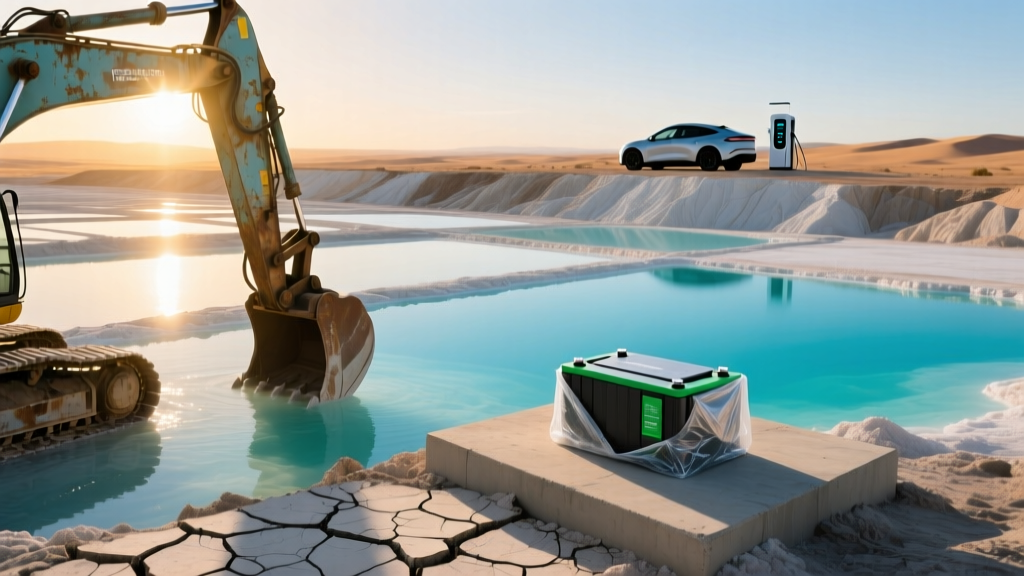
In the "lithium triangle" of Chile, Argentina, and Bolivia — which accounts for roughly half of global lithium production — miners pump lithium-rich salar brine from hundreds of feet underground into shallow evaporation ponds. The sun and dry climate evaporate the water over 12 to 24 months, concentrating lithium chloride until it can be processed into lithium carbonate or lithium hydroxide for battery cells.
The water here serves as the carrier medium. Lithium exists dissolved in the brine at concentrations of roughly 0.03% to 0.15%. Without pumping and evaporating massive volumes of brine, there's no economical way to concentrate the lithium. A single ton of lithium carbonate can require evaporating roughly 500,000 gallons of brine, according to USGS data.
Hard-Rock (Spodumene) Mining
In Australia — the world's largest lithium producer by volume — lithium is mined from spodumene ore in open-pit mines. Water is used for dust suppression, ore processing, and separating lithium-bearing rock from waste material. This method uses significantly less water per ton of lithium but requires more energy for crushing and roasting ore at ~1,070°C.
LFP vs NMC/NCA: The Chemistry Trade-Offs That Matter
Your battery's cathode chemistry determines energy density, cycle life, cold-weather behavior, cost, and — yes — how much lithium and other critical minerals are needed per kWh.
| Attribute | LFP (Lithium Iron Phosphate) | NMC / NCA (Nickel Manganese Cobalt / Nickel Cobalt Aluminum) |
|---|---|---|
| Energy Density | ~160–200 Wh/kg (cell level) | ~250–300 Wh/kg (cell level) |
| Cycle Life | 3,000–6,000+ cycles to 80% SoH | 1,000–2,500 cycles to 80% SoH |
| Cold Performance | Moderate — range loss ~30–40% at 20°F | Better — range loss ~20–30% at 20°F |
| Peak Charge Rate | Typically 150–250 kW DC | Typically 200–350 kW DC |
| Cobalt / Nickel | None (iron + phosphate) | Contains nickel, cobalt, or aluminum |
| Cost per kWh (2026) | ~$80–$100/kWh (cell) | ~$110–$140/kWh (cell) |
| Typical Use | Standard Range trims (Tesla Model 3/Y, Ford Mustang Mach-E Select) | Long Range / Performance trims |
Which is better? There's no universal winner. LFP wins on longevity, cost, and ethical sourcing (no cobalt). NMC wins on energy density — meaning more range in a lighter, smaller pack — and faster charging. If you plan to keep your EV 10+ years and charge at home, LFP's cycle-life advantage is significant. If you need maximum range for frequent road trips, NMC's density matters more.
How Long Do EV Batteries Actually Last?
The short answer: longer than most buyers assume. Data from fleet operators and long-term owner tracking shows that modern liquid-cooled battery packs routinely exceed 150,000–200,000 miles before reaching 80% of original capacity (the industry threshold for "end of life" in automotive use).
- Tesla Model 3/Y (NMC): ~5% capacity loss at 50,000 miles, ~8–10% at 100,000 miles, based on aggregated fleet data from Tesla's 2024 Impact Report.
- Tesla Model 3 RWD (LFP): ~2–4% loss at 50,000 miles; LFP's flatter degradation curve favors high-mileage owners.
- Hyundai Ioniq 5 (NMC, 77.4 kWh): Owners report ~6–8% loss at 60,000 miles with mixed DC fast-charging use.
- Nissan Leaf (passive air-cooled, older): 2013–2017 models showed 20–30% loss by 80,000 miles — a cautionary tale about thermal management.
The critical variable isn't just miles — it's thermal management. Every mainstream 2026 EV (Tesla, Hyundai/Kia, Ford, GM, Rivian, BMW, VW) uses active liquid cooling. This alone has dramatically slowed degradation compared to early passive-cooled packs.
What the Battery Warranty Actually Covers
Federal law mandates a minimum 8-year / 100,000-mile warranty on EV battery packs (California-emissions states extend this to 10 years / 150,000 miles). Here's how major manufacturers structure their coverage in 2026:
| Manufacturer | Warranty Term | Capacity Threshold | Notes |
|---|---|---|---|
| Tesla (Model 3/Y LFP) | 8 yr / 120,000 mi | 70% retention | LFP packs warrantied at same threshold as NMC |
| Tesla (Model 3/Y LR NMC) | 8 yr / 120,000 mi | 70% retention | Long Range and Performance trims |
| Hyundai / Kia | 10 yr / 100,000 mi | 70% retention | Among the longest calendar coverage |
| Ford (Mustang Mach-E, F-150 Lightning) | 8 yr / 100,000 mi | 70% retention | Components and capacity covered |
| GM (Ultium platform) | 8 yr / 100,000 mi | 70% retention | Covers Bolt EV/EUV, Equinox EV, Blazer EV, Silverado EV |
| Rivian | 8 yr / 175,000 mi | 70% retention | Highest mileage cap among major OEMs |
What's covered: Capacity loss below the threshold AND defects in materials/workmanship. What's typically excluded: Damage from accidents, flooding, unauthorized modifications, or using non-approved charging equipment. Normal degradation above the threshold (e.g., dropping from 100% to 75% over 8 years) is not a warranty claim — that's expected battery aging.
EV Battery Replacement Cost: What to Budget For
Most EV batteries outlast the vehicle's useful economic life. But if you're buying a used EV out of warranty or planning to keep a vehicle past 200,000 miles, replacement costs matter.
| Vehicle / Pack Size | Battery kWh | Replacement Cost Range | When Typically Needed |
|---|---|---|---|
| Tesla Model 3 RWD (LFP) | ~60 kWh | $8,000–$12,000 | Rarely before 200,000+ mi |
| Tesla Model Y LR (NMC) | ~75 kWh | $12,000–$16,000 | Rarely before 180,000+ mi |
| Hyundai Ioniq 5 (NMC) | 77.4 kWh | $11,000–$15,000 | Rarely before 170,000+ mi |
| Ford F-150 Lightning Ext. Range | 131 kWh | $18,000–$25,000 | Larger packs cost proportionally more |
| Chevrolet Equinox EV | ~85 kWh | $10,000–$14,000 | Ultium modular design may allow partial replacement |
Cell prices have continued declining — BloombergNEF reports pack-level prices averaging ~$115/kWh in late 2025, trending toward $100/kWh in 2026. That means replacement costs will keep falling. Additionally, GM's Ultium and some other platforms support module-level replacement — swapping individual failed modules rather than the entire pack — which can cut costs by 60–80%.
Factors That Accelerate (or Slow) Battery Degradation
Your charging and driving habits directly affect how quickly your pack loses capacity. Here are the factors ranked by impact, based on battery research and fleet data:
- Avoid sustained 100% SoC (NMC): For NMC/NCA packs, daily charging to 80% significantly reduces stress. LFP packs are an exception — manufacturers recommend periodic 100% charges for cell balancing and accurate SoC estimation.
- Limit DC fast charging to road trips: Occasional DCFC is fine; daily 250+ kW charging accelerates degradation by ~1–3% over 100,000 miles vs. Level 2 home charging. The heat generated at high C-rates is the culprit.
- Precondition before fast charging: Every modern EV preconditions the battery when you navigate to a charger. This brings cells to ~95–105°F for optimal charge acceptance and reduces lithium plating risk.
- Don't store at 0% or 100% for weeks: If leaving your EV for extended periods, set charge limit to ~50%. Calendar degradation accelerates at extreme SoC.
- Extreme heat is worse than extreme cold: Sustained ambient temps above 95°F with high SoC is the most damaging combination. Garage parking in hot climates pays dividends.
- Use regenerative braking normally: Regen doesn't meaningfully degrade the battery — it's well within normal charge/discharge parameters.
How to Check Your Battery's State of Health (SoH)
State of Health (SoH) is expressed as a percentage of your battery's current maximum capacity versus its original capacity. A new pack is 100% SoH; a pack that held 75 kWh when new but now holds 67.5 kWh is at 90% SoH.
How to check it:
- Tesla: No built-in SoH display, but you can calculate it by charging to 100% and comparing the displayed range to the original EPA figure. Third-party apps like Tessie or Teslamate log detailed battery data via the vehicle API.
- Hyundai/Kia: The EV battery health indicator is accessible through the infotainment engineering menu or via the Hyundai/Kia app on newer models.
- GM (Ultium): OnStar diagnostics and the myChevrolet/myCadillac apps report battery health metrics.
- OBD-II scanners: Devices like the OBDLink MX+ paired with apps such as EV Battery Health or Car Scanner can read SoH directly from the BMS (Battery Management System) on most EVs.
- Dealer diagnostic: Any authorized service center can run a full battery health report — request this during routine service or before buying a used EV.
What's Next: Solid-State, Silicon Anodes, and Beyond
Several next-generation battery technologies are in development, but realistic timelines matter:
- Solid-state batteries: Toyota, Samsung SDI, and QuantumScape target limited production in 2027–2029 vehicles. Promised benefits include 50%+ energy density improvement, 10-minute fast charging, and reduced flammability. However, manufacturing scale-up remains the major hurdle — expect solid-state in premium models first, with mainstream adoption likely post-2030.
- Silicon anode cells: Companies like Sila Nanotechnologies and Group14 are already shipping silicon-dominant anode materials to battery manufacturers. These increase energy density by 15–25% over graphite anodes and are appearing in select 2026 model-year cells. This is the most near-term improvement.
- Sodium-ion batteries: CATL and BYD are producing sodium-ion cells for lower-cost, shorter-range EVs (particularly in China). Sodium is far more abundant than lithium and requires no lithium mining at all — but energy density is ~30% lower than LFP, limiting use to city cars and fleet vehicles.
Frequently Asked Questions
How much water does lithium mining actually use per EV?
Estimates vary by extraction method. Brine extraction in South America uses roughly 65,000–500,000 gallons of brine per ton of lithium carbonate. A typical 75 kWh NMC pack contains roughly 8–10 kg of lithium, translating to an estimated 1,500–5,000 gallons of brine water per vehicle battery. Hard-rock mining uses significantly less water but more energy. USGS lithium data provides annual production and sourcing breakdowns.
Does lithium mining make EVs worse for the environment than gas cars?
Lifecycle analyses consistently show that even with mining impacts, EVs produce fewer total greenhouse gas emissions than comparable ICE vehicles over their lifetime — typically 50–70% fewer emissions in the US grid mix, per EPA lifecycle data. The mining footprint is real but front-loaded; an ICE vehicle's emissions are continuous and cumulative.
Can I recycle my EV battery?
Yes. Companies like Redwood Materials, Li-Cycle, and Ascend Elements recover 90–95% of critical minerals (lithium, nickel, cobalt, copper) from spent battery packs. Recycled lithium requires a fraction of the water and energy compared to virgin extraction. Several automakers (notably Tesla and Ford) have partnerships with recyclers to create closed-loop supply chains.
Is LFP safer than NMC in a crash?
LFP cells have a higher thermal runaway threshold (~518°F vs ~410°F for NMC), making them inherently more resistant to catastrophic thermal events. However, modern EV battery packs of both chemistries include extensive physical protection, firewalls, and cell-level fusing. Both chemistries achieve top NHTSA and IIHS safety ratings in their respective vehicles.
Should I be worried about the battery in a used EV?
Check the SoH before purchasing. A used EV with 60,000–80,000 miles and 90%+ SoH has substantial remaining life. Factor in remaining warranty coverage — a 2022 model with an 8-year warranty still has 4+ years of protection. Avoid early Nissan Leafs (2011–2017) with passive cooling unless the pack has been replaced; they show significantly higher degradation.