Lion Electric for Fleet Buyers: The Quick Verdict
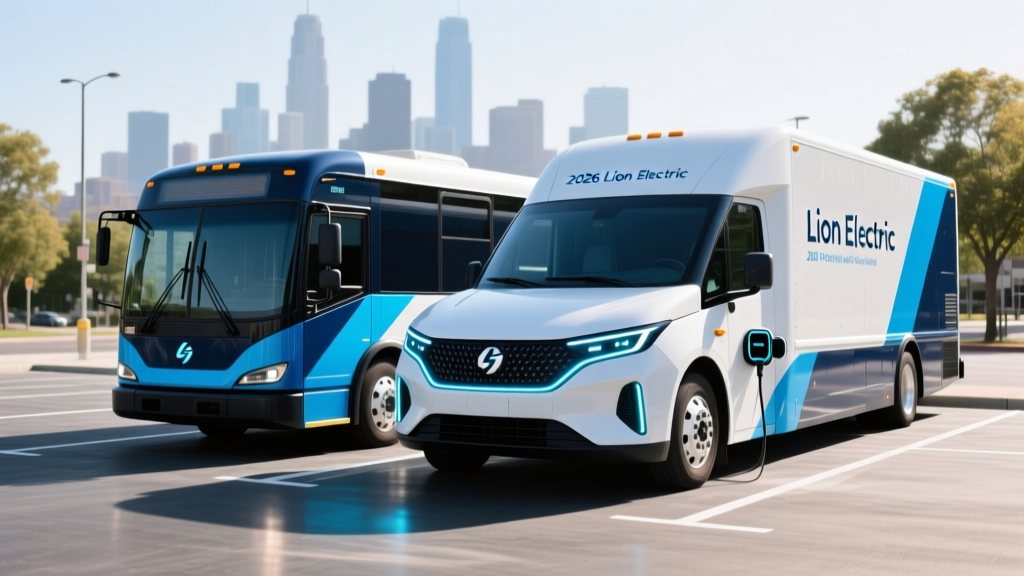
Is Lion Electric the right choice for your fleet in 2026? Lion Electric's LionC (Type C school bus) and Lion8 (Class 8 straight truck) are purpose-built battery-electric vehicles for depot-based routes under 150 miles. EPA-estimated range sits between 100 and 150 miles depending on battery pack configuration (up to ~210 kWh usable, LFP chemistry). Peak DC fast charging reaches 150 kW via CCS1, adding roughly 60-80 miles in 30 minutes. For fleets with predictable daily routes, overnight depot charging, and access to the EPA Clean School Bus Program or IRA commercial credits, Lion Electric offers a 5-year total cost of ownership (TCO) advantage of $40,000-$90,000 over diesel equivalents. However, buyers must budget $25,000-$60,000 per vehicle for Level 2 depot charging infrastructure and accept range limitations in extreme cold or hilly terrain.
Lion Electric Model Lineup: LionC, Lion8, and Lion6 Specs
Lion Electric, headquartered in Saint-Jérôme, Quebec, manufactures all-electric medium- and heavy-duty vehicles at its Joliet, Illinois facility. The company focuses exclusively on Class 5-8 commercial applications—no consumer vehicles. Here are the current production models for the 2026 model year:
| Spec | LionC (Type C Bus) | Lion8 (Class 8 Truck) | Lion6 (Class 6 Truck) |
|---|---|---|---|
| GVWR | 23,500 lbs | 33,000 lbs | 26,000 lbs |
| Battery Chemistry | LFP (Lithium Iron Phosphate) | LFP | LFP |
| Battery Capacity (usable) | 132-210 kWh | 168-252 kWh | 132-168 kWh |
| EPA Est. Range | 100-150 mi | 100-150 mi | 100-130 mi |
| Motor Output | 250 kW (335 hp) / 1,800 lb-ft | 300 kW (402 hp) / 2,500 lb-ft | 250 kW (335 hp) / 1,800 lb-ft |
| DC Fast Charge (peak) | 150 kW (CCS1) | 150 kW (CCS1) | 150 kW (CCS1) |
| Level 2 Charge Rate | 19.2 kW (J1772) | 19.2 kW (J1772) | 19.2 kW (J1772) |
| 10-80% DC Charge | ~70-90 min | ~80-110 min | ~65-85 min |
| Base MSRP (est.) | $250,000-$310,000 | $275,000-$340,000 | $230,000-$280,000 |
| Battery Warranty | 10 yr / unlimited mi | 10 yr / unlimited mi | 10 yr / unlimited mi |
Real-World Range Reality: Lion Electric publishes up to 150 miles of range on the LionC and Lion8 with the largest battery pack. In real-world fleet operations, expect 110-130 miles in moderate weather (55-75°F) on a flat urban route. Cold weather (below 20°F) can reduce range by 25-40%, dropping effective range to 75-100 miles. Hilly terrain and frequent HVAC use further reduce range. Always spec your battery pack for your worst-case route day, not your average day.
Total Cost of Ownership: Lion Electric vs. Diesel
The purchase price of a Lion Electric bus or truck is significantly higher than a diesel equivalent—a new diesel Type C school bus runs $100,000-$130,000, while the LionC starts around $250,000. However, the TCO equation shifts dramatically when you factor in fuel, maintenance, and available incentives over a typical 12-year fleet lifecycle.
| Cost Category | LionC Electric | Diesel Type C | 5-Year Difference |
|---|---|---|---|
| Vehicle Purchase | $280,000 | $115,000 | +$165,000 (EV) |
| EPA Clean School Bus Rebate | -$285,000 | $0 | -$285,000 (EV) |
| Fuel/Energy (5 yr) | $18,000 | $62,000 | -$44,000 (EV) |
| Maintenance (5 yr) | $8,500 | $28,000 | -$19,500 (EV) |
| Depot Charger Install | $35,000 | $0 | +$35,000 (EV) |
| Insurance (5 yr) | $22,000 | $18,000 | +$4,000 (EV) |
| Net 5-Year Cost | $75,500 | $223,000 | -$147,500 (EV saves) |
Key assumptions: Electricity at $0.12/kWh (commercial depot rate), diesel at $4.10/gallon, bus averaging 6 mi/gal (diesel) and 2.1 kWh/mi (electric). The EPA Clean School Bus Program rebate of up to $285,000 for zero-emission buses in priority districts is the single largest factor. Fleets that do not qualify for priority funding may receive $62,500-$125,000 instead, narrowing the savings gap. According to EPA's Clean School Bus Program, funding availability varies by application cycle and district priority status.
Depot Charging: What Fleets Must Plan For
Unlike consumer EVs that rely on public charging networks, Lion Electric vehicles are designed for depot-based charging—vehicles return to a central yard and charge overnight. This is both an advantage (predictable, no public charger reliability issues) and a challenge (significant infrastructure investment).
| Level | Power (kW) | Miles Added/Hour | Full Charge Time | Use Case |
|---|---|---|---|---|
| Level 2 (J1772) | 19.2 kW | ~8-10 mi/hr | 10-14 hours | Overnight depot (primary) |
| DC Fast (CCS1) | 150 kW peak | ~55-65 mi/hr (to 80%) | ~2-2.5 hours (full) | Mid-day opportunity charging |
| Component | Cost Range | Notes |
|---|---|---|
| Level 2 EVSE (19.2 kW, dual-port capable) | $4,000-$8,000 | Commercial-grade, networked |
| Electrical panel upgrade (if needed) | $5,000-$25,000 | 480V 3-phase service may require new transformer |
| Conduit, wiring, trenching (per stall) | $3,000-$12,000 | Distance from panel is the key variable |
| Permitting & utility interconnection | $2,000-$8,000 | Utility demand-charge negotiation recommended |
| Software/charge management | $500-$2,000/yr | Load balancing across multiple vehicles |
| Total per vehicle stall | $14,500-$55,000 | Average: ~$35,000 for first stall |
Critical consideration: Utility demand charges can make or break your electricity cost. Many commercial utilities charge peak demand rates of $10-$20/kW per month. If you plug in 10 buses simultaneously at 19.2 kW each, your peak demand jumps to 192 kW—potentially adding $2,000-$4,000/month in demand charges alone. Charge management software that staggers charging across off-peak hours is not optional; it's essential. Negotiate with your utility before installation.
Federal and State Incentives for Commercial EV Fleets
Lion Electric vehicles are eligible for several layers of incentive, but the rules differ significantly from consumer §30D tax credits:
- EPA Clean School Bus Program: Up to $285,000 per zero-emission school bus + $20,000 for charging infrastructure for priority districts (low-income, rural, tribal). Non-priority districts may receive $62,500-$125,000. Applications cycle annually. Source: epa.gov/cleanschoolbus
- IRA §45W Commercial Clean Vehicle Credit: Up to $40,000 for vehicles over 14,000 lbs GVWR. This credit applies to the business/fleet (not the manufacturer) and requires domestic final assembly. Lion's Joliet, IL plant qualifies. Income tax liability required—cannot exceed tax owed, but can be transferred to a dealer under 2026 rules.
- IRA §30C Alternative Fuel Infrastructure Credit: Up to $100,000 per item of charging equipment installed in eligible census tracts (low-income or non-urban). This applies to depot chargers.
- State/Local Programs: Vary widely. California's HVIP, New York's Truck Voucher Incentive, and utility-specific make-ready programs can add $20,000-$120,000 per vehicle. Check your state energy office and local utility.
Important caveat: These incentive programs have application deadlines, funding caps, and eligibility requirements that change annually. Work with Lion Electric's fleet specialists and a tax professional to confirm eligibility for your specific situation before committing to a purchase order.
Common Misconceptions About Lion Electric
| Myth | Fact |
|---|---|
| "Electric buses can't handle cold weather routes." | Range drops 25-40% below 20°F. LionC with the 210 kWh pack retains ~90-100 miles of range in extreme cold—sufficient for most school bus routes (avg. 30-60 mi/day). Battery preconditioning and electric cabin heating mitigate loss. |
| "The battery will need expensive replacement in 5 years." | Lion uses LFP chemistry, which typically retains 80%+ capacity after 3,000+ full cycles. At one cycle/day, that's 8+ years. Lion backs batteries with a 10-year warranty. LFP degrades more slowly than NMC but is heavier. |
| "Charging takes too long for fleet operations." | Overnight Level 2 charging (10-14 hours) fully replenishes the battery during non-operational hours. Most school buses sit 14-18 hours/day. Mid-day DC fast charging at 150 kW adds ~60 miles in 30 minutes for split-shift routes. |
| "Lion Electric is going out of business." | Lion faced financial restructuring in late 2024/early 2025, entering creditor protection and securing new investment. As of 2026, the company has resumed production at its Joliet facility under new ownership structure. Fleet buyers should verify current production lead times and parts availability before ordering. |
| "Any electrician can install depot chargers." | Commercial 480V 3-phase EVSE installation requires certified electricians experienced with heavy-duty charging. Utility coordination, load studies, and demand-charge negotiations are essential pre-installation steps. |
Decision Framework: Is Lion Electric Right for Your Fleet?
Choose Lion Electric if:
- Your routes are under 120 miles round-trip (or under 80 miles in cold climates)
- You have depot/facility access with available electrical capacity or willingness to upgrade
- Your fleet qualifies for EPA Clean School Bus priority funding or state incentive programs
- You operate in a jurisdiction with diesel idling restrictions or clean-air mandates
- You plan to hold vehicles 8-12+ years (maximizing fuel/maintenance savings)
- You value reduced noise pollution (critical for residential school bus routes)
Stick with Diesel or Consider Alternatives if:
- Your daily routes exceed 150 miles or lack predictable return-to-base patterns
- You operate in extreme cold (sustained below 0°F) with long rural routes
- You cannot access depot charging infrastructure (no yard, no electrical capacity, no utility cooperation)
- Your fleet turns over vehicles every 3-5 years (insufficient time to recoup higher upfront cost)
- You need immediate vehicle availability—Lion production lead times may extend 6-12 months post-restructuring
- You require extensive dealer service network coverage in rural areas (Lion's service network is growing but not yet national)
Consider a Hybrid/Electric Alternative from Blue Bird, IC Bus, or Thomas if:
- You want to pilot electrification on a subset of routes before full commitment
- Your utility offers no demand-charge mitigation or make-ready program
- You need a more established dealer/service network in your region
Frequently Asked Questions
What is the real-world range of a Lion Electric school bus?
The LionC with the largest 210 kWh battery pack carries an EPA-estimated 150 miles of range. In real-world fleet operations with mixed stops, HVAC use, and moderate weather, expect 110-130 usable miles. In sub-20°F conditions, plan for 75-100 miles. The average U.S. school bus route is 30-60 miles round-trip, so most routes fall well within capability—but always spec for your worst-case day.
How long does it take to charge a Lion Electric bus?
On a 19.2 kW Level 2 depot charger, a full charge from empty takes 10-14 hours depending on pack size—ideal for overnight charging. On a 150 kW DC fast charger (CCS1), you can reach 80% in approximately 70-90 minutes. Note that charge speed tapers significantly above 80% SoC to protect the LFP battery; the last 20% can take as long as the first 60%.
What does a Lion Electric bus cost after incentives?
A LionC with mid-range battery configuration lists around $280,000. After the maximum EPA Clean School Bus rebate ($285,000 for priority districts), the net vehicle cost can drop to near zero—though you must still budget for charging infrastructure ($15,000-$55,000 per stall). Non-priority districts receiving $125,000 would see a net vehicle cost around $155,000, still competitive with diesel over a 12-year lifecycle.
Is Lion Electric still in business in 2026?
Lion Electric underwent significant financial restructuring in 2024-2025, entering creditor protection proceedings in Canada and restructuring operations. As of 2026, the company has resumed limited production at its Joliet, Illinois manufacturing facility under revised ownership. Fleet buyers should confirm current production capacity, delivery timelines, warranty backing, and parts/service availability directly with Lion before placing orders. The restructuring does not affect existing vehicles in service, but long-term parts support should be verified.
How does Lion Electric compare to Blue Bird or Thomas electric buses?
Blue Bird's Vision Electric and Thomas Built's Saf-T-Liner C2 Jouley are direct competitors. Blue Bird uses a Cummins-powered electric drivetrain with CCS1 charging and similar 100-150 mile range. Thomas uses Detroit Diesel ePowertrain. Pricing is comparable ($250,000-$320,000 before incentives). Key differentiators: Lion was EV-native from inception (no ICE legacy platform), offers integrated telematics, and manufactures in Illinois. Blue Bird and Thomas have larger established dealer/service networks. Evaluate based on your local dealer support, route requirements, and incentive eligibility.
Do Lion Electric vehicles qualify for the federal §45W commercial tax credit?
Yes. The IRA §45W Commercial Clean Vehicle Credit provides up to $40,000 for qualified commercial clean vehicles with GVWR over 14,000 lbs. Lion's Joliet, IL final assembly satisfies the domestic assembly requirement. The credit is claimed by the fleet purchaser (not the manufacturer) and is subject to the buyer's tax liability. Consult a tax professional and reference IRS guidance on §45W for your specific situation.