The Bottom Line on the Lion Electric School Bus
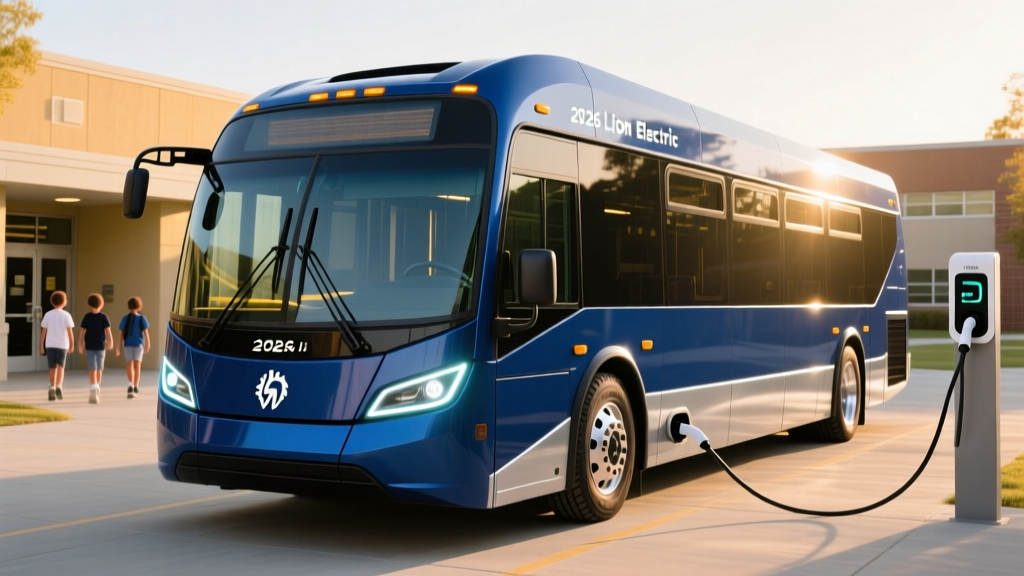
The Lion Electric LionC and LionD school buses deliver an EPA-estimated range of up to 155 miles on a single charge (210 kWh usable battery, NMC chemistry), with DC fast charging at up to 150 kW that can replenish 10–80% in approximately 75 minutes. Base pricing starts around $350,000 before incentives — roughly 3x the cost of a comparable diesel Type C bus — but per-mile energy costs run $0.14/mile versus $0.45+/mile for diesel, with the break-even point for most fleets arriving between years 6 and 9 depending on route length, electricity rates, and available grants.
School districts evaluating fleet electrification face a different calculus than individual EV buyers. Routes are predictable, daily mileage is capped, and depot charging is feasible. The Lion Electric school bus lineup — primarily the Type C LionC and Type D LionD — targets exactly this use case. Here's a data-driven breakdown of what districts and fleet managers need to know in 2026.
Lion Electric School Bus Specs: Range, Battery & Charging
| Spec | LionC (Type C) | LionD (Type D) |
|---|---|---|
| EPA-Estimated Range | Up to 155 miles | Up to 155 miles |
| Battery Capacity (Usable) | 210 kWh (NMC lithium-ion) | 210 kWh (NMC lithium-ion) |
| Battery Config Options | 2, 3, or 4 packs | 2, 3, or 4 packs |
| DC Fast Charge (Peak) | Up to 150 kW (CCS1) | Up to 150 kW (CCS1) |
| 10–80% DC Charge Time | ~75 minutes (4-pack) | ~75 minutes (4-pack) |
| Level 2 AC Charge Rate | Up to 19.2 kW | Up to 19.2 kW |
| Level 2 Full Charge Time | ~11 hours (4-pack) | ~11 hours (4-pack) |
| Motor Output | 250 kW (335 hp) | 250 kW (335 hp) |
| GVWR | 33,000 lbs | 36,000 lbs |
| Seating Capacity | Up to 72 passengers | Up to 84 passengers |
| Starting MSRP (approx.) | ~$350,000 | ~$375,000 |
Real-World Range Expectations
The EPA 155-mile figure assumes moderate conditions. In practice, fleet managers should budget for:
- Stop-and-go urban routes (summer): 130–145 miles effective range — regenerative braking recovers energy in traffic
- Highway-heavy rural routes (summer): 110–130 miles — sustained 55 mph speeds reduce efficiency
- Cold-weather operation (below 32°F): 85–110 miles — battery heating and cabin HVAC draw significant energy; Lion's thermal management system mitigates but doesn't eliminate the loss
- Cold + highway: As low as 75–90 miles — plan routes accordingly or spec the 4-pack configuration
Districts in northern climates should spec the maximum battery pack configuration and verify that all daily routes fall within 70% of cold-weather worst-case range to maintain a safety buffer.
Diesel vs. Electric School Bus: Cost Per Mile & TCO
The upfront cost gap is real. A new diesel Type C school bus costs roughly $110,000–$130,000, while the LionC starts near $350,000. That's a $220,000+ premium before incentives. The question is whether operational savings close the gap over a typical 12–15 year bus lifespan.
| Cost Factor | Diesel Type C Bus | LionC Electric Bus |
|---|---|---|
| Purchase Price | $115,000–$130,000 | $350,000+ |
| Fuel/Energy Cost Per Mile | $0.42–$0.55 (diesel at $3.80/gal, 6 mpg) | $0.12–$0.18 (at $0.12/kWh, ~2 kWh/mi) |
| Annual Fuel/Energy (12,000 mi/yr) | $5,040–$6,600 | $1,440–$2,160 |
| Annual Maintenance | $3,500–$5,000 (oil, filters, DEF, brakes, DPF) | $1,200–$2,000 (no oil, fewer brake replacements due to regen) |
| 12-Year Fuel/Energy Total | $60,480–$79,200 | $17,280–$25,920 |
| 12-Year Maintenance Total | $42,000–$60,000 | $14,400–$24,000 |
| 12-Year Total Operating Cost | $102,480–$139,200 | $31,680–$49,920 |
| Estimated Lifetime Battery Replacement | N/A | $0–$55,000 (if needed; warranty may cover) |
Net operating savings over 12 years: approximately $55,000–$105,000 per bus. This narrows the purchase premium but doesn't fully eliminate it without grants or incentives.
Grants, Incentives & Funding That Close the Gap
The financial case for the Lion Electric school bus hinges on stacking available incentives. Key programs in 2026:
- EPA Clean School Bus Program: Up to $345,000 per electric bus plus $20,000 for charging infrastructure — funded through the Bipartisan Infrastructure Law. Awards are competitive and allocated via lottery/application rounds. Check epa.gov/cleanschoolbus for current application windows.
- IRS §45W Commercial Clean Vehicle Credit: Up to $40,000 for qualified commercial electric vehicles over 14,000 lbs GVWR (which all Lion buses exceed). This is a business tax credit, not the consumer §30D credit. Districts that are tax-exempt entities may be eligible for direct-pay provisions under the IRA. Consult a tax professional — rules on transferability and direct pay for governmental entities have specific requirements per irs.gov.
- State & Utility Programs: Many states (California's HVIP, New York's Truck Voucher Incentive Program, Colorado's ALT Fuels Colorado) and local utilities offer $20,000–$150,000+ in additional per-bus incentives. Utility make-ready programs often cover a significant portion of depot charger installation costs.
- VW Environmental Mitigation Trust: Remaining funds in some states still subsidize electric school bus replacements, particularly in communities affected by the diesel emissions scandal.
When a district stacks EPA Clean School Bus funding ($345,000) with the §45W credit ($40,000) and a state incentive ($50,000–$100,000), the effective purchase price of a LionC can drop to $0–$50,000 — well below the cost of a new diesel bus.
Charging Infrastructure: What Depots Need
Charging a fleet of Lion Electric school buses is a commercial-grade electrical project, not a residential Level 2 installation. Here's what districts need to plan for:
Depot Charging Equipment
- Level 2 (overnight): 19.2 kW AC chargers are the workhorse. Each bus needs roughly 8–11 hours for a full charge — ideal for buses parked overnight at the depot. Budget $3,000–$6,000 per Level 2 pedestal plus installation.
- DC Fast Chargers (midday top-up): 60–150 kW CCS1 units for routes needing midday replenishment or high-utilization schedules. Budget $40,000–$120,000+ per DCFC unit depending on power level.
- Electrical service upgrades: A depot with 10 buses charging at 19.2 kW simultaneously draws ~192 kW — roughly equivalent to adding a small commercial building. Expect transformer upgrades, new switchgear, and potentially a utility service upgrade. Total depot electrical work can range from $50,000 to $500,000+ depending on existing service capacity.
Smart Charging & Managed Charging
Lion supports managed charging integration, allowing districts to stagger charge start times and limit peak demand. This is critical: unmanaged simultaneous charging can trigger utility demand charges of $10–$25/kW per month, adding thousands in annual costs. Smart scheduling that charges during off-peak utility hours (typically 10 PM–6 AM) cuts energy costs by 30–50% in time-of-use rate territories.
Battery Warranty, Degradation & Replacement
Lion Electric warrants its battery systems for 10 years or approximately 300,000 miles, guaranteeing a minimum of 70% state-of-health (capacity retention) over that period. NMC (nickel manganese cobalt) chemistry offers high energy density but is more susceptible to calendar degradation than LFP — though Lion's liquid thermal management system actively conditions the packs to slow degradation.
Real-world data from early LionC deployments (2019–2023 model years) suggests 3–5% annual degradation under typical school bus duty cycles, meaning a bus entering year 10 might retain 80–85% of original capacity. This aligns with the warranty threshold but means range will shrink from 155 miles to roughly 125–135 miles by the warranty's end — still adequate for most routes under 100 miles daily.
If a battery replacement is needed outside warranty, current estimates run $40,000–$55,000 for a full pack replacement. Lion also offers battery repurposing through its partnership programs, which can offset some end-of-life costs.
Common Misconceptions About Electric School Buses
| Myth | Fact |
|---|---|
| "Electric buses can't handle cold weather." | Range drops 25–40% in sub-freezing temps, but most school routes are 30–80 miles round-trip. With proper route planning and the 4-pack config, cold-weather operation is viable in most US climates. |
| "The batteries will need replacing every 5 years." | NMC packs with liquid thermal management show 3–5% annual degradation. Lion warranties them for 10 years at 70% SoH. Most packs outlast the bus chassis. |
| "Charging takes too long for school schedules." | Overnight Level 2 charging (8–11 hours) fits naturally into the 3 PM–7 AM depot window. Midday DC fast charging at 150 kW adds ~100 miles in 75 minutes for split-shift or activity runs. |
| "Electric buses cost more over their lifetime." | Without incentives, the TCO gap narrows but may not close. With EPA Clean School Bus + §45W + state grants, electric buses frequently achieve lower TCO than diesel from year one. |
| "V2G (vehicle-to-grid) will pay for the bus." | Lion has demonstrated V2G capability, but revenue from grid services is currently $500–$2,000/bus/year in pilot programs — helpful but not transformative. Don't build your financial case around V2G revenue in 2026. |
Decision Framework: Should Your District Go Electric?
If X, Then Y
- If your routes are under 100 miles round-trip and you have depot parking → The LionC/LionD is a strong fit. Overnight Level 2 charging handles daily needs. Prioritize EPA Clean School Bus Program applications.
- If your routes exceed 130 miles or include sustained highway segments → Spec the 4-pack battery and add one DC fast charger for midday top-up. Verify worst-case cold-weather range covers your longest route with a 20% buffer.
- If your district is in a cold climate (MN, ND, MT, ME) → Electric buses are viable but require conservative range planning. Budget for 40% winter range loss. Preconditioning while plugged in is essential — it uses grid power to warm the battery and cabin before departure, preserving range.
- If your depot electrical service is under 400A → Expect a utility upgrade. Contact your utility early — transformer lead times can run 12–18 months. Apply for utility make-ready programs to offset infrastructure costs.
- If you can't secure grant funding in year one → Consider a phased approach: start with 1–2 buses on your shortest routes, validate operations, then scale as incentive rounds open. The per-bus economics improve dramatically with grants.
- If your district operates split-shift or extracurricular routes totaling 150+ miles/day → A single LionC may not cover the duty cycle without midday DC fast charging. Evaluate whether a hybrid deployment (electric for AM/PM routes, diesel for activity buses) makes sense until DCFC infrastructure is in place.
Frequently Asked Questions
What is the real-world range of a Lion Electric school bus?
The EPA-estimated range is up to 155 miles with the 4-pack (210 kWh) configuration. In real-world conditions, expect 130–145 miles on urban stop-and-go routes in moderate weather, 110–130 miles on highway routes, and 85–110 miles in cold weather below 32°F. Route planning should use worst-case seasonal figures.
How long does it take to charge a Lion Electric school bus?
On a 19.2 kW Level 2 charger, a full charge takes approximately 11 hours — designed for overnight depot charging. On a 150 kW DC fast charger, 10–80% takes roughly 75 minutes. Note that DC charge rates taper significantly above 80% state of charge to protect battery health — the full 0–100% DC charge takes considerably longer.
Does the Lion Electric school bus qualify for the $7,500 consumer tax credit?
No. The §30D consumer tax credit applies to light-duty personal vehicles. School buses qualify for the §45W Commercial Clean Vehicle Credit (up to $40,000 for vehicles over 14,000 lbs GVWR) and the EPA Clean School Bus Program (up to $345,000 per bus). Tax-exempt governmental entities may access §45W via direct-pay election — consult a tax professional for eligibility details per current IRS guidance.
How does the LionC compare to the Blue Bird Vision Electric or Thomas Saf-T-Liner eC2?
The LionC competes directly with both. Blue Bird's Vision Electric offers a similar range (~150 miles) and comparable pricing. Thomas Built's eC2 uses a Detroit ePowertrain and offers up to 155 miles. Key differentiators include dealer/service network density in your region, available battery configurations, and V2G capability (Lion has been more aggressive in V2G pilot deployments). Request side-by-side quotes and evaluate local service support.
What maintenance does an electric school bus require?
Electric buses eliminate oil changes, diesel exhaust fluid (DEF), diesel particulate filter (DPF) regeneration, fuel filters, and most transmission service. Remaining maintenance includes tire rotation and replacement (EVs are heavier and can wear tires faster), brake inspection (regen braking extends pad life significantly — many fleets report 2–3x longer brake intervals), cabin air filters, coolant system checks for the battery thermal management loop, and standard suspension/steering component inspection. Expect annual maintenance costs of $1,200–$2,000 versus $3,500–$5,000 for diesel.
Can Lion Electric school buses do V2G (vehicle-to-grid)?
Yes — Lion has deployed V2G-enabled buses in pilot programs (notably with utilities in California and New York). V2G allows the bus battery to discharge back to the grid during peak demand events, generating revenue or demand-charge offsets. However, V2G infrastructure requires bidirectional chargers ($30,000–$80,000+ each), utility interconnection agreements, and careful battery-warranty review to ensure V2G cycling doesn't void coverage. In 2026, V2G remains a promising but nascent revenue stream — don't underwrite your bus purchase on V2G income alone.