Quick Answer: Should Your Fleet Go Lion Electric?
Lion Electric buses (the LionC school bus and Lion8 walk-in van) offer 100–155 miles of usable range, 150 kW DC fast charging, and dramatically lower per-mile fuel and maintenance costs versus diesel. However, base prices of $250,000–$350,000+ mean fleets need federal Commercial Clean Vehicle credits (up to $40,000 under IRC §45W), state HVIP-style vouchers, or EPA Clean School Bus grants to make the math work. They are best suited for predictable, depot-based routes under 120 miles with overnight Level 2 or DC charging access.
Lion Electric Buses at a Glance: The 2026 Lineup
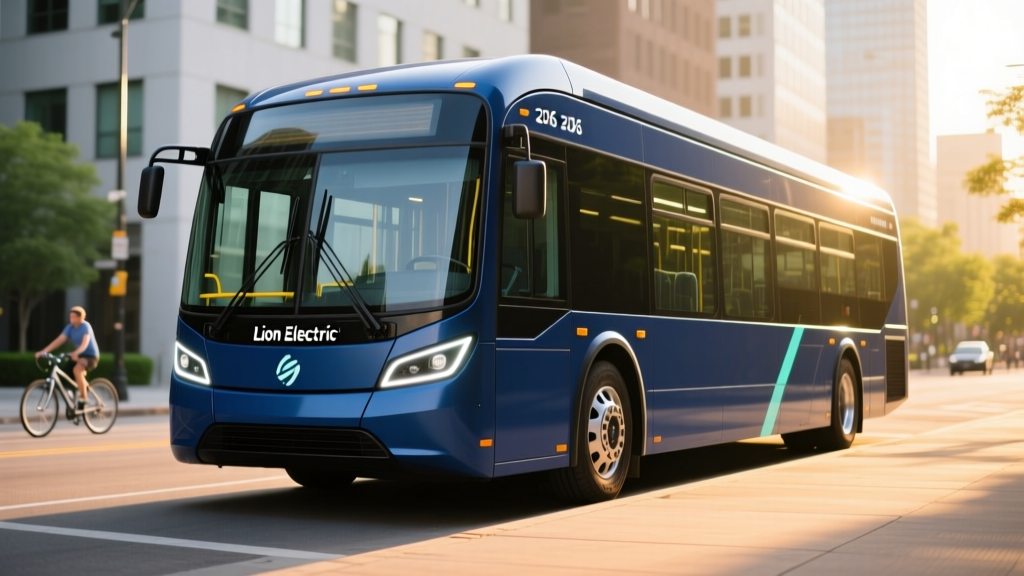
Lion Electric, the Quebec-based commercial EV manufacturer, builds battery-electric vehicles aimed squarely at fleet operators. While consumer EVs dominate headlines, Lion's bread and butter is the LionC (Type C school bus) and the Lion8 (Class 8 straight truck / walk-in delivery van). A city transit platform, the Lion's City E, rounds out the heavy-duty side. Here's how the core specs stack up for 2026 model-year production:
| Spec | LionC (School Bus) | Lion8 (Walk-In / Straight Truck) |
|---|---|---|
| GVWR Class | Class 7–8 (Type C) | Class 8 |
| Usable Battery | ~132–210 kWh (LFP) | ~210–315 kWh (LFP) |
| EPA / Advertised Range | 100–155 mi | 130–155 mi |
| Real-World Range (loaded, cold) | ~70–120 mi | ~90–125 mi |
| DC Fast Charge Peak | ~150 kW | ~150 kW |
| 10–80% DC Time | ~60–75 min | ~75–95 min |
| Level 2 (AC) Charge | 19.2 kW | 19.2 kW |
| Electric Motor Output | ~250 kW (335 hp) | ~250 kW (335 hp) |
| Base MSRP (approx.) | $250,000–$290,000 | $280,000–$350,000+ |
| Battery Warranty | 10 yr / performance guarantee | 10 yr / performance guarantee |
Source: Lion Electric LionC and Lion8 spec pages. Figures vary by battery-pack configuration and model year.
Real-World Range Reality Check
A LionC rated at 155 miles on paper will deliver closer to 110–130 miles on a mild-weather route with moderate stops. In sub-freezing temperatures with cabin heating running and a full 72-passenger load, expect 70–95 miles. Lithium iron phosphate (LFP) batteries handle cold better than NMC for longevity, but cold still saps range 25–40%. Plan routes to use no more than 75–80% of rated range to preserve a buffer for detours, HVAC, and battery health.
Lion Electric Buses vs Diesel: Cost & Efficiency Head-to-Head
The headline price of a LionC is roughly 2.5–3× that of a new diesel Type C school bus ($100,000–$130,000). But fleet procurement isn't about sticker price — it's about total cost of ownership (TCO) over a 12–15 year service life. Here's a 5-year TCO snapshot for a typical school bus running 12,000 miles/year:
| Cost Category (5 yr / 60,000 mi) | LionC (Electric) | Diesel Type C Bus |
|---|---|---|
| Purchase Price (after incentives) | $150,000–$210,000* | $110,000–$130,000 |
| Fuel / Electricity | $6,000–$10,500** | $27,000–$33,000*** |
| Maintenance (oil, filters, DPF, brakes) | $4,000–$7,000 | $15,000–$22,000 |
| Charging Infrastructure (amortized) | $8,000–$15,000 | $0 |
| Insurance | $18,000–$24,000 | $15,000–$20,000 |
| 5-Year TCO Estimate | $186,000–$266,500 | $167,000–$205,000 |
*After $40,000 IRC §45W credit + state voucher (e.g., California HVIP, New York Truck Voucher). **At $0.10–$0.175/kWh depot rate, ~2 kWh/mi. ***At $3.80–$4.50/gal diesel, ~5.5–6 mpg.
The electric bus wins decisively on fuel and maintenance — saving $20,000–$35,000 over five years — but the purchase price gap only closes with incentives. Without grants, the LionC TCO remains higher. With full incentives, TCO parity or advantage is achievable by year 5–7.
Efficiency: MPGe and kWh/Mile
The LionC averages roughly 1.8–2.2 kWh per mile depending on route topography and HVAC use. That translates to an equivalent of about 15–18 MPGe — far better than a diesel bus's 5–6 mpg. Regenerative braking on frequent-stop school routes recovers meaningful energy, making urban and suburban stop-and-go routes the electric bus's sweet spot.
Charging Lion Electric Buses: Depot Infrastructure Realities
Unlike consumer EVs, commercial electric buses demand purpose-built depot charging. Here's what fleet operators actually face:
| Charging Level | Power (kW) | Miles Added / Hour | Use Case |
|---|---|---|---|
| Level 2 (AC, J1772/CCS) | 19.2 kW | ~8–10 mi/hr | Overnight depot top-off |
| DC Fast (CCS1) | 50–150 kW | ~30–75 mi/hr | Mid-day opportunity / fast turnaround |
Depot Charging Install Costs
| Component | Per-Stall Cost Range | Notes |
|---|---|---|
| Level 2 EVSE (19.2 kW) | $3,000–$6,000 | Commercial pedestal mount |
| DC Fast Charger (60–150 kW) | $40,000–$90,000 | Hardware only, CCS1 |
| Electrical Service Upgrade | $15,000–$80,000+ | Transformer, switchgear, trenching |
| Permitting & Engineering | $5,000–$20,000 | Utility coordination, load study |
| Networked Software (per stall/yr) | $300–$600 | Charge management, scheduling |
| Total Per-Stall (Level 2) | $10,000–$25,000 | With panel work |
| Total Per-Stall (DC Fast) | $70,000–$150,000 | With utility upgrade |
Key insight: Most school bus fleets can run entirely on overnight Level 2 charging. A 132 kWh LionC charging at 19.2 kW gains a full charge in ~7 hours — perfect for an 8-hour overnight window. DC fast chargers are only necessary for split-shift operations or mid-day route recovery. Plan your depot electrical capacity for future fleet growth, not just today's first bus.
Federal & State Incentives: Making the Purchase Pencil Out
Commercial EV buyers do not qualify for the consumer §30D tax credit. Instead, fleets rely on:
- IRC §45W Commercial Clean Vehicle Credit: Up to $40,000 for vehicles over 14,000 lb GVWR. Must meet domestic content and final-assembly requirements. This is a business credit applied against tax liability or, for tax-exempt entities (school districts, municipalities), available as a direct payment from the IRS. IRS §45W details.
- EPA Clean School Bus Rebate Program: Up to $345,000 per zero-emission school bus plus $20,000 for charging infrastructure, prioritized for high-need, rural, and Tribal districts.
- State HVIP / Voucher Programs: California's Hybrid and Zero-Emission Truck and Bus Voucher Incentive Project, New York's Truck Voucher Incentive, and similar programs in Colorado, New Jersey, and others can stack $50,000–$175,000 per bus.
- Utility Make-Ready Programs: Many utilities cover 50–100% of depot electrical infrastructure costs for commercial EV adopters.
Common Misconceptions About Lion Electric Buses
| Myth | Fact |
|---|---|
| "Electric buses can't handle cold weather routes." | They can, but range drops 25–40% in sub-freezing temps. Fleets must spec larger battery packs or shorter winter routes. Lion's LFP packs and available battery thermal management mitigate degradation. |
| "The batteries will need replacing in 5 years." | LFP chemistry offers 3,000–5,000+ cycle life. Lion warranties batteries for 10 years with a guaranteed capacity retention floor (typically 70–80% SoH). Most packs outlast the bus chassis. |
| "There's no federal incentive for commercial EVs." | IRC §45W provides up to $40,000 per vehicle, and tax-exempt entities (schools, cities) can receive it as a direct IRS payment — no tax liability required. |
| "Charging takes too long for a school bus fleet." | Overnight Level 2 charging at 19.2 kW fully replenishes a LionC in ~7 hours — well within the typical 4 PM to 6 AM depot window. |
| "Electric buses cost more to insure." | Slightly true — premiums run 10–25% higher due to repair-cost uncertainty and battery replacement values. Factor this into TCO. |
Battery Chemistry & Longevity: Why Lion Uses LFP
Lion Electric has moved toward lithium iron phosphate (LFP) battery packs across its lineup. Here's why that matters for fleet buyers:
| Attribute | LFP (Lion's Choice) | NMC (Common Alternative) |
|---|---|---|
| Cycle Life | 3,000–5,000+ cycles | 1,000–2,500 cycles |
| Energy Density | Lower (heavier pack for same kWh) | Higher (lighter, more compact) |
| Thermal Stability | Excellent — lower fire risk | Good, but requires more active management |
| Cold-Weather Performance | Moderate range loss, slow cold charging | Better cold discharge, but faster degradation |
| Cost per kWh | Lower | Higher |
| Cobalt / Nickel | None | Contains both — supply-chain risk |
For a school bus that charges nightly and runs 12,000 miles/year, LFP is the pragmatic choice: longer life, lower cost, no cobalt supply-chain exposure, and better safety margins. The trade-off is weight and slightly lower range per kWh, which Lion compensates for by offering multiple pack sizes.
Battery Replacement Cost
If a pack does need replacement outside warranty, budget $80,000–$140,000 for a full LionC/Lion8 battery swap (parts + labor). However, with LFP's cycle life and a 10-year warranty, most fleet operators will retire or repower the chassis before facing an out-of-pocket replacement.
Decision Framework: Is a Lion Electric Bus Right for Your Fleet?
Choose Lion Electric If:
- Your routes are predictable and under 120 miles per shift
- You have depot access with overnight parking (8+ hours) for Level 2 charging
- You qualify for EPA Clean School Bus rebates, state vouchers, or §45W credits
- Your fleet runs frequent stop-and-go routes (maximizing regen braking savings)
- You want to eliminate diesel exhaust exposure for children / community health
- You plan to hold vehicles 10+ years (amortizing the higher upfront cost)
Stick With Diesel or CNG If:
- Your routes regularly exceed 150 miles per day or involve long highway segments
- You operate in extreme cold (below 0°F) without garage parking
- Your depot lacks the electrical capacity for charging infrastructure and utility upgrades are cost-prohibitive
- You need rapid fleet flexibility (diesel buses can be refueled in 10 minutes anywhere)
- Your budget cannot absorb higher upfront cost even with incentives
What First-Time Fleet EV Buyers Should Know
If your district or company is evaluating its first electric bus, these practical realities don't always appear in the sales brochure:
- Start with a pilot, not a full fleet conversion. Order 1–3 buses first, instrument them on your most representative routes, and measure actual kWh/mile and range before scaling.
- Engage your utility early. Depot charging upgrades can take 6–18 months for utility-side work (new transformer, service drop). Start the conversation before you order buses.
- Budget for charger management software. Smart scheduling (charging buses sequentially rather than simultaneously) can cut your peak demand charges by 30–50%.
- Train your maintenance team. Electric buses eliminate oil changes, DPF cleaning, and transmission service — but introduce high-voltage safety protocols, coolant system maintenance, and software diagnostics. Budget $3,000–$5,000 per technician for HV certification training.
- Track State of Health (SoH). Lion's telematics provides battery degradation data. Monitoring SoH quarterly lets you plan warranty claims proactively and adjust route assignments as packs age.
Lion Electric Company Outlook: Supply & Support Considerations
Lion Electric has faced financial headwinds, including a 2024 CCAA (Canadian insolvency) filing and subsequent restructuring. As of 2026, the company continues manufacturing and fulfilling orders, but fleet buyers should:
- Confirm current production lead times (historically 6–12 months)
- Verify parts availability and authorized service-center coverage in your region
- Consider extended warranty or service-level agreements as risk mitigation
- Check that your chosen configuration qualifies for §45W domestic-content requirements
Lion's North American manufacturing (Joliet, Illinois assembly) supports Buy America compliance for federally funded procurements — a meaningful advantage for school districts using EPA grant money.
FAQ: Lion Electric Buses
How far can a LionC school bus actually go on a single charge?
The LionC is rated for 100–155 miles depending on battery configuration. In real-world conditions — loaded with passengers, running HVAC, and driving a mixed suburban route — expect 90–130 miles in mild weather and 70–95 miles in winter. Plan routes to use no more than 80% of rated range.
How long does it take to charge a Lion Electric bus?
On a Level 2 charger at 19.2 kW, a full charge takes approximately 7–11 hours depending on pack size. On a 150 kW DC fast charger, 10–80% takes roughly 60–95 minutes. Most school bus fleets charge overnight on Level 2 and never need DC fast charging.
Do Lion Electric buses qualify for the $7,500 consumer EV tax credit?
No. The §30D consumer credit applies only to light-duty personal vehicles. Commercial buses qualify instead for the IRC §45W Commercial Clean Vehicle Credit (up to $40,000 per vehicle) and the EPA Clean School Bus Rebate Program (up to $345,000 for zero-emission school buses).
What happens if the battery fails?
Lion warranties its battery packs for 10 years with a guaranteed minimum State of Health (typically 70–80% capacity retention). If the pack degrades below the threshold within the warranty period, Lion covers repair or replacement. Out-of-warranty replacement costs $80,000–$140,000.
Can Lion Electric buses operate in extreme cold?
Yes, but with significant range reduction. Expect 25–40% less range below freezing. Lion offers battery thermal management to precondition packs during charging. Fleets in cold climates should spec larger battery packs and garage buses when possible to minimize cold-soak losses.
How does Lion compare to Blue Bird, Thomas, or IC Bus electric offerings?
Blue Bird's Vision Electric, Thomas Built's Saf-T-Liner C2 Jouley, and IC Bus's CE Series Electric are direct competitors with similar range (100–150 mi) and pricing ($250,000–$350,000). Lion differentiates with LFP chemistry, North American assembly, and integrated telematics. Evaluate based on dealer/service network in your region, incentive eligibility, and specific route-fit.