The Paradox: Brilliant Engineering, Brutal Balance Sheets
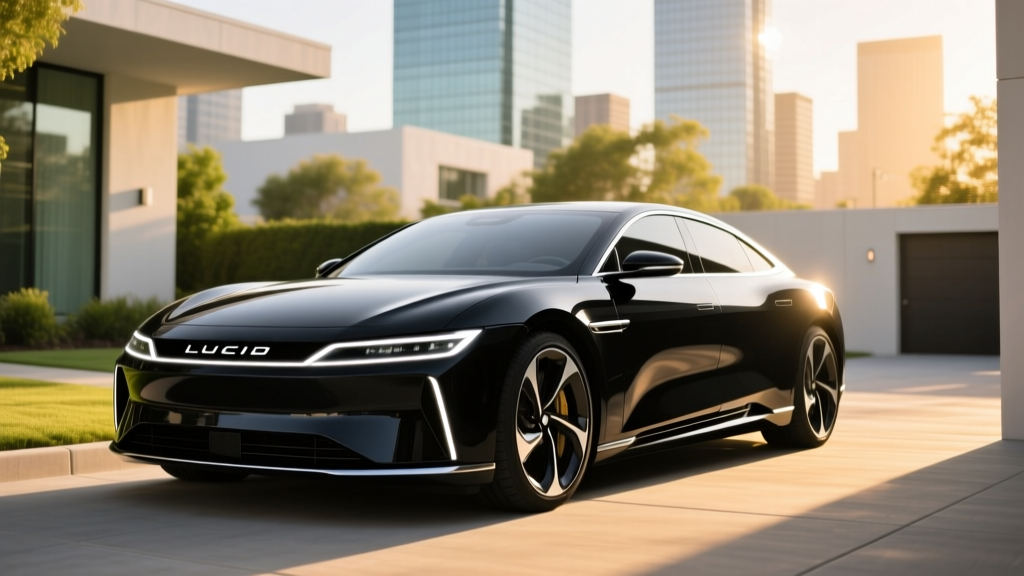
The Lucid Air remains one of the most technically impressive electric sedans ever built. With an EPA-verified range that outpaces every competitor, a 900-volt architecture enabling some of the fastest DC charging in production, and a powertrain that embarrasses supercars at stoplights, the Air is an engineering tour de force. Yet the headline shadowing every purchase decision is financial: Lucid faces extreme cash burn despite rising EV demand interest, raising legitimate questions about long-term parts availability, software support, and resale value for prospective buyers.
This review evaluates the 2026 Lucid Air lineup not just as a vehicle, but as a purchase decision in the context of Lucid Motors' financial reality. We'll cover every spec that matters — range, charging curves, real-world efficiency, tax-credit eligibility, and total ownership cost — so you can weigh the Air's undeniable merits against the risks of buying from a company still burning through billions in capital.
2026 Lucid Air: Core Specifications at a Glance
| Spec | Air Pure | Air Touring | Air Grand Touring |
|---|---|---|---|
| EPA Range | 419 mi | 425 mi | 516 mi |
| Battery (usable) | 88 kWh (NMC) | 112 kWh (NMC) | 112 kWh (NMC) |
| Drivetrain | RWD, single motor | AWD, dual motor | AWD, dual motor |
| Horsepower | 430 hp | 620 hp | 819 hp |
| 0–60 mph | 5.0 sec | 3.4 sec | 3.0 sec |
| Max DC Fast Charge | 220 kW | 250 kW | 270 kW |
| 10–80% DC Time | ~25 min | ~22 min | ~20 min |
| Level 2 Home Rate | 19.2 kW (~75 mi/hr) | 19.2 kW (~75 mi/hr) | 19.2 kW (~75 mi/hr) |
| Efficiency (combined) | 140 MPGe | 131 MPGe | 131 MPGe |
| kWh / 100 mi | 24 | 26 | 26 |
| Base MSRP | $69,900 | $87,400 | $125,600 |
| Federal §30D Credit Eligible? | No (MSRP cap exceeded) | No (MSRP cap exceeded) | No (MSRP cap exceeded) |
Sources: fueleconomy.gov, Lucid Motors official specifications. Pricing reflects 2026 model-year MSRP before destination charges.
Range and Real-World Efficiency: The Air's Strongest Argument
Air Grand Touring: EPA 516 mi → Expect ~420–450 mi highway (70–75 mph), ~350–380 mi in sub-freezing temperatures.
Air Touring: EPA 425 mi → Expect ~350–375 mi highway, ~290–320 mi in cold weather.
Air Pure: EPA 419 mi → Expect ~340–365 mi highway, ~280–310 mi in cold weather.
The Lucid Air Grand Touring's 516-mile EPA rating is not just the best in its class — it's the best of any production EV sold in the United States as of 2026. The secret lies in Lucid's obsessive efficiency engineering: the Air achieves roughly 4.6 miles per kWh in the Grand Touring trim, a figure that makes most competitors look wasteful by comparison. For context, the Tesla Model S Long Range returns approximately 3.8 mi/kWh.
Real-world results confirm the Air's advantage but require tempering. On a 75-mph highway loop in moderate temperatures (65–75°F), independent testing consistently shows the Grand Touring delivering 420–450 miles before requiring a charge — still exceptional, but roughly 13–18% below the EPA sticker. In winter conditions (25–35°F), expect a further reduction to approximately 350–380 miles, primarily due to cabin heating demands and increased battery internal resistance. The Air does not currently offer a heat pump on all trims, which can exacerbate cold-weather consumption compared to competitors like the BMW i5 or Mercedes EQS that include one standard.
The Air Pure and Touring trims, with smaller or differently tuned battery packs, deliver 419 and 425 EPA miles respectively — numbers that still beat most long-range EVs on the market. Efficiency figures hover around 24–26 kWh per 100 miles depending on trim, per fueleconomy.gov data.
Charging Speed: 900-Volt Architecture in Practice
| Charging Level | Power / Rate | Miles Added per Hour | Notes |
|---|---|---|---|
| Level 1 (120V) | 1.4 kW | ~5–6 mi/hr | Emergency/trickle only |
| Level 2 (240V, 80A) | 19.2 kW | ~75 mi/hr | Requires hardwired 100A circuit |
| Level 2 (240V, 48A) | 11.5 kW | ~45 mi/hr | Standard NEMA 14-50 outlet |
| DC Fast (peak, Grand Touring) | 270 kW | ~300 mi in 20 min (10–80%) | Requires 350-kW CCS station |
| DC Fast (peak, Touring) | 250 kW | ~250 mi in 22 min (10–80%) | Requires 350-kW CCS station |
| DC Fast (peak, Pure) | 220 kW | ~200 mi in 25 min (10–80%) | Requires 250+ kW CCS station |
The Air's 900-volt electrical architecture (compared to the more common 400V in most EVs, or 800V in the Hyundai Ioniq 5 and Porsche Taycan) enables genuinely rapid DC charging. The Grand Touring peaks at 270 kW on a sufficiently powerful CCS station, pulling a 10–80% charge in approximately 20 minutes under ideal thermal conditions.
However, charging-curve reality matters. The 270-kW peak is sustained only between roughly 10–40% state of charge (SoC). From 40–60%, the rate tapers to approximately 180–200 kW; from 60–80%, it drops further to 120–140 kW. This is normal lithium-ion behavior — protecting the NMC cells from lithium plating at higher SoC — but it means the full 10–80% time is longer than the peak kW figure alone would suggest. Preconditioning the battery via the navigation-routed charging feature is essential to achieving these speeds; arriving at a fast charger without preconditioning can add 5–10 minutes to your session.
At home, the Air's 19.2-kW onboard charger is among the fastest available, but it requires a hardwired Level 2 wall connector on a dedicated 100-amp circuit to achieve the full rate. Most residential electrical panels (typically 200A total) will need an upgrade or a load-management device to support this, adding $1,500–$3,500 to installation costs. On a more common 48-amp circuit (NEMA 14-50), the Air charges at 11.5 kW — still enough to fully replenish a Grand Touring overnight in roughly 10 hours.
The Air uses the CCS1 connector. Lucid has confirmed NACS (Tesla Supercharger) adapter support, allowing access to Tesla's network — a significant practical advantage given Supercharger reliability and coverage.
Performance and Driving Dynamics
The Lucid Air lineup spans a remarkable performance envelope. The base Pure, with 430 hp from a single rear motor, hits 60 mph in 5.0 seconds — quicker than most V6 sports sedans. The dual-motor Touring (620 hp, 3.4 seconds) enters genuine sports-car territory. And the Grand Touring, with 819 hp and a 3.0-second 0–60 time, competes directly with the Tesla Model S Plaid and Porsche Taycan Turbo S in straight-line acceleration, albeit at a slightly more relaxed pace than the Plaid's sub-2-second claim.
Where the Air distinguishes itself is not just acceleration but ride quality. The available air suspension delivers a genuinely luxurious, compliant ride that absorbs road imperfections with a sophistication the Model S has never matched. Steering is precise if slightly light, and the low center of gravity (battery pack under the floor) keeps body roll minimal through corners. This is a grand tourer in the truest sense — built for swallowing highway miles in silence and comfort rather than chasing lap times.
The Air's driver-assistance suite, branded DreamDrive Pro, includes adaptive cruise control, lane-centering, automatic emergency braking, and blind-spot monitoring. This is an SAE Level 2 system — meaning the driver must remain fully engaged and supervising at all times. It is not self-driving. Competent on highways, DreamDrive Pro is functional but does not match the polish or feature set of Tesla's Autopilot/FSD or GM's Super Cruise in hands-free operation. Lucid has not announced a hands-free highway driving feature as of early 2026.
Interior, Technology, and Practicality
The Air's cabin is a study in minimalist luxury. A sweeping 34-inch curved glass cockpit display dominates the dashboard, supplemented by a lower touchscreen for climate and secondary controls. The interface is responsive and visually crisp, though some owners report a learning curve with the lack of physical buttons for frequently used functions like fan speed or seat heating.
Space is generous for a sedan. Rear legroom measures approximately 36.5 inches — adequate for adults but tighter than the Mercedes EQS's limousine-like rear quarters. The trunk offers 22.1 cubic feet of cargo space (including the rear sub-trunk), and the frunk adds another 4.8 cubic feet, giving the Air a combined 26.9 cubic feet — competitive with midsize SUVs and far more practical than the Model S's 28 cu ft (no frunk in current models).
Notable tech features include:
- Over-the-air (OTA) updates that have added features and improved range post-delivery
- Surreal Sound Pro — a 21-speaker audio system with Dolby Atmos (optional on Touring, standard on Grand Touring)
- Phone-as-key with NFC backup card
- ProPILOT-style lane-change assist within DreamDrive Pro
Drawbacks worth noting: no heads-up display (a surprising omission at this price), no rear-seat entertainment screens, and the glass canopy roof — while stunning — can create significant cabin heat in direct summer sun, requiring heavy tinting or the optional shade panel.
Pricing, Tax Credits, and the Financial Risk Factor
| Trim | Base MSRP | As-Tested (typical options) | §30D Federal Credit | Effective Price |
|---|---|---|---|---|
| Air Pure | $69,900 | $72,500 | $0 (sedan MSRP cap is $55,000) | $69,900+ |
| Air Touring | $87,400 | $94,000 | $0 (sedan MSRP cap is $55,000) | $87,400+ |
| Air Grand Touring | $125,600 | $138,000 | $0 (sedan MSRP cap is $55,000) | $125,600+ |
Under current IRS §30D rules, the federal clean vehicle credit is capped at $55,000 MSRP for sedans. Every Lucid Air trim exceeds this threshold, meaning no Air variant qualifies for the $7,500 federal tax credit. Additionally, buyer income caps ($150,000 single / $300,000 joint AGI) and battery critical-mineral sourcing requirements further limit credit availability even for qualifying vehicles. Always consult a tax professional for your specific situation.
Some state incentives may apply — California's CVRP, for example, has offered rebates for higher-income brackets on a diminishing-funds basis — but these vary by jurisdiction and change frequently. Check your state's energy agency for current programs.
The Cash Burn Question: Should It Affect Your Purchase?
Lucid Motors reported cumulative losses exceeding $10 billion through 2025, with quarterly cash burn rates in the hundreds of millions. The company's majority backer, Saudi Arabia's Public Investment Fund (PIF), has repeatedly injected capital to keep operations running — a financial lifeline that provides some stability but also creates dependency on a single investor's appetite.
For buyers, the implications are real but nuanced:
- Parts and service: Lucid's service-center network remains limited compared to Tesla or legacy luxury brands. Wait times for body repair parts have been a consistent owner complaint.
- Resale value: Financial uncertainty depresses resale values. Early Air models have depreciated more steeply than the Model S or Taycan.
- Software and support: OTA updates continue, but the pace and ambition of new features may slow if capital tightens further.
- Warranty backing: Lucid's warranty is only as reliable as the company's longevity. The PIF's involvement mitigates this risk but does not eliminate it.
This is not a reason to categorically avoid the Air — but it is a factor that belongs in your decision matrix alongside range and performance.
Warranty Coverage
Lucid provides the following warranty coverage for the 2026 Air:
- Basic vehicle: 4 years / 50,000 miles
- Battery and drive unit: 8 years / 100,000 miles (capacity retention threshold: 70% of original)
- Corrosion: 12 years / unlimited miles
The 8-year/100,000-mile battery warranty is standard for the luxury EV segment. The 70% capacity-retention threshold means Lucid would replace or repair the battery if it degrades below 70% of its original capacity within the warranty period. Based on current NMC chemistry data, most EV batteries retain 85–90% capacity at 100,000 miles under normal use — so triggering this warranty should be uncommon.
Lucid Air vs. Key Competitors
| Attribute | Lucid Air GT | Tesla Model S LR | BMW i5 M60 | Mercedes EQS 580 |
|---|---|---|---|---|
| EPA Range | 516 mi | 402 mi | 295 mi | 371 mi |
| 0–60 mph | 3.0 sec | 3.1 sec | 3.7 sec | 4.1 sec |
| Peak DC Charge | 270 kW | 250 kW | 205 kW | 200 kW |
| Base MSRP | $125,600 | $79,990 | $84,100 | $104,400 |
| Service Network | Limited | Extensive | Extensive | Extensive |
| §30D Credit Eligible | No | No (MSRP cap) | No (MSRP cap) | No (MSRP cap) |
The Air Grand Touring wins on range and charging speed decisively. But the Model S offers a far more mature service infrastructure and Supercharger access (now available to the Air via adapter). The BMW i5 trades range for a more traditional luxury experience and dealer network. The EQS offers superior rear-seat comfort but falls behind on efficiency and driving engagement.
Pros and Cons
- Best-in-class EPA range (516 mi Grand Touring)
- Outstanding efficiency (4.6 mi/kWh)
- 900V fast-charging architecture
- Spacious cabin with large frunk + trunk
- Supple air-suspension ride quality
- Strong OTA update track record
- No federal tax credit eligibility (MSRP cap)
- Limited service-center network
- Company cash burn creates long-term risk
- No hands-free driving feature (Level 2 only)
- No heads-up display at this price point
- Steeper depreciation than established luxury rivals
Who Should Buy the 2026 Lucid Air?
Choose the Lucid Air if: You prioritize maximum range above all else, regularly drive 300+ mile routes where charging stops are a friction point, value efficiency as an engineering principle, and are comfortable accepting the financial risk of a younger automaker backed by sovereign wealth.
Choose a competitor if: You need a robust local service network, want hands-free highway driving (GM Super Cruise), prefer the security of an established luxury brand's resale trajectory, or need to stay under the §30D MSRP cap for tax-credit eligibility (look at the Hyundai Ioniq 6 or Tesla Model 3 for credit-eligible sedans).
The Air is ideal for high-mileage commuters, frequent road-trippers, and efficiency-minded buyers who find the Model S's interior wanting and the EQS's driving dynamics too soft. It's less suited for buyers who prioritize service convenience, resale certainty, or who cannot absorb the risk of ownership from a financially unproven company.
Frequently Asked Questions
What is the real-world range of the 2026 Lucid Air?
The Air Grand Touring delivers approximately 420–450 miles on the highway at 70–75 mph in moderate temperatures, and 350–380 miles in sub-freezing conditions. The EPA sticker reads 516 miles, but real-world consumption — especially at sustained highway speeds and in cold weather — reduces that figure by 13–30% depending on conditions. Still best-in-class.
How fast does the Lucid Air charge at home and on the road?
On a 350-kW DC fast charger, the Grand Touring peaks at 270 kW and charges from 10–80% in approximately 20 minutes (with battery preconditioning). At home on a hardwired 80-amp Level 2 station, the Air charges at 19.2 kW, adding roughly 75 miles of range per hour — fully replenishing the Grand Touring overnight. On a standard 48-amp outlet, expect 11.5 kW and ~45 mi/hr.
Does the Lucid Air qualify for the federal EV tax credit?
No. Under current IRS §30D rules, sedans must have an MSRP at or below $55,000 to qualify. The cheapest Air (Pure at $69,900) exceeds this by nearly $15,000. Buyer income limits and battery-sourcing requirements add further restrictions even for qualifying vehicles. Consult a tax professional for your specific eligibility.
Is the Lucid Air worth buying given the company's financial situation?
The Air is objectively one of the best-engineered EVs available. The risk is not the car — it's the company. Lucid's majority ownership by Saudi Arabia's PIF provides a significant financial backstop, but parts availability, service-network expansion, and resale value remain legitimate concerns. If you can accept these risks and have access to alternative transportation for potential service delays, the Air's range and efficiency are unmatched.
What are the biggest pros and cons of the Lucid Air?
Pros: class-leading 516-mile range, exceptional efficiency, fast 270-kW DC charging, spacious and luxurious cabin, strong performance. Cons: no federal tax credit, limited service infrastructure, company financial risk, no hands-free driving feature, steep depreciation, no heads-up display.
How does the Lucid Air compare to the Tesla Model S?
The Air Grand Touring offers 114 more miles of EPA range and faster peak charging than the Model S Long Range, with a more luxurious interior and better ride quality. The Model S counters with a vastly larger service network, access to native Supercharger infrastructure (though the Air now supports it via NACS adapter), a more mature software ecosystem, and stronger brand recognition for resale purposes. Price is also a factor: the Model S LR starts at $79,990 vs. the Air GT's $125,600.