Quick Answer: Is the Lion Electric Bus Right for Your Fleet?
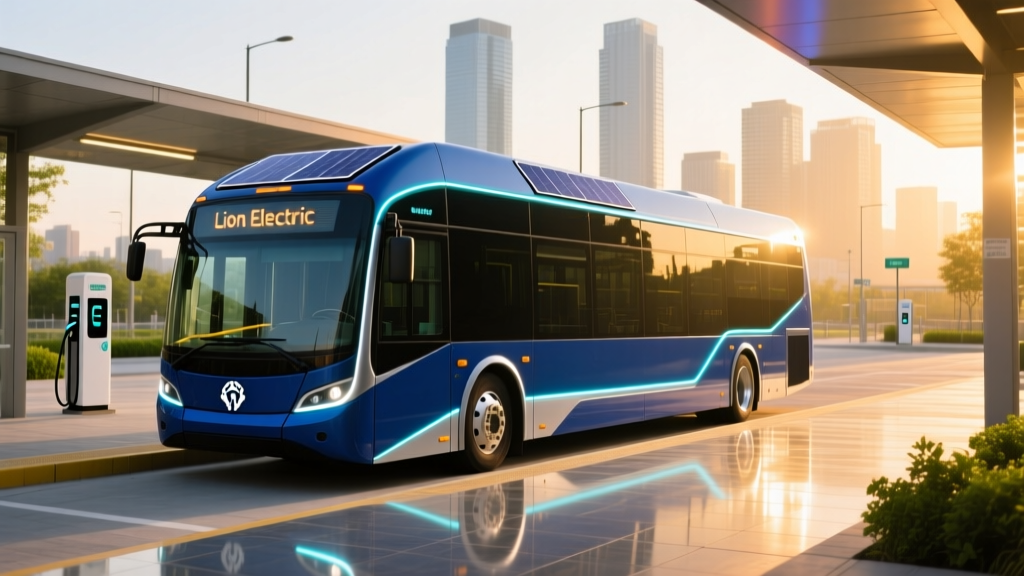
The LionC electric school bus from Lion Electric is a purpose-built, Type C battery-electric school bus designed for fixed daily routes under 130 miles. With a base price in the $350,000–$400,000 range before incentives, it costs roughly 2–3× more upfront than a comparable diesel Type C bus (~$120,000–$150,000). However, total cost of ownership (TCO) over 12–15 years can break even or favor the LionC thanks to dramatically lower fuel and maintenance costs — particularly when federal EPA Clean School Bus Program grants, state vouchers (like California's HVIP), or utility make-ready incentives are applied. Real-world range is typically 100–130 miles on a full charge, making it best suited for urban, suburban, and shorter rural routes with overnight depot charging.
LionC Electric School Bus: Core Specs at a Glance
The LionC has been in production since 2021 and has accumulated significant real-world fleet data. Here are the key specifications for the current-generation LionC as available for 2026 model-year orders:
| Specification | Value |
|---|---|
| Vehicle Type | Type C School Bus (battery-electric) |
| Passenger Capacity | Up to 71 passengers (standard); 77 (max config) |
| Battery Capacity | ~155 kWh usable (LFP chemistry, multi-pack configuration) |
| EPA / Advertised Range | Up to 150 miles (ideal conditions) |
| Real-World Range (mixed route) | 100–130 miles (loaded, moderate climate) |
| Cold-Weather Range (below 20°F) | ~70–95 miles (cabin heating + battery conditioning) |
| AC Level 2 Charging | 19.2 kW (J1772 / CCS1 connector) |
| DC Fast Charging (optional) | Up to 50 kW CCS1 (10–80% in ~2.5 hours) |
| Level 2 Full Charge Time | ~8–10 hours (overnight depot charging) |
| Electric Motor Output | ~200 kW (~268 hp); ~1,500 lb-ft torque |
| GVWR | ~33,000 lbs (Class 7/8) |
| Base MSRP (estimated) | $350,000–$400,000 (varies by battery config & options) |
| Battery Warranty | Typically 5 years / unlimited miles or performance guarantee (varies by contract) |
Key chemistry note: Lion Electric uses LFP (lithium iron phosphate) battery cells in the LionC. LFP trades some energy density for significantly longer cycle life (often 3,000+ cycles to 80% state of health), better thermal stability, and no cobalt or nickel. For a school bus that charges daily and runs predictable routes, LFP is an excellent fit — the battery is likely to outlast the vehicle's service life in most fleet applications.
Electric Bus vs. Diesel Bus: The Cost Comparison That Matters
The headline price difference is stark, but fleet purchasing decisions hinge on total cost of ownership (TCO) over the vehicle's service life — typically 12–15 years and 150,000–200,000 miles for a school bus.
| Cost Category | LionC Electric Bus | Diesel Type C Bus |
|---|---|---|
| Purchase Price | $350,000–$400,000 | $120,000–$150,000 |
| Federal / State Incentives | Up to $375,000 (EPA Clean School Bus); state vouchers (e.g., HVIP $100K–$200K) | None or minimal |
| Effective Purchase Price (with incentives) | $0–$200,000 (varies widely) | $120,000–$150,000 |
| Fuel/Energy Cost per Mile | $0.15–$0.25/mile (electricity at $0.10–$0.15/kWh) | $0.50–$0.75/mile (diesel at ~$4.00/gal, 6 mpg) |
| Annual Fuel/Energy (12,000 mi/yr) | $1,800–$3,000 | $6,000–$9,000 |
| Annual Maintenance | $1,500–$2,500 (no oil, filters, DEF, fewer brakes) | $5,000–$8,000 (oil, filters, DEF, DPF, brakes, transmission) |
| 15-Year Fuel/Energy Total | $27,000–$45,000 | $90,000–$135,000 |
| 15-Year Maintenance Total | $22,500–$37,500 | $75,000–$120,000 |
| Estimated 15-Year TCO (no incentives) | $399,500–$482,500 | $285,000–$405,000 |
| Estimated 15-Year TCO (with $250K incentives) | $149,500–$232,500 | $285,000–$405,000 |
The takeaway: Without incentives, the LionC's TCO is competitive with or slightly higher than diesel over 15 years. With incentives — which are widely available for school bus electrification — the LionC can deliver significant lifetime savings of $100,000–$200,000+ per bus. The EPA's Clean School Bus Program has been the single largest funding source, offering up to $375,000 per electric bus for qualifying school districts (priority given to high-needs, rural, and Tribal districts).
Charging Infrastructure: What Depot Charging Actually Requires
School buses don't need public charging networks. They return to a depot every afternoon and sit for 12–16 hours — ideal for overnight Level 2 charging. Here's what a depot charging setup looks like:
Level 2 Depot Charging (Standard)
- Power per charger: 19.2 kW (240V, 80A circuit)
- Charge time (0–100%): ~8–10 hours for a 155 kWh battery
- Infrastructure per stall: Dedicated 100A panel circuit, hardwired EVSE (e.g., ChargePoint CPF50, Blink HQ 200, or similar commercial units)
- Equipment cost per charger: $3,000–$7,000 (commercial-grade Level 2)
- Electrical installation per stall: $5,000–$15,000 (conduit, wiring, panel work)
DC Fast Charging (Optional Supplement)
- Power: Up to 50 kW CCS1
- Use case: Mid-day top-ups for double-route buses, split-shift operations, or opportunity charging
- Equipment cost: $25,000–$50,000+ per 50 kW charger
- Installation: $15,000–$40,000+ (may require utility transformer upgrade)
Utility make-ready programs are a critical cost offset. Many utilities (Con Edison, PG&E, National Grid, Xcel Energy, and others) cover or subsidize the electrical infrastructure on the utility side of the meter — trenching, transformers, switchgear — which can represent 50–70% of total depot charging installation costs. Contact your utility's transportation electrification department early in the planning process.
For a 10-bus fleet, expect total depot charging infrastructure costs of $80,000–$250,000 before utility make-ready support, depending on site electrical capacity, trenching distance, and whether DC fast chargers are included.
Real-World Range: What Fleets Actually Experience
The LionC's advertised 150-mile range assumes moderate temperatures, flat terrain, a partially loaded bus, and conservative driving. Real-world fleet operators report a different picture depending on conditions:
LionC Real-World Range Expectations
- Mild weather (50–80°F), suburban route, half-loaded: 120–140 miles
- Hot weather (90°F+) with A/C, full load: 100–120 miles
- Cold weather (below 20°F) with cabin heat, full load: 70–95 miles
- Hilly terrain, aggressive driving, full load: 90–110 miles
Cold weather is the primary range limiter. LFP batteries are more sensitive to low temperatures than NMC, and electric cabin heating (resistance or heat pump, depending on spec) draws significant energy. Fleets in northern climates should plan routes conservatively — assume 75–80% of rated range in winter.
Regenerative braking provides meaningful range recovery on stop-and-go school routes. The LionC's regen system recaptures energy during frequent stops, which is where school buses spend much of their operating time. Highway-heavy routes will see lower efficiency.
Common Misconceptions About Electric School Buses
| Myth | Fact |
|---|---|
| "Electric buses can't handle cold weather." | They can, but range drops 25–40% in extreme cold. Route planning and pre-conditioning while plugged in mitigate this. Fleets in Minnesota, Vermont, and Quebec operate electric buses year-round. |
| "The batteries will need replacing in 5 years." | LFP batteries in the LionC are designed for 3,000+ charge cycles. At one cycle per day, that's 8+ years before reaching 80% capacity. Many fleets expect the battery to outlast the bus body. |
| "Charging takes too long for school routes." | Overnight Level 2 charging (8–10 hours) is standard and fits the school bus duty cycle perfectly — buses are parked 12–16 hours daily. DC fast charging is available for split-shift operations. |
| "There are no incentives available." | The EPA Clean School Bus Program, state voucher programs (HVIP in CA, NYTVIP in NY, etc.), utility rebates, and VW settlement funds collectively can cover $100,000–$375,000+ per bus. Check epa.gov/cleanschoolbus for current funding rounds. |
| "Electric buses are less safe than diesel." | LFP chemistry is among the safest lithium-ion chemistries (no thermal runaway risk comparable to NMC). The LionC meets all FMVSS school bus safety standards. Electric drivetrains also eliminate diesel particulate exposure for children. |
| "You need a DC fast charger for every bus." | Most school bus fleets operate exclusively on overnight Level 2 charging. DC fast chargers are only needed for specific operational patterns (split shifts, mid-day top-ups). |
Incentives and Funding: Stacking the Deck
The economics of electric school buses hinge on incentive stacking. Here are the primary funding sources available as of 2026:
- EPA Clean School Bus Program: Up to $375,000 per electric bus (plus up to $20,000 for charging infrastructure). Priority for high-needs, rural, and Tribal school districts. Funded through the Bipartisan Infrastructure Law with allocations through 2026. Check current availability at epa.gov/cleanschoolbus.
- State voucher programs: California's HVIP ($100,000–$200,000+ per bus), New York's NYTVIP, New Jersey, Colorado, and others offer significant point-of-sale vouchers. Availability and amounts vary by state and funding cycle.
- VW Environmental Mitigation Trust: Remaining funds from the Dieselgate settlement are allocated to school bus replacement in many states, with bonuses for electric replacements in disadvantaged communities.
- Utility make-ready programs: Cover electrical infrastructure costs on the utility side of the meter. Can save $50,000–$200,000+ on depot charging buildout for a multi-bus fleet.
- IRS §45W Commercial Clean Vehicle Credit: Up to $40,000 for qualified commercial clean vehicles (GVWR over 14,000 lbs). Note: this is the commercial equivalent of the consumer §30D credit and applies to fleet purchases. Check eligibility with a tax professional and reference IRS guidance on §45W.
Critical note on incentives: Funding availability changes frequently. EPA Clean School Bus funds are distributed in rounds and may be fully allocated. State programs have application windows and budget cycles. Always verify current availability with the administering agency before building a financial case around a specific incentive amount.
Decision Framework: Should Your Fleet Go Electric?
Choose the LionC Electric Bus If:
- Your routes are under 130 miles round-trip (or under 90 miles in cold climates)
- You have depot parking with access to electrical infrastructure (or utility make-ready support)
- You qualify for significant incentives (EPA Clean School Bus, state vouchers, utility rebates)
- You plan to operate the bus for 12+ years (to capture full TCO savings)
- You want to eliminate diesel exhaust exposure for students and drivers
- Your district has sustainability or emissions-reduction mandates
- You operate in a state with strong incentive programs (CA, NY, NJ, CO, WA, MA)
Stick with Diesel or Consider a Hybrid Alternative If:
- Your routes regularly exceed 150 miles (long rural routes, activity/field trips)
- You lack depot parking or electrical infrastructure with no utility make-ready support available
- No meaningful incentives are available in your state or district
- You need buses that can refuel in 10 minutes for multi-shift or emergency operations
- Your fleet turnover cycle is under 8 years (insufficient time to recoup higher upfront cost)
- You operate in extreme cold climates (regularly below 0°F) with routes near the range limit
First-Time EV Fleet Buyer Checklist
If this is your district's first electric school bus, here's what to plan for beyond the vehicle itself:
- Route analysis: GPS-log every route for at least 2 weeks to get actual daily mileage, elevation profiles, and stop frequency. Add a 20% buffer for cold weather and detours.
- Utility engagement: Contact your utility's EV/transportation team 12–18 months before bus delivery. Site assessments, make-ready applications, and electrical upgrades take time.
- Depot electrical assessment: Hire an electrical engineer to evaluate your depot's panel capacity, transformer sizing, and conduit pathways. A 10-bus Level 2 depot may need 200+ amps of dedicated capacity.
- Charger procurement: Order commercial EVSE 6–9 months ahead. Supply chain lead times for commercial chargers can be significant.
- Driver and mechanic training: Lion Electric offers training programs. Drivers need to understand regen braking, range management, and pre-conditioning. Mechanics need high-voltage safety certification.
- Telematics and fleet management: Use Lion's Lion360 telematics or a third-party platform to monitor state of charge, energy consumption per route, and battery health in real time.
- Incentive applications: Apply for EPA, state, and utility incentives 12–24 months before planned purchase. Funding rounds are competitive and time-limited.
Frequently Asked Questions
How long does the LionC battery last before replacement?
LFP batteries in the LionC are rated for 3,000+ charge cycles to 80% state of health. At one full cycle per day, that translates to approximately 8–10 years before significant degradation. In practice, many fleets will retire or repurpose the bus body before the battery reaches end-of-life. Lion Electric typically provides a battery performance warranty (exact terms vary by contract year — confirm with your dealer).
Can the LionC handle highway speeds and hilly routes?
Yes. The LionC has a governed top speed appropriate for school bus operation (typically 65 mph) and its 200 kW motor provides strong hill-climbing ability. However, sustained highway speeds and steep grades increase energy consumption significantly. Plan for 20–30% range reduction on hilly or highway-heavy routes compared to flat suburban stop-and-go routes.
What happens if a LionC runs out of charge on a route?
This is a fleet management failure, not a vehicle limitation. Proper route analysis, telematics monitoring, and conservative range planning prevent this. If it does happen, the bus would need to be towed to a charger — there is no quick roadside refueling option as with diesel. Most fleet operators set a 20% state-of-charge minimum threshold with telematics alerts.
How does the LionC compare to other electric school buses?
Primary competitors include the Blue Bird Vision Electric, Thomas Built Saf-T-Liner C2 Jouley, and the IC Bus CE Series Electric. The LionC was an early mover with a purpose-built EV platform (not a converted diesel chassis), which gives it packaging and weight distribution advantages. Range, pricing, and charging speeds are broadly similar across competitors. Fleet operators should evaluate dealer support, service network proximity, and telematics platforms alongside vehicle specs.
Does the LionC qualify for the federal EV tax credit?
The consumer §30D credit does not apply to school buses. However, the §45W Commercial Clean Vehicle Credit provides up to $40,000 for qualified commercial vehicles over 14,000 lbs GVWR. Eligibility depends on battery sourcing requirements and other criteria. Consult a tax professional and review current IRS §45W guidance. The EPA Clean School Bus Program grants are typically more impactful for school districts (which are often tax-exempt and cannot directly use tax credits).
What's the annual insurance cost for a LionC electric bus?
Insurance premiums for electric school buses are generally 10–20% higher than diesel equivalents due to higher vehicle replacement cost and specialized repair requirements. Expect $3,000–$6,000/year per bus depending on district claims history, location, and coverage levels. Some insurers offer discounts for fleet safety telematics data.
Sources: Lion Electric official specifications, EPA Clean School Bus Program, IRS Commercial Clean Vehicle Credit (§45W). Incentive amounts and availability are subject to change — verify current program details with administering agencies.