Quick Answer: Is the Lincoln Navigator EV Worth Waiting For?
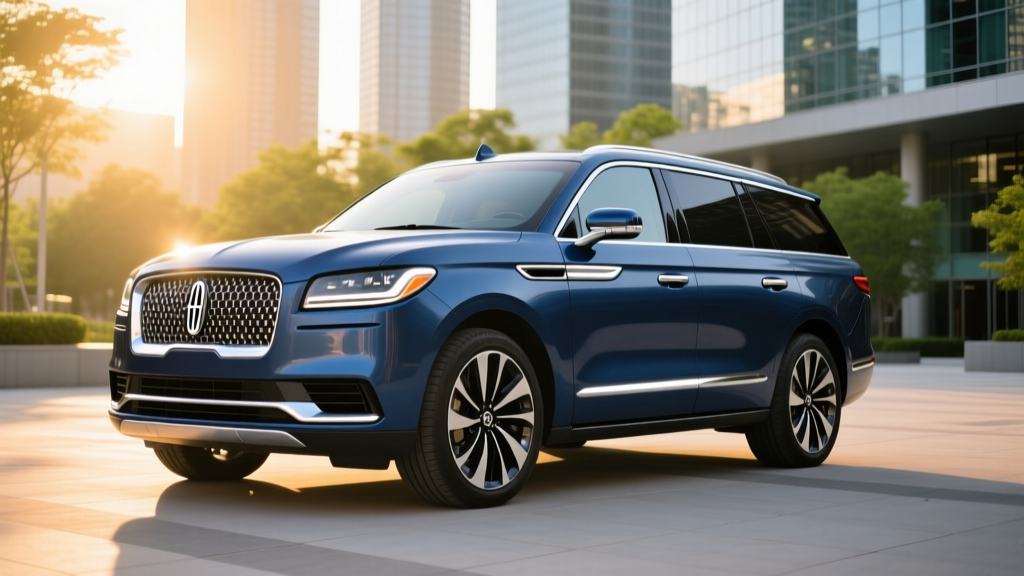
As of early 2026, Lincoln has not yet released a production Navigator EV. The model remains in the announced/preliminary stage following Ford's broader EV strategy shifts in late 2024–2025. Based on Ford's confirmed next-generation electric full-size SUV platform (shared with the upcoming electric Expedition), industry estimates project the Lincoln Navigator EV will carry an EPA range of approximately 300–340 miles, an estimated starting MSRP near $95,000–$105,000, and DC fast charging up to ~200–250 kW. If Lincoln follows Ford's large-EV architecture, expect a ~110–130 kWh battery pack (likely NMC chemistry for energy density in a heavy luxury SUV). The federal §30D tax credit is unlikely to apply because the vehicle's MSRP will almost certainly exceed the IRS cap of $80,000 for SUVs. Buyers weighing this against the current gas Navigator (starting ~$83,000, 16–19 MPG combined) should factor in higher upfront EV cost against significantly lower per-mile fueling and reduced maintenance.
What We Know About the Lincoln Navigator EV So Far
Ford Motor Company confirmed in 2024 that it was restructuring its large-EV program, pivoting from a dedicated next-generation electric platform to a more flexible approach that could include range-extended and hybrid variants alongside battery-electric models. Lincoln, as Ford's luxury division, sits in the same product pipeline. While the automaker has signaled that an electric Navigator is part of its long-term vision, no official EPA range, battery capacity, or pricing has been published as of this writing.
What we can piece together from Ford's existing large-EV architecture (the F-150 Lightning platform and the upcoming three-row electric SUV program):
- Platform: Likely a stretched, luxury-tuned variant of Ford's body-on-frame electric architecture or the newer unibody large-SUV platform Ford has referenced in investor updates.
- Battery chemistry: NMC (nickel manganese cobalt) is the probable choice. LFP batteries, while cheaper and longer-lasting, are too heavy and energy-dense-limited for a 6,000+ lb luxury SUV targeting 300+ miles of range.
- Charging standard: NACS (Tesla's connector), which Ford and Lincoln have committed to across all new EVs starting with the 2025 model year.
- Drivetrain: Dual-motor AWD is virtually guaranteed given the Navigator's luxury positioning and the weight of a full-size SUV.
| Spec | Estimated / Projected | Notes |
|---|---|---|
| EPA Range | 300–340 miles | Based on comparable large EV SUVs; real-world highway likely 250–290 mi |
| Battery Capacity | ~110–130 kWh usable | NMC chemistry expected |
| Peak DC Fast Charge | 200–250 kW | 10–80% in ~25–35 min (estimated) |
| Level 2 Charge Rate | ~11.5–19.2 kW | Full charge overnight on 48A–80A circuit |
| 0–60 mph | ~4.5–5.5 seconds | Dual-motor AWD, ~550–650 HP est. |
| Towing Capacity | ~7,500–9,000 lbs (est.) | Heavy battery reduces payload vs gas |
| Starting MSRP | $95,000–$105,000 | Before destination; Black Label trims $120K+ |
| Federal §30D Credit | Unlikely eligible | MSRP exceeds $80K SUV cap |
| Battery Warranty | 8 yr / 100,000 mi (est.) | Ford/Lincoln standard EV battery coverage |
Navigator EV vs. Gas Navigator: Cost & Efficiency Comparison
The current-generation Lincoln Navigator (gas) uses a 3.5L twin-turbo V6 producing 440 HP and 510 lb-ft of torque, paired with a 10-speed automatic. EPA fuel economy sits at 16 city / 22 highway / 18 combined MPG for 4x2 and slightly less for 4x4, per fueleconomy.gov. Let's compare estimated five-year operating costs.
| Category | Navigator EV (Est.) | Gas Navigator (2025) |
|---|---|---|
| Base MSRP | $100,000 | $83,265 |
| Federal Tax Credit | $0 (MSRP over cap) | $0 |
| Fuel / Energy (75,000 mi) | $5,400–$7,200 (home + public mix) | $14,600 (15 MPG avg, $3.50/gal) |
| Maintenance (5 yr) | $2,500–$3,500 | $5,000–$6,500 |
| Insurance (5 yr avg) | $14,000–$17,000 | $11,000–$14,000 |
| Estimated Depreciation | $40,000–$50,000 | $35,000–$42,000 |
| Total 5-Year Cost | ~$162,000–$178,000 | ~$149,000–$166,000 |
Key takeaway: The EV Navigator saves roughly $7,000–$9,000 on fuel and maintenance over five years, but the higher purchase price (and likely steeper depreciation on a first-generation luxury EV) may erase those savings. Break-even depends heavily on how much you drive, your electricity rate, and whether you can charge primarily at home.
Real-World Ownership: What First-Time EV Buyers Must Know
Buying a full-size electric luxury SUV is not the same experience as buying a compact EV commuter. Here are the practical realities that spec sheets don't highlight:
Home Charging Is Non-Negotiable for Most Owners
A ~120 kWh battery on Level 1 (120V household outlet, ~1.4 kW) would take over 80 hours for a full charge — essentially unusable. You need a Level 2 home charger on a dedicated 240V circuit:
- 48-amp circuit (60A breaker): ~11.5 kW — adds roughly 25–30 miles per hour of charging. Full charge in ~10–12 hours.
- 80-amp circuit (100A breaker): ~19.2 kW — adds roughly 40–45 miles per hour. Full charge in ~6–7 hours.
- Installation cost: $800–$2,500 if your panel has capacity. A 200-amp panel upgrade (common in older homes) adds $2,000–$5,000.
Without home charging, relying on public DC fast chargers for a battery this large means 30–40 minute sessions several times a week, at $0.35–$0.55/kWh — pushing fuel costs closer to what you'd spend on gas.
Cold Weather and Highway Range Loss
A 320-mile EPA estimate on the window sticker does not mean 320 miles in every condition. Expect:
- Highway driving at 75 mph: ~15–20% reduction → ~255–270 real miles.
- Cold weather (below 30°F): ~20–30% reduction due to battery heating demands and cabin climate → ~220–255 real miles.
- Combined highway + cold: Up to 35–40% reduction → ~190–210 miles in worst-case winter road trips.
A heat pump (which Lincoln will likely include) mitigates some cold-weather loss but cannot eliminate it. If your typical winter round-trip commute exceeds 150 miles, range planning becomes essential.
Charging Curve Reality
Peak DC charge rate (e.g., 250 kW) is sustained only between roughly 10–40% state of charge. Above 60%, the rate tapers significantly. A typical session from 10–80% at a 350 kW-capable station might average 150–180 kW effective, meaning 25–35 minutes for a Navigator-class battery. Above 80%, charging slows dramatically to protect the battery — don't plan road-trip stops around 100% fills.
Common Misconceptions About Luxury EV SUVs
| Myth | Fact |
|---|---|
| "I'll get the full $7,500 federal tax credit." | The §30D credit caps eligible SUVs at an $80,000 MSRP (IRS rules). A Navigator EV starting near $100K will not qualify. Some state incentives may apply, but they vary by jurisdiction. |
| "EVs cost nothing to maintain." | No oil changes or spark plugs, but tire wear is 20–30% faster on heavy EVs, cabin air filters still need replacement, and brake fluid, coolant, and windshield washer systems require service. Budget $500–$700/year. |
| "The battery will need replacing in 5 years." | Modern NMC packs are warrantied for 8 years / 100,000 miles at ≥70% capacity retention. Real-world degradation data from comparable Ford/Lincoln EVs shows ~8–12% loss over 100K miles — far from catastrophic. |
| "Public charging is always broken." | Tesla Supercharger reliability consistently exceeds 95% uptime. With the NACS transition, Lincoln owners will gain Supercharger access. Non-Tesla networks (Electrify America, EVgo) have improved but still lag — plan road trips around Supercharger routes. |
| "Towing won't reduce range much." | Towing a 5,000-lb trailer can cut EV range by 40–50%. A 320-mile Navigator EV might deliver only ~160–190 miles while towing. This is the single biggest real-world limitation for SUV buyers who tow frequently. |
Decision Framework: Should You Wait, Buy Gas, or Look Elsewhere?
Choose the Navigator EV (when released) if:
- You have Level 2 home charging (or can install it) and drive under 250 miles on most days.
- You want a quiet, torque-rich luxury experience and value instant acceleration over traditional V8 sound.
- You rarely tow more than 5,000 lbs and your road trips can be planned around DC fast-charging stations.
- You intend to keep the vehicle 7+ years, amortizing the higher purchase price against lower operating costs.
- Your state offers additional EV incentives that partially offset the lost federal credit.
Stick with the Gas Navigator (or a hybrid alternative) if:
- You tow frequently (boat, horse trailer, large camper) — the gas Navigator's 8,300-lb tow rating with minimal range penalty is a decisive advantage.
- You live in an apartment or lack reliable home charging access.
- Your typical road trips exceed 350 miles through areas with sparse DC charging infrastructure.
- You want to stay under the $80,000 MSRP cap to preserve potential tax-credit eligibility on a different EV in your household.
- You need a vehicle now — the Navigator EV has no confirmed on-sale date.
Consider an Alternative Luxury EV SUV if:
- You need three rows and confirmed specs today: the Rivian R1S (EPA 321–410 mi, starting ~$79,900, potentially credit-eligible on lower trims) or the Cadillac Escalade IQ (EPA ~300+ mi, ~$130,000+ starting, NACS native).
- You want a proven luxury electric platform with real-world data and established service networks.
Federal Tax Credit: Why the Navigator EV Likely Won't Qualify
The IRS §30D clean vehicle credit provides up to $7,500 for qualifying new EVs, but several rules work against a Navigator EV:
- MSRP cap: SUVs must have an MSRP at or below $80,000. Even a base Navigator EV is projected well above this threshold.
- Buyer income cap: Adjusted gross income must not exceed $300,000 (joint filers), $225,000 (head of household), or $150,000 (single). Many Navigator buyers are in this range, but the MSRP cap makes it moot.
- Battery sourcing requirements: Critical minerals and battery components must meet escalating domestic-sourcing thresholds each year. Even if Lincoln prices a stripped-down fleet trim under $80K (unlikely), sourcing compliance would need to be verified at the time of purchase.
- Point-of-sale transfer: If eligible, the credit can be transferred to the dealer at purchase for an immediate price reduction — but again, the MSRP cap is the primary barrier here.
Some states (California, Colorado, New York, among others) offer separate EV rebates or tax credits that may apply regardless of MSRP. Check your state's energy office or DMV for current programs.
Frequently Asked Questions
When will the Lincoln Navigator EV be available to buy?
Lincoln has not confirmed a specific on-sale date. Based on Ford's revised EV product timelines announced in 2024–2025, a production Navigator EV is unlikely before the 2027 model year at the earliest. We will update this article when Lincoln publishes official specifications.
Will the Navigator EV have three rows of seating?
Yes — as a full-size luxury SUV, three-row seating is a core requirement for the Navigator nameplate. Expect seating for seven or eight, consistent with the current gas model. Battery packaging under the floor should preserve interior volume, though floor height may be slightly raised compared to the gas version.
How much will it cost to charge a Navigator EV at home?
With a ~120 kWh battery and a national average residential electricity rate of ~$0.16/kWh, a full home charge would cost approximately $19–$22. If you drive 12,000 miles per year at ~2.0 kWh/mile (estimated efficiency for a large, heavy SUV), annual home charging cost would be roughly $3,800–$4,200. Compare this to ~$2,800–$3,200 per year in gasoline at 17 MPG and $3.50/gallon.
Can I use Tesla Superchargers with the Navigator EV?
Almost certainly yes. Ford and Lincoln have committed to the NACS connector for all new EVs, which provides native access to the Tesla Supercharger network (now open to non-Tesla NACS-equipped vehicles). This is a major advantage over CCS-equipped competitors still relying on adapters.
Will the Navigator EV qualify for any incentives?
Federal §30D credit eligibility is unlikely due to the MSRP cap. However, check your state and local utility programs — some offer rebates for home charger installation, time-of-use electricity rates, or state-level EV purchase incentives that are not bound by the federal MSRP limit. Consult a tax professional for your specific situation.
How does the Navigator EV compare to the Cadillac Escalade IQ?
The Escalade IQ is currently in production with a GM Ultium-based platform, ~200+ kWh battery, and an estimated range exceeding 400 miles (GM preliminary). However, it starts above $130,000. The Navigator EV, if it follows Lincoln's pricing strategy, will likely undercut the Escalade IQ on price but may offer less range depending on final battery sizing. We'll publish a full comparison once Navigator EV specs are confirmed.