The Quick Answer: Is a Lincoln Electric SUV Right for You?
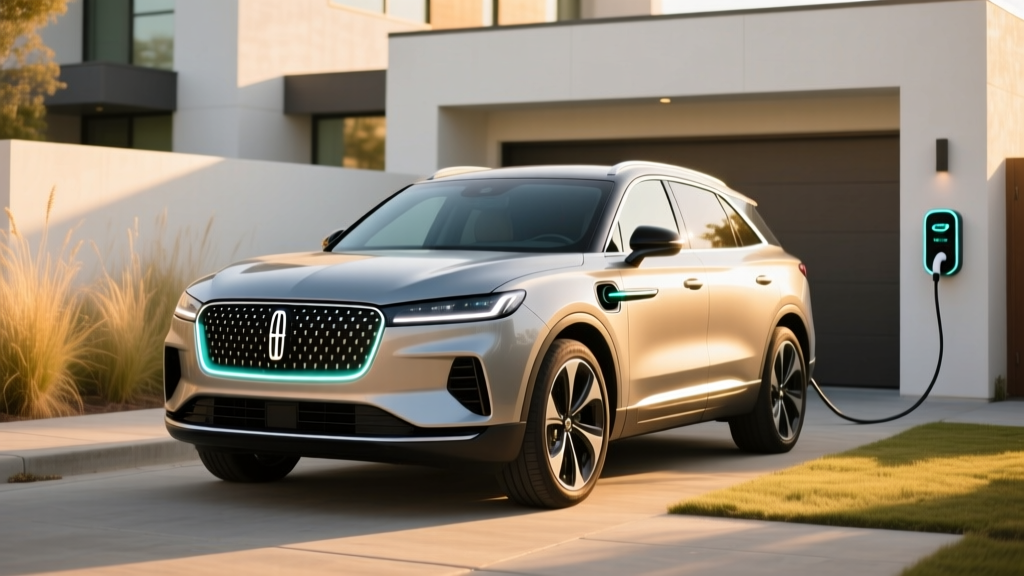
Lincoln's electric SUV lineup for 2026 centers on the upcoming three-row Grand Touring EV (announced, expected late 2026) and the currently available Lincoln Aviator Grand Touring plug-in hybrid as the brand's electrified flagship. If you're searching for a fully electric Lincoln SUV you can buy today, the battery-electric model is still in pre-production. The Aviator Grand Touring PHEV delivers 21 miles of electric-only range, 56 MPGe combined, and a starting MSRP around $69,895 — positioning it as a luxury bridge for buyers not yet ready to commit to a pure BEV. This guide breaks down what's available now, what's coming, real costs, and whether a Lincoln electrified SUV fits your garage and budget.
What Lincoln Electric SUVs Can You Actually Buy in 2026?
Lincoln's electrification strategy has been deliberate rather than aggressive. As of early 2026, here's the reality of what you can put in your driveway:
Available now: The Lincoln Aviator Grand Touring is a plug-in hybrid (PHEV) pairing a 3.0L twin-turbo V6 with an electric motor and a 13.6 kWh (usable) lithium-ion battery. It produces a combined 494 horsepower and 630 lb-ft of torque.
Announced/upcoming: Lincoln has confirmed a battery-electric three-row SUV built on Ford's next-generation flexible EV platform. Industry analysts expect a reveal in late 2026 with deliveries in early-to-mid 2027. Specs remain preliminary, but the vehicle is expected to share architecture with the next-generation Ford Explorer EV, targeting 300+ miles of EPA range and DC fast charging at 150+ kW.
For buyers researching "Lincoln electric SUV" today, the decision is whether to buy the PHEV now or wait for the full BEV. Let's break down the numbers on what's real.
Lincoln Aviator Grand Touring PHEV: Specs and Real-World Performance
| Specification | 2026 Lincoln Aviator Grand Touring |
|---|---|
| Powertrain | 3.0L Twin-Turbo V6 + Electric Motor (PHEV) |
| Combined Output | 494 HP / 630 lb-ft torque |
| Battery (usable) | 13.6 kWh lithium-ion |
| EPA Electric-Only Range | 21 miles |
| EPA MPGe (combined) | 56 MPGe |
| EPA MPG (gas-only, combined) | 23 MPG |
| 0–60 mph | ~5.5 seconds |
| Level 2 Charge Time (0–100%) | ~3.5 hours at 3.6 kW |
| DC Fast Charging | Not supported |
| Base MSRP (Reserve) | $69,895 |
| Battery Warranty | 8 years / 100,000 miles |
| Vehicle Warranty | 4 years / 50,000 miles (bumper-to-bumper), 6 years / 70,000 miles (powertrain) |
Real-World Range Reality Check
The EPA rates the Aviator Grand Touring at 21 miles of electric-only range. In real-world driving, expect 16–19 miles on a full charge in mixed city/highway conditions, and as little as 12–14 miles in freezing weather or at sustained highway speeds above 70 mph. This is enough for short school-run commutes and grocery trips, but it will not cover most round-trip commutes on battery alone.
Lincoln PHEV vs Gas: The Cost and Efficiency Breakdown
The Aviator Grand Touring carries a significant price premium over the gas-only Aviator. Here's how the numbers stack up over five years of ownership, assuming 15,000 miles per year, $3.50/gallon gas, and $0.14/kWh electricity:
| Cost Factor | Aviator Grand Touring (PHEV) | Aviator Reserve (Gas AWD) |
|---|---|---|
| Base MSRP | $69,895 | $58,290 |
| Est. Federal Tax Credit (§30D) | Up to $7,500* | $0 |
| Effective Purchase Price | ~$62,395 | $58,290 |
| Annual Fuel/Energy Cost | ~$2,100 | ~$2,850 |
| 5-Year Fuel/Energy Cost | ~$10,500 | ~$14,250 |
| 5-Year Maintenance (est.) | ~$3,800 | ~$4,200 |
| 5-Year Insurance (avg.) | ~$12,500 | ~$11,200 |
| 5-Year Total Cost | ~$89,195 | ~$87,940 |
*§30D tax credit eligibility depends on MSRP caps (SUVs: $80,000), buyer income limits ($300K MFJ / $150K single), and battery component/critical mineral sourcing requirements. The Aviator Grand Touring has historically qualified for partial credit — verify current eligibility at IRS.gov before purchasing. Credit can now be transferred at point-of-sale as a down payment reduction.
The PHEV saves roughly $3,750 on fuel over five years, but higher insurance premiums and the upfront price premium mean the total cost of ownership is nearly identical. The PHEV's advantage is environmental — lower tailpipe emissions on short trips — and experiential: silent electric cruising around town with the range security of a gas engine for road trips.
Who Should Buy the Aviator Grand Touring PHEV — And Who Should Wait?
Decision Framework: Buy the PHEV Now or Wait for the BEV?
Buy the Aviator Grand Touring PHEV now if:
- Your daily driving is under 20 miles round-trip and you can charge at home (Level 2, 240V)
- You regularly take road trips of 300+ miles where charging infrastructure is uncertain
- You need three rows and 5,600-lb towing capacity today
- You want Lincoln's luxury cabin with the option of electric-only school runs
Wait for Lincoln's battery-electric SUV if:
- Your commute is 30+ miles and you want to drive fully electric most days
- You want DC fast charging capability (200+ kW) for road trips
- You want to eliminate gas-engine maintenance (oil changes, spark plugs, transmission fluid)
- You're targeting maximum §30D tax credit eligibility (BEVs have clearer sourcing compliance paths)
- You can wait until mid-2027 for delivery
Real-World Ownership: What First-Time Electrified SUV Buyers Need to Know
Home Charging Is Non-Negotiable for PHEVs
The Aviator Grand Touring's 13.6 kWh battery recharges in roughly 3.5 hours on a Level 2 (240V / 16A) home charger. On a standard 120V outlet (Level 1), expect 8–10 hours — meaning an overnight charge barely refills the battery. If you live in an apartment without charging access or street-park exclusively, a PHEV's electric range becomes largely inaccessible, and you'll operate it as a heavy, less-efficient gas SUV averaging 23 MPG.
Level 2 home charger installation typically costs $500–$2,500 depending on panel capacity and wiring distance. Homes with 200A electrical panels usually accommodate a 32A–48A Level 2 charger without upgrades. Older homes with 100A panels may need a $1,500–$3,000 panel upgrade.
Cold Weather Cuts Electric Range by 20–35%
If you live in the upper Midwest or Northeast, plan for the Aviator's 21-mile electric range to shrink to roughly 12–14 miles when temperatures drop below 30°F. Battery chemistry slows in cold, and cabin heating draws significant energy. The gas engine compensates seamlessly, but your electric-only commute window narrows substantially.
Maintenance Savings Are Real but Modest
PHEVs still have internal combustion engines, meaning oil changes, coolant flushes, and spark plug replacements remain on the schedule. However, regenerative braking reduces brake pad wear significantly — many PHEV owners report original brake pads lasting 80,000+ miles. Lincoln's 8-year/100,000-mile battery warranty provides long-term protection, and replacement batteries for this class typically cost $8,000–$12,000 out of warranty.
Common Lincoln Electric SUV Myths — Addressed with Data
| Myth | Fact |
|---|---|
| "The Aviator PHEV is basically an electric SUV." | It has 21 miles of electric range. Beyond that, it operates as a gas vehicle. It's a plug-in hybrid, not a BEV. |
| "You'll save thousands on fuel." | Annual savings are roughly $750 vs. the gas Aviator — meaningful but not transformative. The purchase premium takes years to recoup. |
| "The battery will need expensive replacement soon." | Lincoln warranties the battery for 8 years/100,000 miles at a minimum 70% capacity retention. PHEV batteries are smaller and experience less stress than BEV batteries. Most last the vehicle's lifetime. |
| "I don't need home charging — I'll just use public chargers." | The Aviator PHEV does not support DC fast charging. Public Level 2 chargers are slower and more expensive per kWh than home charging. Daily public charging is impractical for most owners. |
| "Lincoln's full-electric SUV is available now." | As of 2026, Lincoln's battery-electric three-row SUV is announced but not yet in production. Expect availability in 2027 at the earliest. |
What to Expect from Lincoln's Upcoming Battery-Electric SUV
While final specifications remain unconfirmed, here's what industry data and Ford's platform strategy suggest for Lincoln's first dedicated BEV:
- Target EPA range: 300–350 miles (based on 90–100 kWh usable battery, likely NMC chemistry)
- DC fast charging: Expected 150–180 kW peak, enabling 10–80% in approximately 28–35 minutes
- Level 2 charging: 11.5 kW onboard charger (approximately 9 hours for a full charge, or ~35 miles of range per hour)
- Platform: Ford's next-gen flexible EV architecture, shared with the upcoming electric Explorer three-row
- Connector: NACS (Tesla-standard), consistent with Ford/Lincoln's 2025+ transition away from CCS1
- Estimated starting MSRP: $70,000–$80,000 (SUV cap for §30D tax credit eligibility is $80,000)
- ADAS: Lincoln Co-Pilot360 Vision with hands-on-highway assist — SAE Level 2, not autonomous driving
⚠️ Unreleased Vehicle Notice
All specifications above for Lincoln's battery-electric SUV are preliminary estimates based on platform analysis and industry reporting. Final EPA range, pricing, charging speeds, and tax credit eligibility will be confirmed by Lincoln closer to the vehicle's on-sale date. Do not base purchasing decisions on projected figures alone.
Lincoln vs. Competing Luxury Electrified SUVs
If you're cross-shopping a Lincoln electric or electrified SUV, here's how the Aviator Grand Touring stacks up against key rivals available in 2026:
| Vehicle | Type | Electric Range | MSRP | 0–60 mph |
|---|---|---|---|---|
| Lincoln Aviator Grand Touring | PHEV | 21 mi (EPA) | $69,895 | ~5.5s |
| BMW X5 xDrive50e | PHEV | 38 mi (EPA) | $73,200 | ~4.6s |
| Volvo XC90 Recharge | PHEV | 35 mi (EPA) | $76,850 | ~5.0s |
| Genesis Electrified GV70 | BEV | 236 mi (EPA) | $68,850 | ~4.5s |
| Cadillac Lyriq | BEV | 314 mi (EPA) | $62,695 | ~4.8s |
The Aviator Grand Touring's 21-mile electric range trails the BMW X5 and Volvo XC90 plug-in hybrids significantly. However, Lincoln counters with a more accessible starting price and a larger, more luxurious cabin with standard third-row seating — something the GV70 and Lyriq lack. If electric range is your priority, the BMW X5 xDrive50e leads the PHEV class. If you want a full BEV in the luxury three-row segment, the Cadillac Lyriq and Rivian R1S are the current benchmarks.
The Bottom Line: Is a Lincoln Electrified SUV Worth It?
The Lincoln Aviator Grand Touring PHEV occupies a specific niche: luxury-family-SUV buyers who want electric-only capability for short errands but aren't ready to commit to a full BEV. It's a compelling vehicle — 494 horsepower, a whisper-quiet cabin in EV mode, and genuine three-row practicality — but its limited electric range and lack of DC fast charging mean it functions as a gas vehicle the majority of the time for most drivers.
If you can charge at home, drive under 20 miles daily, and value the Lincoln brand experience, the Grand Touring PHEV delivers a genuine taste of electric driving without range anxiety. If you want to drive electric 90%+ of the time, the mathematically smarter move is to wait for Lincoln's dedicated BEV or look at the Cadillac Lyriq, BMW iX, or Rivian R1S today.
Frequently Asked Questions
Does Lincoln make a fully electric SUV?
Not yet as of early 2026. Lincoln's first dedicated battery-electric SUV is announced and expected to enter production in late 2026 or 2027. The only electrified Lincoln SUV currently available is the Aviator Grand Touring plug-in hybrid.
How far can the Lincoln Aviator Grand Touring drive on electric power alone?
The EPA rates it at 21 miles of electric-only range. Real-world conditions — highway speeds, cold weather, hills — typically reduce this to 12–19 miles. Beyond that range, the gasoline V6 engine takes over seamlessly.
Does the Lincoln Aviator PHEV qualify for the federal tax credit?
It may qualify for a partial or full §30D credit depending on current battery sourcing rules, your income (capped at $300K married filing jointly / $150K single), and the vehicle's MSRP (SUV cap: $80,000). Eligibility rules change frequently — verify at IRS.gov and consult a tax professional before purchasing. The credit can be transferred at the dealer as a point-of-sale price reduction.
What's the difference between kW and kWh?
kW (kilowatts) measures power — how fast energy flows, like the flow rate of a hose. kWh (kilowatt-hours) measures energy — the total amount stored or consumed, like the volume of water in a bucket. The Aviator's battery holds 13.6 kWh of energy and charges at a maximum rate of 3.6 kW on Level 2.
Can I charge the Aviator Grand Touring at a DC fast charger?
No. The Aviator PHEV only supports Level 1 (120V) and Level 2 (240V) AC charging. It does not have a DC fast charging port. This is typical for PHEVs — their smaller batteries don't require rapid charging infrastructure.
How much does it cost to charge the Aviator PHEV at home?
A full charge of the 13.6 kWh battery at the national average of $0.14/kWh costs approximately $1.90. That's roughly $0.09 per electric mile — about one-third the per-mile cost of gasoline at $3.50/gallon and 23 MPG combined.
What will Lincoln's fully electric SUV cost?
Official pricing has not been announced. Based on platform sharing with Ford's electric Explorer and Lincoln's current positioning, expect a starting MSRP in the $70,000–$80,000 range. If priced under the $80,000 SUV cap and meeting battery sourcing rules, it could qualify for the full $7,500 §30D federal tax credit.