The Quick Answer on Lincoln Electric Cars
As of the 2026 model year, Lincoln does not sell a fully electric vehicle (BEV). The brand's only electrified option is the Lincoln Aviator Grand Touring plug-in hybrid (PHEV), offering an EPA-estimated 21 miles of electric-only range and a combined 25 MPGe. Lincoln's first dedicated battery-electric SUV, previewed by the Model L concept, has been announced for production but is not yet on sale. If you need a pure EV today, you'll need to look at competitors like the Genesis GV60, BMW iX, or Cadillac Lyriq. If you want Lincoln luxury with partial electrification and have access to home charging, the Aviator Grand Touring is your only current option.
Lincoln's Current Electrified Lineup: The Aviator Grand Touring PHEV
Lincoln's journey into electrification has been slower than many luxury rivals. While brands like BMW, Mercedes-Benz, Genesis, and Cadillac have multiple battery-electric models on showroom floors, Lincoln's parent company Ford has focused its EV efforts on the Ford brand (Mustang Mach-E, F-150 Lightning). Lincoln's electrification strategy currently hinges on one plug-in hybrid model.
The 2026 Lincoln Aviator Grand Touring pairs a twin-turbocharged 3.0-liter V6 with an electric motor integrated into the 10-speed automatic transmission. Combined output is 494 horsepower and 630 lb-ft of torque, making it the most powerful Aviator variant.
| Spec | Value |
|---|---|
| Powertrain | 3.0L Twin-Turbo V6 + Electric Motor (PHEV) |
| Combined Output | 494 hp / 630 lb-ft |
| Battery Capacity | ~13.1 kWh usable (NMC chemistry) |
| EPA Electric-Only Range | 21 miles |
| EPA Combined MPGe | 25 MPGe |
| EPA Combined MPG (gas only) | 20 MPG |
| 0-60 mph | ~5.5 seconds |
| Level 2 Charge Rate | ~3.3 kW (full charge in ~3.5 hours) |
| DC Fast Charging | Not supported |
| Starting MSRP | ~$70,595 (Reserve trim) |
| Battery Warranty | 8 years / 100,000 miles |
| Federal §30D Tax Credit | Not eligible (does not meet battery sourcing or electric-range thresholds) |
Real-world caveat: The EPA-rated 21 miles of electric range assumes moderate temperatures and gentle driving. In cold weather (below 30°F), expect that figure to drop to roughly 14–17 miles as the battery's internal resistance increases and cabin heating draws additional energy. Highway-speed electric-only driving will also reduce range versus the EPA mixed-cycle test.
Data sourced from fueleconomy.gov.
Lincoln's Upcoming Battery-Electric SUV: What We Know
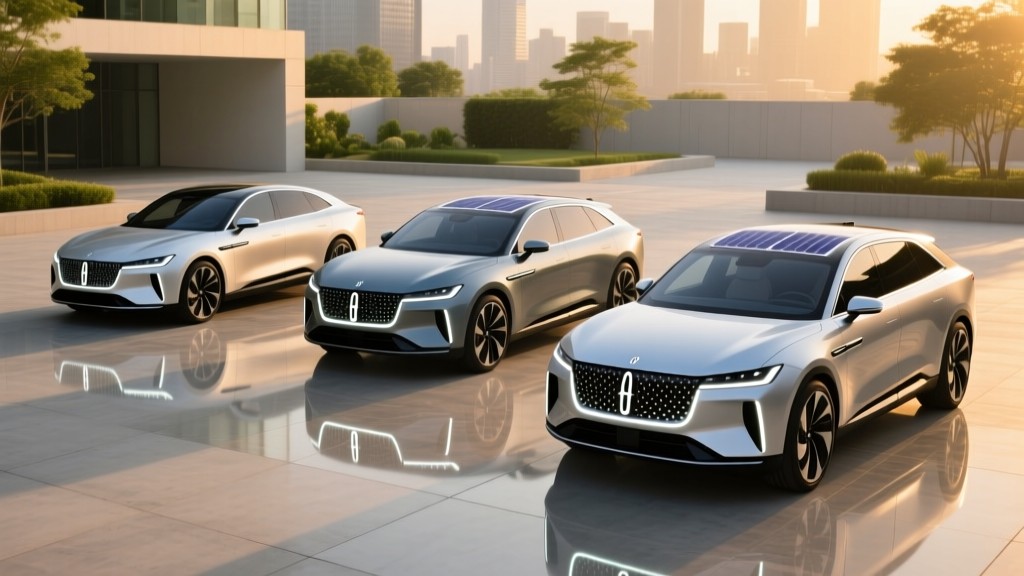
Lincoln unveiled the Model L concept as a preview of its first dedicated electric vehicle — a large, luxury SUV expected to slot above the Nautilus in Lincoln's lineup. Ford has confirmed the production version will ride on a next-generation flexible EV platform.
Here's what has been announced versus what remains preliminary:
- Platform: Ford's next-gen flexible EV architecture (not the canceled dedicated EV platform)
- Target segment: Full-size luxury electric SUV, competing with Cadillac Escalade IQ, BMW iX, and Mercedes EQS SUV
- Expected timeline: Production anticipated for late 2027 or 2028 model year — not available for purchase in 2026
- Projected range: Lincoln has not published official EPA estimates; industry estimates suggest a target of 300+ miles
- Charging standard: Expected to adopt NACS (Tesla-style connector), consistent with Ford's broader transition
- Pricing: Not yet announced; likely starting in the $80,000–$100,000 range based on segment positioning
All specs above are preliminary and subject to change. We'll update this guide with confirmed EPA range, battery kWh, charge rates, and pricing as Lincoln releases official data.
Aviator Grand Touring vs. Gas Aviator vs. Competitor EVs: The Cost Comparison
Is the Aviator PHEV worth the premium over the gas-only Aviator? And how does it stack up against actual luxury EVs? Let's break down the numbers.
| Cost Factor | Aviator Grand Touring PHEV | Aviator Reserve (Gas) | Cadillac Lyriq (BEV) |
|---|---|---|---|
| Base MSRP | $70,595 | $58,495 | $58,590 |
| Federal Tax Credit (§30D) | $0 | $0 | Up to $7,500 (eligibility varies) |
| Est. Fuel/Energy (60k mi) | ~$7,800 (mixed EV/gas) | ~$10,500 (gas at $3.50/gal, 20 MPG) | ~$3,600 (electric at $0.15/kWh, 2.5 mi/kWh) |
| Est. Maintenance (5 yr) | ~$3,200 | ~$3,800 | ~$1,800 |
| Est. Insurance (5 yr) | ~$11,000 | ~$9,500 | ~$10,200 |
| 5-Year Total (est.) | ~$92,595 | ~$82,295 | ~$66,690 |
Key takeaways from the data:
- The Aviator Grand Touring's $12,000+ price premium over the gas Aviator is difficult to recoup through fuel savings alone. At 21 miles of electric range, most daily commutes can be covered on electricity, but the higher purchase price dominates the equation.
- A purpose-built EV like the Cadillac Lyriq — with 314 miles of EPA range, DC fast charging, and potential §30D credit eligibility — delivers dramatically lower operating costs.
- Insurance premiums for the PHEV Aviator tend to run higher due to the dual powertrain complexity and repair costs. Check quotes from your insurer before committing.
Note: Estimates use national averages. Actual costs depend on local electricity rates, gas prices, driving patterns, and insurance jurisdiction. Federal §30D credit eligibility depends on buyer income, vehicle MSRP caps, and battery sourcing requirements per current IRS rules.
Real-World Ownership: What a First-Time EV or PHEV Buyer Should Know
If you're considering the Aviator Grand Touring as your first electrified vehicle, these practical realities matter more than spec sheets.
Home Charging Is Nearly Mandatory for PHEV Value
The Aviator Grand Touring's 21-mile electric range is meaningful only if you can charge at home regularly. With a standard 120V outlet (Level 1), a full charge takes approximately 8–10 hours — feasible for overnight, but slow. A Level 2 home charger (240V, 3.3 kW) cuts that to roughly 3.5 hours.
Home charging installation costs: Expect $800–$2,500 for a Level 2 setup if your electrical panel has capacity. If a panel upgrade from 100A to 200A is needed, add $1,500–$3,500. Without home charging, you'll rely on the gas engine almost exclusively, negating the PHEV advantage.
No DC Fast Charging
The Aviator Grand Touring does not support DC fast charging. The battery is too small (13.1 kWh) to justify it, and the onboard charger caps at 3.3 kW. This is normal for PHEVs, but it means public charging infrastructure is largely irrelevant for this vehicle.
Cold Climate Considerations
In northern climates where winter temperatures regularly dip below freezing:
- Electric-only range drops 20–35% due to battery chemistry limitations and cabin heating demand
- The Aviator PHEV will default to the gas engine more frequently to maintain cabin warmth
- Engine oil changes and gas-engine maintenance remain on the service schedule, unlike a pure BEV
Driving Patterns That Maximize PHEV Value
The Aviator Grand Touring makes the most sense if your daily driving is under 25 miles round-trip and you can charge every night. For frequent road trips or highway-heavy commutes exceeding 40 miles daily, the gas engine does most of the work and the electric drivetrain becomes dead weight.
Common Misconceptions About Lincoln and Electric Vehicles
| Myth | Fact |
|---|---|
| "Lincoln has a fully electric SUV you can buy." | As of 2026, Lincoln sells no BEV. The only electrified model is the Aviator Grand Touring PHEV. |
| "The Aviator PHEV qualifies for the $7,500 federal tax credit." | It does not meet §30D requirements for battery component sourcing and critical mineral thresholds. Check IRS.gov for current eligibility. |
| "PHEVs don't need charging to be efficient." | Without regular charging, the Aviator Grand Touring returns ~20 MPG combined — worse than many gas-only midsize SUVs — because it carries the extra weight of the battery and electric motor. |
| "Lincoln's upcoming EV will be out soon." | The production electric SUV is expected for late 2027 or 2028. It is not available for order in 2026. |
| "All luxury brands have gone electric." | Lincoln is notably behind rivals. BMW (iX, i7), Mercedes (EQE/EQS SUV), Genesis (GV60, Electrified GV70), and Cadillac (Lyriq, Optiq) all have BEVs on sale now. |
Decision Framework: Should You Buy a Lincoln Electrified Vehicle?
Choose the Aviator Grand Touring PHEV if:
- You want Lincoln's brand, dealer network, and American luxury specifically
- Your daily commute is under 25 miles round-trip and you can install a Level 2 home charger
- You need three rows of seating and are not ready for a pure EV
- You value the 494 hp powertrain output and smooth electric-assisted acceleration in stop-and-go traffic
Look at a competitor's BEV if:
- You want 250+ miles of electric range and DC fast charging for road trips
- You want to eliminate gasoline purchases and oil changes entirely
- You want to potentially qualify for the federal §30D tax credit (up to $7,500)
- You prioritize lowest total cost of ownership over brand loyalty
Wait for Lincoln's production EV if:
- You're committed to the Lincoln brand but want a true battery-electric vehicle
- You can wait until late 2027–2028 for availability
- You're comfortable that pricing, range, and charging specs remain unconfirmed
Competitor EVs Worth Cross-Shopping Today
If Lincoln's current electric-car gap is a dealbreaker, these luxury EVs are available now and compete in similar price brackets:
| Model | EPA Range | Battery (kWh) | Peak DC Charge | 10-80% Time | Starting MSRP | §30D Credit |
|---|---|---|---|---|---|---|
| Cadillac Lyriq | 314 mi | 102 kWh (NMC) | 190 kW | ~30 min | $58,590 | Potential (check sourcing) |
| BMW iX xDrive50 | 324 mi | 111.5 kWh (NMC) | 200 kW | ~31 min | $87,250 | Likely ineligible (MSRP cap) |
| Genesis GV60 | 280 mi | 77.4 kWh (NMC) | 240 kW | ~18 min | $53,350 | Potential (check sourcing) |
| Mercedes EQE 350 SUV | 279 mi | 90.6 kWh (NMC) | 170 kW | ~32 min | $79,050 | Likely ineligible (MSRP cap) |
| Rivian R1S (Dual-Motor) | 352 mi | 149 kWh (NMC) | 220 kW | ~28 min | $79,900 | Potential (check sourcing) |
All data from fueleconomy.gov and manufacturer spec sheets. §30D credit eligibility depends on buyer AGI, MSRP caps ($80,000 for SUVs), and battery component/critical mineral sourcing per IRS rules. Consult a tax professional before relying on credit eligibility.
Frequently Asked Questions
Does Lincoln make any fully electric cars in 2026?
No. Lincoln's only electrified vehicle for 2026 is the Aviator Grand Touring plug-in hybrid. A dedicated battery-electric SUV has been announced but is not expected until late 2027 or 2028.
What is the electric-only range of the Lincoln Aviator PHEV?
The EPA rates the Aviator Grand Touring at 21 miles of electric-only range. In real-world cold-weather driving, expect 14–17 miles. Highway-speed electric driving will also reduce this figure.
Does the Lincoln Aviator Grand Touring qualify for the federal EV tax credit?
No. The Aviator Grand Touring does not meet the §30D battery sourcing and critical mineral requirements set by the IRS. Always verify current rules at IRS.gov or with a tax professional.
Can I DC fast-charge the Aviator Grand Touring?
No. The PHEV Aviator only supports Level 2 AC charging at up to 3.3 kW. DC fast charging is not available — this is standard for plug-in hybrids with smaller battery packs.
How much does it cost to install a home charger for the Aviator PHEV?
A Level 2 (240V) home charging installation typically costs $800–$2,500 if your electrical panel has sufficient capacity. A panel upgrade (100A to 200A) adds $1,500–$3,500. Since the Aviator PHEV charges at only 3.3 kW, even a basic Level 2 setup is sufficient.
Is the Aviator PHEV worth it over the gas-only Aviator?
It depends on your driving pattern. If you drive under 25 miles daily and charge nightly, you'll use minimal gasoline for commuting. However, the $12,000+ price premium is difficult to recover through fuel savings alone. The PHEV makes the most sense if you value the 494 hp output and smooth electric low-speed driving in addition to fuel savings.
When will Lincoln release its first fully electric vehicle?
Lincoln's first production BEV — a large luxury SUV previewed by the Model L concept — is expected for the late 2027 or 2028 model year. Official EPA range, battery specs, charging rates, and pricing have not been published.