The Short Answer on the Sienna Electric
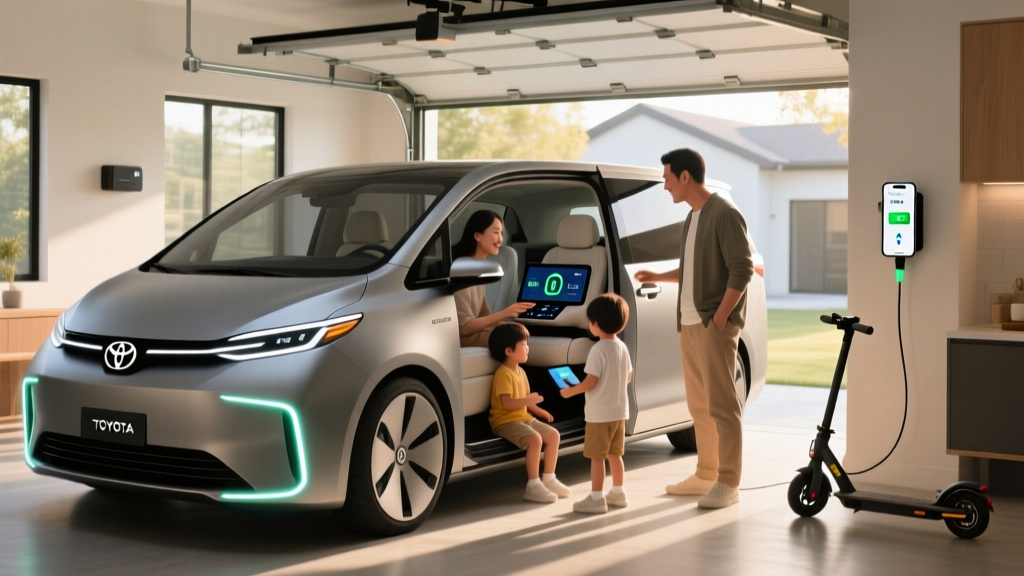
As of the 2026 model year, Toyota does not sell an all-electric Sienna. The current-generation Toyota Sienna is exclusively a hybrid (HEV) — pairing a 2.5-liter four-cylinder engine with electric motors for an EPA-estimated 36 MPG combined. Toyota has not announced a battery-electric Sienna or a Sienna PHEV for the U.S. market. If you're specifically searching for a "Sienna electric," you're likely encountering wishful forum speculation, not confirmed product plans.
However, several three-row electric SUVs and one true electric minivan rival now compete in the same family-hauler space. Below, we break down what the hybrid Sienna actually delivers, how it compares to battery-electric alternatives, the real ownership costs, and a practical decision framework for families weighing hybrid versus full EV.
2026 Toyota Sienna Hybrid: The Specs That Matter
The Sienna's powertrain hasn't changed significantly since its fourth-generation launch. It uses Toyota's fourth-generation hybrid system — not a plug-in, meaning you cannot charge it from a wall outlet. The battery is a small 1.9 kWh nickel-metal hydride (NiMH) pack that assists the gas engine but provides no meaningful electric-only driving range.
| Spec | Value |
|---|---|
| Powertrain | 2.5L I4 hybrid (HEV, non-plug-in) |
| Combined Horsepower | 245 hp |
| EPA Fuel Economy (FWD) | 36 city / 36 hwy / 36 combined MPG |
| EPA Fuel Economy (AWD) | 35 city / 36 hwy / 35 combined MPG |
| Battery Type / Capacity | NiMH / ~1.9 kWh |
| Electric-Only Range | None (assist-only hybrid) |
| 0–60 mph | ~7.1 seconds |
| Seating | 7 or 8 passengers |
| Cargo (behind 3rd row) | 33.5 cu ft |
| Starting MSRP (LE FWD) | ~$39,085 |
| Hybrid Battery Warranty | 10 years / 150,000 miles |
Source: fueleconomy.gov and Toyota.com.
Real-World Fuel Economy Note: The Sienna's 36 MPG combined is remarkably consistent for a hybrid — unlike EVs, there's no dramatic cold-weather range loss. However, sustained highway driving at 75+ mph can drop observed economy to 30–32 MPG, and heavy city stop-and-go with a full load of passengers and cargo may yield similar figures. Owners on fuel-tracking sites commonly report 33–36 MPG in mixed driving.
Sienna Hybrid vs. Electric Alternatives: Data Comparison
Since there's no Sienna EV, families cross-shopping this van need to look at electric three-row SUVs and the one battery-electric minivan available: the Chrysler Pacifica (which is actually a PHEV, not a full BEV). Here's how the Sienna stacks up against popular electrified family vehicles on the market in 2026.
| Vehicle | Type | EPA Range / MPG | Battery (kWh) | Peak DC Charge | Starting MSRP | Federal Credit |
|---|---|---|---|---|---|---|
| Toyota Sienna | HEV | 36 MPG combined | ~1.9 (NiMH) | N/A | ~$39,085 | Not eligible |
| Kia EV9 (Land RWD) | BEV | 304 mi range / 89 MPGe | 100.0 (NMC) | 236 kW | ~$54,900 | Up to $7,500* |
| Hyundai Ioniq 9 (SEL RWD) | BEV | ~335 mi range / 91 MPGe | 110.3 (NMC) | ~240 kW | ~$56,000 | Up to $7,500* |
| Chrysler Pacifica PHEV | PHEV | 32 mi electric + 30 MPG gas | 16.0 (NMC) | N/A (Level 2 only) | ~$51,095 | Up to $7,500* |
| Tesla Model X (Long Range) | BEV | 335 mi range / 102 MPGe | ~100 (NMC) | 250 kW | ~$79,990 | Not eligible (MSRP cap) |
*Federal §30D tax credit eligibility depends on MSRP caps ($80,000 for SUVs/vans), buyer income limits ($300K MFJ / $150K single), and battery critical-mineral/component sourcing requirements that shift annually. Check current rules at irs.gov. Credits can now be transferred to the dealer at point of sale as an instant discount.
Cost of Ownership: Sienna Hybrid vs. Going Full Electric
The Sienna hybrid's appeal is simplicity: no charging infrastructure needed, no range anxiety, and proven Toyota reliability. But the total cost of ownership (TCO) math shifts depending on your driving volume, electricity rates, and whether you qualify for incentives.
| Cost Category | Toyota Sienna Hybrid (HEV) | Kia EV9 (BEV, Home Charging) |
|---|---|---|
| Purchase Price (base) | $39,085 | $54,900 |
| Federal Tax Credit | $0 | –$7,500 (if eligible) |
| Effective Purchase Price | $39,085 | $47,400 |
| Fuel / Electricity (75K mi) | $7,290 (36 MPG, $3.50/gal) | $2,810 (3.0 mi/kWh, $0.14/kWh) |
| Maintenance (5 yr) | $2,800 (oil, filters, brakes) | $1,200 (cabin filter, tires, wipers) |
| Insurance (5 yr avg.) | $7,500 | $9,200 |
| Estimated 5-Yr Depreciation | $14,500 | $19,000 |
| Total 5-Yr Cost | ~$71,175 | ~$79,610 |
Key takeaway: The Sienna hybrid wins on five-year TCO primarily due to its lower purchase price, strong resale value, and no dependency on charging access. The EV9 closes the gap through fuel savings (~$4,480 less over 5 years) and lower maintenance, but higher insurance and depreciation partially offset those gains. If you drive more than 15,000 miles annually or have access to cheap electricity (under $0.10/kWh), the EV math improves significantly.
Home Charging Reality: What You Actually Need
This is where many "Sienna electric" searches reveal a misunderstanding. The Sienna hybrid requires zero charging infrastructure — you fuel it at any gas station. But if you're considering pivoting to an electric three-row vehicle, charging access becomes the single most important ownership variable.
| Level | Power | Miles Added per Hour | Full Charge Time (0–100%) | Typical Install Cost |
|---|---|---|---|---|
| Level 1 (120V outlet) | 1.4 kW | ~4–5 miles | ~70+ hours | $0 (use existing outlet) |
| Level 2 (240V, 48A) | 11.5 kW | ~32–36 miles | ~9–10 hours | $800–$2,500 |
| DC Fast Charge (public) | 50–236 kW | ~180–900 miles/hr | 10–80% in ~20 min | Pay per session ($0.30–$0.60/kWh) |
For a 100 kWh battery (Kia EV9): Level 1 charging is impractical as a daily strategy — it would take nearly three days to refill from empty. A Level 2 home charger is effectively mandatory for convenient BEV ownership. Installation typically runs $800–$2,500 depending on panel proximity, but can exceed $4,000 if your home requires a 200-amp electrical panel upgrade (common in older homes with 100-amp service).
Common Misconceptions About Electric Family Vehicles
| Myth | Fact |
|---|---|
| "An electric Sienna is coming soon" | Toyota has not announced a BEV Sienna. Toyota's U.S. EV lineup is currently limited to the bZ4X and the upcoming three-row bZ Large SUV (announced, expected late 2026/2027). Toyota's strategy leans heavily on hybrids for minivans. |
| "EVs don't work for family road trips" | A Kia EV9 with 304 miles of range and 236 kW DC fast charging adds ~180 miles in 15 minutes. Road trips require more planning, but major highway corridors now have reliable 150–350 kW chargers at 50–100 mile intervals. |
| "Hybrids are always cheaper than EVs" | At 20,000+ miles/year with cheap home electricity, a BEV's fuel savings can exceed $2,000/year, narrowing the purchase-price gap within 3–4 years — especially with the $7,500 federal credit applied at purchase. |
| "EV batteries need replacing every few years" | Modern NMC and LFP packs are warranted for 8 years/100,000 miles (10 years/150,000 miles in CARB states) to retain at least 70% capacity. Real-world degradation data shows most packs lose 8–15% capacity over 100,000 miles — not a failure point. |
| "I need a Tesla for the Supercharger network" | As of 2026, most major automakers (Ford, GM, Hyundai, Kia, Rivian, and more) have adopted the NACS connector or include adapters, granting access to Tesla Superchargers. The charging-network advantage is no longer Tesla-exclusive. |
Decision Framework: Should You Buy the Sienna Hybrid or Go Electric?
Choose the Toyota Sienna Hybrid if:
- You lack reliable home charging (apartment, street parking, no garage)
- Your budget is under $45,000 and you need three rows today
- You frequently drive 400+ mile routes through rural areas with sparse charging
- You want maximum resale value certainty (Sienna holds value exceptionally well)
- You don't want to think about charging — ever
- Cold-weather range loss is a concern (hybrids are unaffected)
Choose an electric three-row SUV (Kia EV9, Hyundai Ioniq 9) if:
- You can install a Level 2 charger at home and have a garage or driveway
- You qualify for the full $7,500 federal tax credit (check income and sourcing rules at irs.gov)
- Your daily driving is under 250 miles and you want near-zero "fuel" cost
- You want stronger acceleration (EV9 AWD: 0–60 in ~5.0 sec vs. Sienna's 7.1 sec)
- You value silent, vibration-free operation and one-pedal regenerative braking
- Lower ongoing maintenance (no oil changes, fewer brake replacements due to regen) matters to you
Wait and reconsider if:
- Toyota announces a three-row bZ SUV — expected to preview a potential electric minivan platform eventually
- You're in a state with additional EV rebates (e.g., California, Colorado, Massachusetts) that could shift the TCO math
- Solid-state battery EVs begin arriving (Toyota has targeted 2027–2028 for initial production, though timelines have slipped before)
What First-Time EV Buyers Should Know Before Switching from a Sienna
If you've been driving a Sienna and are considering your first EV, here are the practical realities that spec sheets don't always convey:
Real-world range is less than the EPA sticker. A Kia EV9 rated at 304 miles will deliver approximately 240–270 miles at sustained 70–75 mph highway speeds, and as low as 200–220 miles in sub-freezing temperatures. Plan road trips around ~200 miles of usable range between charges to keep stress low.
Charging curves taper significantly above 80%. That 236 kW peak charge rate on the EV9 only holds from roughly 10% to 55% State of Charge (SoC). From 80% to 100%, speed drops to under 50 kW. On road trips, charge to 80% and go — the last 20% takes nearly as long as the first 70%.
Insurance costs more. EVs typically carry 15–25% higher insurance premiums than comparable gas or hybrid vehicles due to higher repair costs, specialized parts, and battery replacement risk. Get quotes before purchasing — the difference can be $300–$500/year.
Tire wear is faster. The instant torque and heavier weight of EVs (the EV9 weighs ~5,800 lbs vs. the Sienna's ~4,600 lbs) accelerate tire wear by 20–30%. Budget for replacement tires every 30,000–40,000 miles instead of the 50,000+ miles typical on a hybrid minivan.
Frequently Asked Questions
Will Toyota ever make an all-electric Sienna minivan?
Toyota has not announced any plans for a battery-electric Sienna. Toyota's current strategy for minivans centers on hybrid powertrains, which align with their broader approach of offering diverse electrification options (HEV, PHEV, BEV, hydrogen) rather than committing to all-electric across every segment. Toyota's announced three-row electric SUV (the bZ Large concept, expected to enter production around 2027) may eventually signal a path toward an electric minivan, but nothing is confirmed.
Does the Toyota Sienna qualify for any federal tax credits?
No. The §30D Clean Vehicle Credit under current IRS rules applies only to plug-in electric vehicles (BEVs and PHEVs) that meet battery sourcing, MSRP, and buyer income requirements. The Sienna is a conventional hybrid (HEV) with no plug-in capability, so it does not qualify for the federal EV tax credit or the point-of-sale transfer option.
What is the closest electric alternative to a Toyota Sienna?
The closest in function is the Kia EV9 or Hyundai Ioniq 9 — both offer three-row seating for up to seven passengers, over 300 miles of EPA range, and fast DC charging. However, neither offers the Sienna's minivan-specific features like sliding rear doors, a low step-in height, or stow-and-go seating. If those features are essential, the Chrysler Pacifica PHEV (32 miles of electric range before the gas engine engages) is the only plug-in minivan currently sold in the U.S.
How much does it cost to charge an EV like the Kia EV9 at home?
With a 100 kWh battery and the U.S. average residential electricity rate of approximately $0.16/kWh, a full 0–100% charge costs roughly $16. In practice, most owners charge from 20% to 80% daily, costing about $9.60 per session. Over 15,000 miles of annual driving at 3.0 mi/kWh efficiency, expect approximately $800/year in home electricity — compared to about $1,460/year in gasoline for the Sienna hybrid at 36 MPG and $3.50/gallon.
Is a hybrid minivan better than an electric SUV for families?
It depends on your priorities. The Sienna hybrid wins on upfront cost, no charging dependency, minivan practicality (sliding doors, low load floor), and proven long-term reliability. Electric SUVs win on operating cost, acceleration, quietness, zero tailpipe emissions, and lower maintenance. If you can charge at home and your daily routes are under 250 miles, an electric SUV is a compelling upgrade. If you need max cargo versatility, tow frequently, or live in a charging-limited area, the Sienna hybrid remains the pragmatic choice.