The Quick Answer on the Lincoln Aviator EV
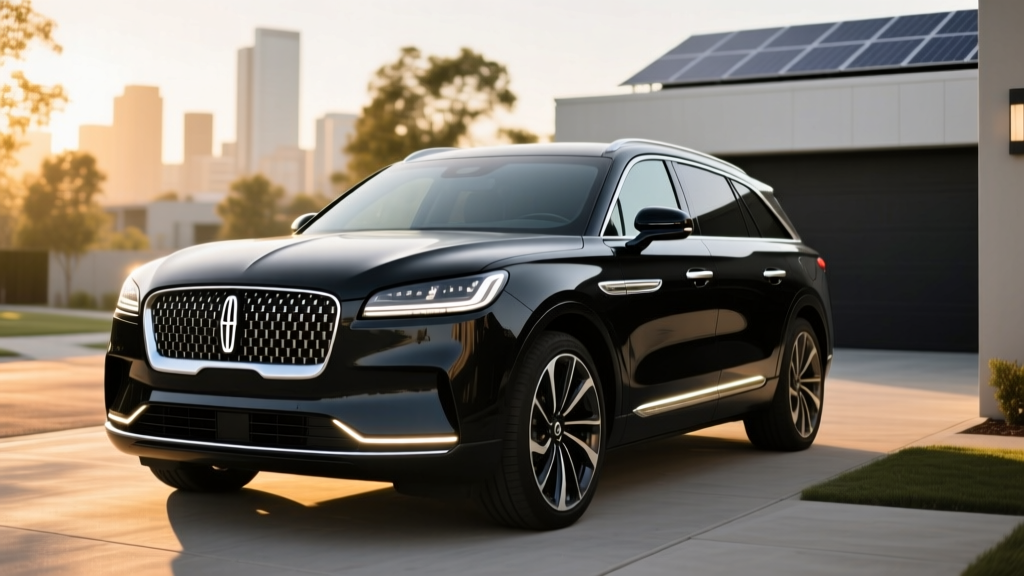
The Lincoln Aviator EV (officially badged as the 2025+ Aviator with a fully electric variant built on Ford's CD6 platform) targets luxury three-row SUV buyers who want premium refinement with battery-electric power. As of early 2026, Lincoln has not yet released a dedicated battery-electric Aviator to dealers — the current-generation Aviator is offered exclusively as a twin-turbo V6 gasoline model and a plug-in hybrid (PHEV) variant known as the Aviator Grand Touring. If you are searching for a Lincoln Aviator EV, you are likely looking at one of three paths: the existing Aviator Grand Touring PHEV, the upcoming all-electric Aviator expected no earlier than the 2027 model year, or cross-shopping the Aviator against battery-electric three-row competitors already on sale like the Rivian R1S, Kia EV9, and Cadillac Vistiq.
What the Lincoln Aviator EV Lineup Actually Looks Like in 2026
Lincoln's electrified three-row strategy currently rests on the Aviator Grand Touring PHEV, which pairs a 3.0-liter twin-turbo V6 with a plug-in hybrid system. Lincoln has confirmed that a fully electric Aviator successor is in development, aligned with Ford's broader EV platform investments, but no official EPA range, battery capacity, or pricing has been published for a battery-electric Aviator as of this writing. Any specs circulating for a "Lincoln Aviator EV" with a 300+ mile range or 100+ kWh battery are preliminary estimates — treat them as such.
Here is what is confirmed and available today, alongside reasonable projections for the upcoming all-electric model:
| Specification | Aviator Grand Touring (PHEV, On Sale) | Aviator EV (Projected / Announced) |
|---|---|---|
| Powertrain | 3.0L TT V6 + electric motor (PHEV) | Dual-motor AWD BEV (expected) |
| Combined Output | 494 hp / 630 lb-ft torque | Est. 480–560 hp |
| Battery Capacity | 13.1 kWh (usable, NMC) | Est. 100–120 kWh usable |
| Electric-Only Range (EPA) | ~17–21 miles (PHEV) | Est. 280–340 miles (BEV) |
| Combined MPGe / MPG | 23 MPG combined (gas); 56 MPGe (electric mode) | Est. 80–95 MPGe |
| DC Fast Charge Rate | N/A (PHEV, no DCFC) | Est. 175–250 kW peak |
| Level 2 Charge Rate | ~3.3 kW onboard | Est. 11.5–19.2 kW onboard |
| 10–80% DCFC Time | N/A | Est. 25–35 minutes |
| 0–60 mph | ~5.5 seconds | Est. 4.5–5.5 seconds |
| Starting MSRP | $72,490 (Grand Touring Reserve) | Est. $75,000–$85,000 |
| Battery Warranty | 8 yr / 100,000 mi (hybrid components) | Expected 8 yr / 100,000 mi |
Sources: fueleconomy.gov (EPA data for Grand Touring), Lincoln media center. Projected BEV figures are analyst estimates based on Ford/Lincoln platform capabilities and are not manufacturer-confirmed.
The PHEV Reality: Aviator Grand Touring Ownership Costs
If you are buying today and want electrified Aviator motoring, the Grand Touring PHEV is your only option. Here is what ownership actually costs compared to the standard gasoline Aviator.
| Cost Factor | Aviator Reserve (Gas V6) | Aviator Grand Touring (PHEV) |
|---|---|---|
| Base MSRP | $55,590 | $72,490 |
| Price Premium for Electrification | — | +$16,900 |
| EPA Combined MPG | 20 MPG | 23 MPG (hybrid) / 56 MPGe |
| Annual Fuel Cost (15,000 mi, $3.50/gal avg) | ~$2,625 | ~$2,100 (mixed gas/electric) |
| Annual Electricity Cost (PHEV, home charging) | $0 | ~$280 |
| Total Annual Energy Cost | ~$2,625 | ~$2,380 |
| Annual Energy Savings vs. Gas | Baseline | ~$245/year |
| Federal §30D Tax Credit (New) | $0 | Likely $0 (battery sourcing rules) |
| Estimated Insurance (Annual) | ~$2,400 | ~$2,700 |
The Grand Touring's $16,900 price premium over the gas Aviator Reserve is steep. At roughly $245 in annual energy savings, the payback period on the powertrain premium alone exceeds 68 years — meaning the PHEV Grand Touring is a performance and luxury upgrade first (494 hp vs. 400 hp in the gas model) and a fuel-savings play second. The real value proposition is the instant electric torque for city driving and the ability to complete short commutes on electricity alone.
How the Aviator Compares: EV vs. PHEV vs. Gas for Three-Row SUV Buyers
Buyers searching for a Lincoln Aviator EV are often weighing whether to wait for the all-electric model, buy the PHEV now, or cross-shop existing BEV competitors. Here is a data-driven comparison framework.
| Vehicle | Type | Range / Electric Miles | Est. MSRP | Energy Cost/Mile | Home Charging Needed? |
|---|---|---|---|---|---|
| Lincoln Aviator Reserve | Gas V6 | ~400 mi (gas tank) | $55,590 | $0.13/mi | No |
| Lincoln Aviator Grand Touring | PHEV | 17–21 mi electric + 370 mi gas | $72,490 | $0.09–$0.13/mi | Recommended |
| Lincoln Aviator EV (Projected) | BEV | 280–340 mi (est.) | $75,000–$85,000 | $0.04–$0.06/mi | Essential |
| Rivian R1S (Dual-Motor) | BEV | 352 mi (EPA, Max Pack) | $82,900 | $0.04–$0.05/mi | Essential |
| Kia EV9 (GT-Line AWD) | BEV | 270 mi (EPA) | $64,900 | $0.04–$0.05/mi | Essential |
| Cadillac Vistiq | BEV | ~300 mi (est.) | ~$78,000 (est.) | $0.04–$0.06/mi | Essential |
Energy costs based on national average electricity ($0.16/kWh) and gasoline ($3.50/gal). See fueleconomy.gov for model-specific data.
Real-World Ownership Considerations Before You Commit
Whether you buy the Grand Touring PHEV today or wait for the all-electric Aviator, these practical factors determine whether electrified ownership actually works for your situation.
Home Charging Access Is Non-Negotiable for a BEV
A battery-electric Aviator with an estimated 100+ kWh battery will require a Level 2 home charger (240V, 40–48 amp circuit) for practical daily use. A full charge on a 11.5 kW Level 2 unit would take approximately 9–11 hours from empty. Without home charging, relying exclusively on public DC fast chargers adds time, cost ($0.35–$0.50/kWh vs. $0.12–$0.16/kWh at home), and inconvenience. A typical Level 2 home installation costs $1,200–$3,500 depending on panel capacity and run distance — and a 100+ kWh BEV may push older 100-amp panels to require a $2,000–$5,000 upgrade to 200 amps.
The Grand Touring PHEV, by contrast, can charge its 13.1 kWh battery in about 3.5–4 hours on a standard 120V household outlet (Level 1), making it far more forgiving for apartment dwellers or those without garage charging infrastructure.
Cold-Weather Range Loss
Battery-electric vehicles lose 20–35% of their EPA-rated range in sustained sub-freezing temperatures. A projected 310-mile Aviator EV could realistically deliver 200–250 miles in January in Minnesota or New England. The PHEV Grand Touring's already-short 17–21 mile electric range shrinks to roughly 12–15 miles in cold weather, though the gasoline engine seamlessly compensates.
Charging Speed and Road Trips
For the future Aviator BEV, DC fast charging speed will be critical. If Lincoln achieves a sustained 200 kW peak charge rate (similar to the Ford F-150 Lightning and Mustang Mach-E GT), a 10–80% session would take approximately 28–35 minutes. However, charging curves taper significantly above 80% — that last 20% can take as long as the first 70%. Plan road-trip stops around 10–80% charges, not full fills.
Federal Tax Credit Eligibility: What the IRS §30D Rules Mean for Aviator Buyers
The IRS §30D clean vehicle credit provides up to $7,500 for qualifying new EVs and PHEVs, but eligibility hinges on multiple criteria that change frequently:
| Myth | Fact |
|---|---|
| "Every new EV gets the $7,500 credit." | Only vehicles meeting MSRP caps ($80,000 for SUVs), buyer income limits ($300K MFJ / $150K single), and battery critical-mineral sourcing requirements qualify. Many luxury EVs fail one or more tests. |
| "The Aviator Grand Touring PHEV qualifies." | The Grand Touring's MSRP can exceed $80,000 when optioned, and its battery sourcing may not meet 2026 critical-mineral thresholds. Verify per-VIN eligibility on fueleconomy.gov before purchase. |
| "I can transfer the credit at the dealership." | Point-of-sale transfer is available for qualifying vehicles, reducing the purchase price directly — but only if the vehicle and buyer both meet all §30D requirements at the time of sale. |
| "The credit will be the same next year." | Sourcing requirements tighten annually. A vehicle qualifying in 2026 may not qualify in 2027. Always confirm current-year rules. |
Always consult a tax professional and verify eligibility on irs.gov before relying on the credit for purchase decisions.
Decision Framework: Should You Buy, Wait, or Cross-Shop?
Here is a practical framework for Aviator EV-curious buyers based on real-world constraints:
Buy the Aviator Grand Touring PHEV Now If:
- You need a luxury three-row SUV today and cannot wait 12–24 months for the BEV variant
- Your daily commute is under 20 miles and you can charge at home (even on 120V)
- You frequently take long road trips where BEV charging infrastructure is still inconsistent in your region
- You want the 494 hp performance upgrade over the standard Aviator and view electrification as a bonus, not a payback play
Wait for the All-Electric Aviator If:
- You have reliable home Level 2 charging or can install it
- Your daily driving is under 250 miles and you rarely drive in extreme cold
- You want to minimize per-mile energy costs (~$0.04–$0.06/mi electric vs. $0.13/mi gas)
- You are willing to wait until late 2026 or 2027 for official specs and availability
Cross-Shop a Competing BEV Now If:
- You want a battery-electric three-row SUV without waiting — consider the Rivian R1S (352 mi range, $82,900) or Kia EV9 (270 mi, $64,900)
- Lincoln brand loyalty is secondary to EV capability and charging speed
- You want access to a proven DC fast-charging network (Tesla Superchargers via NACS adapter on Rivian)
Frequently Asked Questions About the Lincoln Aviator EV
Is the Lincoln Aviator available as a full electric vehicle?
Not yet. As of early 2026, the Aviator is sold as a gasoline V6 and a Grand Touring PHEV. Lincoln has signaled a fully electric Aviator is in development, but no official release date, pricing, or EPA-certified specs have been published. Expect the BEV Aviator no earlier than the 2027 model year.
What is the electric-only range of the Aviator Grand Touring PHEV?
The EPA rates the Aviator Grand Touring at approximately 17–21 miles of electric-only range depending on model year and configuration. In real-world driving — especially at highway speeds or in cold weather — expect 12–18 miles before the gasoline engine engages.
How much does it cost to charge the Aviator Grand Touring at home?
The PHEV's 13.1 kWh battery costs roughly $1.70–$2.60 to fully charge at home (based on $0.13–$0.20/kWh residential rates). That translates to approximately $0.08–$0.15 per electric mile — significantly cheaper than the gasoline Aviator's $0.13/mile at $3.50/gallon.
Will the future Lincoln Aviator EV qualify for the $7,500 federal tax credit?
It depends on the final MSRP (must be under $80,000 for SUVs under §30D), your adjusted gross income, and whether Lincoln's battery supply chain meets critical-mineral and component sourcing requirements at the time of sale. This is not guaranteed — verify on fueleconomy.gov and consult a tax professional before purchasing.
What home electrical upgrades do I need for a future Aviator BEV?
A 100+ kWh battery EV benefits from a 48-amp Level 2 charger on a dedicated 60-amp 240V circuit. Installation typically costs $1,200–$3,500, but homes with 100-amp electrical panels may require a $2,000–$5,000 panel upgrade to 200 amps. Have a licensed electrician evaluate your panel capacity before purchasing any BEV.
How does the Aviator Grand Touring PHEV compare to the gas Aviator in maintenance costs?
The PHEV carries similar maintenance requirements to the gas Aviator (oil changes, transmission fluid, brake service) since it still uses the twin-turbo V6. However, regenerative braking reduces brake pad wear. Expect annual maintenance of $400–$700 for both variants — a BEV Aviator, when available, would eliminate oil changes and reduce maintenance to roughly $200–$400 annually.