Quick Answer: Is the Lightship L1 Electric RV Worth It?
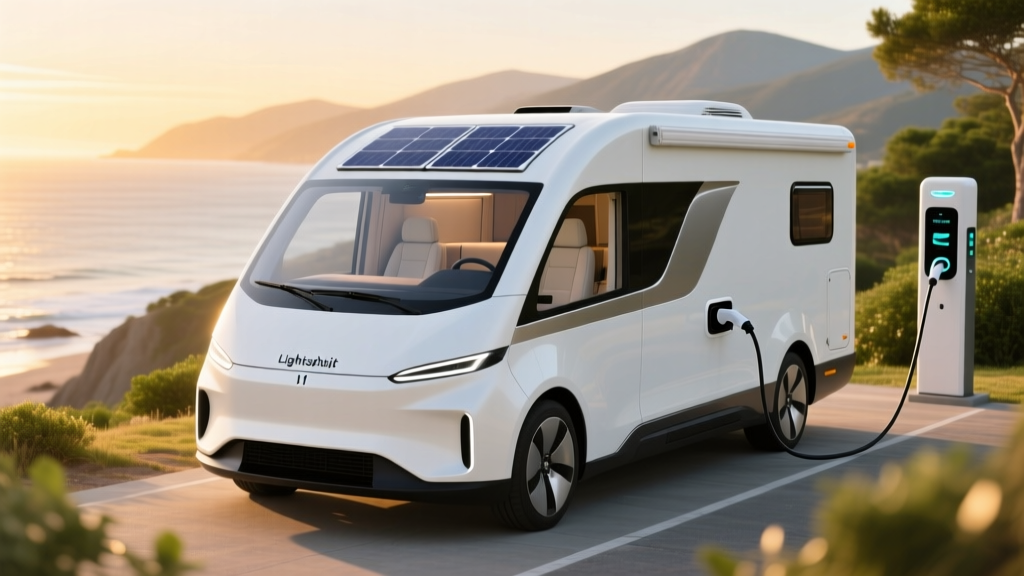
The Lightship L1 electric RV is an all-electric, aerodynamic travel trailer designed to preserve your EV's range while towing. With an estimated 300 miles of tow range (when pulled by a compatible EV like the Ford F-150 Lightning or Rivian R1T), an integrated ~80 kWh battery pack, and up to 3 kW of roof-mounted solar, the L1 aims to eliminate the 50–70% range loss that conventional travel trailers inflict on electric trucks. Base pricing starts around $125,000, placing it firmly in the premium RV segment. Deliveries are targeted for late 2025 into 2026, with reservations currently open. The L1 is best suited for EV-truck owners who want off-grid camping capability without sacrificing highway range or relying on loud, polluting gas generators.
What Is the Lightship L1 and Who Is It For?
The Lightship L1 is a travel trailer — not a motorhome — built from the ground up for electric-vehicle towing. Founded by former Tesla engineers, Lightship designed the L1 around three principles that conventional RV makers have largely ignored: extreme aerodynamic efficiency, a self-contained battery system that powers both the trailer and your campsite, and lightweight construction using aluminum and composite materials.
Traditional travel trailers are shaped like boxes on wheels. They create enormous aerodynamic drag, which is why towing a 5,000-lb conventional trailer can cut an EV truck's range from 320 miles down to 120–160 miles. The L1's teardrop-inspired profile, low ride height, and integrated solar canopy aim to reduce that drag penalty dramatically. Lightship claims the L1 enables up to 300 miles of range when towed by a properly equipped electric truck — roughly double what you'd get with a similarly sized conventional trailer.
Target buyer profile: You already own or plan to own an electric pickup (F-150 Lightning, Rivian R1T, Chevrolet Silverado EV, Tesla Cybertruck) and want a travel trailer that doesn't gut your range or require a gas generator at the campsite.
Lightship L1 Specs: Battery, Range, Solar, and Charging
Here's what we know from Lightship's published specifications and industry reporting. Note that as a new product entering production, some figures remain preliminary and may shift with EPA or third-party validation.
| Specification | Value |
|---|---|
| Trailer Battery Capacity | ~80 kWh (usable, LFP chemistry expected) |
| Tow Range (with EV truck) | Up to ~300 miles (manufacturer estimate) |
| Solar Roof Capacity | Up to 3 kW integrated panels |
| Off-Grid Power Duration | Up to 7 days (typical 2-person camping load) |
| Trailer Weight (dry) | ~7,500 lbs (estimated) |
| Sleeping Capacity | 4–6 (depending on floor plan) |
| Shore Power Charging | Level 2 (240V) compatible, estimated 8–10 hours 0–100% |
| DC Fast Charge Capability | CCS port planned (details TBD) |
| Base MSRP | ~$125,000 (estimated, before options) |
Battery chemistry note: Lightship has indicated a preference for LFP (lithium iron phosphate) cells, which offer longer cycle life (3,000+ cycles to 80% capacity) and better thermal stability than NMC, albeit at slightly lower energy density. For an RV that sits in sun and heat, LFP's safety margin is a meaningful advantage.
Solar recharging reality check: A 3 kW solar array in ideal conditions (direct sun, panels angled optimally) can generate roughly 12–18 kWh per day in summer. That's enough to recharge about 15–22% of the 80 kWh battery daily — sufficient for basic campsite loads (lights, fridge, devices, induction cooktop) but not enough to fully recharge the pack from empty. Think of solar as range-extending trickle charge, not a replacement for plugging in.
Electric RV vs Gas Motorhome: Real Cost Comparison
The L1 is a travel trailer, so the fairest comparison is against conventional travel trailers pulled by gas trucks — not Class A or Class C motorhomes. Here's how the economics stack up over five years of typical recreational use (approximately 5,000 towing miles per year).
| Cost Category | L1 + F-150 Lightning | Conventional 25' Trailer + F-150 Gas |
|---|---|---|
| Trailer Purchase | $125,000 | $45,000 |
| Truck Purchase (base) | $55,000 | $52,000 |
| Fuel / Electricity (5 yrs, 25k mi towing) | ~$2,500 (home + public charging) | ~$8,750 (gas at 10 MPG towing, $3.50/gal) |
| Generator Fuel (campsite) | $0 (battery + solar) | ~$1,500 (gas generator, 5 yrs) |
| Maintenance (trailer, 5 yrs) | ~$1,500 (no engine, minimal moving parts) | ~$3,000 (axles, brakes, more wear from heavier rig) |
| Truck Maintenance (5 yrs) | ~$2,000 (no oil changes, fewer fluids) | ~$4,500 (oil, transmission, spark plugs, etc.) |
| Estimated 5-Year Depreciation | ~$55,000 (EV + new-category trailer) | ~$38,000 |
| Total 5-Year Cost | ~$241,000 | ~$182,750 |
The bottom line: The Lightship L1 costs significantly more upfront and will likely depreciate faster in its early years as a new product category. However, operating costs are dramatically lower — roughly $6,250 less in fuel and maintenance over five years. If you camp frequently off-grid and value silent, emission-free campsites, the L1's premium buys a qualitatively different experience. If you tow only a few weekends a year, a conventional trailer remains the pragmatic financial choice.
Towing Range Reality: What to Actually Expect
Lightship's 300-mile tow-range claim assumes optimal conditions: moderate temperatures (60–75°F), flat terrain, speeds around 60–65 mph, and a fully charged truck with a high-range battery pack. Here's how real-world variables will affect that number:
- Highway speeds (75+ mph): Expect 220–260 miles. Aerodynamic drag increases with the square of speed; the L1's slippery shape helps but doesn't eliminate physics.
- Mountain terrain: Expect 180–230 miles on sustained climbs. Regenerative braking on descents will recover some energy, but net consumption rises sharply on grades.
- Cold weather (below 32°F): Expect 200–250 miles. Both the truck and trailer batteries lose efficiency in cold, and cabin heating in the truck adds load. The L1's battery thermal management system (details TBD) will be critical here.
- Headwinds: A sustained 20+ mph headwind can reduce range by 10–15%, similar to the effect on a conventional trailer but somewhat mitigated by the L1's lower drag coefficient.
For context, towing a conventional 25-foot travel trailer (like an Airstream Flying Cloud or Jayco Jay Feather) behind an F-150 Lightning Extended Range typically yields 120–170 real-world miles before you need to charge. The L1's value proposition is roughly doubling that figure, turning a stressful 400-mile trip (requiring 2–3 charging stops) into a manageable single-stop journey.
Charging the L1: Home, Campground, and On the Road
Charging logistics are the most practical concern for any electric RV buyer. Here's how the L1 breaks down across charging scenarios:
Home Charging (Between Trips)
The L1's ~80 kWh battery will need a Level 2 (240V) home charger for practical overnight replenishment. At a typical 48-amp Level 2 circuit delivering ~11.5 kW, expect a full charge in 8–10 hours. You'll need a dedicated 60-amp circuit at your home's electrical panel — if you're already running a Level 2 charger for your EV truck, you may need a panel upgrade (typically $1,500–$3,000) to support both simultaneously. Consult a licensed electrician for load calculations.
Campground Shore Power
Most RV campgrounds offer 30-amp or 50-amp shore power (120V/240V). A 50-amp RV hookup can deliver up to 12 kW, meaning a full charge at a well-equipped campground takes roughly 8 hours — perfect for overnight stays. However, many older campgrounds have 30-amp service (3.6 kW), which stretches a full charge to 22+ hours. Plan accordingly.
DC Fast Charging on the Road
Lightship has indicated the L1 will include a CCS DC fast-charge port, though peak charge rates haven't been confirmed. If the L1 supports 100–150 kW DC charging, a 10–80% charge could take roughly 30–45 minutes at a compatible station. This is a critical feature for road-trip viability, but public DC chargers capable of serving a trailer (with adequate pull-through space) remain scarce. Networks like Electrify America and Tesla Superchargers (with NACS adapter) are gradually adding pull-through stalls, but availability varies widely by region.
Federal Tax Credits and Incentives: What Applies?
The Lightship L1 occupies a tricky space in current IRS §30D tax-credit rules. Here's what you need to know:
- The §30D new clean vehicle credit ($7,500 max) applies to motor vehicles, not trailers. The L1 is a travel trailer, so it does not qualify for the federal EV tax credit directly.
- Your tow vehicle may qualify. If you purchase a new F-150 Lightning, Rivian R1T, or other eligible EV truck, the truck itself may qualify for up to $7,500 under §30D — subject to MSRP caps ($80,000 for trucks), buyer income limits ($150K single / $300K joint), and battery-sourcing requirements. Point-of-sale transfer is available for 2026.
- Residential energy credits (§25D). If you install solar panels at home or a home battery system to support EV/RV charging, you may qualify for the 30% residential clean energy credit on those installations — but not on the L1's integrated solar panels themselves.
- State incentives vary. Some states offer rebates for EV charging equipment or RV-related upgrades. Check your state energy office for current programs.
Consult a tax professional before making purchase decisions based on credit eligibility. IRS rules on battery sourcing and critical minerals continue to evolve, and individual circumstances vary.
Common Misconceptions About Electric RVs
| Myth | Fact |
|---|---|
| "You can't tow anything useful with an EV." | Modern EV trucks tow 7,700–10,000 lbs. The range penalty is real (40–60% loss with conventional trailers), but the L1's aero design aims to cut that loss roughly in half. |
| "Solar panels on an RV are just a gimmick." | 3 kW of solar won't fully recharge an 80 kWh battery, but it can sustain campsite loads indefinitely off-grid — eliminating the need for a gas generator and its noise, fumes, and fuel cost. |
| "Electric RVs will strand you without power." | The L1's 80 kWh battery holds enough energy to power a campsite (fridge, lights, cooktop, HVAC) for up to 7 days without solar or shore power. That's far more reserve than a typical RV house battery (2–5 kWh). |
| "The battery will need expensive replacement in a few years." | LFP chemistry is rated for 3,000+ charge cycles to 80% capacity. At typical recreational use (20–30 cycles per year), the battery should last 15–20+ years before significant degradation. Lightship's warranty terms are TBD but industry standard is 8 years. |
| "Charging an RV takes all day." | At a 50-amp campground hookup, overnight charging (8 hours) is sufficient. DC fast charging (if equipped at 100+ kW) could add 150+ miles of trailer battery in 30–40 minutes. |
Decision Framework: Should You Buy the Lightship L1?
Buy the Lightship L1 if:
- You already own or are committed to buying an electric pickup truck
- You camp 10+ nights per year and value off-grid, generator-free sites
- You regularly tow 200+ miles and need maximum range preservation
- You have home Level 2 charging (or can install it) for both truck and trailer
- You're comfortable spending $125,000+ on a first-generation product in a new category
Skip the L1 (for now) if:
- You tow only 2–3 weekends a year — a conventional trailer's lower cost makes more sense
- You don't have reliable home charging access for the trailer between trips
- You need a proven, multi-year track record before investing in a premium RV
- Your tow vehicle is a gas truck — the L1's range advantage matters most with EVs
- You need immediate delivery — production is ramping through 2026 and wait times may be significant
Frequently Asked Questions
Can I tow the Lightship L1 with a gas truck?
Technically yes, if your gas truck has adequate towing capacity (~7,500+ lbs). However, the L1's core value proposition — preserving EV range through aerodynamics and integrated battery assist — is designed for electric trucks. Towing it with a gas truck would give you the campsite power benefits but not the range-extension benefits that justify the premium price.
How long will the L1's battery last before replacement?
With expected LFP chemistry rated at 3,000+ cycles to 80% capacity, and typical RV use of 20–40 full cycles per year, the battery should provide 15–20+ years of service before capacity drops meaningfully. Replacement cost for an 80 kWh LFP pack is difficult to project for the 2040s, but current LFP pack pricing trends suggest it will be significantly cheaper than today's estimates of $10,000–$15,000.
Do I need a special driver's license to tow the L1?
In most U.S. states, no. The L1's estimated ~7,500-lb dry weight falls within standard non-commercial towing limits for most jurisdictions. However, combined gross vehicle weight (truck + trailer) may approach 15,000+ lbs, which in a few states requires a non-commercial Class A or B license. Check your state's DMV requirements.
Will the L1 work at RV parks with only 30-amp service?
Yes, but charging will be slow. A 30-amp, 120V hookup delivers about 3.6 kW — enough to run campsite loads and slowly charge the battery (roughly 22 hours for a full charge). For faster turnaround, seek parks with 50-amp (240V) service or plan multi-night stays.
Is the Lightship L1 eligible for any federal tax credits?
The L1 itself, as a trailer, does not qualify for the §30D new clean vehicle credit. However, the EV truck you use to tow it may qualify for up to $7,500, subject to 2026 IRS rules on MSRP caps, buyer income, and battery sourcing. Home charging equipment installation may qualify for the §30C alternative fuel infrastructure credit (up to $1,000 for residential). Always consult a tax professional for your specific situation.