Quick Verdict: A Spacious Midsize EV With Real Road-Trip Credentials
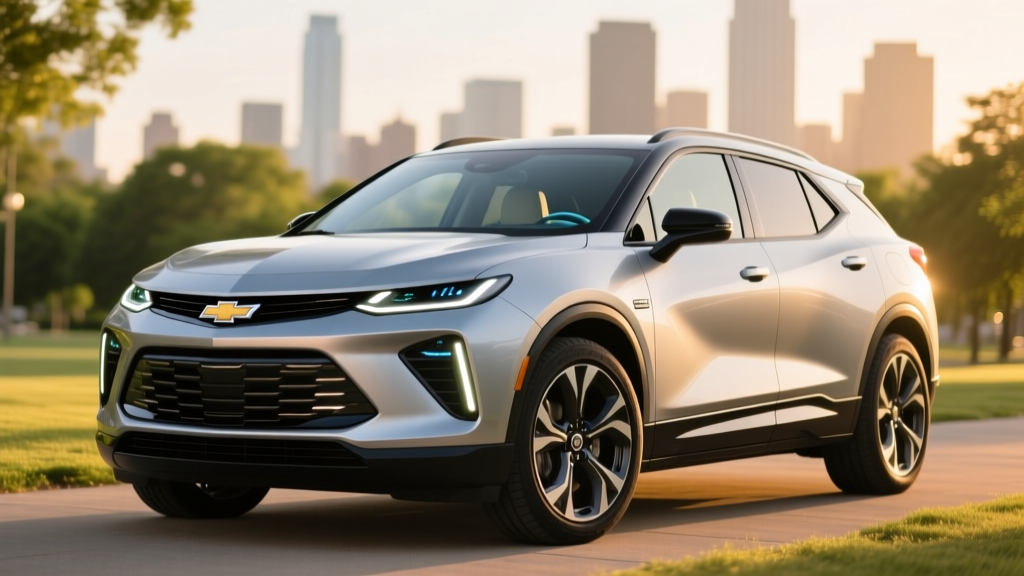
The 2026 Chevy Blazer EV occupies a specific niche: a two-row midsize crossover that prioritizes cabin space, highway comfort, and straightforward usability over performance theatrics. After GM streamlined the lineup following the 2024 launch hiccups, the 2026 Blazer EV arrives with a more focused set of trims, standard NACS charging port compatibility, and a starting price that undercuts several rivals in the midsize electric SUV segment. It's not the quickest or longest-range EV in its class, but for buyers who need genuine cargo room, a comfortable ride, and access to the Tesla Supercharger network, it makes a compelling case.
This review covers every spec that matters to real buyers — from actual highway range and charging-curve behavior to federal tax credit eligibility under current IRS §30D rules. We'll also address the software issues that plagued early models and whether GM has resolved them for 2026.
EPA Range, Battery Capacity, and Real-World Efficiency
The 2026 Blazer EV is offered with two battery configurations depending on drivetrain. The rear-wheel-drive (RWD) model carries a usable battery capacity of approximately 102 kWh (NMC chemistry), while the all-wheel-drive (AWD) variant uses a slightly smaller pack at roughly 89 kWh usable. Both employ liquid-cooled lithium-ion modules with nickel-manganese-cobalt (NMC) cathode chemistry, which delivers higher energy density than LFP but requires more careful charge management for long-term longevity.
| Trim / Drivetrain | EPA Est. Range | Real-World Highway (70-75 mph) | Cold Weather Estimate (20-30°F) |
|---|---|---|---|
| LT RWD | 324 miles | ~265–285 miles | ~220–245 miles |
| RS AWD | 279 miles | ~225–245 miles | ~185–210 miles |
| SS AWD (Performance) | 293 miles | ~235–255 miles | ~195–220 miles |
The RWD model's large battery delivers strong EPA numbers, but highway driving at sustained speeds reduces range by roughly 12–18%. Cold weather compounds this with an additional 15–25% loss due to battery resistance and cabin heating demands. Preconditioning the battery while plugged in mitigates some of this loss.
Efficiency ratings land at approximately 89 MPGe combined (38 kWh/100 miles) for the RWD and 84 MPGe combined (40 kWh/100 miles) for the AWD variants, per fueleconomy.gov. These figures place the Blazer EV mid-pack among midsize electric crossovers — less efficient than the Hyundai Ioniq 5 but comparable to the Ford Mustang Mach-E and Volkswagen ID.4.
Charging Speed: DC Fast Charge and Home Level 2
For 2026, the Blazer EV ships with a native NACS (North American Charging Standard) port, granting direct access to Tesla Supercharger V3 and V4 stations without an adapter. This is a significant advantage over CCS-equipped rivals that still require a dongle for Supercharger access.
| Charging Level | Power / Rate | Speed (Approx.) | Notes |
|---|---|---|---|
| Level 1 (120V) | 1.2 kW | ~3–4 miles/hour | Emergency/trickle only; full charge in 70+ hours |
| Level 2 (240V, 48A) | 11.5 kW | ~32–36 miles/hour | Full charge in ~9–10 hours (102 kWh pack) |
| DC Fast Charge (Peak) | 190 kW peak | 10–80% in ~31 minutes | Peak rate sustained to ~55% SoC, then tapers |
The DC fast-charge peak of 190 kW is respectable but not class-leading. The Hyundai Ioniq 5 peaks at 240 kW on an 800V architecture, and the Tesla Model Y can sustain high rates well past 60% state of charge. In practice, the Blazer EV's charge curve holds near its peak through about 50–55% SoC, then progressively tapers. From 80–100%, expect charging to slow dramatically — plan your road-trip stops around 10–80% sessions for the best time efficiency.
Home charging at 11.5 kW (Level 2, 48-amp circuit) adds roughly 32–36 miles of range per hour, which means a full overnight charge is practical for most daily driving needs. A typical Level 2 home installation (240V/60A circuit with a hardwired wall connector) costs between $800 and $2,000 depending on panel proximity and local permit fees — work that should be scoped by a licensed electrician.
Performance, Drivetrain, and Driving Dynamics
The 2026 Blazer EV offers three distinct powertrain configurations:
- LT RWD: Single rear motor, 220 hp, 0–60 mph in approximately 7.8 seconds. Adequate for commuting and highway merging; not sporty.
- RS AWD: Dual-motor all-wheel drive, 288 hp, 0–60 mph in approximately 5.8 seconds. The volume trim — confident acceleration in all conditions.
- SS AWD: Dual-motor performance tune, 557 hp, 0–60 mph in approximately 3.9 seconds. The enthusiast pick, rivaling some sports sedans off the line.
Regenerative braking is adjustable through multiple levels, including a one-pedal driving mode that allows near-complete stops without touching the brake pedal. The ride quality leans toward comfort over sportiness — GM tuned the suspension for highway cruising and rough pavement absorption, which suits the Blazer's family-oriented positioning. Steering feel is light and numb by enthusiast standards, but predictable and easy around town.
| Specification | LT RWD | RS AWD | SS AWD |
|---|---|---|---|
| Drivetrain | Rear-Wheel Drive | Dual-Motor AWD | Dual-Motor AWD |
| Horsepower | 220 hp | 288 hp | 557 hp |
| 0–60 mph | ~7.8 sec | ~5.8 sec | ~3.9 sec |
| Usable Battery | ~102 kWh (NMC) | ~89 kWh (NMC) | ~89 kWh (NMC) |
| EPA Range | 324 mi | 279 mi | 293 mi |
| Peak DC Charge | 190 kW | 190 kW | 190 kW |
| Level 2 Rate | 11.5 kW | 11.5 kW | 11.5 kW |
| Towing Capacity | 1,500 lbs | 1,500 lbs | 1,500 lbs |
Interior Space, Cargo, and Technology
The Blazer EV's cabin is genuinely spacious for a two-row crossover. Front legroom measures 43.2 inches, with rear legroom at 38.5 inches — enough for adults on longer trips without complaint. Cargo volume behind the second row is 25.5 cubic feet, expanding to approximately 59.4 cubic feet with the rear seats folded. There is no front trunk (frunk) in the Blazer EV, which is a missed opportunity for weather-sealed storage that rivals like the Ford Mustang Mach-E and Rivian R1S provide.
The infotainment system centers on a 17.7-inch diagonal touchscreen running Google Built-In, which includes native Google Maps navigation, Google Assistant voice control, and access to the Google Play Store for apps. A 11.0-inch digital instrument cluster faces the driver. Wireless Apple CarPlay and Android Auto are standard. The system is responsive and the screen is large, but the heavy reliance on touchscreen controls for climate and vehicle settings means fewer physical buttons than some buyers prefer — a common complaint in GM's recent interiors.
Driver assistance comes via Chevy's Super Cruise system on higher trims (available on RS and SS), which enables hands-free driving on over 400,000 miles of mapped highways in the US and Canada. This is an SAE Level 2 system — the driver must remain attentive and eyes on the road, monitored by a driver-facing camera. Super Cruise is one of the most refined Level 2 systems available, with smooth lane changes and natural speed management, but it is not autonomous driving and requires continuous supervision.
- Operates only on pre-mapped divided highways — not surface streets or unmapped roads
- Driver must keep eyes on the road at all times (camera-monitored)
- Hands-free does not mean attention-free — system issues escalating alerts if driver looks away
- Does not handle construction zones, emergency vehicles, or severe weather autonomously
- Requires an active OnStar/Super Cruise subscription after the initial trial period
Pricing, Trims, and Federal Tax Credit Eligibility
The 2026 Blazer EV lineup has been simplified into three trims, with pricing as follows:
| Trim | Base MSRP | Est. As-Tested* | §30D Credit Eligible? | Effective Price (if eligible) |
|---|---|---|---|---|
| LT RWD | $43,200 | $45,500 | Yes (up to $7,500) | ~$35,700 – $38,000 |
| RS AWD | $47,400 | $51,200 | Yes (up to $7,500) | ~$39,900 – $43,700 |
| SS AWD | $56,500 | $60,800 | Yes (up to $7,500) | ~$49,000 – $53,300 |
*As-tested prices reflect common option packages and destination charges. Actual dealer pricing may vary.
All 2026 Blazer EV trims fall under the IRS §30D MSRP cap of $80,000 for SUVs, making them potentially eligible for the full $7,500 federal tax credit — provided the buyer and vehicle meet all current requirements. The credit can now be transferred to the dealer at the point of sale, effectively reducing the purchase price at the dealership rather than requiring the buyer to wait for a tax refund.
- Buyer income caps: Modified AGI must not exceed $150,000 (single), $225,000 (head of household), or $300,000 (joint filers)
- MSRP cap: Vehicle base price must be ≤$80,000 for SUVs (all Blazer EV trims qualify)
- Battery sourcing: Increasing percentages of critical minerals and battery components must be sourced from the US or free-trade-agreement countries — check the specific VIN on fueleconomy.gov before purchasing, as eligibility can shift mid-year
- Point-of-sale transfer: Buyers can elect to transfer the credit to the dealer for an upfront price reduction; requires tax documentation at sale
- New vehicle only: Must be purchased new; used EVs have a separate credit (§25E, up to $4,000)
We recommend confirming your specific eligibility with a tax professional and checking the VIN-level credit status on the official IRS clean vehicle database before finalizing a purchase. Battery sourcing requirements tighten annually, and a vehicle that qualifies in January may not qualify in December.
Warranty, Battery Longevity, and Ownership Costs
Chevrolet backs the 2026 Blazer EV with the following warranty coverage:
- Battery & propulsion components: 8 years / 100,000 miles (whichever comes first), covering capacity loss below 60% of original
- Limited vehicle warranty: 3 years / 36,000 miles bumper-to-bumper
- Powertrain (motors, reduction gears): 5 years / 60,000 miles
- Corrosion: 6 years / 100,000 miles
The 60% capacity retention threshold in the battery warranty is lower than some competitors — Hyundai guarantees 70% retention over 10 years/100,000 miles for the Ioniq 5. In practice, NMC batteries in liquid-cooled packs like the Blazer's typically lose 8–15% capacity over the first 100,000 miles based on industry degradation data, so hitting the 60% threshold would be unusual under normal use.
Five-year total cost of ownership is competitive when factoring in the federal tax credit, lower per-mile energy costs versus gasoline, and reduced maintenance (no oil changes, fewer brake replacements due to regen). Insurance premiums for the Blazer EV tend to run 10–20% higher than equivalent gas-powered Blazers, which partially offsets fuel savings. Home-charging at the national average electricity rate of ~$0.16/kWh yields a cost of approximately $0.05–0.06 per mile, versus ~$0.12–0.15 per mile for a comparable gas SUV at $3.50/gallon.
How It Stacks Up Against Key Competitors
| Attribute | Chevy Blazer EV RS AWD | Ford Mustang Mach-E Premium AWD | Hyundai Ioniq 5 SEL AWD | Tesla Model Y Long Range AWD |
|---|---|---|---|---|
| EPA Range | 279 mi | 290 mi | 290 mi | 320 mi |
| Battery (usable kWh) | ~89 kWh | ~88 kWh | ~77.4 kWh | ~75 kWh |
| Peak DC Charge | 190 kW | 150 kW | 240 kW | 250 kW |
| 10–80% DC Time | ~31 min | ~41 min | ~18 min | ~25 min |
| 0–60 mph | ~5.8 sec | ~5.1 sec | ~5.2 sec | ~4.8 sec |
| Cargo (behind 2nd row) | 25.5 cu ft | 29.7 cu ft | 27.2 cu ft | 30.2 cu ft |
| Base MSRP (AWD) | $47,400 | $48,995 | $49,950 | $48,990 |
| Native NACS Port | Yes | No (adapter) | No (adapter) | Yes |
| Hands-Free Highway Assist | Super Cruise | BlueCruise | Highway Driving Assist | Autopilot/FSD |
The Blazer EV's main advantages are its native NACS port, Super Cruise availability, and strong rear-seat space. Its main disadvantages are slower DC charging than the Ioniq 5 and Model Y, less cargo room than the Mach-E, and a battery warranty retention threshold that trails Hyundai's. For road-trippers who value Supercharger network access and hands-free highway driving, the Blazer EV is a strong pick. For buyers who prioritize charging speed above all else, the Ioniq 5 remains the benchmark.
- Native NACS port — direct Supercharger access without an adapter
- Spacious rear seat with 38.5 inches of legroom
- Super Cruise hands-free highway driving on RS and SS trims
- Competitive pricing after $7,500 federal tax credit
- Comfortable, compliant ride quality for daily commuting
- SS trim offers genuine sports-car acceleration at 557 hp
- DC fast charging (190 kW peak) trails Ioniq 5 and Model Y
- No front trunk (frunk) — missed utility opportunity
- Battery warranty retention threshold at 60% is below class average
- Touchscreen-heavy interior with few physical climate controls
- Software reliability concerns from 2024 launch linger in consumer perception
- Towing limited to 1,500 lbs — insufficient for most trailer needs
Who Should Buy the 2026 Chevy Blazer EV?
- You want native Tesla Supercharger access without carrying an adapter
- You prioritize rear-seat comfort and highway ride quality over sportiness
- Super Cruise hands-free driving is important for your commute
- You want a mainstream-brand EV with a large dealer service network
- Your daily driving is under 80 miles and you charge at home overnight
- DC fast-charge speed is your top priority (consider Ioniq 5 or Model Y)
- You need more than 25.5 cu ft of cargo space without folding seats
- You need to tow more than 1,500 lbs regularly
- You prefer physical buttons for climate and volume controls
Frequently Asked Questions
What is the real-world range of the 2026 Chevy Blazer EV?
The EPA rates the RWD LT at 324 miles and the AWD RS at 279 miles. In real-world highway driving at 70–75 mph, expect roughly 265–285 miles from the RWD and 225–245 miles from the AWD. Cold weather (below 30°F) can reduce these figures by an additional 15–25%, bringing the AWD RS down to roughly 185–210 miles in winter highway conditions.
How fast does the Blazer EV charge at home and on the road?
At home on a Level 2 (240V, 48A) charger, the Blazer EV charges at up to 11.5 kW, adding roughly 32–36 miles of range per hour — a full charge takes about 9–10 hours. On DC fast chargers, it peaks at 190 kW and charges from 10–80% in approximately 31 minutes. The charge rate tapers noticeably above 55% state of charge.
How much does the 2026 Blazer EV cost after the federal tax credit?
The LT RWD starts at $43,200 MSRP. If you qualify for the full $7,500 §30D credit (via point-of-sale transfer), the effective price drops to approximately $35,700 before destination and options. The RS AWD starts at $47,400, dropping to roughly $39,900 after the credit. Eligibility depends on your income, the vehicle's battery sourcing, and MSRP caps — verify with the IRS database and a tax professional.
Does the 2026 Blazer EV qualify for the $7,500 federal EV tax credit?
All Blazer EV trims fall under the $80,000 MSRP cap for SUVs, making them potentially eligible. However, eligibility also depends on the buyer's modified adjusted gross income (≤$150K single, ≤$300K joint), battery component and critical mineral sourcing requirements that tighten each year, and purchasing the vehicle new. Check your specific VIN on fueleconomy.gov before buying.
Is the 2026 Blazer EV worth buying versus the Tesla Model Y or Hyundai Ioniq 5?
It depends on your priorities. The Blazer EV offers native Supercharger access, Super Cruise, and a comfortable ride at a competitive post-credit price. The Model Y offers more range, more cargo space, and faster charging but a firmer ride and less conventional interior. The Ioniq 5 charges significantly faster (240 kW peak, ~18 min 10–80%) but requires an adapter for Superchargers. For buyers who value comfort and Supercharger convenience above all else, the Blazer EV is a strong choice.
Has GM fixed the software issues from the 2024 Blazer EV launch?
GM paused 2024 Blazer EV sales in early 2024 due to infotainment and electrical system bugs, then resumed sales after extensive software updates. The 2026 model benefits from multiple over-the-air update cycles and a more mature software stack. Early reviews and owner reports for the 2025–2026 models indicate significantly improved stability, though we recommend a thorough test drive and verification that all systems function correctly before purchase.
What is the battery warranty coverage?
Chevrolet covers the Blazer EV's battery and propulsion components for 8 years or 100,000 miles, whichever comes first. The warranty covers capacity loss below 60% of original capacity. This is adequate but note that some competitors guarantee 70% retention over a similar or longer period.