Quick Verdict: The Lifted Hummer EV Is a Statement Piece With Real Capability
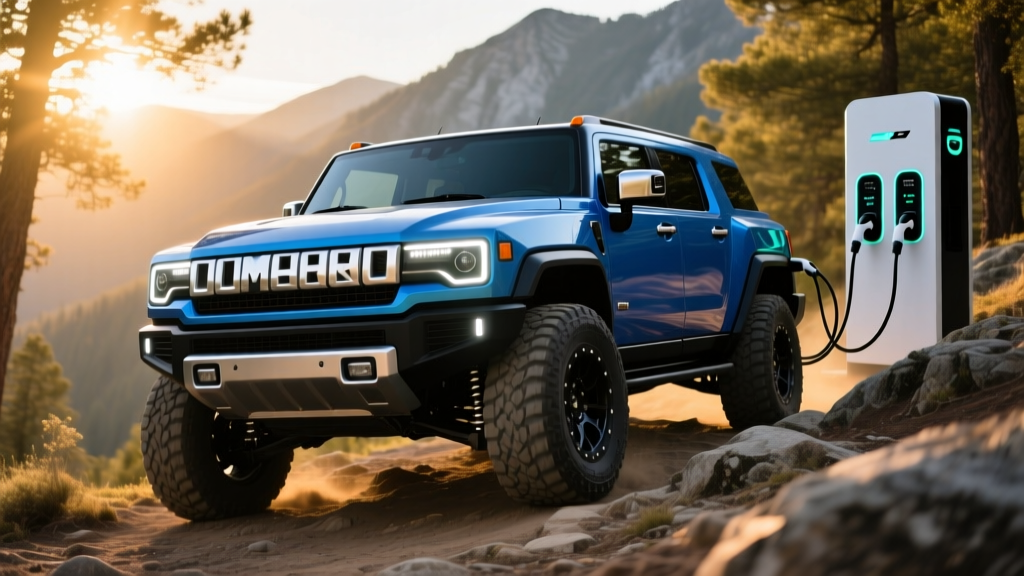
The GMC Hummer EV — in both Pickup and SUV body styles — remains the most physically imposing electric vehicle on the road. For 2026, GMC continues to offer the Hummer EV with its available Extreme Off-Road package that gives the truck its signature lifted stance, massive 35-inch mud-terrain tires, underbody armor, and locking differentials. This isn't just cosmetic: the lifted Hummer EV delivers genuine off-road prowess wrapped around a 212 kWh Ultium battery pack and up to 1,000 horsepower.
But size comes with trade-offs. At nearly 9,500 pounds (the Pickup), efficiency suffers, real-world highway range falls well short of the EPA sticker, and public charging infrastructure still isn't built for a vehicle this wide. If you're weighing a lifted Hummer EV purchase, this review breaks down every number that matters — range, charging speed, pricing, tax credits, and whether it actually makes sense versus the Rivian R1T, Ford F-150 Lightning, or Chevrolet Silverado EV.
2026 Hummer EV Full Spec Sheet
| Specification | Hummer EV Pickup (3X) | Hummer EV SUV (3X) |
|---|---|---|
| EPA Range | 381 miles | 314 miles |
| Battery (usable) | ~212 kWh (NMC) | ~212 kWh (NMC) |
| Drivetrain | Tri-motor AWD | Tri-motor AWD |
| Horsepower | 1,000 hp (Watts to Freedom) | 830 hp |
| 0-60 mph | ~3.0 seconds | ~3.5 seconds |
| Max DC Fast Charge | 350 kW (peak) | 350 kW (peak) |
| 10-80% DC Charge Time | ~34 minutes | ~34 minutes |
| Level 2 Home Charge | 19.2 kW (~52 mi/hr) | 19.2 kW (~44 mi/hr) |
| MPGe (combined) | 47 MPGe | 47 MPGe |
| Efficiency | ~72 kWh/100 mi | ~72 kWh/100 mi |
| Towing Capacity | 7,500 lbs | 7,500 lbs |
| Ground Clearance (max) | 15.9 inches (Extract Mode) | 15.9 inches (Extract Mode) |
| Base MSRP (2026) | $98,845 (2X) | $98,845 (2X) |
| Battery Warranty | 8 yr / 100,000 mi | 8 yr / 100,000 mi |
Sources: EPA fueleconomy.gov, GMC Hummer EV official specs.
Range Reality: EPA Sticker vs. What You'll Actually Get
Real-World Expectation: 300-330 miles highway (Pickup); 250-280 miles highway (SUV). Cold weather (below 32°F) reduces range an additional 15-25%. With the Extreme Off-Road package's 35-inch mud-terrain tires, expect a further 5-10% reduction versus the standard all-terrain tires.
The Hummer EV's 212 kWh Ultium battery pack is the largest in any production vehicle. That's an enormous amount of energy — roughly three times the capacity of a Tesla Model Y Long Range. But physics is unforgiving: pushing a 9,500-pound brick through the air at 70 mph requires massive energy. The Hummer EV Pickup's combined efficiency of 47 MPGe (approximately 72 kWh per 100 miles) is among the lowest of any current EV.
In practical terms, a road trip at sustained highway speeds in moderate weather will net you roughly 300-330 miles in the Pickup before you need to stop. The SUV, with its slightly shorter wheelbase and lower range rating, delivers closer to 250-280 miles on the highway. If you're running the Extreme Off-Road package with aggressive mud-terrain tires, rolling resistance increases, and that number drops further.
Cold weather compounds the issue. The Hummer EV uses a resistance heater supplemented by a heat pump system, but heating a cabin this large in sub-freezing temperatures consumes significant energy. Plan for 15-25% range loss in winter conditions, putting real cold-weather highway range closer to 240-280 miles for the Pickup.
The battery uses GM's Ultium NMC (nickel manganese cobalt) pouch cells. NMC chemistry offers high energy density — necessary to hit these range targets in such a heavy vehicle — but it's more sensitive to extreme temperatures than LFP chemistry. The 8-year/100,000-mile battery warranty covers capacity retention below 60% of original capacity, which aligns with industry norms but isn't as generous as Hyundai's 10-year/100,000-mile coverage.
Charging Speed: 350 kW Peak, But Read the Fine Print
| Charging Level | Power | Speed | Notes |
|---|---|---|---|
| Level 1 (120V) | ~1.4 kW | ~3 mi/hr | Emergency/trickle only; full charge takes 6+ days |
| Level 2 (240V, 80A) | 19.2 kW | ~44-52 mi/hr | Full charge overnight (~11-12 hours); requires hardwired 100A circuit |
| DC Fast Charge | Up to 350 kW (peak) | 10-80% in ~34 min | Peak rate only sustained briefly; average rate ~200-220 kW |
The Hummer EV supports peak DC fast charging at 350 kW on compatible chargers (Electrify America, EVgo, and select Tesla Supercharger stations via the NACS adapter now standard on 2025+ models). However, peak kW is not sustained kW. The charge curve on the 212 kWh pack means you'll see 300-350 kW briefly at low state of charge (roughly 10-20%), then the rate tapers progressively. The average rate across a 10-80% session is closer to 200-220 kW, which still delivers a 10-80% charge in approximately 34 minutes.
That 34-minute figure is respectable for a battery this massive — it's roughly the same time as smaller-battery EVs because the charge power scales with capacity. But it means your road-trip stops won't be quick 15-minute top-ups. Plan accordingly.
For home charging, the Hummer EV accepts up to 19.2 kW on Level 2 (240V, 80 amps). This requires a hardwired wall connector on a dedicated 100-amp circuit. Expect installation costs of $2,000-$4,500 depending on your panel capacity — and many homes will need a 200-amp panel upgrade ($1,500-$3,000 additional) to support a continuous 80A draw. At 19.2 kW, a full 0-100% charge takes roughly 11-12 hours, making overnight charging practical for daily use.
If your home electrical service is limited to 100A total (common in older homes), you'll likely be restricted to a 48A Level 2 charger (11.5 kW), which extends a full charge to roughly 18-20 hours. Consult a licensed electrician before committing to a purchase — this is a non-negotiable step for a vehicle with a battery this large.
Performance: 1,000 HP and a 3-Second 0-60 in a 9,500-lb Truck
The tri-motor 3X powertrain in the Hummer EV Pickup produces up to 1,000 horsepower and 12,000 lb-ft of wheel torque when you engage Watts to Freedom (WTF) mode — GMC's launch-control sequence that lowers the air suspension, preconditions the battery, and primes the motors. The result is a 0-60 mph time of approximately 3.0 seconds, which is genuinely startling in a vehicle with the footprint of a small apartment.
The SUV variant, while sharing the tri-motor layout, is tuned to 830 hp and runs 0-60 in roughly 3.5 seconds. Both variants come standard with e4WD and torque vectoring across the rear axle.
The available Adaptive Air Ride suspension offers 5.8 inches of travel and enables Extract Mode, which raises the vehicle an additional 5.8 inches to a maximum 15.9 inches of ground clearance — enough to clear serious obstacles on technical trails. The approach, departure, and breakover angles with the Extreme Off-Road package rival dedicated off-roaders like the Jeep Wrangler Rubicon 392.
On-road, the Hummer EV rides surprisingly well for its mass. The air suspension soaks up imperfections, and the torque-vectoring rear axle keeps it planted in corners. But make no mistake: this is a heavy vehicle, and you feel that weight during emergency maneuvers and braking. Stopping distances from 60 mph are longer than lighter EVs, and tire wear on the massive 35-inch rubber is a real ownership cost to budget for.
Standard driver-assistance features include Super Cruise — GM's Level 2 hands-free driving system on compatible mapped highways (currently over 750,000 miles of roads in North America). Super Cruise is genuinely excellent for long highway stretches, but it requires continuous driver attention and does not make the Hummer EV autonomous. You must keep your eyes on the road at all times.
Pricing, Trims, and Federal Tax Credit Eligibility
| Trim / Configuration | 2026 MSRP | Federal Tax Credit | Effective Price |
|---|---|---|---|
| Pickup 2X (dual-motor) | $98,845 | $0 (MSRP cap exceeded) | $98,845 |
| Pickup 3X (tri-motor) | $106,495 | $0 (MSRP cap exceeded) | $106,495 |
| Pickup 3X Extreme Off-Road | ~$119,000 | $0 (MSRP cap exceeded) | ~$119,000 |
| SUV 2X (dual-motor) | $98,845 | $0 (MSRP cap exceeded) | $98,845 |
| SUV 3X (tri-motor) | $106,495 | $0 (MSRP cap exceeded) | $106,495 |
The pricing reality for the lifted Hummer EV is stark: you're paying a six-figure premium for exclusivity and capability, and the federal government won't be subsidizing any of it. The base 2X dual-motor trims start at $98,845, but the lifted configuration most buyers want — the 3X with Extreme Off-Road package — pushes the price to approximately $119,000 before destination, dealer markups, or accessories.
Some states offer their own EV incentives that may partially offset the cost (Colorado, for example, has offered rebates for trucks over a certain weight class), but these vary by jurisdiction and change frequently. Check your state's energy office or department of revenue for current programs.
Cargo, Passenger Space, and Daily Practicality
The Hummer EV Pickup offers a 5-foot bed with approximately 37 cubic feet of cargo volume, plus a front trunk (frunk) with 11.3 cubic feet — one of the largest frunks in any EV, thanks to the Ultium platform's packaging. The MultiPro Tailgate provides six configurations for loading and tailgating. Maximum payload is rated at 1,300 pounds.
The SUV variant trades the bed for enclosed cargo space: approximately 35.9 cubic feet behind the second row and up to 81.8 cubic feet with the rear seats folded. Both body styles seat five passengers.
Interior space is generous in all dimensions. Front-seat legroom measures approximately 45.6 inches, and rear legroom comes in around 38.9 inches — comparable to a full-size crew-cab truck. The cabin is wide enough that front passengers feel genuinely separated, which is great for comfort but means you're stretching to reach the center touchscreen.
The infotainment system runs on a 13.4-inch diagonal center touchscreen with Google built-in (Google Maps, Google Assistant, Play Store apps), plus a 12.3-inch driver instrument cluster. Wireless Apple CarPlay and Android Auto are standard. The system is responsive, though the sheer number of off-road and vehicle-configuration menus can be overwhelming at first.
Notable drawbacks for daily use:
- Width: At 86.7 inches wide (without mirrors), the Hummer EV doesn't fit in many standard parking spaces and is tight in drive-throughs.
- Visibility: The thick A-pillars and tall hood create significant blind spots; rely heavily on the surround-view camera system.
- Energy cost: At ~72 kWh/100 mi, charging this vehicle at public DC fast chargers ($0.35-$0.60/kWh) costs $25-$42 per 100 miles — comparable to or exceeding a gas truck's fuel cost in some regions.
- Tire cost: 35-inch mud-terrain tires run $400-$600 each and wear faster than standard all-terrains under the Hummer's weight.
How the Lifted Hummer EV Stacks Up Against Competitors
| Attribute | Hummer EV 3X Pickup | Rivian R1T Tri Motor | Ford F-150 Lightning Platinum | Chevy Silverado EV 4WT |
|---|---|---|---|---|
| EPA Range | 381 mi | ~420 mi (Max Pack) | 320 mi | 460 mi |
| Battery | 212 kWh NMC | 149 kWh NMC | 131 kWh NMC | 200+ kWh NMC |
| 0-60 mph | ~3.0 sec | ~2.9 sec | ~3.8 sec | ~4.5 sec |
| Max DC Charge | 350 kW | 220 kW | 150 kW | 350 kW |
| Towing | 7,500 lbs | 11,000 lbs | 10,000 lbs | 10,000 lbs |
| Ground Clearance | 15.9 in (Extract) | 14.9 in (max) | 8.9 in | 10.4 in |
| Base MSRP | $106,495 | $99,900 | $96,874 | $74,800 |
| Federal Credit | Not eligible | Eligible (check sourcing) | Eligible (check sourcing) | Eligible (check sourcing) |
The Hummer EV wins on raw presence, ground clearance, and battery size. It loses on efficiency, price, tax credit eligibility, towing capacity, and practicality. The Rivian R1T Tri Motor offers similar off-road capability and quicker acceleration in a more manageable package. The Silverado EV 4WT delivers far more range at a significantly lower price and qualifies for the federal tax credit. The F-150 Lightning remains the best value in electric trucks despite its lower range.
- You want the most extreme off-road EV available from the factory
- Exclusivity and presence matter more than efficiency or value
- You have home charging with a 100A+ circuit and don't road-trip frequently
- Budget is not your primary constraint
- You need to tow more than 7,500 lbs (Rivian R1T or Silverado EV)
- You want federal tax credit eligibility (R1T, Lightning, Silverado EV)
- Daily driving practicality and parking matter (R1T, Lightning)
- Maximum range per dollar is your priority (Silverado EV 4WT)
Pros and Cons at a Glance
- Class-leading ground clearance (15.9 in Extract Mode) with genuine off-road hardware
- Massive 212 kWh battery delivers usable 300+ real-world highway miles
- 350 kW DC fast charging is among the fastest available
- 1,000 hp and 3-second 0-60 defy physics for a 9,500-lb truck
- Super Cruise hands-free driving on 750,000+ miles of highways
- Huge frunk (11.3 cu ft) and versatile MultiPro Tailgate
- CrabWalk diagonal driving for tight trail maneuvering
- Starts at $98,845; lifted 3X Extreme Off-Road approaches $120K
- Does NOT qualify for $7,500 federal tax credit (MSRP cap)
- Worst-in-class efficiency at ~72 kWh/100 mi (47 MPGe)
- Too wide for standard parking spaces and many drive-throughs
- 7,500-lb towing trails Rivian R1T and F-150 Lightning
- Home charging requires expensive 100A dedicated circuit
- 35-inch mud-terrain tires are expensive to replace and hurt efficiency
Frequently Asked Questions
What is the real-world range of the lifted Hummer EV?
The EPA rates the Hummer EV Pickup at 381 miles and the SUV at 314 miles. In real-world highway driving at 70 mph in moderate temperatures, expect 300-330 miles for the Pickup and 250-280 miles for the SUV. The Extreme Off-Road package's mud-terrain tires reduce that by another 5-10%. In cold weather (below freezing), subtract an additional 15-25%.
How fast does the Hummer EV charge at home and on the road?
On a DC fast charger, the Hummer EV peaks at 350 kW and charges from 10-80% in approximately 34 minutes. At home on a Level 2 charger (240V, 80A / 19.2 kW), a full charge takes about 11-12 hours, adding roughly 44-52 miles of range per hour. You'll need a dedicated 100-amp circuit and likely a panel upgrade to support this.
Does the Hummer EV qualify for the federal EV tax credit?
No. Under IRS §30D rules, pickup trucks must have an MSRP at or below $80,000 to qualify for the $7,500 Clean Vehicle Credit. Every Hummer EV trim starts above $98,000, making it ineligible regardless of buyer income or battery sourcing. Verify current rules at IRS.gov.
How much does the lifted Hummer EV cost?
The 2026 Hummer EV starts at $98,845 for the 2X dual-motor trim. The tri-motor 3X begins at $106,495. Adding the Extreme Off-Road package (which includes the lifted air suspension, 35-inch mud-terrain tires, underbody armor, and locking differentials) pushes the Pickup to approximately $119,000 before destination charges and any dealer adjustments.
Is the Hummer EV worth buying over the Rivian R1T or Silverado EV?
It depends on your priorities. If you want maximum off-road capability, ground clearance, and exclusivity — and budget isn't the primary concern — the Hummer EV is unmatched. If you value towing capacity (Rivian R1T: 11,000 lbs), tax credit eligibility, daily practicality, or cost efficiency, the Rivian R1T, Ford F-150 Lightning, or Chevrolet Silverado EV are more rational choices. The Hummer EV is a specialty vehicle for buyers who want something no one else has.
Can the Hummer EV really drive diagonally with CrabWalk?
Yes. CrabWalk uses four-wheel steering to angle the rear wheels in the same direction as the front wheels (up to 10 degrees), allowing the vehicle to move diagonally. It's genuinely useful on tight off-road trails and in parking situations, though it operates at low speeds only (under 25 mph).
What is the battery warranty on the Hummer EV?
GM covers the Ultium battery pack for 8 years or 100,000 miles, whichever comes first. The warranty guarantees the battery will retain at least 60% of its original capacity during the coverage period. The powertrain (motors, power electronics) carries the same 8-year/100,000-mile coverage.
Note: All specifications, pricing, and tax credit information reflect the most current data available for the 2026 model year as of publication. IRS §30D eligibility rules, manufacturer pricing, and vehicle specifications are subject to change. Always verify with the manufacturer, IRS.gov, and your tax professional before making a purchase decision. Real-world range and charging estimates are based on testing conditions and may vary based on driving style, weather, terrain, and tire configuration.