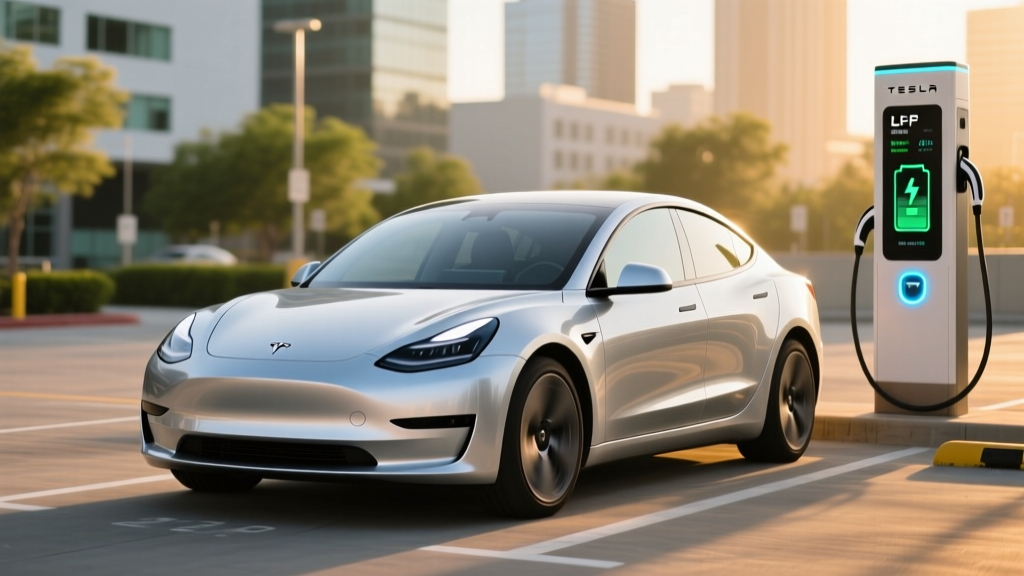
The phrase "L&F Tesla deal value" has been circulating among EV deal-hunters and forum threads, often referring to Tesla's LFP (Lithium Iron Phosphate) equipped Model 3 Rear-Wheel Drive — the most affordable entry point into the Tesla Supercharger network. "L&F" is shorthand for LFP, the battery chemistry that powers the base Model 3 RWD. But does this budget-oriented Tesla actually deliver long-term value, or are you sacrificing too much on range, charging speed, and cold-weather performance? We put the 2026 Tesla Model 3 RWD through a full ownership analysis to find out.
2026 Tesla Model 3 RWD: Core Specifications at a Glance
| Spec | 2026 Model 3 RWD |
|---|---|
| EPA Range | 272 miles |
| Battery Capacity | 60 kWh (usable ~57.5 kWh), LFP chemistry |
| Drivetrain | Rear-Wheel Drive, single motor |
| Horsepower | 271 hp |
| 0-60 mph | 5.8 seconds |
| Max DC Fast Charge | 170 kW peak |
| 10-80% DC Charge Time | ~25 minutes |
| Level 2 Home Charging | 11.5 kW (~44 mi/hr) |
| EPA Efficiency | 132 MPGe combined (25 kWh/100 mi) |
| Cargo Volume | 23 cu ft (trunk + frunk) |
| Rear Legroom | 35.3 inches |
| Base MSRP | $38,990 |
| Battery Warranty | 8 years / 100,000 miles (70% retention) |
Real-World Range: What 272 EPA Miles Actually Means
Real-World Highway (70 mph, 75°F): ~235-245 miles
Real-World City/Mixed: ~255-265 miles
Cold Weather (30°F, highway): ~185-210 miles (25-35% loss typical for LFP)
The 2026 Model 3 RWD carries an EPA-estimated 272 miles of range. That number is achievable in moderate city driving where regenerative braking recovers energy frequently. However, highway cruising at 70-75 mph pushes aerodynamic drag higher, and LFP's lower energy density means there's simply less total kWh to draw from compared to the Long Range's NMC pack.
Cold weather is the LFP chemistry's most notable weakness. Unlike NMC cells, LFP batteries have higher internal resistance at low temperatures, which means the thermal management system must work harder to warm the pack — consuming range. Expect 25-35% range reduction in sub-freezing highway driving. Tesla's heat pump (standard on all 2026 Model 3 trims) mitigates cabin heating losses, but the pack itself still suffers. If you live in Minnesota or Maine and commute more than 80 miles one-way in winter, the Model 3 RWD's usable winter range could drop below 190 miles — a genuine planning constraint.
One advantage LFP owners gain: Tesla recommends charging LFP batteries to 100% regularly (unlike NMC, which prefers an 80% daily limit). This means your "daily usable" range is closer to the full 272 miles, whereas Long Range NMC owners effectively operate on ~80% of their 363-mile sticker for battery longevity.
Charging Speed: 170 kW Peak, but Watch the Curve
| Charging Level | Power / Rate | Miles Added | Notes |
|---|---|---|---|
| Level 1 (120V household) | ~1.4 kW | ~5 mi/hr | Emergency only; full charge takes 40+ hours |
| Level 2 (240V, Wall Connector) | 11.5 kW | ~44 mi/hr | Full charge in ~5.5 hours; ideal for overnight |
| DC Fast (Tesla Supercharger V3) | 170 kW peak | ~175 mi in 15 min | Peak only below 50% SoC; tapers significantly above 80% |
| DC Fast (CCS via adapter) | Up to 150 kW | Varies by station | Tesla includes CCS adapter; Electrify America, EVgo compatible |
The Model 3 RWD peaks at 170 kW on a V3 Supercharger, but that peak only sustains from roughly 5-50% State of Charge (SoC). Above 50%, the charge curve tapers to ~100 kW, and above 80% it drops to under 40 kW. The practical result: a 10-80% session takes approximately 25 minutes, which is competitive but not class-leading. The Hyundai Ioniq 6 SE, for comparison, hits 800V architecture and can do 10-80% in ~18 minutes at 250 kW peak.
Home charging on a Tesla Wall Connector at 11.5 kW is where this car excels for daily use. Plug in at 10 PM with a 30% battery, and you'll wake up at 100% by 5:30 AM — more than enough for any daily commute. Installation of a 60-amp circuit for the Wall Connector typically costs $800-$2,000 depending on your electrical panel's capacity and distance from the garage, on top of the $475 Wall Connector unit itself.
LFP's 100% charge recommendation actually makes Level 2 home charging even more practical: you don't need to manage charge limits or worry about calendar degradation from sitting at high SoC the way NMC owners do.
Pricing, Tax Credits, and the True L&F Tesla Deal Value
| Cost Factor | Amount |
|---|---|
| Base MSRP (Model 3 RWD) | $38,990 |
| Destination Fee | $1,390 |
| As-Tested (Midnight Cherry Red, no other options) | $42,880 |
| Federal §30D Tax Credit (if eligible) | Up to $7,500 |
| Effective Price After Max Credit | ~$32,880 (base) |
The 2026 Model 3 RWD starts at $38,990 before destination. This positions it well under the IRS §30D MSRP cap of $55,000 for sedans. However, qualifying for the full $7,500 federal credit depends on three factors that change frequently:
- Buyer Income Caps: Modified AGI must not exceed $150,000 (single), $225,000 (head of household), or $300,000 (joint).
- Battery Sourcing Requirements: A percentage of critical minerals and battery components must be sourced from the US or free-trade-agreement countries. Tesla's LFP cells have historically been CATL-sourced from China, which has complicated credit eligibility in prior years.
- Point-of-Sale Transfer: As of 2024+, you can transfer the credit to the dealer at purchase, reducing your out-of-pocket cost immediately rather than waiting for tax season.
The critical question for L&F Tesla deal value: does the Model 3 RWD currently qualify for the full $7,500, a partial $3,750, or nothing? This answer shifts as Tesla adjusts its supply chain. As of early 2026, buyers should verify current eligibility on fueleconomy.gov before signing a purchase agreement. The partial credit ($3,750) applies when battery component requirements are met but critical-mineral thresholds are not. Always confirm with your tax professional — IRS rules are complex and subject to annual adjustment.
Performance and Daily Drivability
With 271 hp and a 5.8-second 0-60 mph time, the Model 3 RWD is no slouch. It's genuinely quicker than most gas-powered compact sedans in its price range. The single rear motor provides confident acceleration from stops, and Tesla's traction control system manages wheelspin effectively even in wet conditions.
Where the RWD model diverges from the Long Range AWD is in low-traction scenarios. Snow, ice, and heavy rain expose the limitations of rear-wheel drive with instant electric torque. If you live in a region with significant winter weather, the $4,000 upgrade to Long Range AWD (dual-motor, 363 miles EPA) is arguably the more rational buy — not for the extra range alone, but for the all-weather traction.
Ride quality on the refreshed Model 3 (the "Highland" platform introduced for 2024 and carried into 2026) is noticeably improved over the pre-2024 cars. The cabin is quieter thanks to acoustic glass, and the suspension tuning absorbs road imperfections with less harshness. It's still a firm ride — Tesla prioritizes handling over plushness — but it no longer feels punishing on broken pavement.
Interior, Tech, and Standout Features
The 2026 Model 3 interior continues Tesla's minimalist approach: a single 15.4-inch center touchscreen controls virtually everything, including climate vents (which are adjusted by swiping on-screen). There are no physical buttons for audio, temperature, or glovebox release. This is either refreshingly simple or maddeningly impractical depending on your tolerance for screen-based controls.
Standout tech features include:
- Tesla Autopilot (SAE Level 2) — adaptive cruise + lane centering, standard on all trims
- Full Self-Driving (Supervised) — $8,000 option; adds Navigate on Autopilot, auto lane change, traffic light/stop sign recognition, and Smart Summon. Remains Level 2 — driver must stay engaged at all times.
- Over-the-air updates that add features post-purchase
- Supercharger network access — still the most reliable DC fast-charging network in the US
- Ventilated front seats, heated rear seats, and a heated steering wheel (all standard)
- 8-camera vision system for driver assists and Sentry Mode dashcam recording
Notable drawbacks:
- No Apple CarPlay or Android Auto — Tesla's proprietary system only
- Rear-seat headroom is tight for passengers over 6'2" due to the sloping roofline
- Turn signal stalks were removed in the refresh; signals are now on the steering wheel (polarizing)
- No physical speedometer cluster — all info is on the center screen
Cargo and Passenger Space
The Model 3 offers 23 cubic feet of total cargo space (trunk plus a modest front trunk/frunk). The trunk opening is narrower than a crossover's hatch, which limits bulkier items, but the 60/40 split-folding rear seats extend usable length for longer objects. For a family of four on a road trip, the trunk fits two large suitcases and a couple of carry-ons with room to spare.
Front legroom is generous at 42.2 inches. Rear legroom measures 35.3 inches — adequate for average-height adults but tight for tall passengers on long trips. The rear middle seat is best reserved for children due to the transmission tunnel hump and narrow cushion.
Battery Longevity and Warranty
LFP chemistry offers a significant longevity advantage over NMC: higher cycle life (typically 3,000+ full cycles before 80% capacity retention vs. ~1,500-2,000 for NMC). This means an LFP Model 3 battery should comfortably outlast the vehicle itself under normal use. Tesla warrants the battery for 8 years or 100,000 miles with a minimum 70% capacity retention threshold.
Real-world degradation data from Tesla's fleet suggests LFP packs lose roughly 5-8% capacity in the first 50,000 miles, then flatten out to a very gradual decline. A 2026 Model 3 RWD driven 12,000 miles/year could reasonably retain 90%+ of its original capacity after 8 years. This is one of the strongest arguments for L&F Tesla deal value: the battery you're getting is arguably more durable than the one in the pricier Long Range model.
If replacement ever is needed out of warranty, current LFP pack replacement costs run approximately $8,000-$12,000 at a Tesla service center — lower than NMC packs due to cheaper raw materials (no cobalt or nickel).
Pros and Cons: The LFP Model 3 Verdict
Pros
- Lowest entry price into the Tesla Supercharger ecosystem
- LFP battery longevity: 3,000+ cycle life, can charge to 100% daily
- 272 miles EPA is sufficient for most commutes and city driving
- Excellent efficiency at 132 MPGe combined
- Over-the-air updates keep the car current years after purchase
- Strong resale value relative to non-Tesla EVs
Cons
- Cold-weather range loss of 25-35% is significant
- 170 kW peak DC charging is slower than 800V competitors
- Rear-wheel drive only — not ideal for snow/ice regions
- No Apple CarPlay or Android Auto
- Federal tax credit eligibility is uncertain due to LFP sourcing
- Touchscreen-only controls frustrate some drivers
Who Should Buy the Model 3 RWD (and Who Shouldn't)
This EV is ideal for: Urban and suburban commuters driving 40-80 miles round-trip daily, who have access to home Level 2 charging, live in moderate climates, and want the lowest-cost entry into Tesla's ecosystem. If your typical day involves a 30-mile commute with errands, you'll rarely need to think about range, and overnight home charging keeps you topped up effortlessly.
Look elsewhere if: You regularly drive 200+ miles one-way in cold weather, need AWD for winter traction, frequently carry tall rear passengers, or depend on Apple CarPlay. In those cases, the Model 3 Long Range AWD ($46,990), Hyundai Ioniq 6 SEL ($43,000), or BMW i4 eDrive40 ($55,000) may serve you better despite the higher price.
Frequently Asked Questions
What is the real-world range of the 2026 Tesla Model 3 RWD?
Expect roughly 235-245 miles on the highway at 70 mph in warm weather, 255-265 miles in mixed city/highway driving, and 185-210 miles in cold-weather highway conditions. The EPA sticker reads 272 miles, but real-world efficiency depends heavily on speed, temperature, and terrain.
How fast does the Model 3 RWD charge?
On a Tesla V3 Supercharger, it peaks at 170 kW and charges from 10-80% in approximately 25 minutes. At home on a Level 2 Wall Connector (11.5 kW), it adds about 44 miles of range per hour, reaching a full charge in roughly 5.5 hours. LFP's ability to charge to 100% without degradation concerns makes home charging especially convenient.
How much does the Model 3 RWD cost after tax credits?
The base MSRP is $38,990 plus $1,390 destination. If you qualify for the full $7,500 federal §30D credit (income caps, battery sourcing, and MSRP caps apply), the effective price drops to roughly $32,880. However, LFP battery sourcing from China has historically complicated full credit eligibility. Verify current status on fueleconomy.gov and consult a tax professional before purchase.
Is the Model 3 RWD worth buying vs. competitors?
At ~$33,000-$39,000, it offers the best combination of efficiency, Supercharger network access, and software ecosystem in its class. Competitors like the Hyundai Ioniq 6 offer faster charging (800V architecture) and more rear-seat room, but lack Tesla's charging infrastructure advantage. If Supercharger access matters to you for road trips, the Model 3 RWD remains the value leader.
Does it qualify for the federal EV tax credit?
It may qualify for the full $7,500 or partial $3,750 credit under IRS §30D, depending on current battery-component and critical-mineral sourcing requirements. The MSRP ($38,990) is well under the $55,000 sedan cap, and buyer income must not exceed $150,000 (single) or $300,000 (joint). Because LFP cells have historically been sourced from CATL in China, the critical-minerals requirement has been a moving target. Check the latest eligibility at irs.gov before committing.
How long will the LFP battery last?
LFP chemistry supports 3,000+ full charge cycles before dropping to 80% capacity — far more than most owners will ever use. At 12,000 miles/year, that's well over 200,000 miles of driving before meaningful degradation. Tesla's warranty covers 8 years/100,000 miles at 70% minimum retention, but real-world data suggests LFP packs routinely exceed those thresholds.