Quick Answer: What Lexus All Electric Vehicles Are Available?
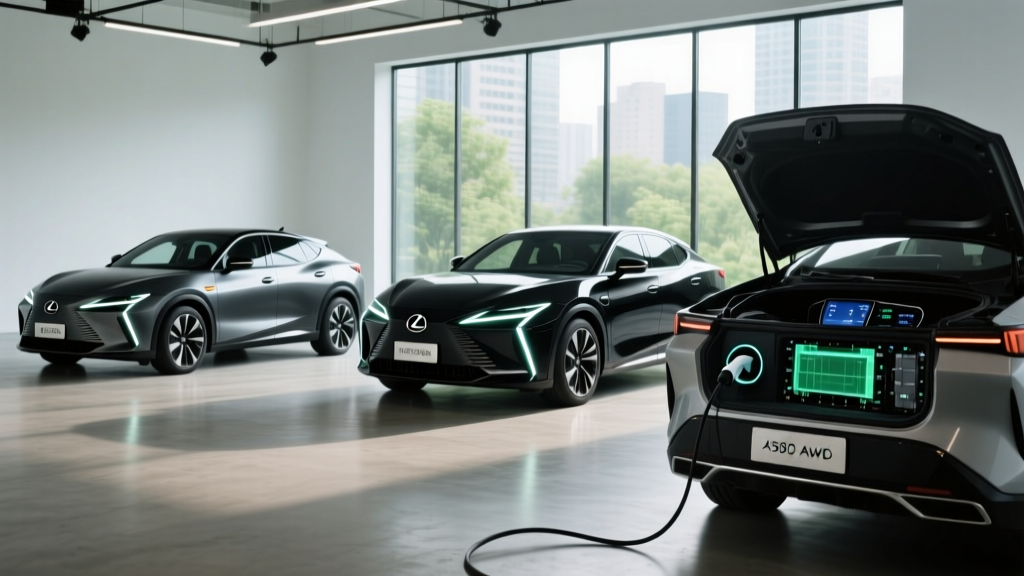
As of 2026, Lexus offers two all-electric vehicles in the US market: the RZ 300e (single-motor, FWD, starting at $55,150) with up to 266 miles of EPA range, and the RZ 450e (dual-motor, AWD, starting at $59,850) with up to 220 miles of EPA range. Both ride on Toyota's e-TNGA platform shared with the bZ4X but feature Lexus-specific tuning, interior materials, and a 10-year/150,000-mile powertrain warranty. Neither currently qualifies for the full $7,500 federal §30D tax credit due to battery-sourcing requirements, though point-of-sale lease incentives may apply.
If you've searched for Lexus all electric vehicles expecting a sprawling lineup rivaling BMW or Mercedes-Benz, the reality is more restrained. Lexus has taken a deliberate, conservative approach to full electrification—prioritizing its dominant hybrid portfolio while slowly scaling its battery-electric offerings. For buyers who value build quality, dealer service networks, and long-term reliability data, the RZ series deserves a close look. For those chasing maximum range or the latest in autonomous driving features, competitors may pull ahead.
Below, we break down exactly what the 2026 RZ lineup delivers in range, charging speed, real-world ownership costs, and how it stacks up against both gas-powered Lexus models and rival EVs.
The 2026 Lexus RZ Lineup: Specs at a Glance
| Specification | RZ 300e (FWD) | RZ 450e (AWD) |
|---|---|---|
| Base MSRP | $55,150 | $59,850 |
| Drivetrain | Single-motor FWD | Dual-motor AWD (DIRECT4) |
| Horsepower | 201 hp | 308 hp |
| 0-60 mph | 7.4 sec | 5.0 sec |
| Battery (usable) | 72.8 kWh (NMC) | 72.8 kWh (NMC) |
| EPA Range (max wheel config) | 266 mi | 220 mi |
| EPA Range (18"/20" wheels) | 224 mi | 196 mi |
| MPGe (combined) | 114 MPGe | 102 MPGe |
| Max DC Fast Charge | 150 kW (CCS) | 150 kW (CCS) |
| 10-80% DCFC Time | ~30 min | ~30 min |
| Level 2 Charge Rate | 7.2 kW | 7.2 kW |
| Level 2 0-100% Time | ~11 hours | ~11 hours |
| Powertrain Warranty | 10 yr / 150,000 mi | 10 yr / 150,000 mi |
| Basic Warranty | 4 yr / 50,000 mi | 4 yr / 50,000 mi |
Source: fueleconomy.gov and Lexus USA official specifications. Range figures reflect the most efficient wheel/tire configuration; larger alloy wheels reduce range by up to 46 miles.
Real-World Range Expectations
The EPA sticker says 266 miles for the RZ 300e, but real-world results depend heavily on conditions:
- Highway driving (70-75 mph): Expect ~220-235 miles in moderate temperatures
- Cold weather (below 32°F): Range can drop 20-30%, yielding ~165-190 miles
- City/regenerative driving: You may match or slightly exceed the EPA estimate
- Wheel selection matters: Choosing 20" wheels on the RZ 450e drops EPA range to 196 miles—plan accordingly
The RZ uses a conventional NMC (nickel-manganese-cobalt) lithium-ion pack with liquid thermal management. Unlike LFP batteries found in some competitors, NMC offers higher energy density but benefits from staying between 20-80% state of charge for daily driving to minimize long-term degradation.
Charging the RZ: Speed, Connectors, and Infrastructure
The RZ lineup uses the CCS1 connector for DC fast charging and the J1772 connector for Level 2 AC charging. Notably, Lexus has not yet adopted the Tesla NACS standard on the RZ, meaning Supercharger access requires an adapter (available from some third parties, though official Lexus NACS adapter support remains limited as of early 2026).
| Charging Level | Power | Connector | Miles Added per Hour | Best For |
|---|---|---|---|---|
| Level 1 (120V outlet) | 1.4 kW | J1772 | ~5 mi/hr | Overnight trickle, emergencies |
| Level 2 (240V home) | 7.2 kW | J1772 | ~25 mi/hr | Daily home charging |
| DC Fast Charge | Up to 150 kW | CCS1 | ~150 mi in 30 min (10-80%) | Road trips |
Understanding the Charge Curve
The RZ's peak 150 kW rate is not sustained for the entire session. Like most EVs, charging speed tapers significantly above 80% state of charge to protect battery health. A typical 10-80% session takes roughly 30 minutes at a properly functioning 150 kW charger. Charging from 80-100% can add another 20-25 minutes. For road-trip planning, target 10-80% stops and move on rather than waiting for a full charge.
The 7.2 kW Level 2 onboard charger is a weak point compared to competitors offering 11.5 kW (like the Hyundai Ioniq 5). This means a full Level 2 charge from empty takes about 11 hours—fine for overnight use but slower than rivals if you're mid-day topping up at a public Level 2 station.
Cost of Ownership: RZ EV vs. Lexus Gas and Hybrid Models
How does going electric with the RZ compare financially to sticking with a gasoline Lexus NX or a hybrid NX 350h? Let's model a 5-year ownership period at 15,000 miles per year (75,000 miles total).
| Cost Category (5 years) | RZ 450e (AWD) | NX 350 (Gas AWD) | NX 350h (Hybrid AWD) |
|---|---|---|---|
| Base MSRP | $59,850 | $43,965 | $45,550 |
| Fed. Tax Credit (§30D) | $0* | $0 | $0 |
| Estimated Fuel/Energy | $4,500** | $10,125*** | $7,090*** |
| Maintenance (est.) | $1,200 | $3,500 | $3,200 |
| Insurance (est.) | $9,500 | $7,500 | $7,800 |
| 5-Year Total (before depreciation) | $75,050 | $65,090 | $63,640 |
*The RZ does not currently meet §30D critical-mineral and battery-component sourcing thresholds. Check IRS.gov for the latest eligibility rules, as sourcing requirements phase in through 2026-2027.
**Based on $0.14/kWh national average home electricity; actual costs vary by utility rate and public-charging reliance.
***Based on $3.60/gal regular and EPA combined MPG (25 mpg NX 350, 36 mpg NX 350h).
Who Should Buy the Lexus RZ?
Choose the RZ 300e if:
- You want maximum range (266 mi EPA) and don't need AWD
- Your daily commute is under 80 miles round-trip
- You have reliable Level 2 home charging
- You prioritize Lexus interior quality and dealer service over cutting-edge EV tech
Choose the RZ 450e if:
- You need AWD for snow/rain climates
- You value the 5.0-second 0-60 time and DIRECT4 torque vectoring
- You accept a ~46-mile range penalty for the dual-motor performance
Look elsewhere if:
- You need 300+ miles of range (consider Tesla Model Y, Hyundai Ioniq 5, or Chevy Equinox EV)
- You rely on Tesla Supercharger access without adapters
- You want the $7,500 federal tax credit applied at point of sale
- Fastest DC charging speed is a priority (RZ's 150 kW trails the Ioniq 5's 350 kW capability)
Tax Credits and Incentives: The Complicated Reality
The federal §30D clean vehicle credit offers up to $7,500 for qualifying new EVs, but the RZ faces significant hurdles under current rules:
- MSRP cap: SUVs must be under $80,000 — the RZ passes this test ✓
- Buyer income cap: AGI must not exceed $150K single / $300K joint — varies by buyer ✓/✗
- Battery component sourcing: Must be manufactured or assembled in North America — the RZ is built in Japan, and its battery components currently do not meet phase-in thresholds ✗
- Critical minerals: Must be sourced from the US or FTA partners at increasing percentage thresholds — partially unmet for the RZ ✗
The net result: most RZ buyers should not count on the $7,500 federal credit. However, some buyers may find value through:
- Leasing: Vehicles leased (not purchased) can sometimes pass the commercial clean vehicle credit (§45W) through the lessor, who may reflect savings in the lease terms. Ask your Lexus dealer about current lease offers.
- State incentives: States like California, Colorado, and Massachusetts offer additional rebates that may apply regardless of federal eligibility. Check your state's energy office for current programs.
- Utility rebates: Many electric utilities offer $500-$1,500 rebates for home charger installation or off-peak charging enrollment.
Common Misconceptions About Lexus Electric Vehicles
| Myth | Fact |
|---|---|
| "Lexus has no electric cars." | The RZ 300e and RZ 450e have been on sale since 2023, with incremental updates through the 2026 model year. |
| "The RZ is just a rebadged Toyota bZ4X." | While both share the e-TNGA platform and battery, the RZ features different suspension tuning, interior materials, sound insulation, the DIRECT4 AWD system (450e), and Lexus Safety System+ 3.0. |
| "EV batteries need replacing every few years." | Lexus warranties the RZ battery for 10 years/150,000 miles against capacity loss below 70%. Industry data from Recurrent shows modern NMC packs typically retain 90%+ capacity at 100,000 miles under normal use. |
| "I'll save $7,500 in tax credits." | Due to battery-sourcing rules, the RZ does not currently qualify for the federal §30D credit. Budget accordingly and investigate state/lease alternatives. |
| "The RZ charges as fast as any EV." | At 150 kW peak DC, the RZ charges slower than competitors like the Hyundai Ioniq 5 (up to 350 kW on compatible chargers) and the Tesla Model Y (up to 250 kW on V3 Superchargers). |
First-Time EV Buyer Essentials: What You Must Know Before Purchasing the RZ
If the RZ would be your first electric vehicle, these practical considerations will determine whether ownership is seamless or frustrating:
1. Home Charging Access Is Non-Negotiable for Most Owners
Over 80% of EV charging happens at home. Before ordering, confirm you can install a Level 2 (240V) charger in your garage or driveway. Typical installation costs range from $800 to $2,500 depending on your electrical panel's capacity and the distance from panel to charger location. If your home has a 200-amp panel with spare capacity, expect the lower end. A panel upgrade to 200A can add $2,000-$5,000. Always get a quote from a licensed electrician before committing.
2. Public Charging Infrastructure Varies by Region
The RZ's CCS connector is compatible with Electrify America, EVgo, ChargePoint, and other major networks. However, reliability varies. In urban and suburban corridors, CCS charging is generally accessible. In rural areas, charging deserts remain a real concern. Download PlugShare or A Better Routeplanner to map charging along your regular routes before purchasing.
3. Cold Weather Will Reduce Your Range
If you live in a climate with sustained sub-freezing winters, plan for 20-30% range loss. The RZ's heat pump (standard on 2026 models) helps mitigate cabin-heating energy draw, but battery chemistry itself becomes less efficient in cold temperatures. Preconditioning the battery while plugged in—using the Lexus app to warm the pack before departure—recovers some of this loss.
4. Insurance Costs More for EVs
EV insurance premiums run 15-25% higher than comparable gas vehicles due to higher repair costs, specialized parts, and battery-replacement risk. Get quotes from your insurer before purchasing to avoid surprises. Some insurers (like Progressive and State Farm) now offer EV-specific policies.
5. Maintenance Is Minimal but Not Zero
The RZ has no engine oil, spark plugs, transmission fluid, or exhaust system to maintain. You'll still need tire rotations (EVs wear tires faster due to instant torque and heavier weight), cabin air filter replacements, brake fluid checks, and wiper fluid. Budget roughly $200-$400 per year for basic EV maintenance versus $600-$900 for a gas vehicle.
How the RZ Compares to Key Rivals
| Attribute | Lexus RZ 450e | Tesla Model Y LR AWD | Hyundai Ioniq 5 LR AWD | BMW iX xDrive50 |
|---|---|---|---|---|
| Base MSRP | $59,850 | $48,990 | $54,600 | $87,250 |
| EPA Range | 220 mi | 308 mi | 290 mi | 324 mi |
| Max DC Charge | 150 kW | 250 kW | 350 kW | 200 kW |
| 10-80% Time | ~30 min | ~22 min | ~18 min | ~31 min |
| 0-60 mph | 5.0 sec | 4.8 sec | 5.1 sec | 4.4 sec |
| Federal Credit | No | Partial* | No | No |
| Connector | CCS1 | NACS | CCS1/NACS** | CCS1 |
*Tesla Model Y eligibility varies by build date and sourcing; verify at fueleconomy.gov.
**2026 Ioniq 5 models for North America are transitioning to NACS.
The RZ trades range and charging speed for Lexus build quality, a quieter cabin, and the brand's strong reliability reputation. If maximum range or the fastest road-trip charging matters most, the Model Y and Ioniq 5 lead. If dealership experience, fit-and-finish, and long-term durability data are your priorities, the RZ earns its place on the shortlist.
Frequently Asked Questions
Does Lexus make a fully electric SUV?
Yes. The Lexus RZ 300e and RZ 450e are fully electric compact luxury SUVs available in the US market. Both seat five and offer between 196 and 266 miles of EPA range depending on trim and wheel configuration.
Will Lexus add more electric vehicles beyond the RZ?
Lexus has announced plans for a full EV lineup by 2035, including a next-generation electric sedan and larger SUV concepts shown at recent auto shows. However, as of 2026, only the RZ series is confirmed and on sale in the US. Any additional models remain announced/preliminary until official US pricing and availability are confirmed.
Is the Lexus RZ eligible for the $7,500 federal tax credit?
Currently, no. The RZ is manufactured in Japan, and its battery components and critical minerals do not meet the §30D sourcing thresholds as structured in 2026. Lease customers may benefit if the leasing company passes through commercial credit savings. Always verify current rules at IRS.gov before purchasing.
How long does the Lexus RZ battery last?
Lexus warranties the high-voltage battery for 10 years or 150,000 miles, whichever comes first, against capacity loss below 70% of original. Real-world data from similar NMC packs suggests 85-92% capacity retention at 100,000 miles under typical use patterns (avoiding frequent 100% charges and extreme heat exposure).
Can the Lexus RZ use Tesla Superchargers?
Not natively. The RZ uses a CCS1 connector, while Tesla Superchargers use the NACS connector. Some third-party adapters exist, but official compatibility depends on Lexus releasing a NACS adapter or future models adopting the standard natively. Check with your dealer for the latest adapter availability.
Is the RZ 450e faster than a gas Lexus NX?
Yes, significantly. The RZ 450e hits 0-60 mph in 5.0 seconds with 308 hp, compared to the NX 350 gas at 6.8 seconds (275 hp). The instant torque delivery of the electric motors also makes the RZ feel quicker in real-world passing and merging situations.
What does it cost to charge the RZ at home?
At the US national average of $0.14/kWh, fully charging the 72.8 kWh battery from empty costs approximately $10.20. For a typical month of 1,000 miles of driving (consuming roughly 240 kWh based on the RZ 450e's efficiency), expect about $33-40 in home electricity costs—roughly one-third the cost of fueling a comparable gas SUV.