Is a Hyundai Ioniq Electric Lease the Smartest Way to Go Electric in 2026?
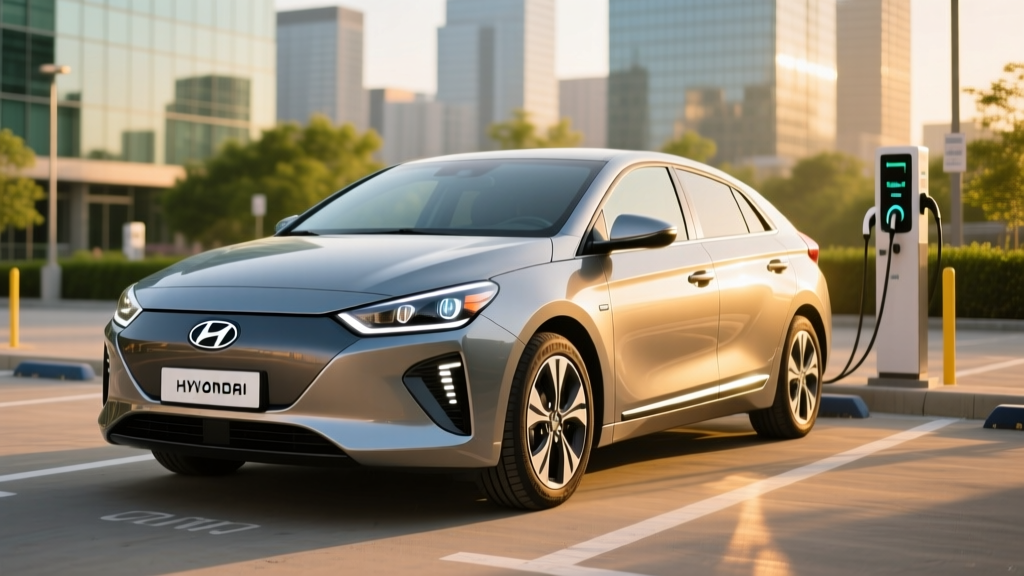
If you've been searching for Hyundai Ioniq electric lease deals, you're likely weighing whether leasing or buying makes more financial sense for your next electrified vehicle. The Hyundai Ioniq lineup — spanning the Ioniq 5 crossover and the sleek Ioniq 6 sedan — represents some of the most compelling EVs on the market, with EPA ranges exceeding 300 miles, 800V ultra-fast charging architecture, and competitive pricing. But the real question isn't just the monthly payment; it's the total cost of ownership over five years.
This guide breaks down every dollar you'll spend (and save) owning or leasing a Hyundai Ioniq EV, from federal tax credit eligibility under IRS §30D to real-world charging costs, insurance premiums, and depreciation trends. We'll use the 2026 Ioniq 5 SEL (the volume trim) as our baseline, with Ioniq 6 comparisons where relevant.
| Attribute | Value |
|---|---|
| Base MSRP | $44,950 (before incentives) |
| EPA Range | 303 miles (RWD Long Range) |
| Battery | 77.4 kWh usable, NMC chemistry |
| Peak DC Fast Charge | 240 kW (10–80% in ~18 min) |
| Level 2 Charge Rate | 10.9 kW (AC) |
| Motor Output | 168 kW (225 hp), RWD |
| 0–60 mph | 7.4 seconds |
| MPGe (Combined) | 114 MPGe |
| Battery Warranty | 10 years / 100,000 miles |
Real-World Range Reality: The EPA rates the Ioniq 5 RWD Long Range at 303 miles. In mixed highway driving at 70+ mph, expect approximately 250–270 miles. In cold weather (below 30°F), range can drop 20–30%, yielding roughly 210–240 miles. The Ioniq 5's heat pump (standard on most trims) mitigates some cold-weather loss compared to EVs without one.
Lease vs. Buy: How the Federal EV Tax Credit Changes the Math
The single biggest variable in any Hyundai Ioniq electric lease deal is the federal electric vehicle tax credit, governed by IRS §30D. Here's the critical distinction:
Buying: You may qualify for up to $7,500 in federal tax credits, applied as a point-of-sale reduction (starting in 2024, buyers can transfer the credit to the dealer for an immediate price discount). However, eligibility depends on your income, the vehicle's MSRP, and battery component/mineral sourcing requirements that tighten each year.
Leasing: Under the commercial vehicle credit (§45W), the leasing company (lessor) claims the full $7,500 credit regardless of your income, the vehicle's MSRP, or battery sourcing. Many lessors pass this savings through as a "lease cash" incentive, effectively lowering your monthly payment or capitalized cost. This has made leasing one of the most reliable ways to capture the full federal incentive — even if you wouldn't qualify buying outright.
Federal §30D Tax Credit Eligibility Checklist (Purchase)
- Buyer Income Caps (MAGI): $150,000 single / $225,000 head of household / $300,000 joint filers
- MSRP Caps: $55,000 for sedans (Ioniq 6) / $80,000 for SUVs, vans, pickups (Ioniq 5)
- Battery Component Sourcing: Increasing percentage of battery components must be manufactured or assembled in North America (phased thresholds by year)
- Critical Minerals: Increasing percentage of critical minerals must be sourced from the US or FTA partners
- Point-of-Sale Transfer: You can transfer the credit to the dealer for an immediate price reduction at purchase (requires tax filing reconciliation)
- Final Assembly: Vehicle must undergo final assembly in North America (all US-spec Ioniq 5/6 qualify)
Note: Sourcing thresholds change annually. Check fueleconomy.gov for current model-year eligibility. Consult a tax professional for your specific situation.
The lease advantage in practice: If your MAGI exceeds the §30D income caps, or if battery sourcing rules disqualify a specific Ioniq trim for the full $7,500 when purchasing, a lease typically still captures the full $7,500 through the commercial credit pathway. Hyundai Motor Finance has historically passed this through as lease cash, though amounts vary by month and region.
5-Year Total Cost of Ownership: Ioniq 5 vs. Gas Crossover Baseline
To evaluate whether those Hyundai Ioniq electric lease deals actually save you money, we need a full five-year cost picture. Below, we compare purchasing a 2026 Ioniq 5 SEL (after $7,500 federal credit) against a comparably equipped gas-powered compact SUV averaging 28 MPG combined.
| Cost Category | 2026 Ioniq 5 SEL (EV) | Gas Crossover (28 MPG) |
|---|---|---|
| Purchase Price (after incentives) | $37,450 | $36,000 |
| Fuel / Electricity (60k mi) | $3,480 | $7,500 |
| Maintenance (5 years) | $1,200 | $3,800 |
| Insurance (5 years) | $9,600 | $7,200 |
| Depreciation (est. resale at 5yr) | –$18,500 | –$15,000 |
| Net 5-Year Cost | $33,230 | $39,500 |
| Cost Per Mile | $0.55/mi | $0.66/mi |
Assumptions: Electricity at $0.14/kWh average (home charging), gas at $3.50/gal, 15,000 miles/year. Depreciation estimates based on current EV resale trends. Insurance based on national EV averages. Individual results vary by region, driving habits, and utility rates.
The Ioniq 5 saves roughly $6,270 over five years in this scenario — primarily through fuel and maintenance savings that offset higher insurance and slightly steeper depreciation. But let's unpack each line item.
Charging vs. Gas: The Per-Mile Cost Advantage
The Ioniq 5's efficiency is one of its strongest ownership arguments. At 114 MPGe combined, it consumes roughly 29 kWh per 100 miles. Here's how that translates to real dollars:
| Scenario | Ioniq 5 (EV) | Gas Crossover (28 MPG) |
|---|---|---|
| Home charging ($0.14/kWh) / Gas ($3.50/gal) | $0.041/mi | $0.125/mi |
| Utility off-peak rate ($0.09/kWh) / Gas ($3.50/gal) | $0.026/mi | $0.125/mi |
| Public DC fast charging ($0.40/kWh avg) / Gas ($3.50/gal) | $0.116/mi | $0.125/mi |
| Annual cost (15,000 mi, home rate) / Gas | $615/yr | $1,875/yr |
At typical residential electricity rates, the Ioniq 5 costs roughly one-third as much per mile to "fuel" as a gas crossover. Even at expensive public DC fast charging rates, it's competitive with gasoline. The savings widen further if your utility offers time-of-use (TOU) rates and you charge overnight at off-peak prices.
Critical caveat: These savings assume predominantly home charging. If you rely entirely on public DC fast charging (at $0.35–$0.50/kWh in many markets), your per-mile cost approaches or exceeds gasoline. Home Level 2 charging access is the single biggest determinant of EV operating cost advantage.
Maintenance Savings: Where EVs Quietly Win
EVs have dramatically fewer moving parts than internal combustion vehicles. The Ioniq 5's electric powertrain eliminates oil changes, spark plugs, timing belts, exhaust systems, and multi-speed transmissions. Regenerative braking significantly reduces brake pad wear — many EV owners report original brake pads lasting 80,000+ miles.
| Service Item | Ioniq 5 (EV) | Gas Crossover |
|---|---|---|
| Oil changes (6–8 over 5yr) | $0 | $350–$560 |
| Brake pad replacement | $0 (regen preserves pads) | $300–$500 |
| Transmission fluid / service | $0 | $150–$300 |
| Engine air filter | $0 | $100–$150 |
| Cabin air filter (both) | $150 | $150 |
| Tire rotation / replacement | $1,050 (EVs wear tires faster due to weight/torque) | $800 |
| Coolant / misc. fluid service | $0 | $200–$350 |
| Total Estimated | ~$1,200 | ~$3,800 |
The net maintenance savings of roughly $2,600 over five years is substantial. The one area where EVs cost more is tires — the Ioniq 5's 4,300+ lb curb weight and instant torque accelerate tire wear. Budget for a set of four tires around year 3–4.
Insurance Reality: The Cost EV Buyers Often Overlook
EV insurance premiums are typically 15–30% higher than equivalent gas vehicles. For the Ioniq 5, expect annual premiums in the $1,700–$2,200 range depending on your profile, compared to $1,200–$1,600 for a gas crossover.
Why the premium?
- Higher repair costs: EV battery packs and specialized components are expensive to replace after collisions
- Specialized labor: Fewer body shops have high-voltage EV repair certification
- Higher vehicle MSRP: Insurance tracks replacement cost, and EVs still carry a price premium
- Total-loss thresholds: Minor battery damage can trigger a total-loss declaration
Mitigation strategies: Shop quotes from EV-friendly insurers (some offer EV-specific discounts), bundle with homeowners, and consider higher deductibles. The insurance gap is narrowing as EV repair infrastructure matures and more Ioniq 5/6 collision data enters actuarial models.
Depreciation and Resale Value: The Evolving EV Picture
EV depreciation has been volatile. Early EVs suffered steep drops due to battery longevity fears and rapid tech obsolescence. The Ioniq 5 has held value better than many competitors, thanks to its 800V charging architecture, strong EPA range, and Hyundai's 10-year/100,000-mile battery warranty — one of the best in the industry.
Current trends for 3-year-old EVs show depreciation of 40–55% from MSRP, compared to 35–45% for mainstream gas vehicles. However, several factors work in the Ioniq 5's favor:
- The 800V platform (shared with Kia EV6 and Genesis GV60) is future-proofed for next-gen chargers
- Hyundai's battery warranty transfers to second owners, boosting resale confidence
- NMC battery chemistry in the Ioniq 5 shows strong State of Health (SoH) retention in early fleet data
Expect a 5-year-old Ioniq 5 to retain approximately 45–55% of its incentive-adjusted purchase price, depending on mileage, condition, and the used-EV market at that time. This is an area where leasing transfers depreciation risk to the lessor — a meaningful advantage if you're uncertain about long-term EV resale trajectories.
State, Local, and Utility Incentives
Beyond the federal credit, many states and utilities offer additional EV incentives that can stack with lease deals:
- California: Up to $2,000–$7,000 via Clean Fuel Reward and CVRP (income-dependent)
- Colorado: State tax credit up to $5,000 for EVs under certain MSRP thresholds
- New York: Drive Clean Rebate up to $2,000 (point-of-sale)
- Utility rebates: Many utilities offer $250–$1,500 for home Level 2 charger installation, plus TOU rate discounts
These programs change frequently and vary by jurisdiction. Check your state energy office and local utility for current offerings. The Alternative Fuels Data Center maintains a searchable database of state and federal incentives.
Lease or Buy: A Decision Framework for the Ioniq 5
Choose a Hyundai Ioniq Electric Lease If:
- Your income exceeds the §30D caps ($150k single / $300k joint) — leasing captures the full $7,500 via §45W
- You want to hedge against EV depreciation uncertainty
- You prefer lower monthly payments and plan to upgrade every 3 years
- You drive under 12,000–15,000 miles/year (lease mileage limits apply)
- You want to experience EV ownership before committing to a purchase
Choose to Buy the Ioniq 5 If:
- You qualify for the full §30D credit (income, MSRP, sourcing all check out)
- You drive high annual miles (15,000+) — lease overage penalties add up fast
- You plan to keep the vehicle 5+ years to amortize the higher upfront cost
- You want to build equity and avoid perpetual car payments
- You want unrestricted modification freedom (wraps, aftermarket wheels, etc.)
Frequently Asked Questions
How much does it really cost to own a Hyundai Ioniq 5 over 5 years?
Based on our analysis, the net 5-year cost for an Ioniq 5 SEL (after the $7,500 federal credit, including fuel, maintenance, insurance, and depreciation) is approximately $33,000–$35,000 for 60,000 miles of driving. That works out to roughly $0.55–$0.58 per mile — significantly less than a comparable gas crossover at $0.65–$0.70 per mile. Your actual cost depends on local electricity rates, insurance profile, and how the used EV market values the car at trade-in time.
Do I qualify for the $7,500 federal tax credit on the Ioniq 5?
For a purchase, you must meet IRS §30D requirements: MAGI under $150,000 (single) or $300,000 (joint), vehicle MSRP under $80,000 (SUV threshold — the Ioniq 5 qualifies), and the battery must meet escalating North American sourcing requirements for components and critical minerals. The safest way to check current eligibility is fueleconomy.gov. For a lease, the commercial credit (§45W) bypasses income and sourcing restrictions, making the full $7,500 available to the lessor — who typically passes it through as lease cash.
How much do I save on fuel and maintenance with the Ioniq 5?
At average residential electricity rates ($0.14/kWh) and current gas prices ($3.50/gal), you'll save approximately $1,260 per year on fuel alone driving 15,000 miles. Maintenance savings add another $500–$600 per year by eliminating oil changes, reducing brake wear through regenerative braking, and removing transmission and exhaust service. Combined, expect $1,800–$2,000 in annual operating savings versus a gas crossover.
Are EVs more expensive to insure than gas cars?
Yes, typically 15–30% more. The Ioniq 5's higher repair costs (specialized high-voltage components), elevated MSRP, and limited EV-certified body shops contribute to premiums that average $1,700–$2,200 annually versus $1,200–$1,600 for a gas crossover. The gap is narrowing as EV adoption grows and more collision data becomes available. Always get quotes before committing — some insurers now offer EV-specific policies with competitive rates.
How well does the Hyundai Ioniq 5 hold its value?
The Ioniq 5 has outperformed many EVs in residual value, retaining an estimated 50–60% of its value at 3 years. Hyundai's industry-leading 10-year/100,000-mile battery warranty (which transfers to second owners) supports resale confidence. Long-term, expect 45–55% retention at 5 years, though the used EV market remains sensitive to new-model introductions, battery health perceptions, and shifting federal incentives. Leasing eliminates this uncertainty entirely.
What Hyundai Ioniq electric lease deals are available right now?
Lease offers change monthly and vary by region. As of early 2026, typical Ioniq 5 SEL lease deals range from $349–$449/month for 36 months with $2,999–$3,999 due at signing, depending on the lease cash incentive applied (which often includes the $7,500 federal commercial credit passed through by Hyundai Motor Finance). Check HyundaiUSA.com's current offers page and contact local dealers for region-specific numbers. Always confirm whether the advertised payment includes the full federal credit passthrough.
Whether you lease or buy, the Hyundai Ioniq 5 remains one of the most well-rounded EVs available in 2026 — with 303 miles of EPA range, 18-minute fast charging, and a total cost of ownership that undercuts gas alternatives when you factor in the full incentive picture. The key is running the numbers for your specific situation: your income, your utility rate, your annual mileage, and your risk tolerance on depreciation. Do that homework, and the right deal becomes clear.