Quick Answer: What Lexus Electric Cars Are Available Now?
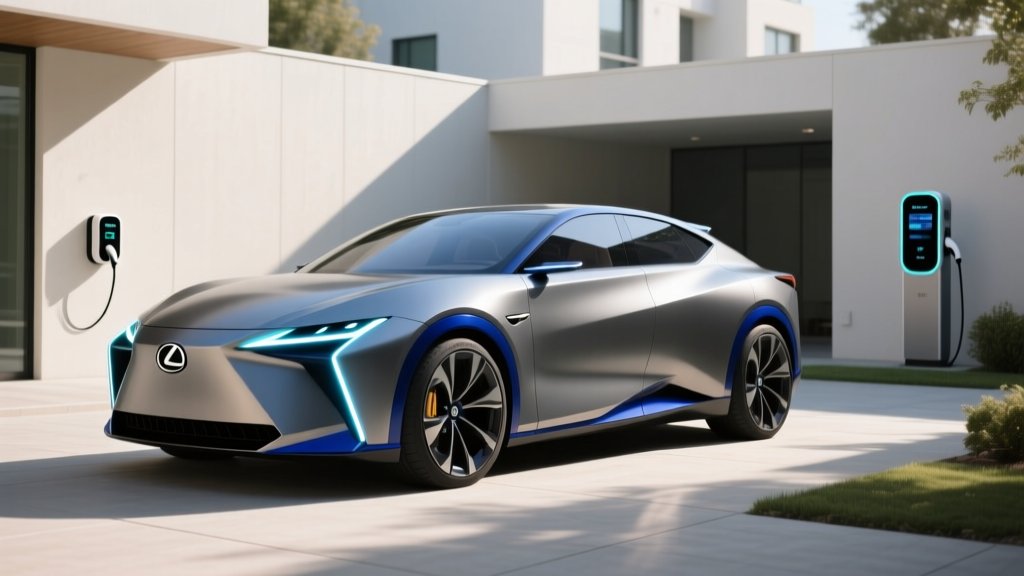
As of 2026, Lexus offers two fully electric vehicles in the US: the RZ 450e (dual-motor AWD, 222 miles EPA range, starting at $54,900) and the RZ 300e (single-motor FWD, 266 miles EPA range, starting at $49,900). Neither currently qualifies for the full $7,500 federal §30D tax credit due to battery-sourcing requirements, though point-of-sale lease incentives and state rebates may apply. The RZ is best suited for luxury buyers prioritizing build quality, ride refinement, and dealer service over maximum range or charging speed.
The 2026 Lexus RZ Lineup: Trims, Range, and Pricing
Lexus entered the EV market with the RZ, a midsize luxury crossover built on Toyota's e-TNGA platform — the same architecture underpinning the Subaru Solterra and Toyota bZ4X. For 2026, the lineup has settled into two distinct powertrain options across multiple trim levels.
| Spec | RZ 300e (FWD) | RZ 450e (AWD) |
|---|---|---|
| Base MSRP | $49,900 (Premium) | $54,900 (Premium) |
| Top Trim MSRP | $55,100 (Luxury) | $61,300 (Luxury) |
| Battery (Usable) | 71.4 kWh (NMC) | 71.4 kWh (NMC) |
| EPA Range | 266 mi | 222 mi (18" wheels) / 196 mi (20" wheels) |
| Real-World Highway Range | ~225-240 mi | ~185-200 mi |
| MPGe (Combined) | 114 MPGe | 102 MPGe |
| Horsepower | 201 hp | 308 hp |
| 0-60 mph | 7.4 sec | 5.0 sec |
| Max DC Fast Charge | ~150 kW (peak) | ~150 kW (peak) |
| 10-80% DC Charge Time | ~30 min | ~30 min |
| Level 2 Charge Rate | ~7.4 kW | ~7.4 kW |
| Drivetrain | FWD | Dual-Motor AWD (DIRECT4) |
| Battery Warranty | 8 yr / 100,000 mi | 8 yr / 100,000 mi |
Sources: EPA / fueleconomy.gov, Lexus USA
Real-World Range vs. EPA Sticker
The EPA numbers tell only part of the story. In highway-heavy driving at 70-75 mph, expect the RZ 450e to deliver 185-200 miles on a full charge — a meaningful drop from the 222-mile sticker. Cold weather (below 30°F) can further reduce range by 20-30%, meaning winter highway driving in the RZ 450e on 20-inch wheels could yield as little as 140-155 miles. The RZ 300e FWD fares better in practice, routinely achieving 225-240 real-world highway miles thanks to lower energy consumption.
Lexus RZ vs. Gas and Hybrid Alternatives: The Cost Reality
Many Lexus shoppers cross-shop the RZ against the NX (compact hybrid SUV) and RX (midsize hybrid SUV). Here's how the numbers actually compare over a 5-year ownership period, assuming 15,000 miles/year, $3.50/gallon gas, and $0.14/kWh home electricity.
| Cost Category | RZ 450e (Premium) | NX 350h (AWD) | RX 350 (AWD) |
|---|---|---|---|
| Purchase Price (MSRP) | $54,900 | $44,100 | $50,450 |
| Fed. Tax Credit (§30D) | $0 (sourcing rules)* | N/A | N/A |
| Fuel / Electricity (5 yr) | $3,675 | $7,000 | $8,750 |
| Maintenance (5 yr) | ~$1,800 | ~$3,200 | ~$3,500 |
| Insurance (5 yr est.) | ~$11,500 | ~$9,200 | ~$9,800 |
| Est. Depreciation (5 yr) | ~$28,000 | ~$20,000 | ~$22,000 |
| Total 5-Yr Cost (est.) | ~$99,875 | ~$83,500 | ~$94,500 |
*As of 2026, the RZ does not qualify for the $7,500 §30D credit because its battery cells and critical minerals do not meet the domestic-sourcing thresholds established under the Inflation Reduction Act. Always verify current eligibility at IRS.gov. Lease structures may offer different incentives through the commercial clean vehicle credit (§45W), which dealers can pass through as a lease discount.
The RZ's higher depreciation is a real concern. Early Lexus EVs have not yet established the brand's legendary resale-value reputation in the electric segment. The fuel savings are genuine — roughly $3,300-$5,000 over five years — but they don't fully offset the higher purchase price, steeper depreciation, and elevated insurance premiums.
Charging the Lexus RZ: What Buyers Need to Know
The RZ uses the standard J1772 connector for Level 1 and Level 2 AC charging, and the CCS1 connector for DC fast charging. Lexus has not yet adopted the Tesla NACS standard on the RZ, though future models are expected to transition.
| Level | Power | Miles Added Per Hour | Use Case |
|---|---|---|---|
| Level 1 (120V) | ~1.4 kW | ~3-4 mi/hr | Emergency / overnight trickle |
| Level 2 (240V, 32A) | ~7.4 kW | ~22-25 mi/hr | Home / workplace daily |
| DC Fast Charge | Peak ~150 kW | N/A | 10-80% in ~30 min |
The RZ's DC fast-charging speed is the most common criticism. A peak of ~150 kW — and a sustained rate closer to 100-120 kW through the middle of the charge curve — means the RZ charges noticeably slower than competitors like the Hyundai Ioniq 5 (peak 240 kW, 10-80% in ~18 minutes) or the BMW iX (peak 200 kW). For road-trippers who plan to DC fast-charge frequently, this adds roughly 10-15 extra minutes per stop compared to the segment leaders.
Home charging is straightforward. A Level 2 home charger (240V, 40A circuit) will fully replenish the RZ's 71.4 kWh battery in about 10-11 hours, which is ideal for overnight charging. Installation costs vary widely:
- Simple install (panel capacity available, short run): $500-$1,200
- Moderate install (longer wire run, new 240V outlet): $1,200-$2,500
- Panel upgrade required (older home, 100A service): $2,500-$5,000+
Have a licensed electrician assess your panel before committing to a purchase.
Common Misconceptions About the Lexus RZ
| Myth | Fact |
|---|---|
| "The RZ gets the full $7,500 federal tax credit." | It does not, as of 2026. Battery-sourcing and critical-mineral requirements under §30D exclude the RZ. Lease incentives may differ. |
| "It's basically a Toyota bZ4X with a Lexus badge." | While they share the e-TNGA platform and battery, the RZ has unique suspension tuning, interior materials, DIRECT4 torque vectoring (AWD), and sound insulation. The driving experience is noticeably more refined. |
| "222 miles of range isn't enough for road trips." | It's tight but workable with planning. Using Electrify America or EVgo networks, you'll add ~150 miles in 30 minutes. The constraint is charge speed, not range alone. |
| "EV maintenance costs nothing." | You save on oil changes and transmission fluid, but tire wear is higher (EVs are heavier with instant torque), cabin air filters still need replacing, and brake fluid still requires periodic service. Budget ~$350-$500/year. |
| "Lexus reliability guarantees no battery issues." | Lexus's 8-year/100,000-mile battery warranty is solid but standard for the industry. Long-term NMC degradation data for this specific pack is still limited given the RZ's 2023 launch. |
Who Should Buy the Lexus RZ — And Who Shouldn't
The Decision Framework
Choose the Lexus RZ 300e if:
- You commute under 60 miles daily and can charge at home overnight
- You prioritize ride comfort, cabin quietness, and dealer service experience
- You live in a mild climate where cold-weather range loss is minimal
- You want a luxury EV under $55,000 and value Lexus brand ownership
Choose the Lexus RZ 450e if:
- You need AWD for snow or wet-weather traction
- You want the 5.0-second 0-60 acceleration the dual-motor provides
- Your daily driving is under 40 miles and road trips are infrequent
Look elsewhere (Hyundai Ioniq 5, BMW iX, Tesla Model Y) if:
- Maximum range (300+ miles) is a priority for frequent road trips
- Fast DC charging speed matters to you (under 20 min 10-80%)
- You need access to the Tesla Supercharger network natively (NACS)
- You want to claim the $7,500 federal tax credit on a purchase
- You need three rows of seating or more cargo space
First-Time EV Buyer Checklist: Before You Sign
If the RZ is your first electric vehicle, work through this practical checklist before visiting the dealership:
- Confirm home charging feasibility. Do you have a garage or driveway with access to a 240V outlet (or room to install one)? Apartment and condo dwellers without charging access should reconsider any EV purchase until public infrastructure improves in their area.
- Map your actual driving patterns. Track your weekly mileage for two weeks. If 90% of your driving falls within 150 miles round-trip, the RZ's range will work. If you regularly exceed that, the slower charging speed will frustrate you.
- Calculate your electricity rate. At $0.14/kWh national average, the RZ costs roughly $4.50-$5.50 to fully charge at home. If your utility charges $0.25+/kWh (common in California and the Northeast without time-of-use plans), costs rise proportionally.
- Get insurance quotes before purchasing. EV insurance premiums run 15-25% higher than equivalent gas vehicles. The RZ's luxury classification compounds this. Obtain actual quotes — not estimates — from your insurer.
- Understand the tax credit landscape. The federal §30D credit has MSRP caps ($80,000 for SUVs), buyer income caps ($300,000 joint / $150,000 single), and battery-sourcing requirements. Check IRS.gov for the current qualified vehicle list, which updates regularly. Also research your state's EV rebates — many stack on top of federal incentives.
- Test the infotainment. The RZ uses Lexus's latest touchscreen interface, which is improved over prior generations but still draws criticism for capacitive touch controls. Spend at least 20 minutes in the driver's seat during your test drive adjusting climate, navigation, and media.
Frequently Asked Questions
Does any Lexus qualify for the $7,500 federal EV tax credit in 2026?
No Lexus BEV currently qualifies for the full $7,500 §30D purchase credit due to battery-sourcing requirements. However, Lexus plug-in hybrids (like the NX 450h+ and RX 450h+) may qualify for partial credits depending on current IRS sourcing lists. Leasing any Lexus electrified vehicle may unlock incentives through the separate §45W commercial credit, which dealers can apply as a capitalized-cost reduction. Always confirm with your tax professional and check the latest IRS qualified vehicle list.
How does the RZ compare to the Toyota bZ4X mechanically?
Both share the e-TNGA platform and the same 71.4 kWh NMC battery pack. The RZ 450e adds Lexus DIRECT4 AWD torque vectoring, retuned dampers, additional sound deadening, and higher-grade interior materials. The RZ 300e is mechanically closer to the bZ4X FWD but with distinct tuning. Think of it as a similar powertrain wrapped in a more premium, quieter package.
Can I road-trip the Lexus RZ across the country?
Yes, but with planning. You'll rely on Electrify America, EVgo, and other CCS-compatible networks (not Tesla Superchargers). With 222 miles of EPA range and ~30-minute DC fast-charge stops, plan for a stop every 150-180 highway miles. Cross-country trips will add roughly 1-2 hours of charging time compared to a gas fill-up on a 1,000-mile journey.
What happens if the RZ battery degrades significantly?
Lexus warranties the battery for 8 years or 100,000 miles against capacity loss below 70% of original. NMC chemistry typically degrades 10-15% over the first 100,000 miles under normal use. A full battery replacement out of warranty would likely cost $15,000-$20,000+ based on current pricing for similar-capacity packs, though costs are expected to decline as the supply chain matures.
Is the RZ a good first EV for someone switching from gas?
It can be, provided you have reliable home charging and your daily driving fits within the range envelope. The RZ drives like a conventional Lexus — quiet, smooth, and unintimidating — which eases the transition. The main adjustment is planning longer trips around charging stops. If range flexibility is your top priority, consider the Hyundai Ioniq 5 (303 mi EPA, faster charging) or Tesla Model Y (310+ mi, Supercharger access) as alternatives.