Quick Answer: Is the 2026 Lexus RZ 450e Worth Buying?
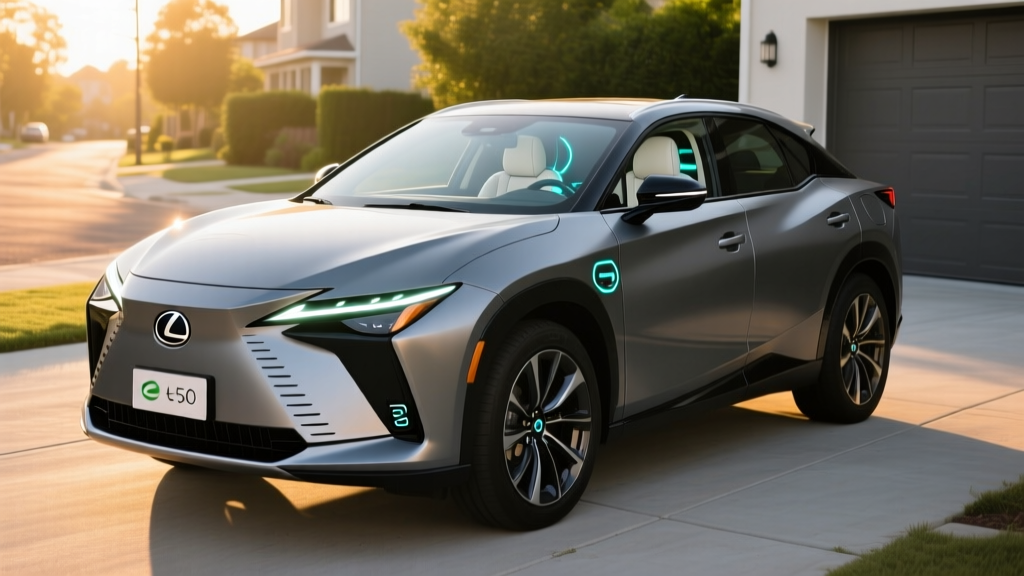
The 2026 Lexus RZ 450e is a luxury compact electric SUV with an EPA-estimated range of up to 220 miles (Premium trim, 18-inch wheels), a 72.8 kWh battery, and peak DC fast charging at 150 kW (10–80% in approximately 30 minutes). Starting at roughly $55,000 MSRP before incentives, it targets buyers who prioritize ride refinement and cabin quality over maximum range. If you drive under 200 miles daily, have access to Level 2 home charging, and value Lexus dealer service, the RZ 450e is a compelling luxury EV. If you frequently road-trip 300+ miles or live in extreme cold climates without garage parking, consider the longer-range RZ 300e variant or a competitor like the Genesis Electrified GV70.
2026 Lexus RZ 450e: Specs, Range, and Charging at a Glance
The RZ remains Lexus's dedicated battery-electric SUV, built on Toyota's e-TNGA platform. For 2026, Lexus offers two powertrain variants: the dual-motor all-wheel-drive RZ 450e and the single-motor front-wheel-drive RZ 300e, which trades acceleration for additional range. Battery chemistry is lithium-ion NMC (nickel manganese cobalt), prioritizing energy density over the LFP chemistry found in some budget EVs.
| Specification | RZ 450e (AWD) | RZ 300e (FWD) |
|---|---|---|
| EPA Range (est.) | 220 mi (18" wheels) / 196 mi (20" wheels) | 266 mi (18" wheels) |
| Battery Capacity | 72.8 kWh usable (NMC) | 72.8 kWh usable (NMC) |
| Horsepower | 308 hp (dual motor) | 201 hp (single motor) |
| 0–60 mph | 5.0 sec | 7.4 sec |
| Peak DC Fast Charge | 150 kW | 150 kW |
| 10–80% DC Fast Charge | ~30 min | ~30 min |
| Level 2 Charge Rate | 7.2 kW (~25 mi/hr) | 7.2 kW (~25 mi/hr) |
| Connector | CCS1 (NACS adapter available) | CCS1 (NACS adapter available) |
| Efficiency (MPGe) | 102 MPGe combined | 118 MPGe combined |
| Base MSRP (est.) | $55,175 | $52,175 |
| Battery/Powertrain Warranty | 8 yr / 100,000 mi | 8 yr / 100,000 mi |
Real-World Range Expectations
The EPA sticker says 220 miles for the RZ 450e on 18-inch wheels, but real-world results depend heavily on conditions. Expect roughly 185–200 miles during sustained 75 mph highway driving. In sub-freezing winter temperatures (below 32°F), range can drop 20–30%, reducing effective range to approximately 155–175 miles. The RZ's standard heat pump mitigates some cold-weather loss compared to EVs without one, but cabin heating still draws significant energy from the 72.8 kWh pack. City driving with regenerative braking recovers the most range — many owners report exceeding the EPA estimate in stop-and-go traffic.
Charging the RZ 450e: Home, Public, and the 150 kW Reality
The RZ 450e charges at a peak rate of 150 kW on DC fast chargers. However, like all EVs, it does not sustain peak speed throughout the session. The charge curve peaks near 150 kW between roughly 10–40% state of charge, then tapers progressively. The 10–80% time of approximately 30 minutes reflects this taper — the final 10% (80–90%) can add another 15–20 minutes. For road-trip planning, budget 35 minutes per stop to reach 80% and stretch your legs.
| Charging Level | Power | Miles Added per Hour | Typical Use Case |
|---|---|---|---|
| Level 1 (120V household) | ~1.4 kW | ~4–5 mi/hr | Overnight top-off, emergency |
| Level 2 (240V home/public) | 7.2 kW | ~25 mi/hr | Daily home charging, workplace |
| DC Fast Charge | Up to 150 kW | ~250+ mi/hr (peak) | Road trips, highway corridors |
At home on a Level 2 charger (240V, 32-amp circuit), a full 10–100% charge takes approximately 9.5 hours. Most owners plug in nightly and wake to a full battery — a full depletion-to-full cycle is rare in daily use. For Level 2 home installation, budget between $800 and $2,500 depending on whether your electrical panel needs an upgrade to support a dedicated 40-amp circuit.
Lexus equips the 2026 RZ with a CCS1 charge port. A NACS (Tesla Supercharger) adapter is available, and Lexus has been expanding Supercharger compatibility. According to Lexus's official RZ page, verify adapter availability with your dealer, as compatibility expanded through the 2025–2026 model years.
Cost of Ownership: RZ 450e vs. Gas Lexus NX
The most common cross-shop is the RZ 450e against the gas-powered Lexus NX 350, a similarly sized luxury compact SUV. Here's how five-year costs compare, assuming 15,000 miles per year, $3.50/gallon regular fuel, and $0.14/kWh national average electricity rate.
| Cost Category | 2026 RZ 450e (AWD) | 2026 Lexus NX 350 (AWD) |
|---|---|---|
| Base MSRP | $55,175 | $44,300 |
| Federal Tax Credit (§30D) | Up to $7,500 (eligibility varies*) | $0 |
| Effective Purchase Price | ~$47,675 | $44,300 |
| 5-Year Fuel/Energy Cost | ~$4,375 (electricity) | ~$9,375 (gasoline) |
| 5-Year Maintenance (est.) | ~$1,500 | ~$3,500 |
| 5-Year Insurance (est.) | ~$11,500 | ~$9,800 |
| Estimated 5-Year Total Cost | ~$65,050 | ~$66,975 |
The RZ 450e costs more upfront but closes the gap through fuel savings (approximately $5,000 over five years) and reduced maintenance (no oil changes, fewer brake replacements due to regenerative braking, no transmission fluid). Insurance runs 10–20% higher on the EV due to higher repair costs and battery replacement risk.
*Federal Tax Credit Caveat: The §30D credit of up to $7,500 depends on buyer income caps ($150K single / $300K joint), vehicle MSRP caps ($80K for SUVs), and battery critical-mineral and component sourcing requirements that shift annually. As of 2026, some trims may qualify for the full amount, a partial credit, or none depending on supply-chain compliance. The credit can be transferred to the dealer at point of sale as a purchase-price reduction. Always verify current eligibility on IRS.gov's clean vehicle credits page before purchase.
EV vs. Hybrid: Should You Consider the Lexus NX 450h+ PHEV Instead?
Buyers who lack reliable home charging or who take frequent long road trips may be better served by the Lexus NX 450h+ plug-in hybrid, which offers 37 miles of electric-only range on a full charge plus a gas engine for unlimited distance. The PHEV eliminates range anxiety entirely but sacrifices the RZ's silent, one-pedal driving experience and per-mile energy cost advantage.
| Factor | RZ 450e (BEV) | NX 450h+ (PHEV) | NX 350 (Gas) |
|---|---|---|---|
| EPA Electric Range | 220 mi | 37 mi | 0 mi |
| Total Range (full tank/charge) | 220 mi | ~440 mi | ~430 mi |
| MPGe / MPG Combined | 102 MPGe | 84 MPGe (elec) / 36 MPG (gas) | 25 MPG |
| Home Charging Needed? | Strongly recommended | Optional but ideal | No |
| Road-Trip Convenience | Plan DC fast stops | Gas-and-go | Gas-and-go |
| Maintenance Complexity | Lowest | Higher (two powertrains) | Moderate |
Common Misconceptions About the Lexus RZ 450e
| Myth | Fact |
|---|---|
| "The battery will need expensive replacement within a few years." | Lexus warranties the battery for 8 years/100,000 miles against capacity loss below 70%. NMC batteries in modern thermal-managed packs typically retain 85–90% capacity after 100,000 miles based on industry degradation data. Full replacement costs $12,000–$18,000 out of warranty, but most owners never need one. |
| "150 kW charging means I'll always charge that fast." | 150 kW is the peak rate, sustained only in the lower state-of-charge window (roughly 10–40%). Above 80%, charging slows dramatically to protect battery health. The 10–80% session averages closer to 100–110 kW sustained. |
| "I can't take road trips in an EV with 220 miles of range." | With DC fast-charger networks along major U.S. interstates, a 300-mile trip requires one 25–30 minute stop. Apps like PlugShare and the Lexus app map compatible chargers along your route. The constraint is time, not feasibility. |
| "The federal tax credit is guaranteed $7,500 off." | Eligibility depends on your income, the vehicle's MSRP, and battery-sourcing rules that change yearly. Some buyers qualify for $7,500, others $3,750, and some $0. Always check IRS rules for the current tax year. |
| "Level 2 home charging requires a full panel upgrade." | Most homes with a 200-amp panel can support a 40-amp Level 2 circuit without an upgrade. A panel upgrade ($2,000–$4,000) is only necessary if your existing panel is maxed out (common in older homes with 100-amp service). |
Real-World Ownership: What First-Time EV Buyers Must Know
Owning the RZ 450e is fundamentally different from a gas Lexus, and the differences go beyond the fuel pump. Here's what to expect:
Home Charging Is Non-Negotiable for Most Buyers
If you cannot install a Level 2 charger at home (or lack workplace charging), daily EV ownership becomes inconvenient. Public Level 2 chargers are slow (4–8 hours for a full charge) and DC fast charging daily accelerates battery degradation modestly. Buyers in apartments or condos without charging access should strongly consider the NX 450h+ PHEV instead.
Cold-Weather Range Loss Is Real
If you live in the upper Midwest, Northeast, or mountain states where winters regularly drop below freezing, plan for 20–30% range reduction. The RZ 450e's 220-mile EPA range becomes approximately 155–175 miles in deep cold. Preconditioning the battery while plugged in (using the Lexus app to warm the cabin and pack before departure) recovers some of this loss and improves charge speed.
Driving Patterns Favor the EV
Commuters with predictable daily routes under 100 miles round-trip get the most from the RZ 450e. Regenerative braking in city traffic extends range and reduces brake wear. Highway-heavy drivers at 75–80 mph will see the lowest efficiency. If your typical day involves 250+ miles of highway driving, the RZ's range becomes a constraint.
Insurance Costs More
EV insurance premiums run 10–20% higher than equivalent gas vehicles. Get quotes from your insurer before purchasing. The higher cost reflects EV repair complexity (high-voltage safety protocols, specialized parts) and higher total-loss valuations.
Decision Framework: Is the 2026 Lexus RZ 450e Right for You?
Choose the RZ 450e if:
- You have Level 2 home charging (or can install it)
- Your daily driving is under 150 miles
- You prioritize cabin quietness, ride quality, and Lexus dealer service
- You qualify for some or all of the §30D federal tax credit
- You rarely drive more than 250 miles in a single day without stopping
Choose the RZ 300e (FWD) if:
- You want maximum range (266 mi EPA) and don't need AWD
- You live in a mild climate where AWD is unnecessary
- You want the lowest purchase price in the RZ lineup
Choose the NX 450h+ PHEV instead if:
- You lack home charging access
- You frequently road-trip 300+ miles in a day
- You live in a region with sparse DC fast-charging infrastructure
- You want electric commuting with gas-engine range insurance
Look at competitors (Genesis Electrified GV70, BMW iX, Tesla Model Y) if:
- You need more than 266 miles of range (GV70: 236 mi; BMW iX xDrive50: 324 mi; Model Y Long Range: 310+ mi)
- You want faster DC charging (Model Y peaks at 250 kW; iX at 200 kW)
- You prefer a larger or smaller vehicle footprint
Frequently Asked Questions
Does the 2026 Lexus RZ 450e qualify for the $7,500 federal tax credit?
Possibly, but eligibility depends on three factors: your adjusted gross income (must be under $150K single / $300K joint filers), the vehicle's MSRP (must be under $80K for SUVs), and battery-sourcing requirements for critical minerals and components that change annually. The credit can be transferred to the dealer at point of sale for an immediate price reduction. Verify current eligibility at IRS.gov and confirm with your Lexus dealer before signing paperwork.
How long does the RZ 450e battery last?
Lexus warranties the high-voltage battery for 8 years or 100,000 miles against capacity dropping below 70%. Based on NMC battery degradation data from similar Toyota/Lexus hybrid and EV packs, expect approximately 85–90% state of health after 100,000 miles with normal use. Avoiding habitual DC fast charging to 100% and frequent deep discharges to 0% will extend longevity. Battery replacement out of warranty costs $12,000–$18,000 but is rarely needed within the vehicle's typical ownership period.
Can I use Tesla Superchargers with the Lexus RZ?
The 2026 RZ comes with a CCS1 charge port. Lexus offers a NACS adapter that enables access to Tesla Supercharger stalls equipped with the "Magic Dock" CCS-compatible connector or via the adapter for NACS-native stalls. Verify adapter compatibility and availability with your dealer, as network access expanded through the 2025–2026 timeframe. Non-Tesla DC networks like Electrify America, EVgo, and ChargePoint work natively with the CCS1 port.
What does it cost to charge the RZ 450e at home?
At the national average electricity rate of $0.14/kWh, a full charge from empty (72.8 kWh) costs approximately $10.19. In real-world use, most owners charge 40–60 kWh nightly (replenishing 120–180 miles of driving) for $5.60–$8.40. Over a year of 15,000 miles, home charging costs roughly $800–$950, compared to approximately $1,875 for gasoline in the NX 350 at $3.50/gallon and 25 MPG combined. Rates vary significantly by state — check your utility's EV time-of-use plan for off-peak discounts.
Is the Lexus RZ 450e self-driving?
No. The RZ 450e comes equipped with Lexus Safety System+ 3.0, which includes adaptive cruise control, lane-centering assist, and automatic emergency braking. This is an SAE Level 2 driver-assistance system — you must keep your hands on the wheel and remain fully engaged at all times. It is not autonomous or self-driving. Only Level 4 robotaxi services like Waymo operate without a human driver, and those are available only in limited metro areas.
How does the RZ 450e perform in snow and ice?
The dual-motor AWD system provides confident traction in light to moderate snow, and the low center of gravity (battery pack under the floor) aids stability. However, the RZ rides on all-season tires from the factory — dedicated winter tires significantly improve braking and cornering on ice. Cold temperatures reduce range by 20–30%, so plan for shorter effective range in winter. Preconditioning the cabin and battery while plugged in before departure helps preserve range and improves regenerative braking performance, which is often limited when the battery is cold.