Quick Verdict: Should You Buy a Lexus EV in 2026?
If you're evaluating Lexus on EV vehicles for your next luxury purchase, here is the direct answer: Lexus currently offers one dedicated battery-electric model — the RZ 450e — with an EPA-estimated range of up to 220 miles (XLINE with 18-inch wheels) and a starting MSRP of approximately $55,150. The RZ 450e is a competent, refined luxury EV crossover, but its range falls short of rivals like the BMW iX, Genesis Electrified GV70, and Tesla Model Y. Lexus's true strength remains its hybrid lineup, where models like the RX 500h deliver 30+ MPG without charging infrastructure. Choose the RZ 450e if you prioritize Lexus build quality, dealer service, and daily commutes under 150 miles with reliable home charging. Choose a Lexus hybrid if you road-trip frequently, lack home charging, or need 300+ miles between stops.
The Lexus EV Lineup: What's Actually Available
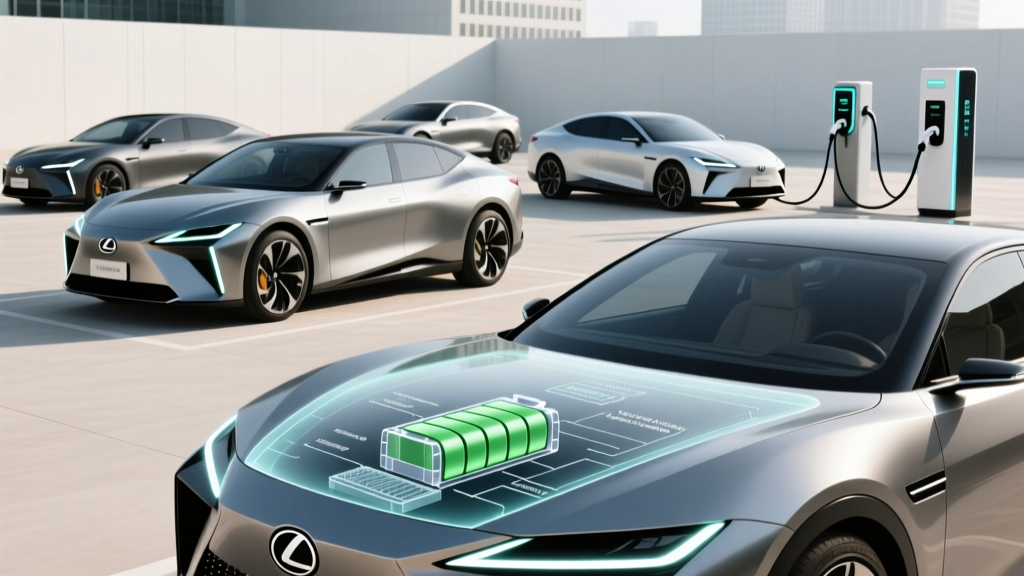
As of the 2026 model year, Lexus sells a single battery-electric vehicle (BEV) in the United States: the RZ 450e. This is a compact luxury crossover built on Toyota's e-TNGA platform, shared in concept with the Subaru Solterra and Toyota bZ4X but with distinctly Lexus-level refinement, sound insulation, and interior materials.
Lexus has announced an electrified future — the brand targets a full BEV lineup by 2035 — but additional models like a next-generation electric sedan remain in the announced/preliminary stage and are not yet available for purchase. For buyers shopping today, the RZ 450e is the sole option.
| Specification | RZ 450e Premium (FWD) | RZ 450e Luxury (AWD) |
|---|---|---|
| Battery Capacity (usable) | 71.4 kWh (lithium-ion, NMC chemistry) | |
| EPA Range | 220 miles (18" wheels) | 196 miles (20" wheels) |
| Horsepower | 201 hp | 308 hp (dual motor) |
| 0–60 mph | ~7.4 sec | ~5.0 sec |
| Peak DC Fast Charge Rate | 150 kW (CCS1 connector) | |
| 10–80% DC Fast Charge Time | ~30 minutes (preconditioned) | |
| Level 2 AC Charging (240V) | ~7 kW onboard; ~9.5 hours (0–100%) | |
| Combined MPGe | 102 MPGe | 89 MPGe |
| Starting MSRP | ~$55,150 | ~$60,650 |
| Battery/Powertrain Warranty | 8 years / 100,000 miles | |
Source: fueleconomy.gov and Lexus USA specifications.
Real-World Range vs. EPA Sticker
The EPA rates the RZ 450e at up to 220 miles. In real-world highway driving at 70 mph in moderate temperatures, expect approximately 180–195 miles before needing to charge. In cold weather (below 32°F), range can drop to 150–165 miles due to battery chemistry limitations and cabin heating demand. This is typical for NMC batteries without a dedicated heat pump, though the RZ does employ a radiant cabin heating system on some trims to reduce HVAC load. If your daily round-trip commute exceeds 120 miles or you regularly drive in freezing conditions, this range envelope requires planning.
Lexus EV vs. Lexus Hybrid: The Numbers That Matter
The most common decision for luxury Lexus buyers is not EV vs. gas — it is EV vs. hybrid. Lexus pioneered luxury hybrids, and models like the RX 500h and NX 450h+ (a plug-in hybrid) offer compelling alternatives to the RZ 450e. Here is how the math works out.
| Metric | RZ 450e (BEV) | RX 350h (HEV) | NX 450h+ (PHEV) |
|---|---|---|---|
| EPA Range / Efficiency | 220 mi / 102 MPGe | 36 MPG combined | 37 mi electric + 84 MPGe / 35 MPG gas |
| Starting MSRP | ~$55,150 | ~$52,000 | ~$59,900 |
| Fuel/Energy Cost per 1,000 mi | ~$45 (home charging, $0.15/kWh) | ~$97 (gas, $3.50/gal) | ~$60 (mixed electric/gas) |
| Annual Fuel Savings vs. Gas | ~$625/year | ~$250/year | ~$450/year |
| Maintenance (5-yr est.) | ~$2,200 | ~$4,500 | ~$3,800 |
| Charging/Fueling Stops (300-mi trip) | 1 DC fast charge (~30 min) | 0 (full tank = ~480 mi) | 0–1 depending on SoC |
| Federal Tax Credit (§30D) | Up to $7,500 (if eligible) | None | Up to $7,500 (if eligible) |
The RZ 450e delivers the lowest per-mile energy cost and requires minimal drivetrain maintenance (no oil changes, no transmission fluid). However, the RX 350h offers nearly double the range between stops and costs less upfront. The NX 450h+ plug-in hybrid splits the difference: 37 miles of electric-only driving covers most commutes, while the gas engine eliminates road-trip range anxiety entirely.
Real Ownership Costs: 5-Year Breakdown
Understanding total cost of ownership (TCO) is essential when evaluating any luxury EV. Below is a realistic 5-year / 60,000-mile projection for the RZ 450e compared to the gas-powered RX 350.
| Cost Category | RZ 450e Luxury AWD | RX 350 (Gas AWD) |
|---|---|---|
| Purchase Price (MSRP) | $60,650 | $52,500 |
| Federal Tax Credit (§30D) | −$7,500 (if eligible) | $0 |
| Effective Purchase Price | $53,150 | $52,500 |
| Energy/Fuel (60k miles) | $2,700 (home charging) | $6,000 (gas at $3.50/gal, 24 MPG) |
| Maintenance (60k miles) | $2,200 | $4,800 |
| Insurance (5-yr avg.) | $11,500 | $9,500 |
| Estimated Depreciation | $22,000 | $18,000 |
| Total 5-Year Cost | $91,550 | $90,800 |
Notes: Tax credit eligibility depends on income caps, battery sourcing, and MSRP limits per IRS §30D rules. Insurance premiums for EVs are typically 15–25% higher due to repair cost structures. Depreciation estimates reflect current luxury EV resale trends, which have been less favorable than luxury hybrids. Consult a tax professional before assuming credit eligibility.
Charging the RZ 450e: Home Setup and Public Networks
Lexus equips the RZ 450e with a CCS1 charge port for DC fast charging and a J1772 inlet for Level 2 AC charging. Understanding the infrastructure is critical before purchase.
| Level | Power (kW) | Miles Added per Hour | Typical Use Case |
|---|---|---|---|
| Level 1 (120V) | ~1.4 kW | ~3–4 mi/hr | Overnight trickle; not practical for daily use |
| Level 2 (240V, 32A) | ~7 kW | ~20–23 mi/hr | Home overnight charging; full charge in ~9.5 hrs |
| DC Fast Charge | Peak 150 kW | ~150 mi in 30 min (10–80%) | Road trips; tapers significantly above 80% SoC |
Home Charging Installation Costs
If you have a garage or dedicated parking space with access to a 240V circuit, a Level 2 home charger is the most practical setup. Here is a realistic cost breakdown:
| Component | Low Estimate | High Estimate |
|---|---|---|
| Level 2 Charger (e.g., ChargePoint Home Flex, Emporia) | $350 | $700 |
| Electrician Labor (240V/50A circuit run) | $500 | $2,000 |
| Electrical Panel Upgrade (if needed, 100A→200A) | $1,500 | $3,500 |
| Permit & Inspection | $100 | $400 |
| Total (no panel upgrade) | $950 | $3,100 |
| Total (with panel upgrade) | $2,450 | $6,600 |
Always hire a licensed electrician for a final assessment. Older homes with 100-amp panels often require upgrades to support a 50-amp EV circuit alongside existing loads.
On public DC fast chargers (Electrify America, EVgo, ChargePoint), the RZ 450e peaks at 150 kW. This is slower than competitors like the Hyundai Ioniq 5 (peak 240 kW) or Porsche Macan Electric (peak 270 kW). Expect a 10–80% session to take roughly 30 minutes when the battery is preconditioned, with the charge curve tapering sharply above 80% SoC. This means adding the last 20% can take as long as the first 70%.
Common Misconceptions About Lexus EVs
| Myth | Fact |
|---|---|
| "Lexus EVs have the same range as Tesla." | The RZ 450e tops out at 220 miles EPA. The Tesla Model Y Long Range achieves 320+ miles EPA. That is a ~100-mile gap that matters on road trips. |
| "All EVs qualify for the $7,500 tax credit." | The §30D credit has income caps ($150K single / $300K joint), MSRP caps ($80K for SUVs), and critical-mineral/battery-component sourcing requirements. Verify current eligibility on fueleconomy.gov before purchasing. |
| "EV batteries need replacement every few years." | Lexus warrants the RZ 450e battery for 8 years/100,000 miles against capacity loss below 70%. Industry data shows NMC batteries typically retain 85–90% capacity at 100,000 miles with normal use. |
| "Lexus doesn't make EVs — only hybrids." | Lexus has sold the RZ 450e since the 2023 model year and continues it for 2026. However, the hybrid lineup is far broader (10+ models), which is why Lexus is often associated primarily with hybrid technology. |
| "Home charging is too expensive to install." | A basic Level 2 install without a panel upgrade typically costs $950–$3,100. Federal and local utility rebates can offset $300–$1,000 of this cost. Over five years, home charging saves $3,000+ versus gas. |
Decision Framework: Is the Lexus RZ 450e Right for You?
Choose the Lexus RZ 450e if:
- Your daily driving is under 120 miles round-trip and you have access to Level 2 home charging.
- You value Lexus dealership service, build quality, and cabin quietness over maximum range.
- You qualify for the §30D federal tax credit, bringing the effective price closer to a gas RX 350.
- You rarely take road trips longer than 250 miles without overnight stops.
- You want minimal maintenance (no oil changes, brake pads last 100K+ miles with regen braking).
Choose a Lexus Hybrid (RX 350h, NX 450h+) instead if:
- You lack reliable home or workplace charging access.
- You regularly drive 300+ miles in a single day or travel in regions with sparse DC fast-charging infrastructure.
- You live in extreme cold climates where EV range drops 25–35% in winter.
- You want maximum resale value — Lexus hybrids hold value exceptionally well, while luxury EV depreciation remains steeper.
- You want the broadest model selection: Lexus offers over 10 hybrid trims versus one BEV.
Consider a rival EV if:
- Range is your top priority: the BMW iX xDrive50 delivers 324 miles EPA; the Tesla Model Y LR delivers 320+.
- You want faster DC charging: the Hyundai Ioniq 5 and Kia EV6 charge 10–80% in ~18 minutes at 240+ kW.
- You need three rows of seating: no Lexus EV currently offers this.
What First-Time Lexus EV Buyers Should Know
If you are transitioning from a gas Lexus or a Lexus hybrid to the RZ 450e, prepare for these practical differences:
- Route planning is required for road trips. Use apps like PlugShare or A Better Routeplanner to identify CCS-compatible DC fast chargers along your route. The RZ 450e uses CCS1, not NACS (Tesla's connector), though adapters are becoming available.
- Precondition the battery before fast charging. Navigate to a DC charger using the built-in navigation, and the RZ will warm the battery to optimize charge speed. Skipping this step in cold weather can add 10–15 minutes to your charge session.
- Regenerative braking changes driving feel. The RZ 450e offers adjustable regen levels but does not provide true one-pedal driving to a complete stop like some competitors. Expect a brief adjustment period.
- Tire wear accelerates on EVs. The RZ 450e's instant torque and heavier curb weight (~4,600 lbs) wear tires 20–30% faster than equivalent gas vehicles. Budget $800–$1,200 for a tire set replacement every 25,000–35,000 miles.
- Insurance is higher. EV insurance premiums average 15–25% above gas equivalents. Get quotes before purchasing to avoid surprises.
Driver Assistance: Not Self-Driving
The RZ 450e comes equipped with Lexus Safety System+ 3.0, which includes adaptive cruise control, lane-centering assist, and automated emergency braking. This is a SAE Level 2 driver-assistance system — meaning you must remain fully engaged, hands on or near the wheel, and eyes on the road at all times. It is not autonomous driving and does not replace the driver.
Frequently Asked Questions
Does Lexus have any fully electric vehicles for sale in 2026?
Yes. The Lexus RZ 450e is the brand's only dedicated battery-electric vehicle currently on sale in the U.S. It is a compact luxury crossover with up to 220 miles of EPA range, starting at approximately $55,150.
How does the RZ 450e range compare to other luxury EVs?
The RZ 450e's 220-mile maximum EPA range is below average for its class. The BMW iX xDrive50 achieves 324 miles, the Genesis Electrified GV70 reaches 236 miles, and the Tesla Model Y Long Range delivers over 320 miles. The RZ's range is adequate for commuting but limits road-trip flexibility.
Does the Lexus RZ 450e qualify for the federal EV tax credit?
Potentially. The §30D credit of up to $7,500 depends on your taxable income (capped at $150K single / $300K joint filers), the vehicle's MSRP (must be under $80,000 for SUVs), and battery-component/critical-mineral sourcing requirements that change annually. Check the latest eligibility on fueleconomy.gov and consult a tax professional before relying on the credit.
Is the Lexus RZ 450e better than a Lexus hybrid?
It depends on your driving pattern. The RZ 450e offers lower per-mile energy costs and less maintenance but shorter range and higher upfront cost. A Lexus hybrid like the RX 350h (36 MPG combined) is better for drivers who lack home charging, take frequent long trips, or live in extreme cold climates.
How long does the RZ 450e battery last?
Lexus warranties the high-voltage battery for 8 years or 100,000 miles against degradation below 70% of original capacity. Based on industry data for NMC lithium-ion packs, most owners can expect 85–90% capacity retention at 100,000 miles with normal charging habits (avoiding frequent 100% charges and prolonged storage at very low SoC).
Can I charge the RZ 450e at Tesla Superchargers?
Not natively. The RZ 450e uses a CCS1 connector, while Tesla Superchargers use the NACS connector. Some CCS-to-NACS adapters are entering the market, and Tesla has begun opening select Superchargers to non-Tesla EVs via the Magic Dock adapter, but coverage remains limited. Plan to rely primarily on Electrify America, EVgo, and ChargePoint DC networks.