Quick Answer: Should You Buy a Lexus EV in 2026?
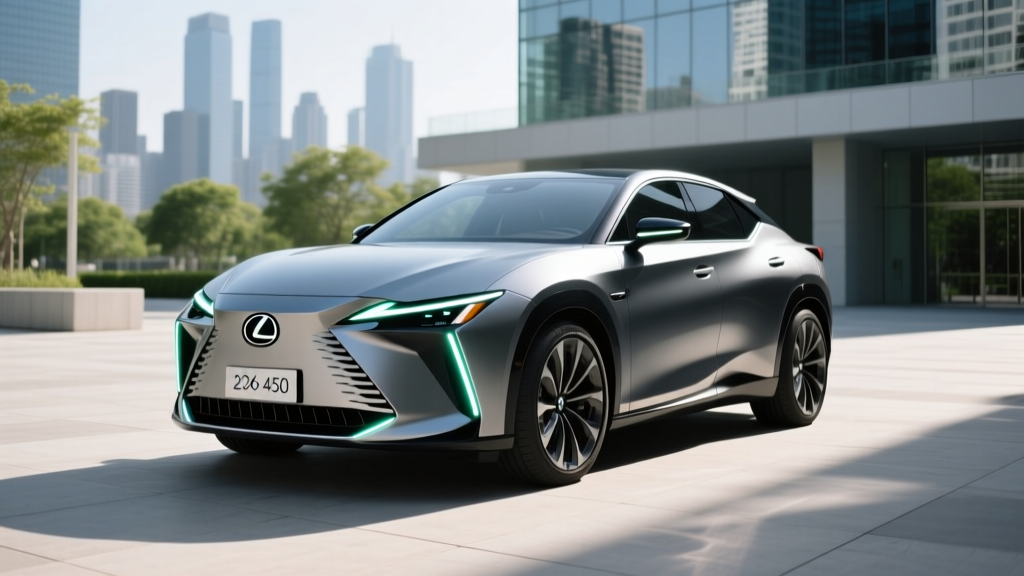
The 2026 Lexus EV lineup centers on the RZ 450e midsize SUV (and its new single-motor sibling, the RZ 300e). The all-wheel-drive RZ 450e delivers 220 miles of EPA range on 20-inch wheels or 270 miles on 18s, starts around $55,850, and charges from 10-80% in roughly 30 minutes on a 150 kW DC fast charger. It's best suited to buyers who prioritize Lexus-grade cabin quietness and ride refinement over class-leading range. If you need 300+ miles or rely solely on public charging in a cold climate, competitors like the Hyundai Ioniq 5 or Tesla Model Y may serve you better. If you already own a Lexus hybrid and want to go fully electric with minimal brand-switching friction, the RZ is a strong, if conservative, choice.
What the 2026 Lexus EV Lineup Actually Offers
As of the 2026 model year, Lexus sells one fully electric nameplate in the U.S.: the RZ. It's offered in two powertrain configurations — the dual-motor AWD RZ 450e (308 hp, 71.4 kWh usable battery, NMC chemistry) and the single-motor FWD RZ 300e (201 hp, same battery), which arrived for the 2025 model year and carries into 2026. Lexus has also previewed larger, three-row electric SUVs on its LF-Z Electrified platform, but as of early 2026 these remain announced concepts, not production vehicles you can buy.
| Spec | RZ 450e (AWD) | RZ 300e (FWD) |
|---|---|---|
| EPA Range | 220 mi (20" wheels) / 270 mi (18") | 304 mi |
| Battery (usable) | 71.4 kWh NMC | 71.4 kWh NMC |
| Peak DC Charge Rate | ~150 kW | ~150 kW |
| 10-80% DC Fast Charge | ~30 min | ~30 min |
| Level 2 (240V, 48A) | ~9.5 hours 0-100% | ~9.5 hours 0-100% |
| Horsepower | 308 hp | 201 hp |
| 0-60 mph | 5.0 sec | 7.4 sec |
| Combined MPGe | 102 MPGe (20") / 114 MPGe (18") | 131 MPGe |
| Starting MSRP (2026 est.) | $55,850 | $48,850 |
| Battery Warranty | 8 yr / 100,000 mi | 8 yr / 100,000 mi |
Sources: EPA fueleconomy.gov, Lexus official spec page.
Real-World Range: What the EPA Number Doesn't Tell You
EPA Sticker: 220-304 miles depending on trim and drivetrain.
Real-World Expectation: Plan on 180-250 miles in mixed highway driving. Cold weather (below 32°F) can reduce range by 20-30%, meaning a 220-mile RZ 450e on 20-inch wheels may deliver only 155-175 miles on a winter highway trip.
The RZ 450e's efficiency gap between its 18-inch and 20-inch wheel options is unusually large — 50 miles of EPA range separates them. This is driven by both increased rolling resistance and aerodynamic drag from the wider 20-inch rubber. For buyers in the Sun Belt or those who highway-commute, the 18-inch-wheel Premium trim is the pragmatic pick. The 20-inch Luxury trim trades range for stance and a slightly firmer ride.
The RZ 300e's 304-mile EPA figure is genuinely competitive with rivals like the Model Y Long Range and Ioniq 5, but achieving it requires modest acceleration habits and warm weather. Expect roughly 260-275 miles in temperate mixed driving, and closer to 210-230 in sustained 75+ mph highway travel.
Charging Reality: Home Setup, Public Networks, and the Curve
The RZ uses a CCS1 connector for DC fast charging in North America (Lexus has committed to NACS adoption, but 2026 RZ models still ship with CCS1; a NACS port or adapter is expected for future model years). This matters for public charging access: Electrify America, EVgo, and most non-Tesla networks use CCS1 natively. Tesla Supercharger access for CCS-equipped vehicles requires a Tesla-approved adapter and is expanding but not universal.
| Level | Power (kW) | Miles Added per Hour | Use Case |
|---|---|---|---|
| Level 1 (120V, 12A) | ~1.4 kW | ~4-5 mi/hr | Emergency / overnight top-up only |
| Level 2 (240V, 48A) | ~11.5 kW | ~35-40 mi/hr | Home daily charging (recommended) |
| DC Fast Charge | Peak ~150 kW | Up to ~550 mi/hr (peak) | Road trips; 10-80% in ~30 min |
Charging curve reality check: The RZ peaks near 150 kW only at low state-of-charge (roughly 10-30%). Above 50% SoC, the rate tapers to 80-100 kW, and above 80% it drops below 40 kW. That 30-minute 10-80% figure assumes a preconditioned battery on a functional 150+ kW charger — a condition you won't always find on aging public hardware. Budget 40-45 minutes for a real-world road-trip stop to account for taper, connector handshakes, and charger variability.
Home charging cost: Installing a dedicated 240V/60A circuit for a Level 2 home charger typically runs $800-$2,200 including panel work, wire, and permits, depending on your panel's proximity to the garage. If your home has a 100-amp panel, a $1,500-$3,000 panel upgrade may be necessary. The charger unit itself costs $400-$700 for a quality hardwired model (ChargePoint Home Flex, Emporia Level 2, or Wallbox Pulsar Plus).
Lexus EV vs. Lexus Hybrid: The Cost and Ownership Comparison
Many Lexus shoppers cross-shop the RZ against the UX Hybrid or NX 350h. The economics aren't always what buyers assume.
| Cost Category | RZ 450e AWD ($55,850) | NX 350h AWD (~$45,500) |
|---|---|---|
| Purchase Price | $55,850 | $45,500 |
| Federal Tax Credit (§30D) | Up to $7,500* | $0 (hybrid, not PHEV) |
| Effective Net Purchase | ~$48,350 | $45,500 |
| 5-Year Fuel/Energy (75k mi) | $3,800-$5,600** | $7,500 (gas @ $3.50/gal, 37 MPG) |
| 5-Year Maintenance | ~$1,200 | ~$2,800 |
| 5-Year Insurance (est.) | ~$11,500 | ~$9,800 |
| Estimated 5-Yr Total Cost | ~$64,850-$68,450 | ~$65,600 |
*The IRS §30D credit is subject to buyer income caps ($150k single / $300k joint), MSRP caps ($80k for SUVs), and battery critical-mineral sourcing requirements that change annually. The RZ 450e's eligibility for the full $7,500 has fluctuated — verify the current year's status at fueleconomy.gov before purchasing, and note that point-of-sale transfer is available at participating dealers.
**Home charging at $0.14/kWh yields ~$3,800 over 5 years. Public-only charging at $0.40-$0.50/kWh pushes that to $5,200-$5,600. Your ratio of home-to-public charging is the single largest variable in EV operating cost.
The math shows the RZ EV roughly breaking even with the NX 350h over five years if you can charge at home. Public-only charging erases most of the fuel-cost advantage. The RZ wins on refinement and cabin quietness; the NX 350h wins on range flexibility (470+ miles on a tank) and lower upfront complexity.
Federal Tax Credit Eligibility: What RZ Buyers Must Know
The §30D New Clean Vehicle Credit is not a guaranteed $7,500 rebate. For 2026, the credit has three gates:
- Buyer income cap: Modified AGI ≤ $150,000 (single), $225,000 (head of household), $300,000 (joint).
- MSRP cap: ≤ $80,000 for SUVs (the RZ qualifies — its MSRP is well under the cap).
- Battery sourcing: A percentage of critical minerals and battery components must be sourced from the U.S. or FTA partners. These thresholds tighten annually. The RZ 450e's battery supply chain has historically qualified for the full credit, but IRS updates can change this mid-year.
- Point-of-sale transfer: You can transfer the credit to the dealer at purchase, reducing your out-of-pocket cost immediately rather than waiting for tax filing.
Always confirm eligibility on the fueleconomy.gov tax credit page for the specific VIN before signing paperwork.
Common Misconceptions About the Lexus RZ EV
| Myth | Fact |
|---|---|
| "The RZ can't road-trip because of low range." | 220-304 EPA miles is sufficient for 2-3 hour driving legs between DC fast chargers. The U.S. Interstate charging network is dense enough on major corridors (I-5, I-95, I-80) that range is a minor inconvenience, not a blocker — provided you plan stops. |
| "EV batteries need replacing every 5 years." | Lexus warranties the RZ battery for 8 years/100,000 miles against capacity loss below 70%. Real-world NMC degradation data from similar platforms shows ~8-12% capacity loss over 100,000 miles. Replacement (if ever needed out of warranty) currently runs $12,000-$18,000 for this class. |
| "I need a Tesla to use Superchargers." | CCS1-equipped EVs like the RZ can access a growing subset of Tesla Superchargers using a manufacturer-approved adapter. The network is not fully open, but access is expanding. Non-Tesla networks (Electrify America, EVgo) remain the RZ's primary fast-charging ecosystem. |
| "The RZ is just a rebadged Toyota bZ4X." | They share the e-TNGA platform and battery, but Lexus retuned the suspension, added more sound insulation, upgraded interior materials, and applied different drive calibrations. The RZ rides noticeably quieter and more composed than the bZ4X — it's a differentiated product, not a badge swap. |
Decision Framework: Is the Lexus RZ the Right EV for You?
Choose the Lexus RZ 450e if:
- You have Level 2 home charging (or can install it)
- Your daily commute is under 80 miles round-trip
- You value cabin quietness and ride comfort over maximum range
- You're upgrading from a Lexus UX, NX, or RX and want brand continuity
- You qualify for the §30D tax credit, bringing the effective price near $48,000
Choose the Lexus RZ 300e if:
- You want the maximum 304-mile range and don't need AWD
- You live in a mild climate (FWD is fine without snow)
- You want the lowest entry price in the Lexus EV lineup (~$48,850)
Look elsewhere (Ioniq 5, Model Y, EV6) if:
- You regularly drive 300+ miles in a single day and can't stop for 30+ minutes
- You live in a charging desert (rural Mountain West, parts of the Plains)
- You need a third row or 30+ cu ft of cargo space (the RZ offers ~35 cu ft behind the rear seats, which is midsize-competitive, but no frunk)
- You want the fastest DC charging in the segment (the RZ's 150 kW peak trails the Ioniq 5's 240 kW and EV6's 235 kW)
First-Time EV Buyer Checklist for the Lexus RZ
- Verify home charging feasibility. Confirm your electrical panel has capacity for a 60A circuit. Get a quote from a licensed electrician before purchasing — don't assume installation is simple or cheap.
- Test your actual commute range. Use the 80% daily-charge rule (Lexus recommends it for NMC battery longevity). That means ~176 real-world miles available daily on an RZ 450e with 20-inch wheels.
- Download PlugShare or A Better Routeplanner. Map your two most common road trips to confirm DC fast-charger coverage along those routes.
- Confirm §30D eligibility for your VIN and income. Use fueleconomy.gov and discuss point-of-sale transfer with the dealer.
- Budget for insurance. EV insurance premiums run 15-25% higher than comparable gas cars. Get a quote from your insurer before signing.
- Understand the battery care basics. Avoid routinely charging to 100% on NMC chemistry. Use Level 2 for daily charging; reserve DC fast charging for road trips to minimize long-term degradation.
Frequently Asked Questions
Does the Lexus RZ qualify for the $7,500 federal tax credit?
It has historically qualified for the full credit, but eligibility depends on current-year battery-sourcing rules, your income, and the MSRP cap. Verify on fueleconomy.gov for the exact model year and VIN you're purchasing.
How long does the RZ battery last before needing replacement?
Lexus warranties it for 8 years/100,000 miles with a 70% capacity retention floor. Based on data from similar NMC packs, expect 85-92% capacity at 100,000 miles with normal use. Full replacement is rare before 150,000+ miles and costs $12,000-$18,000 if out of warranty.
Can I charge the Lexus RZ at Tesla Superchargers?
Select Tesla Supercharger stalls are open to CCS1-equipped vehicles via an adapter (sold separately or provided by Lexus depending on model year). Coverage is growing but not comprehensive. Plan road trips around CCS-native networks as your primary option.
Is the RZ 300e or 450e better for cold climates?
The 450e's AWD provides better traction in snow and ice. Both trims lose 20-30% range below freezing due to battery chemistry and cabin heating load. A heat pump (standard on the RZ) mitigates some of this loss. If cold-weather range is critical, choose the 300e for its higher baseline, but accept FWD limitations — or look at AWD rivals with larger batteries.
How does the RZ compare to the Toyota bZ4X?
Same platform, same battery. The RZ adds roughly $10,000 in price for a quieter cabin, better materials, retuned suspension, and Lexus dealer experience. If refinement matters, the premium is justified. If value is paramount, the bZ4X delivers nearly identical range and charging for less.