The Short Answer on Lexus EV Offers
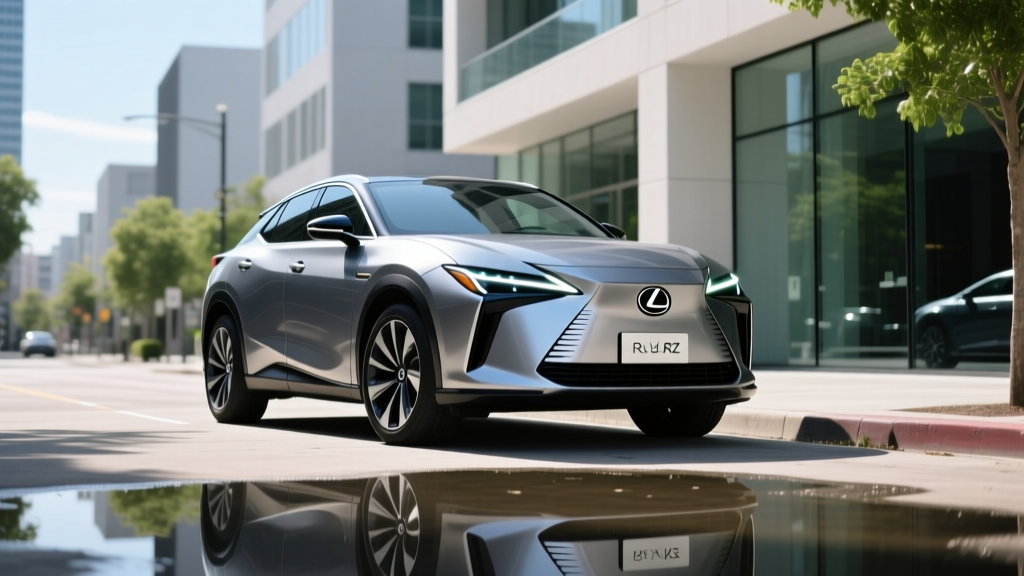
If you're researching Lexus EV offers in 2026, the lineup centers on the Lexus RZ — available as the dual-motor RZ 450e (starting around $54,000 MSRP) and the more affordable single-motor RZ 300e (starting around $45,000 MSRP). The RZ 450e delivers an EPA-estimated 220 miles of range on 20-inch wheels and up to 266 miles on 18-inch wheels, while the RZ 300e pushes approximately 266 miles. Both use a 72.8 kWh (usable) lithium-ion battery pack. Federal §30D tax-credit eligibility depends on current-year battery sourcing and your income — check the IRS clean vehicle credit page before assuming you qualify for up to $7,500. Lexus also offers a certified pre-owned EV program and periodic lease incentives that can significantly lower your monthly cost.
Current Lexus EV Lineup: What's Actually for Sale
Lexus has been deliberate about its electric transition. Unlike some rivals flooding the market with half-finished products, Toyota's luxury division launched the RZ on the dedicated e-TNGA platform — the same architecture underpinning the Toyota bZ4X and Subaru Solterra. For 2026, here's what you can actually buy:
| Model | Drivetrain | Battery (Usable kWh) | EPA Range | Peak DC Charge | 10–80% Time | 0–60 mph | Starting MSRP |
|---|---|---|---|---|---|---|---|
| RZ 300e | FWD, single motor | 72.8 kWh | ~266 mi | 150 kW | ~30 min | ~7.0 sec | ~$45,000 |
| RZ 450e (18" wheels) | AWD, dual motor | 72.8 kWh | ~266 mi | 150 kW | ~30 min | ~5.0 sec | ~$54,000 |
| RZ 450e (20" wheels) | AWD, dual motor | 72.8 kWh | ~220 mi | 150 kW | ~30 min | ~5.0 sec | ~$56,000 |
The RZ 300e was added to the lineup to address the biggest criticism of the original RZ 450e: range that fell short of competitors like the Genesis GV60 (248 mi), BMW iX (324 mi), and Tesla Model Y (310+ mi). By dropping the front motor and reducing weight, Lexus extracted meaningful extra miles from the same battery.
Lexus EV vs. Lexus Hybrid: The Cost Comparison Buyers Need
Most Lexus shoppers cross-shop EVs against the brand's strong hybrid lineup — and for good reason. The RX 500h, NX 450h+, and UX 300h are proven, reliable, and don't require any charging infrastructure. So does going electric actually save you money? Let's break it down with a concrete scenario: 15,000 miles per year, 5 years of ownership, $3.50/gallon gas, and $0.14/kWh home electricity.
| Cost Factor | RZ 450e (EV) | RX 350h (Hybrid) | Difference (5 yr) |
|---|---|---|---|
| Purchase Price (base MSRP) | $54,000 | $52,000 | EV +$2,000 |
| Est. Federal Tax Credit (§30D) | $0–$7,500* | $0 | EV up to –$7,500 |
| Fuel/Energy Cost (5 yr, 75k mi) | ~$3,675 (home) | ~$7,500 (36 MPG) | EV saves ~$3,825 |
| Maintenance (5 yr est.) | ~$1,200 | ~$2,800 | EV saves ~$1,600 |
| Insurance (5 yr est.) | ~$9,500 | ~$7,800 | EV +$1,700 |
| Estimated Depreciation (5 yr) | ~$24,000 | ~$18,000 | EV +$6,000 |
| Total 5-Year Cost | ~$84,375–$91,875 | ~$88,100 | Roughly break-even to EV savings |
*§30D credit eligibility for the RZ depends on battery critical-mineral sourcing, your modified adjusted gross income ($150k single / $300k joint cap), and MSRP caps ($80k for SUVs). The RZ is under the MSRP cap, but battery sourcing rules change frequently. Verify at IRS.gov or with a tax professional. Point-of-sale transfer is available at participating dealers.
The math reveals something important: the RZ doesn't automatically beat a Lexus hybrid on total cost. The EV's advantage in fuel and maintenance savings is partially offset by higher insurance premiums, steeper depreciation (EVs have depreciated faster than hybrids in recent years), and the upfront price gap. If you qualify for the full §30D credit, the RZ comes out ahead. If you don't, the RX 350h may be the smarter financial play — especially if you lack reliable home charging.
Charging the RZ: Home Setup, Public Networks, and What to Expect
The RZ's charging capability is adequate but not class-leading. Here's what you'll encounter at each charging level:
| Level | Power (kW) | Miles Added per Hour | Typical Use Case |
|---|---|---|---|
| Level 1 (120V household) | ~1.4 kW | ~4–5 mi/hr | Overnight trickle; emergency top-up |
| Level 2 (240V, 32A home) | ~7.7 kW | ~25–28 mi/hr | Daily home charging; full charge in ~9–10 hr |
| Level 2 (240V, 48A home) | ~11.5 kW | ~37–40 mi/hr | Faster home charging; full charge in ~6–7 hr |
| DC Fast Charge | Up to 150 kW (peak) | ~150+ mi in 30 min | Road trips; 10–80% in ~30 min |
Key charging insights for RZ buyers:
- The charge curve matters. The RZ peaks near 150 kW at low state-of-charge (SoC) but tapers significantly above 80%. Charging from 80–100% on DC can take nearly as long as 10–80%. For road trips, plan to hop between chargers at 10–80% rather than waiting for a full battery.
- Preconditioning is essential. The RZ supports battery preconditioning when you navigate to a DC fast charger. This warms the battery to optimal temperature, enabling faster charge acceptance — especially critical in cold weather. Always use the navigation system to route to chargers rather than just driving there.
- Connector: NACS transition. Early RZ models shipped with CCS1 connectors. For 2026, Lexus has been transitioning to the NACS (Tesla-style) connector. Confirm which port your specific model year has, as this affects your public charging network access. NACS-equipped RZs can use Tesla Superchargers directly; CCS models need an adapter.
- Home installation cost. If you need a Level 2 home charger installed, budget $1,200–$3,500 total (charger hardware $400–$700, electrician labor $500–$2,000, potential panel upgrade $1,000–$2,500 if your home has a 100A panel that needs upgrading to 200A). Homes with existing 240V/50A circuits (like dryer outlets) may be on the lower end.
Federal Tax Credits and Lexus EV Incentives: What Actually Applies
The §30D federal tax credit is the single biggest financial variable in any Lexus EV purchase. Here's the current eligibility checklist:
- MSRP cap: Vehicle must be under $80,000 for SUVs (the RZ qualifies).
- Buyer income cap: Modified AGI must not exceed $150,000 (single) or $300,000 (married filing jointly).
- Battery sourcing: Critical minerals and battery components must meet escalating percentage thresholds from qualifying trade partners. These thresholds tighten annually.
- Final assembly: Vehicle must undergo final assembly in North America. The RZ is assembled in Japan — which has historically disqualified it from the full credit. Check current IRS guidance for any trade-agreement exceptions.
- Point-of-sale transfer: If eligible, you can transfer the credit to the dealer at purchase, reducing your out-of-pocket cost immediately rather than waiting for tax filing.
Beyond federal credits, check your state and utility for additional incentives. Many utilities offer $500–$1,500 rebates for home charger installation, and some states (California, Colorado, Massachusetts, New York) offer their own EV purchase rebates of $1,000–$5,000. These stack with federal incentives but vary by jurisdiction — consult your state energy office or DSIRE database for specifics.
Common Lexus EV Misconceptions — Addressed with Data
| Myth | Fact |
|---|---|
| "Lexus EVs have terrible range." | The RZ 300e delivers ~266 EPA miles — competitive with the Audi Q4 e-tron (265 mi) and better than the Subaru Solterra (222 mi). It's not class-leading, but it's not "terrible." |
| "EV batteries need replacing every few years." | Lexus warranties the RZ battery for 8 years/100,000 miles against capacity loss below 70%. Real-world data from similar Toyota/Lexus battery systems shows typical degradation of 8–12% over 100,000 miles — meaning most owners will never need a replacement under warranty. |
| "Charging takes forever." | A 10–80% DC fast charge takes ~30 minutes. That's longer than a gas fill-up, but most charging happens at home overnight — you start every day with a "full tank" and only use public chargers on road trips. |
| "I can't take a Lexus EV on road trips." | The RZ works with Electrify America, EVgo, ChargePoint, and (with NACS or adapter) Tesla Superchargers. With ~220 miles of real-world highway range and 30-minute charge stops, a 600-mile trip adds roughly 2–2.5 hours of charging. |
| "EVs are worse in winter." | Range does drop 20–30% in freezing weather, but the RZ's heat pump, heated seats, and preconditioning help. AWD models (RZ 450e) provide excellent traction, and regenerative braking adapts to cold-battery conditions. |
Who Should Buy a Lexus EV — and Who Should Choose a Hybrid Instead
Decision Framework: RZ EV or Lexus Hybrid?
Choose the Lexus RZ (EV) if:
- You have access to Level 2 home charging (garage or driveway with 240V circuit)
- Your daily commute is under 100 miles round-trip
- You qualify for the §30D tax credit or your state offers meaningful EV incentives
- You take road trips fewer than 5–6 times per year
- You value silent, smooth acceleration and minimal maintenance
- You want to reduce your carbon footprint (especially with renewable electricity)
Choose a Lexus hybrid (RX 350h, NX 450h+, UX 300h) if:
- You live in an apartment or lack access to home/workplace charging
- You regularly drive 300+ miles between stops in areas with sparse charging infrastructure
- You live in an extremely cold climate (northern MN, MT, AK) where winter range loss compounds
- You don't qualify for federal or state EV incentives
- You plan to keep the vehicle 10+ years and want proven long-term reliability data
- You want the flexibility of any gas station, anywhere, with zero planning
Consider the NX 450h+ (plug-in hybrid) as a bridge: With 37 miles of electric-only range, it covers most daily commutes on electricity while retaining a gas engine for road trips. It's the best of both worlds if you can charge at home but aren't ready to commit to a full EV.
Lexus EV Ownership: What First-Time Buyers Need to Know
If you're transitioning from a gas Lexus to the RZ, here are the practical realities that brochures don't emphasize:
1. Your "fuel" cost depends heavily on how you charge. At $0.14/kWh (national average residential rate), the RZ costs roughly $0.049 per mile to drive — about one-third the cost of a 25 MPG gas car at $3.50/gallon. But if you rely exclusively on DC fast charging at $0.35–$0.50/kWh, your cost jumps to $0.12–$0.18 per mile, narrowing the savings gap significantly. Home charging is the economic foundation of EV ownership.
2. Insurance costs more. EVs typically carry 15–25% higher insurance premiums than comparable gas vehicles due to higher repair costs and specialized parts. Get quotes before purchasing — the difference can be $200–$400/year depending on your profile and carrier.
3. Tires wear faster. The RZ's instant torque and heavier curb weight (~4,600 lbs for the 450e) accelerate tire wear. Expect to replace tires every 30,000–40,000 miles rather than 50,000+. Budget $800–$1,400 for a set of premium all-season or EV-specific tires.
4. The Lexus Safety System+ 3.0 is Level 2, not self-driving. The RZ includes adaptive cruise control, lane-centering, and automatic emergency braking. This is a driver-assist system — you must keep your hands on the wheel and eyes on the road at all times. It reduces fatigue on highways but does not replace the driver.
5. Resale value is uncertain. EV depreciation has been steeper than hybrids and gas vehicles in recent years, driven by rapid technology advancement, price cuts from Tesla, and shifting incentive policies. Lexus's strong brand reputation may help the RZ hold value better than some competitors, but plan conservatively. According to Kelley Blue Book, mainstream EVs have seen 3-year depreciation of 45–55% compared to 30–40% for comparable hybrids.
6. Battery health monitoring is built in. The RZ displays battery state of health (SoH) through the infotainment system. Lexus's battery management system includes a buffer (you never access the full 72.8 kWh — a top and bottom reserve protects longevity). Avoid routinely charging to 100% or draining to 0% for daily use; the 20–80% SoC window maximizes cycle life.
Frequently Asked Questions
Does the Lexus RZ qualify for the $7,500 federal tax credit?
It depends. The RZ is assembled in Japan, which has historically conflicted with the §30D final-assembly requirement. Battery sourcing rules also apply and change annually. Always verify current eligibility at fueleconomy.gov and consult a tax professional. Lease customers may qualify under different commercial credit rules.
How does the RZ compare to the Tesla Model Y?
The Model Y Long Range offers more EPA range (~310 mi), faster DC charging (up to 250 kW, 10–80% in ~20 min), and access to the full Supercharger network. The RZ counters with superior build quality, a quieter cabin, more traditional Lexus luxury materials, and a less polarizing design. If range and charging speed are your top priorities, the Model Y wins. If refinement and dealership experience matter more, the RZ has the edge.
What is the real-world range of the Lexus RZ 450e?
EPA estimates 220 miles on 20-inch wheels and 266 miles on 18-inch wheels. In real-world highway driving at 70 mph, expect approximately 195–210 miles (20-inch) or 235–250 miles (18-inch). In freezing temperatures, subtract 20–30%. For official EPA data, check fueleconomy.gov.
Can I charge a Lexus RZ at Tesla Superchargers?
If your RZ has the NACS connector (2025+ models transitioning), yes — directly. If it has a CCS1 port, you'll need a CCS-to-NACS adapter (approximately $200–$250) to access Superchargers. Confirm your vehicle's connector type with your dealer before purchasing an adapter.
How long will the Lexus RZ battery last?
Lexus warranties the battery for 8 years/100,000 miles against degradation below 70% capacity. Based on data from Toyota's battery systems, expect approximately 8–12% degradation over 100,000 miles with normal use. Many EV batteries outlast their warranty periods by significant margins. Avoiding routine 100% charges and extreme heat exposure helps maximize longevity.
Is the Lexus RZ good for road trips?
It's capable but requires more planning than longer-range EVs. With ~200 miles of real-world highway range and 30-minute charge stops, a 500-mile trip requires 2–3 charging stops adding roughly 1.5–2 hours total. It works fine for occasional road trips, but if you drive 400+ miles weekly, a longer-range EV or a plug-in hybrid may be a better fit.
What does Level 2 home charger installation cost?
Expect $1,200–$3,500 total: charger hardware ($400–$700), electrician labor ($500–$2,000), and potentially a panel upgrade ($1,000–$2,500) if your home has a 100A service. Get three quotes from licensed electricians and check if your utility offers a rebate. Always have a professional assess your electrical panel before purchasing equipment.