If you've been searching for a 2000 Ford F-150 Lightning expecting an electric pickup, you've likely hit a wall of conflicting forum posts and confusing search results. Here's the definitive answer: Ford never produced an electric F-150 Lightning in the year 2000. The "Lightning" nameplate in 2000 belonged to the SVT F-150 Lightning — a supercharged, gas-powered V8 performance truck that had zero electrification. The battery-electric F-150 Lightning didn't arrive until the 2022 model year.
This guide clears up the confusion around the 2000 Ford F-150 Lightning and then gives you a comprehensive, data-driven review of the actual electric F-150 Lightning as it stands for the 2026 model year — including real-world range, charging speeds, tax credit eligibility, and whether it's the right electric truck for your needs.
The 2000 Ford F-150 Lightning: What It Actually Was
The 2000 SVT F-150 Lightning was Ford's high-performance gas truck, built in partnership with Saleen. It featured a 5.4-liter supercharged Triton V8 producing 360 horsepower and 440 lb-ft of torque, paired with a 4-speed automatic transmission and rear-wheel drive. It was a muscle truck — quick for its era (0-60 mph in roughly 5.8 seconds) — but it burned premium gasoline at around 12-14 mpg combined and had no battery, no electric motor, and no plug.
The electric F-150 Lightning badge didn't debut until Ford revealed its battery-electric full-size pickup for the 2022 model year. If you're looking for an electrified F-150, you want the 2022–2026 F-150 Lightning — not a turn-of-the-millennium SVT relic.
2026 Ford F-150 Lightning: Full EV Review
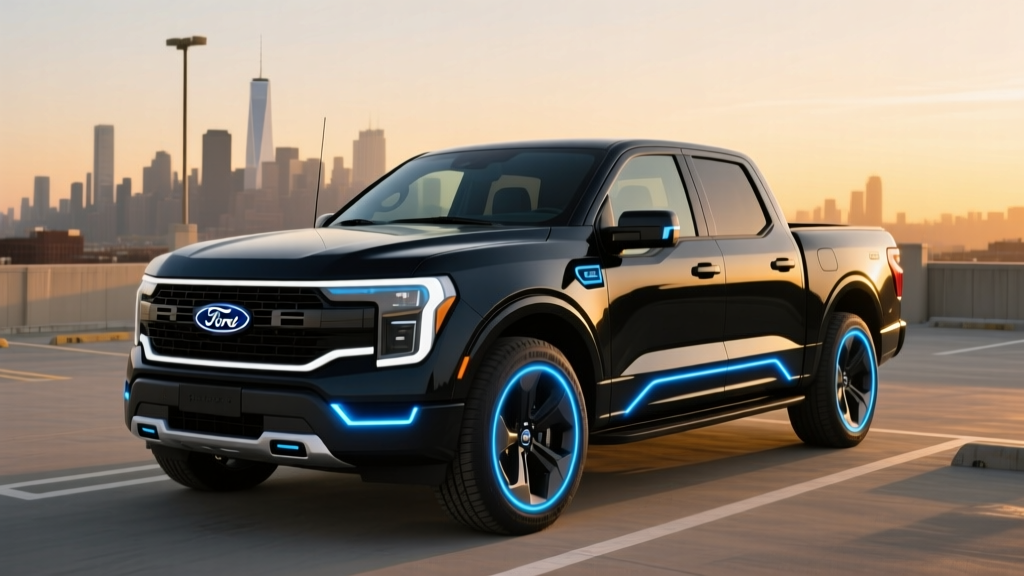
With the naming confusion settled, here's everything you need to know about the current-generation Ford F-150 Lightning. For 2026, Ford continues to offer the Lightning across multiple trims with two battery options, dual-motor all-wheel drive standard, and increasingly competitive tech and pricing.
| Spec | Standard Range | Extended Range |
|---|---|---|
| Usable Battery Capacity | 98 kWh (NMC) | 131 kWh (NMC) |
| EPA Range | ~240 miles | ~320 miles |
| Drivetrain | Dual-motor AWD | |
| Horsepower | 452 hp | 580 hp |
| Torque | 775 lb-ft | 775 lb-ft |
| 0-60 mph | ~5.0 sec | ~3.8 sec |
| Max DC Fast Charge | ~150 kW | ~150 kW |
| 10-80% DC Fast Charge | ~44 min | ~49 min |
| Level 2 Home Charging | Up to 19.2 kW (80A) / ~30 mi/hr | |
| Towing Capacity | 7,700 lbs | 10,000 lbs (w/ Max Trailer Tow) |
| Payload | ~2,235 lbs | ~1,952 lbs |
| EPA Efficiency | ~76 MPGe (combined) | ~70 MPGe (combined) |
| Battery Warranty | 8 years / 100,000 miles | |
Real-World Range: What the EPA Sticker Doesn't Tell You
Standard Range (98 kWh): EPA-rated ~240 miles. Expect 200–220 miles in mixed highway driving, dropping to 160–180 miles in sub-freezing temperatures or sustained 75+ mph highway runs.
Extended Range (131 kWh): EPA-rated ~320 miles. Real-world highway testing consistently yields 260–280 miles at 70 mph in moderate temperatures. Cold weather (below 32°F) can cut this to 200–230 miles due to cabin heating demand and increased battery internal resistance.
The F-150 Lightning's size and weight work against it on the highway. At roughly 6,200–6,500 lbs curb weight, aerodynamic drag and rolling resistance consume energy faster than the EPA's mixed-drive cycle suggests. On a 250-mile road trip in 45°F weather with the Extended Range pack, plan for one DC fast-charge stop — the battery simply doesn't hold enough energy at highway speeds and cold temperatures to reliably cover that distance without a buffer.
City driving and moderate climates are where the Lightning shines closest to its sticker range. Regenerative braking recovers significant energy in stop-and-go traffic, and the heat pump (standard on Extended Range trims) helps mitigate cold-weather losses compared to resistive heating alone.
Charging Speed: DC Fast and Home Level 2
Charging speed remains one of the F-150 Lightning's most debated specs. The truck's large battery packs and relatively conservative peak charge rate mean longer DC fast-charge sessions than lighter EVs like the Hyundai Ioniq 5 or Tesla Model Y.
| Charge Level | Power | Speed (mi/hr added) | Notes |
|---|---|---|---|
| Level 1 (120V) | ~1.4 kW | ~2–3 mi/hr | Emergency/trickle only; full charge takes days |
| Level 2 (240V, 32A) | 7.7 kW | ~13 mi/hr | Common home setup; full overnight charge |
| Level 2 (240V, 48A) | 11.5 kW | ~19 mi/hr | Recommended home setup for Standard Range |
| Level 2 (240V, 80A) | 19.2 kW | ~30 mi/hr | Requires Ford Charge Station Pro + 100A circuit; best for Extended Range |
| DC Fast Charge | Peak ~150 kW | ~150–250 mi/hr (at peak) | 10-80% in ~44-49 min; tapers significantly above 80% |
Charging curve reality check: The Lightning peaks around 150 kW only between roughly 15–35% state of charge on the Extended Range pack. From 35–65%, it sustains approximately 110–120 kW, then tapers to under 60 kW above 80%. This means a 10–80% session on a 150+ kW CCS station (or NACS adapter at a Tesla Supercharger) takes roughly 44–49 minutes — not the "under 30 minutes" you might see in marketing for smaller EVs. Plan road-trip stops accordingly.
For home charging, the 80A Ford Charge Station Pro is the gold standard if your electrical panel supports a dedicated 100-amp circuit. Many homes will need a panel upgrade ($1,500–$3,000) to accommodate this. A 48A circuit on a standard 60A breaker is the practical sweet spot for most owners, delivering roughly 19 miles of range per hour — enough to replenish 200+ miles overnight.
Pricing, Trims, and Federal Tax Credit Eligibility
The 2026 F-150 Lightning lineup spans from work-truck basics to luxury cruiser. Here's the pricing landscape and how the federal §30D tax credit factors in.
| Trim | Battery | Base MSRP | Est. After §30D Credit* |
|---|---|---|---|
| Pro (fleet/commercial) | Standard | ~$52,000 | ~$44,500 |
| XLT | Standard | ~$57,000 | ~$49,500 |
| XLT | Extended | ~$67,000 | ~$59,500 |
| Lariat | Extended | ~$75,000 | ~$67,500 |
| Platinum | Extended | ~$85,000 | ~$77,500 |
*Federal tax credit amounts and eligibility are subject to IRS §30D rules, which include buyer income caps ($150K single / $300K joint MAGI), MSRP caps ($80,000 for trucks/SUVs), battery critical-mineral sourcing requirements, and point-of-sale transfer availability. Not all trims or buyers will qualify for the full $7,500. Consult IRS.gov §30D guidance and a tax professional before purchasing. Pricing shown is approximate for the 2026 model year and may vary by dealer and configuration.
The MSRP cap is a key consideration: the Platinum trim at ~$85,000 exceeds the $80,000 truck/SUV threshold, potentially disqualifying it from the federal credit entirely. The Lariat Extended Range sits right at the edge — option it carefully to stay under the cap. The XLT with Standard Range is the value sweet spot for credit-eligible buyers.
Cargo, Passenger Space, and the Mega Power Frunk
The F-150 Lightning retains the SuperCrew cab configuration with four full doors and seating for five (or six with the front bench option on Pro/XLT trims). Rear-seat legroom measures approximately 43.6 inches — genuinely spacious for adult passengers on long drives.
Cargo dimensions are where the electric architecture pays dividends:
- Bed volume: ~52.8 cu ft (5.5-foot Styleside box)
- Frunk (front trunk): 14.1 cu ft — the Mega Power Frunk is lockable, weather-sealed, drainable, and includes four 120V outlets plus two USB-C ports. It's large enough for two carry-on suitcases or a full set of tools.
- Max payload: ~2,235 lbs (Standard Range) / ~1,952 lbs (Extended Range — the heavier battery reduces payload)
The frunk alone is a differentiator no gas F-150 can match. It transforms the Lightning into a mobile workstation or camp kitchen, especially with the available Pro Power Onboard system that turns the truck into a 9.6 kW mobile generator (240V and 120V outlets in the bed and frunk).
Tech, Driver Assists, and Standout Features
The 2026 Lightning runs Ford's SYNC 4A infotainment system on a 12-inch (XLT) or 15.5-inch (Lariat/Platinum) vertically oriented touchscreen. Wireless Apple CarPlay and Android Auto are standard. The digital instrument cluster is 12 inches across all trims.
Ford BlueCruise is Ford's Level 2 hands-free highway driving assist — available on divided highways mapped in Ford's system. It's critical to understand: BlueCruise is SAE Level 2, not self-driving. You must remain attentive, and the system monitors your eyes via an infrared camera. It handles steering, acceleration, and braking on qualified highways but will disengage on surface streets, in construction zones, or if you look away too long. It does not navigate intersections, stoplights, or unmapped roads.
This is a Level 2 driver-assist system — not autonomous driving. The driver is legally and practically responsible for the vehicle at all times. BlueCruise does not operate on all roads, in all weather conditions, or without active driver monitoring. Keep your hands near the wheel and eyes on the road.
Other notable tech includes:
- Pro Power Onboard: 2.4 kW standard; 9.6 kW available with bed and frunk outlets — enough to power job-site tools or a home during an outage (with proper transfer switch installation)
- Intelligent Backup Power: With the Ford Charge Station Pro and a home transfer switch, the Lightning can supply up to 9.6 kW to your house during a power outage — roughly 3 days of average home use
- Over-the-air updates: Ford Power-Up software updates continue to refine battery management, charging profiles, and infotainment features
- Trailer backup assist and onboard scales: Practical towing tech that gas F-150 buyers also appreciate
How It Compares: Lightning vs. Rivals
The electric truck segment has matured since the Lightning's 2022 debut. Here's how it stacks up against the key competitors for 2026:
- Chevrolet Silverado EV: Offers up to ~400 miles of EPA range on the top-tier battery pack and slightly faster DC charging. However, it rides on GM's BT1 platform with a different bed configuration (no traditional box; midgate instead). Pricing is competitive but availability has been constrained.
- Rivian R1T: More premium, more off-road capable, and faster charging (peak ~200+ kW on newer packs). But it starts above $70,000, is smaller in bed and cabin dimensions, and targets the adventure-luxury buyer rather than the fleet/work buyer.
- Tesla Cybertruck: Polarizing design, stainless steel exoskeleton, and strong performance. Range and build quality remain debated, and service infrastructure for body damage is limited. The Lightning is more conventional — which is a feature, not a bug, for most truck buyers.
- Familiar F-150 driving feel — no learning curve for truck veterans
- Massive 14.1 cu ft frunk with built-in power outlets
- Pro Power Onboard turns it into a 9.6 kW mobile generator
- Home backup power capability (with proper installation)
- Spacious SuperCrew cabin with 43.6" rear legroom
- Ford dealer network for service — far more accessible than Rivian or Tesla
- Strong towing tech (backup assist, onboard scales, Pro Trailer Hitch Assist)
- DC fast charging peaks at only ~150 kW — slower than rivals
- Real-world highway range falls well short of EPA, especially cold weather
- Extended Range battery adds significant weight, reducing payload
- Higher trims exceed the $80K MSRP cap, losing federal tax credit
- No NACS port native — requires adapter for Tesla Supercharger access
- Insurance costs run 15–25% higher than gas F-150 equivalents
Who Should Buy the F-150 Lightning?
Buy the F-150 Lightning if:
- You have reliable home Level 2 charging and your daily driving stays under 200 miles
- You want a full-size work truck with onboard power for tools and job sites
- You value home backup power capability in an area with frequent outages
- You prefer a conventional truck experience from an established dealer network
- You tow occasionally (under 8,000 lbs) and want electric torque for trailer launches
Look elsewhere if:
- You regularly drive 300+ miles between charging stops on road trips
- You need the fastest possible DC charging for high-mileage commercial routes
- You live in an apartment or lack access to reliable home or workplace charging
- You need maximum payload (the Extended Range battery eats into payload capacity)
Frequently Asked Questions
Was there ever a 2000 Ford F-150 Lightning electric truck?
No. The 2000 Ford F-150 Lightning was the SVT performance variant with a supercharged 5.4L V8 gasoline engine producing 360 hp. It had no electric motor, no battery pack, and no plug. Ford's first electric F-150 Lightning debuted for the 2022 model year.
What is the real-world range of the 2026 F-150 Lightning?
The Standard Range pack (~240 miles EPA) delivers roughly 200–220 miles in real-world mixed driving, dropping to 160–180 miles in freezing temperatures. The Extended Range pack (~320 miles EPA) yields 260–280 miles on the highway in moderate weather and 200–230 miles in cold conditions. Towing cuts range by 40–50% regardless of pack size.
How fast does the F-150 Lightning charge?
On a DC fast charger, it peaks at approximately 150 kW and charges from 10–80% in roughly 44–49 minutes, with significant tapering above 80% SoC. At home on a Level 2 charger, expect 13–30 miles of range per hour depending on your amperage (32A to 80A). A full Level 2 charge of the Extended Range pack takes 10–13 hours depending on circuit capacity.
Does the 2026 F-150 Lightning qualify for the federal EV tax credit?
Potentially yes, but with important caveats under IRS §30D rules. The buyer must meet income caps ($150K single / $300K joint modified AGI), the truck's MSRP must not exceed $80,000 (which eliminates the Platinum trim and heavily optioned Lariat), and the battery must meet critical-mineral and component sourcing requirements that change annually. The credit can be transferred to the dealer at point of sale for an immediate price reduction. Always verify current eligibility at IRS.gov and consult a tax professional.
Is the F-150 Lightning worth buying vs. the Silverado EV or Rivian R1T?
The Lightning wins on familiarity, dealer service access, frunk utility, and home backup power. The Silverado EV offers longer range options; the Rivian R1T offers better off-road capability and faster charging. If you want a conventional full-size truck experience with electric benefits and Ford dealer support, the Lightning remains the strongest choice. If range or charging speed is your top priority, cross-shop the Silverado EV. If you want adventure luxury, test-drive the R1T.
Can the F-150 Lightning power my home during an outage?
Yes — with the available Ford Charge Station Pro (80A bi-directional charger) and a professionally installed home transfer switch, the Lightning can supply up to 9.6 kW back to your home's electrical panel. Ford estimates this can power an average home for approximately three days. Installation of the transfer switch and charger typically costs $2,000–$4,500 depending on your panel capacity and wiring runs. Consult a licensed electrician for your specific setup.
The 2000 Ford F-150 Lightning lives on in enthusiast memory as a supercharged V8 muscle truck — not an EV. But the 2026 F-150 Lightning is a genuinely capable electric workhorse for the right buyer: one with home charging, sub-250-mile daily needs, and an appetite for onboard power and frunk utility. It's not the fastest-charging or longest-range electric truck available, but it remains the most accessible and familiar entry into full-size electric pickup ownership.